Chilat Doina
June 9, 2026
Planning your 2026 event calendar usually starts the same way. You open five tabs, every conference says it's the must-attend event, and by the end of the hour you still don't know whether you're buying access to real operators or just paying for a louder expo hall. For a serious seller, that mistake is expensive. It's not the ticket cost. It's the lost week, the missed decisions back home, and the follow-up pile that never turns into anything.
That's why I look at ecommerce conferences 2026 through one filter only: what changes in the business because you went. New vendor shortlist. Better strategic context. A direct line to a platform team. A room full of peers dealing with the same operational headaches at scale. If the answer is “nice content” or “good energy,” I pass.
The broader market is big enough to justify being selective. Global ecommerce sales are projected to reach $6.88 trillion in 2026 and account for 21.1% of total retail sales, while the global B2B ecommerce market is forecast to reach $36 trillion in 2026 with a 14.5% CAGR through that year, according to Salsify's ecommerce trends overview. That scale is exactly why the conference scene is crowded.
If you're tightening planning, this practical guide to event management is useful. But the short version is simple. Pick events that match the bottleneck in your business, not the events everyone posts about.
You land in New York with three open decisions: keep stitching systems together, replace part of the stack, or prepare for real omnichannel complexity. That is the right moment for NRF. This show is useful when the business has outgrown channel-by-channel thinking and the operational cost of a bad systems decision is already showing up in margin, speed, or team drag.
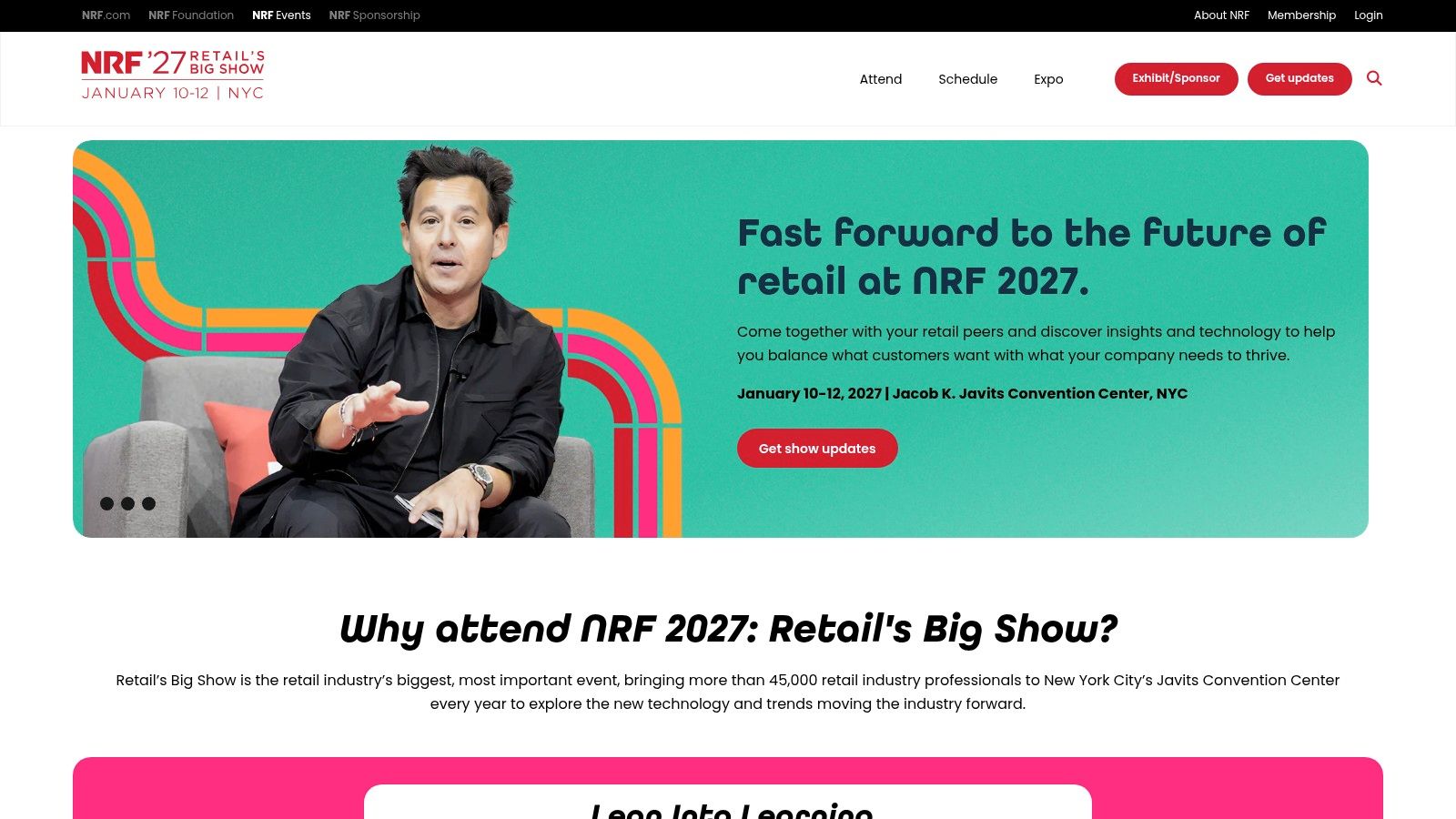
NRF 2026 runs January 11 to 13 at the Javits Center in New York City. The event is widely known for its scale, broad retail attendance, and heavy exhibitor presence. For larger operators, that scale is both the upside and the risk. You can compress months of vendor meetings into a few days. You can also burn a full day on polished demos that never survive diligence.
For 7 to 9 figure sellers, NRF tends to produce the best return in a few specific situations:
The key trade-off is simple. NRF gives you breadth. It rarely gives you candor.
That matters if you are used to private founder rooms where people will tell you what broke, what it cost, and which vendor promises fell apart after implementation. Public events serve a different purpose. They are strong for reconnaissance, category mapping, and first-pass diligence. They are weaker for the sharp, trust-based conversations that usually change a real operator's decision.
Go in with one operator priority and a tight meeting grid. Returns infrastructure. POS migration. Retail media measurement. Inventory visibility. Pick the problem first, then book around it.
Practical rule: Use NRF to pressure-test a specific roadmap, not for general discovery.
If you already follow MDS ecommerce events for serious operators, treat NRF as the public-market layer of your conference plan. Use it to compare vendors, read the direction of the retail market, and get face time with platform teams. Then use smaller, high-trust rooms for the conversations founders usually keep off the expo floor.
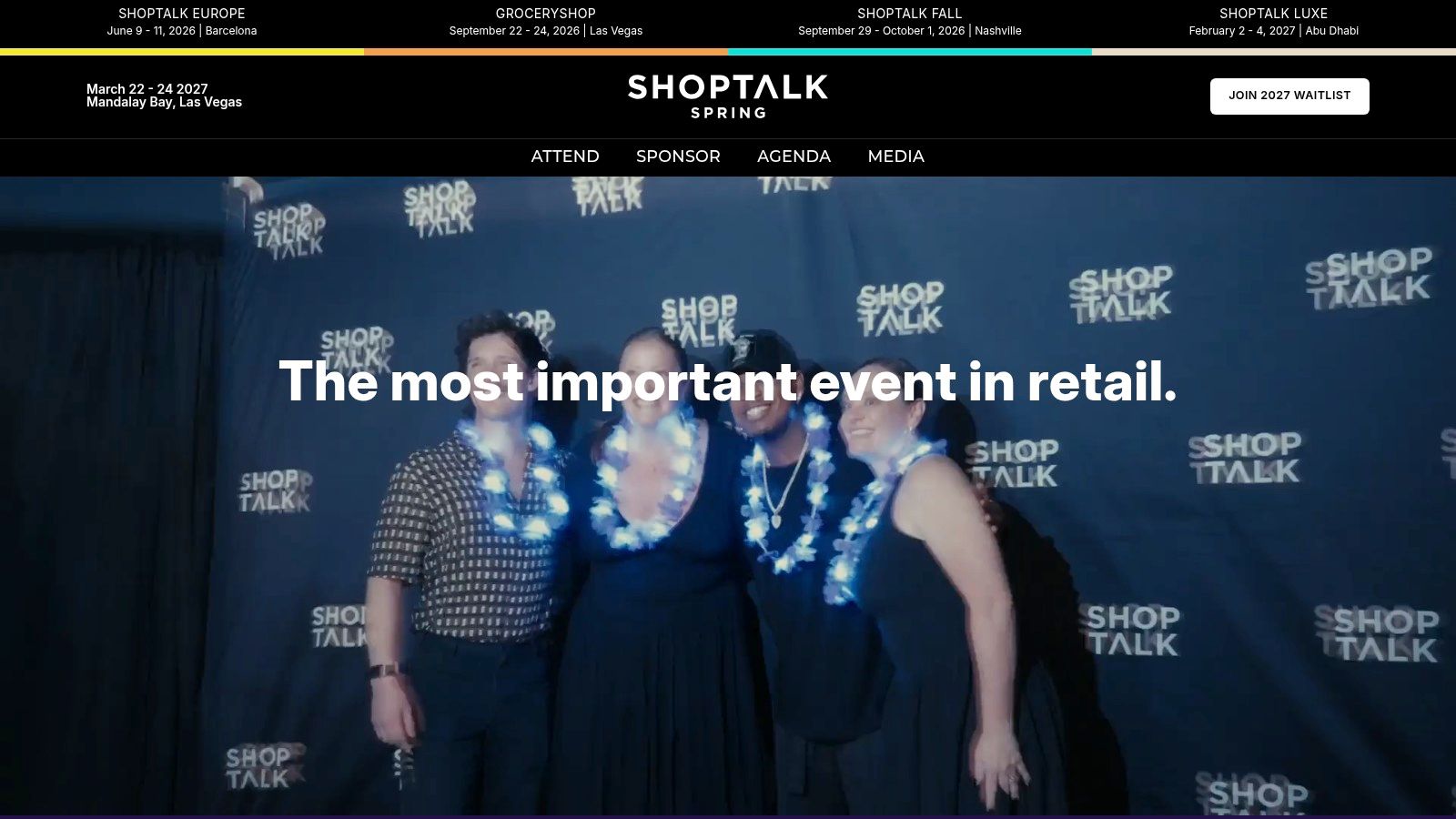
You land in Vegas with two days blocked, a full inbox, and a shortlist of problems that need answers this quarter. Retail media attribution. International expansion partners. A new agency relationship that either saves time or creates six months of cleanup. That is the right setup for Shoptalk.
Shoptalk earns its spot because it compresses a high volume of decision-makers into a tight schedule. As noted earlier, the event is large. For a 7 to 9 figure operator, size is not the draw by itself. The value is speed. You can stack partner meetings, compare vendors in the same category, and get a quick read on which themes serious teams are budgeting around.
Shoptalk is strongest for operators who need commercial density, not conference inspiration.
A good fit looks like this:
The upside is obvious. The trade-off is just as real.
Shoptalk is efficient, but public-event conversations still skew polished. Founders, operators, and service providers are careful with what they say when the room is full of prospects. You will get positioning before you get candor. That makes Shoptalk useful for screening, less useful for the conversations that usually shape a major strategic move.
That is the gap private operator communities fill. Public events are good for top-of-funnel relationship building. Curated rooms like Million Dollar Sellers are where people are more likely to tell you what failed, what the implementation cost, and which partner looked strong in the pitch but weak in execution.
If your team is going, prepare them for meeting discipline before the trip, not after it. This guide to networking at founder and operator events is a useful baseline to share internally.
Shoptalk pays off when your calendar is already built around a short list of decisions.
Go if you want fast market coverage, partner access, and a broad read on where commerce operators are placing bets. Skip it if your main goal is deep Amazon tactics, off-record founder conversation, or highly specific marketplace problem-solving.
If NRF is broad and Shoptalk is mixed, Prosper is narrower and that's the point. This is a marketplace operator event. You go here because Amazon economics, catalog complexity, ad strategy, compliance pressure, and marketplace tooling are still core to your P&L.
For sellers doing meaningful volume on Amazon, Prosper usually produces a better signal-to-noise ratio than the giant retail shows. You can compare agencies, software, and service providers without sitting through a lot of enterprise-retail abstraction that doesn't apply to your business.
Prosper is where I'd send an Amazon-heavy team lead, head of marketplace, or founder who needs tactical clarity on issues like:
The best part is the density of relevant vendors. In one pass, you can get a clean read on who understands Amazon operationally and who just rebranded generic ecommerce services for seller audiences.
Prosper is weaker if your current challenge is DTC retention, brand storytelling, creative systems, or omnichannel retail. You'll still find value, but it won't be the highest-return room for those priorities.
Pre-book meetings. That's non-negotiable. Prosper can get crowded, and once the day starts, reactive networking turns into hallway chaos. Serious operators should lock in the software demos and service-provider conversations that matter before landing.
For direct planning, use the official Prosper Show website. Keep your hit list short. Three categories, a few meetings per category, and one internal debrief owner.
eTail West is for operators who care less about spectacle and more about execution. It tends to attract ecommerce leaders who own a number. Conversion, retention, merchandising, paid efficiency, customer experience, and team process. That makes it useful when your issue isn't “what's the next big trend,” but “why isn't this part of the business performing?”
That practical bent is what separates it from some larger shows. You'll still get vendor presence, but the primary value usually comes from hearing how other teams are running the machine.
A founder at scale doesn't need basic ecommerce content. They need sharp discussions around operator pain points:
That's where eTail West can earn its keep. It's often a better environment for ecommerce directors, GMs, and growth leaders than for founders looking for macro strategy alone.
You still need to screen the agenda hard. Some sessions are useful. Others are vendor-shaped and softer than the title suggests. Experienced attendees know to prioritize operator panels, peer conversations, and off-agenda meetings over polished presentations.
Field note: At eTail-style events, the best question isn't “What are you using?” It's “What broke when you implemented it?”
If your team needs a working session around DTC economics, retention, or merchandising process, eTail West can justify the trip. If you're shopping for the broadest possible vendor universe, NRF or Shoptalk usually wins.
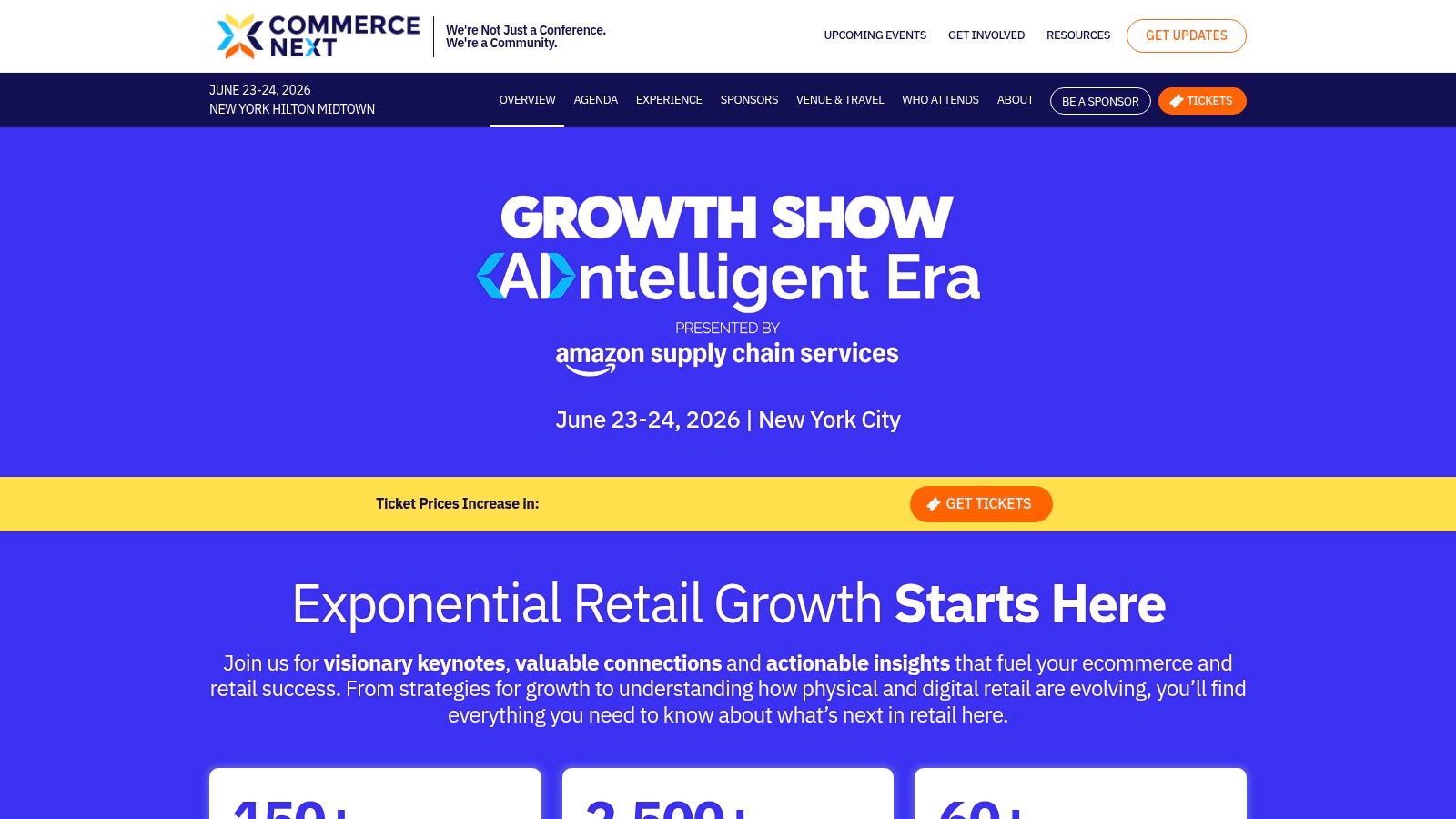
Your growth lead is pushing for better paid efficiency. Your retention manager wants cleaner segmentation and tighter post-purchase logic. Your creative team is asking for faster feedback loops between ad performance and onsite conversion. CommerceNext is one of the few rooms built around those exact conversations.
Compared with the giant retail shows, CommerceNext is tighter and more execution-focused. The crowd skews toward marketers, CRM leaders, ecommerce heads, and tech teams trying to improve revenue quality, not just top-line growth. For a 7 to 9 figure operator, that matters. You are less likely to spend two days sorting through broad retail themes and more likely to get into practical discussions around acquisition economics, lifecycle performance, measurement, and creative operations.
CommerceNext works well when the business already knows its bottlenecks and needs sharper answers from people solving similar problems:
I would not send a founder alone unless growth is the core issue. The better move is usually founder plus head of growth, or ecommerce lead plus retention owner. Split the sessions, compare notes over dinner, and leave with three changes you can ship in the next 30 days.
CommerceNext is less useful for marketplace-first brands, especially Amazon-heavy operators looking for channel-specific tactics. The center of gravity is DTC and retail growth execution.
The vendor set is also narrower than NRF or Shoptalk. That can help if you arrive with a clear shortlist and a live problem to solve. It works against you if your team wants a broad scan of the ecosystem.
Public events also have a ceiling. You can get good ideas, useful intros, and a read on where the market is heading. What you usually will not get is the candid layer. Serious operators save that for smaller private dinners, side meetings, and trusted groups like Million Dollar Sellers, where people are more willing to share what failed, what it cost, and what they changed.
One useful market check comes from BigCommerce's guide to top ecommerce conferences, which highlights how concentrated the event calendar is around a relatively small set of established shows. That is the key takeaway for larger brands. Fewer targeted rooms usually produce better ROI than stacking random events across the year.
If your brand is in a growth systems phase, fixing paid efficiency, retention, analytics, or creative coordination, CommerceNext can justify the trip. If you need marketplace depth, giant vendor coverage, or broader retail exposure, other events on this list will do more work for you.
eTail East is the reset event. If West helps shape the early-year operating plan, East is where teams check whether the plan is still working before holiday execution locks in. That timing is a significant advantage.
For East Coast teams, it's also easier to justify. Less travel friction, solid operator attendance, and enough vendor access to solve a live problem without committing to a giant conference week.
eTail East tends to work well for midyear recalibration:
That narrower mission is exactly why the event can produce a better return than a splashier show. It lets operators make in-season adjustments instead of collecting broad inspiration.
As with eTail West, pass type matters and agenda screening matters. If you're not on the retailer or brand side, confirm details early so there are no pricing surprises or access limitations.
The other limitation is scale. You won't get the same breadth of launches or giant ecosystem exposure you'd get at NRF. But if your business already knows its core stack and just needs course correction, eTail East is often a smarter use of time.
Midyear events should answer one question: what are we changing before Q4, and who owns it when we get back?
That's how to use eTail East. Not as a discovery trip. As an operating review with outside input.
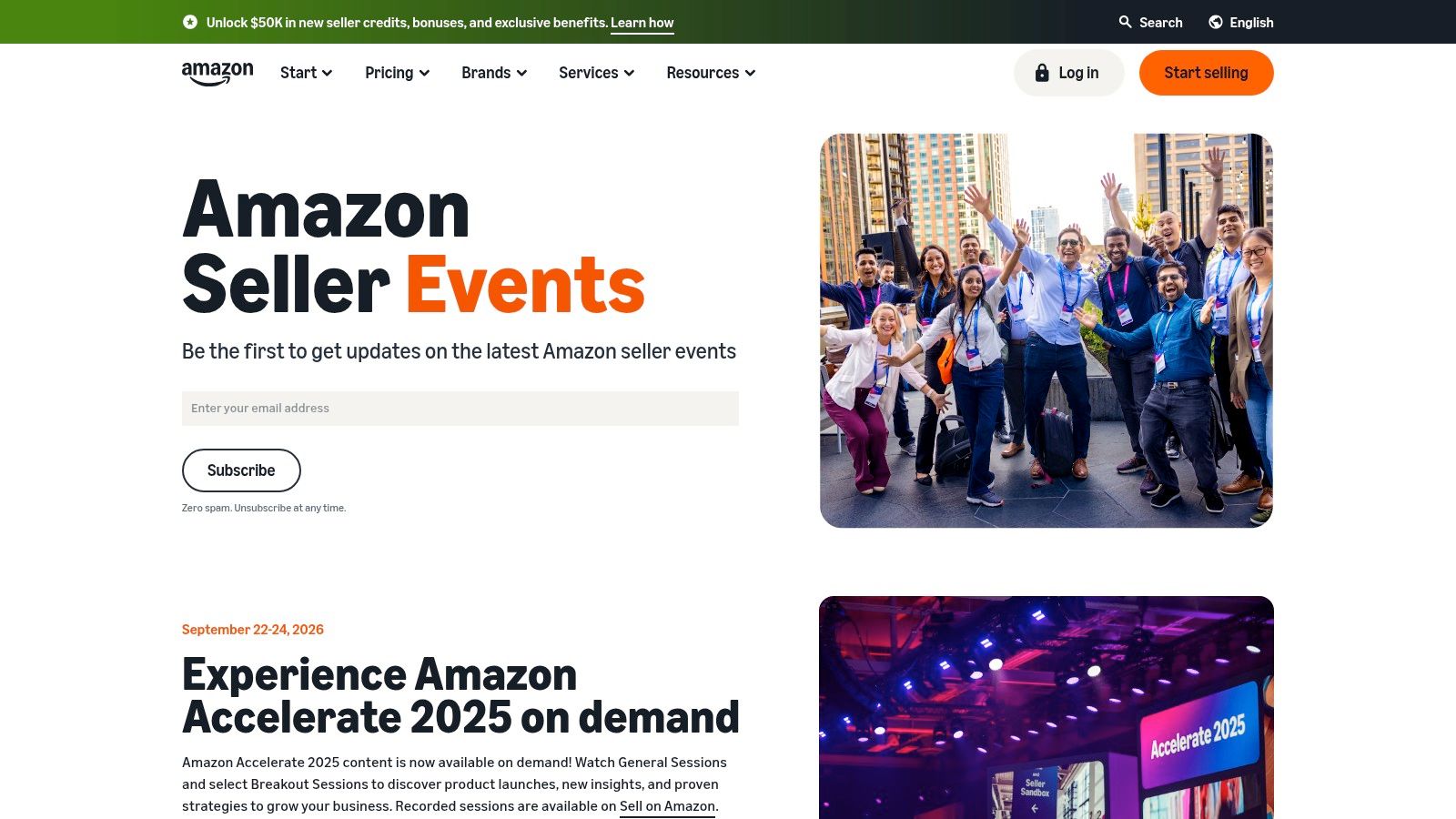
If Amazon is still a meaningful revenue driver for your brand, Amazon Accelerate is hard to ignore. No third-party conference can replicate direct access to Amazon's own product teams, policy explanations, and feature rollouts. That alone makes it one of the most consequential ecommerce conferences 2026 for marketplace-first operators.
This one isn't about broad networking first. It's about getting closer to the platform decisions that move your margins, operations, and Q4 tactics.
Amazon changes small things that become large consequences. That's why direct context matters. Accelerate can help advanced sellers get clarity on:
The conference is especially useful if you send the person who owns the Amazon number, not just a general marketing lead.
Dates and pricing often land later than ideal, which can make planning messy. Session quality also varies. Some tracks will matter to your model. Others won't. You need to curate aggressively.
Use the official Amazon seller events page for planning. If you want a more peer-led complement to that public event, keep an eye on MDS Inspire 2026 tickets, especially if your goal is to pair platform updates with candid operator discussion.
For teams still improving catalog quality before traffic even hits the listing, this guide on fix my Amazon listings is a practical companion.
Go to Accelerate for platform truth. Go back to your peer network for interpretation.
| Event | 🔄 Complexity | ⚡ Resources & Time | 📊 Expected outcomes | 💡 Ideal use cases | ⭐ Key advantages |
|---|---|---|---|---|---|
| NRF 2026: Retail's Big Show | High, large expo coordination and curated planning | High budget & time; multi‑staff attendance recommended | Broad vendor benchmarking; macro retail and policy signals | Omnichannel brands scaling stores, wholesale, or enterprise partnerships | Unmatched vendor density and enterprise insight |
| Shoptalk Spring 2026 | Medium‑High, dense agenda and hosted meetings program | Significant time investment; travel + meeting prep required | Senior‑level dealmaking; early trend spotting (retail media, AI) | Founders and operators prioritizing partnerships and growth deals | Efficient, high‑quality 1:1s and actionable operator content |
| Prosper Show 2026 | Medium, marketplace‑focused sessions and workshops | Moderate cost; best with pre‑booked meetings | Tactical Amazon/marketplace improvements (ads, catalog, compliance) | Amazon‑first sellers, aggregators, and marketplace operators | Concentrated marketplace tools and peer seller networking |
| eTail West 2026 | Medium, operator‑centric, role‑specific tracks | Moderate resources; role pricing can reduce cost | Practical CRO, retention, and omnichannel operational gains | Ecommerce directors/VPs focused on P&L and execution | Highly actionable sessions and focused peer networking |
| CommerceNext Growth Show 2026 | Low‑Medium, curated roundtables and 1:1s streamline decisions | Moderate; smaller scale with potential travel credits | Faster solution selection for acquisition, CRM, analytics | CMOs and growth leaders optimizing paid mix and CLV | Dense community of growth execs and high ROI for growth tactics |
| eTail East 2026 | Medium, similar to eTail West with regional focus | Moderate; regional alternative reduces travel for East teams | Mid‑year course corrections; holiday readiness improvements | East‑coast teams planning H2/Q4 strategy adjustments | Well‑timed, operator‑level content for holiday planning |
| Amazon Accelerate 2026 | Medium, tactical tracks and Amazon product sessions | Moderate; date uncertainty can complicate planning | Direct Amazon guidance; immediate operational or policy changes | Amazon‑centric brands and advanced marketplace sellers | Direct access to Amazon teams and consequential product announcements |
The public conference circuit still matters. It gives you market visibility, vendor access, and a fast read on what the broader industry is building toward. That's useful, especially in a year when major events continue to cluster around New York and Las Vegas and the biggest shows dominate attention, as noted earlier. But experienced operators know public events have a ceiling.
The ceiling is trust.
On an expo floor, attendees often filter what they say. Vendors are selling. Speakers are polished. Even peer conversations stay cautious until there's context, history, or some reason to believe the other person isn't just collecting tactics. That's why the most valuable conference moment is usually not the keynote. It's the side conversation with someone who has personally dealt with the same issue at a similar scale.
That's also the practical difference between public conferences and a curated operator community. Public events are strong for discovery, reconnaissance, and first meetings. High-trust communities are where founders talk plainly about margins, channel risk, leadership problems, failed tests, agency issues, and what they'd do differently if they had to make the call again.
Million Dollar Sellers fits into that second category. According to the publisher information provided here, MDS is an invite-only community of top ecommerce entrepreneurs whose members collectively generate over $8 billion in annual revenue across Amazon, DTC, and omnichannel brands. For a 7 to 9 figure seller, that changes the value equation. You're not just attending a conference. You're building a repeatable feedback loop with operators who understand the stakes.
That's how I'd frame your 2026 calendar. Use NRF for broad retail intelligence. Use Shoptalk for efficient dealmaking. Use Prosper or Amazon Accelerate when the marketplace side needs attention. Use eTail or CommerceNext when your bottleneck is execution in growth, retention, or ecommerce operations. Then bring your critical questions back to a room where people can provide direct answers.
If you want more than another badge and booth crawl, take a look at Million Dollar Sellers. It's built for serious ecommerce operators who want trusted peers, practical strategy sharing, and year-round conversations that go deeper than what usually happens at public events.
Join the Ecom Entrepreneur Community for Vetted 7-9 Figure Ecommerce Founders
Learn MoreYou may also like:
Learn more about our special events!
Check Events