Chilat Doina
May 28, 2026
You close the year with record revenue, solid contribution margin, and a bank balance that looks healthy enough to fund the next inventory buy. Then your CPA sends the estimate. Suddenly the cash you thought would go into POs, freight, and ad spend is spoken for.
That's the e-commerce version of a tax problem. Not “we paid too much tax” in the abstract. “We can't move as aggressively next quarter because tax planning lagged behind growth.”
For an inventory-heavy brand, tax optimization strategies aren't just about reducing liability on paper. They're about protecting working capital, improving after-tax profit, and giving yourself more room to reinvest without forcing ugly decisions in the middle of a buying cycle. The founders who handle this well don't treat tax as a filing exercise. They treat it like capital allocation.
A lot of founders still approach tax from the wrong angle. They look at it as cleanup work. Book the transactions, hand the file to the CPA, file on time, move on.
That approach works until the business becomes large enough that tax starts competing directly with growth. In e-commerce, that happens fast. Inventory lands before the revenue shows up. Platforms hold reserves. Paid media gets volatile. One strong quarter can create a tax bill that arrives at exactly the wrong time.
A healthy brand can still get squeezed if taxable income and cash flow drift apart. I've seen founders confuse revenue growth with financial flexibility, then realize too late that the business generated a tax obligation before it generated usable cash.
That's why good tax optimization strategies start with a harder question than “what can we deduct?” The better question is “how do we keep more after-tax cash available for the next operating decision?”
Practical rule: If a tax move improves the return but weakens your ability to buy inventory, fund ads, or absorb a margin shock, it needs a second look.
Small details matter more than founders expect. Vehicle use gets missed. Owner reimbursements get handled sloppily. Travel gets mixed with personal spend. If your team needs a clean reference on understanding business mileage rules, use one. The point isn't mileage itself. The point is that weak documentation turns ordinary deductions into lost deductions.
The strongest operators use tax planning to support three outcomes:
Most founders don't need exotic structures. They need disciplined execution on the impactful decisions that truly change after-tax outcomes. That usually means getting the architecture right, tightening inventory accounting, and making timing decisions with liquidity in mind.
Entity structure and state nexus drive more downstream tax pain than almost anything else. If those two are wrong, every later optimization is patchwork.
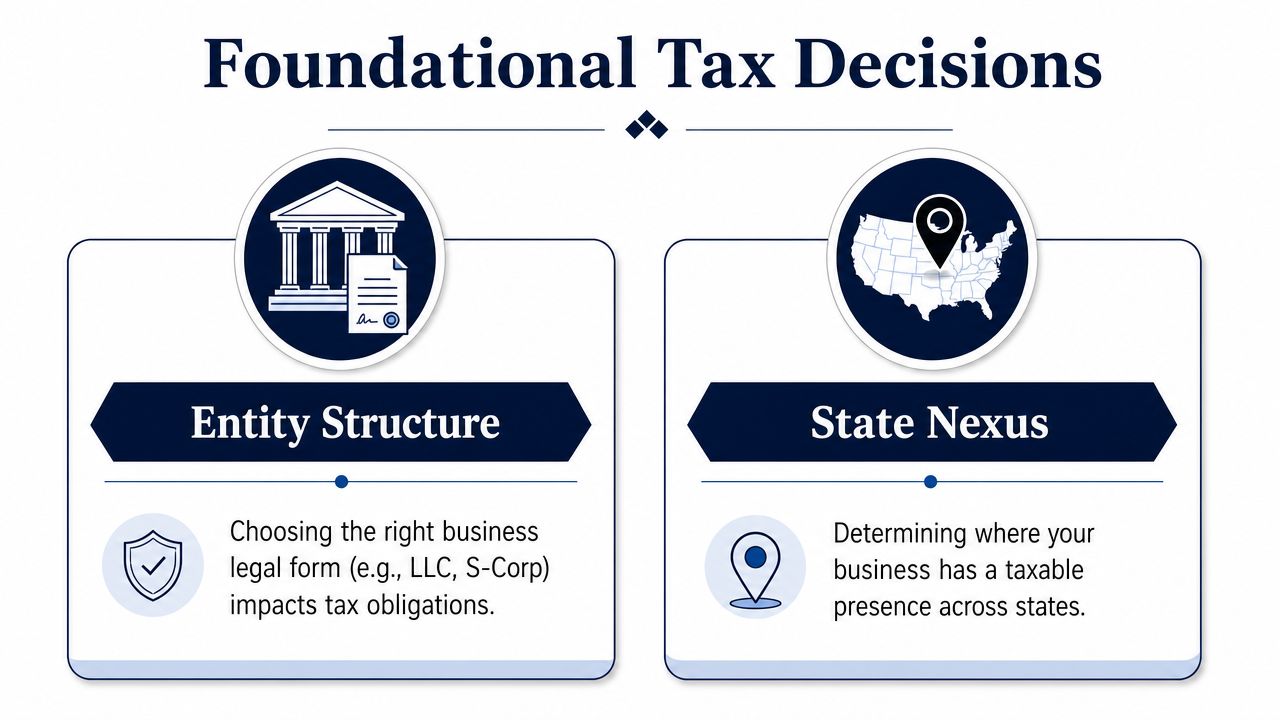
Founders often ask whether they should run as an LLC taxed as an S-Corp or move toward a C-Corp. The right answer depends less on abstract tax theory and more on your operating model, reinvestment needs, and exit path.
Here's the practical lens:
| Structure | Usually fits best when | Main trade-off |
|---|---|---|
| LLC taxed as S-Corp | Owner-operated brands distributing profits and wanting pass-through treatment | More owner-comp rules, less natural fit for certain institutional investors |
| C-Corp | Brands planning to retain earnings, raise outside capital, or build for a structured exit | More complexity and the possibility of double taxation |
If the business throws off cash and owners want regular distributions, pass-through treatment may be efficient. If the plan is to reinvest heavily, bring in outside investors, or build a company that could sell in a more institutional process, a C-Corp can make more strategic sense.
That decision also isn't permanent in spirit, even if changing it later can be messy in practice.
A major example is the growth of pass-through entity tax, or PTET. After the 2017 Tax Cuts and Jobs Act capped the federal deduction for state and local taxes at $10,000 for individuals, more than 34 states had enacted or allowed optional PTET regimes by 2024, creating a way for many business owners to shift part of the tax burden from the individual level back to the entity level in qualifying structures, according to Edelman Financial Engines' discussion of tax-saving strategies.
That matters because it shows something founders miss all the time. Tax optimization strategies change when the law changes. What looked like a settled entity decision a few years ago may deserve another review today.
A structure that was “good enough” at low seven figures often becomes expensive at eight figures.
Most e-commerce brands create tax exposure in more places than they realize. The obvious triggers are warehouses and 3PLs. Less obvious triggers include remote team members, inventory stored by marketplace programs, and operational activity spread across states.
You don't need to memorize every state rule. You do need a system that catches when your footprint changes.
Focus on these checkpoints:
The right entity and nexus strategy fail if your reporting is weak. If your books can't separate channels, inventory movements, and state activity cleanly, your tax team is forced to estimate around the edges.
A strong accounting setup is part of tax architecture. If you're evaluating systems, this breakdown of best accounting software for ecommerce is a useful place to compare what supports a growing brand.
What works is straightforward. Pick the structure that matches your next few years, not your last few. Then install reporting discipline before complexity outruns your team.
Most founders spend more time negotiating unit cost than auditing how their inventory costs flow through the books. That's a mistake. In an inventory-driven business, COGS accounting is one of the biggest levers for taxable income and one of the easiest places to get distorted numbers.

If your landed cost rises over time, the accounting method can change reported margins and tax timing. Founders often look at sales velocity, reorder dates, and contribution margin by SKU, but they don't always ask whether the inventory method still reflects economic reality well enough for decision-making.
The point isn't to chase a clever election in isolation. The point is to understand how your accounting policy affects taxable income when product costs, freight, and duties move around.
For practical grounding, it helps to review a clear overview of what is cost of goods sold and then compare that definition against what your team is booking.
A lot of e-commerce operators understate inventory-related costs in the wrong periods or classify them too loosely. That creates noisy margins and can leave legitimate costs sitting in operating expenses when they belong in inventory accounting.
Check these categories closely:
I prefer a simple working session with operations, finance, and whoever owns purchasing. Pull one SKU family and trace every cost from supplier payment to sellable inventory status. Don't start with the chart of accounts. Start with the real-world flow of goods.
Ask:
If your gross margin jumps around for reasons the ops team can't explain, there's a decent chance your inventory accounting is doing part of the damage.
What works here isn't glamorous. Clean SKU-level cost mapping. Consistent capitalization policy. Regular reconciliation between operations and accounting. Founders usually find more value in that discipline than in trying to squeeze savings out of edge-case deductions.
Once the foundation is stable, the next layer of tax optimization strategies comes from combining incentives, workforce decisions, and timing. These aren't isolated tactics. They interact.
A founder who claims a credit but creates payroll risk didn't optimize anything. A founder who grabs every possible deduction but starves the business of liquidity did the same thing.
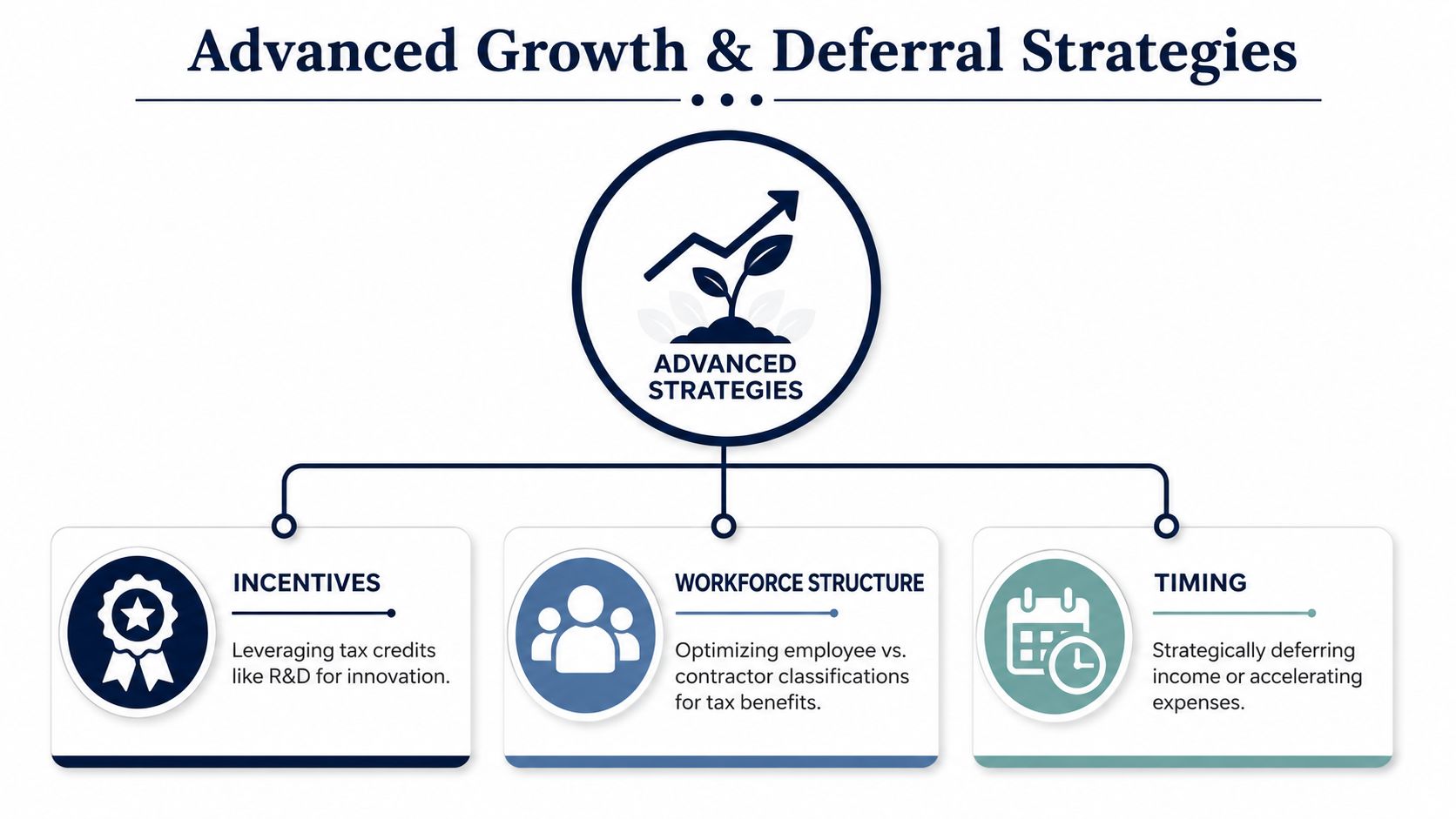
Many brand owners hear “R&D credit” and assume it applies only to lab-heavy companies or software startups. In practice, a lot of e-commerce businesses do work that deserves a real review. Product formulation changes, packaging engineering, proprietary systems work, and process improvements inside fulfillment or operations can all be worth examining with a specialist.
The miss usually happens because founders describe the activity too casually. “We were just improving packaging.” “We rebuilt our internal order-routing logic.” “We tested a new formulation.” Those might not sound like tax assets to an operator, but they can represent qualifying work depending on the facts.
The discipline here is documentation. Save the iteration history. Keep vendor notes. Preserve the project trail. If you can't show the work, the opportunity weakens quickly.
The employee versus contractor decision gets framed too narrowly. Founders focus on payroll tax savings and miss the broader implications.
Here's the trade-off set:
For e-commerce brands, this is especially relevant in creative, customer support, ops, and growth roles. If someone works inside your systems, follows your process, and operates like part of the core team, the tax answer shouldn't be forced by a cash preference alone.
A related point for founders with international operations or overseas relationships is that country-specific rules differ a lot. If you operate in Australia or have an entity there, guidance on how to legally minimise your tax in Australia can help you compare local planning options with the U.S. assumptions you may be used to.
Most advanced tax planning online gets simplified badly. Founders are told to maximize deductions, accelerate expenses, and take every current-year write-off available. Sometimes that's right. Sometimes it's a bad operating decision.
According to Schwab's discussion of tax-smart year-end planning, the key question is often whether you should prioritize deferral or liquidity, and the best move isn't always the largest deduction. For inventory-driven businesses facing margin swings and ad spend shocks, the better move is often the one that improves after-tax liquidity without creating a future cash crunch.
That framing is closer to how an e-commerce CFO should think.
Don't ask whether a deduction is available. Ask what taking it now does to the next two buying cycles.
Bonus depreciation, repair-versus-improvement decisions, and cost-segregation-style timing choices can all change current-year taxable income. But current-year savings are only one part of the equation. If your next inventory buy is large, your platform reserve is sticky, or your paid media efficiency is under pressure, preserving flexibility may matter more than maximizing this year's tax headline.
A valuable perspective is this:
| Decision type | Looks good on paper when | Actually works when |
|---|---|---|
| Accelerate deductions | You want to lower current-year taxable income | You won't create a later cash squeeze or lose needed flexibility |
| Defer income | You want to push tax into a later period | Cash receipts and working capital still support operations |
| Spread benefit over time | You want smoother taxable results | The business values predictability more than immediate tax relief |
Here's a practical discussion that captures the broader mindset behind these choices:
What works is integrating the tax team with the operating forecast. Review tax moves against:
When those sit in one model, the best decision gets clearer. A credit may be worth pursuing because it reduces current liability without hurting liquidity. A deduction may be worth delaying because this quarter's cash matters more than this year's return. A hiring decision may make sense because operational control outweighs short-term payroll savings.
That's real optimization. Not the largest deduction. The strongest after-tax position with the fewest operational compromises.
Cross-border selling tends to look simple from the storefront and messy everywhere else. A brand launches in the UK, ships into the EU, stores product abroad, adds a local entity later, and suddenly finance is dealing with VAT, GST, customs, registrations, and intercompany pricing.
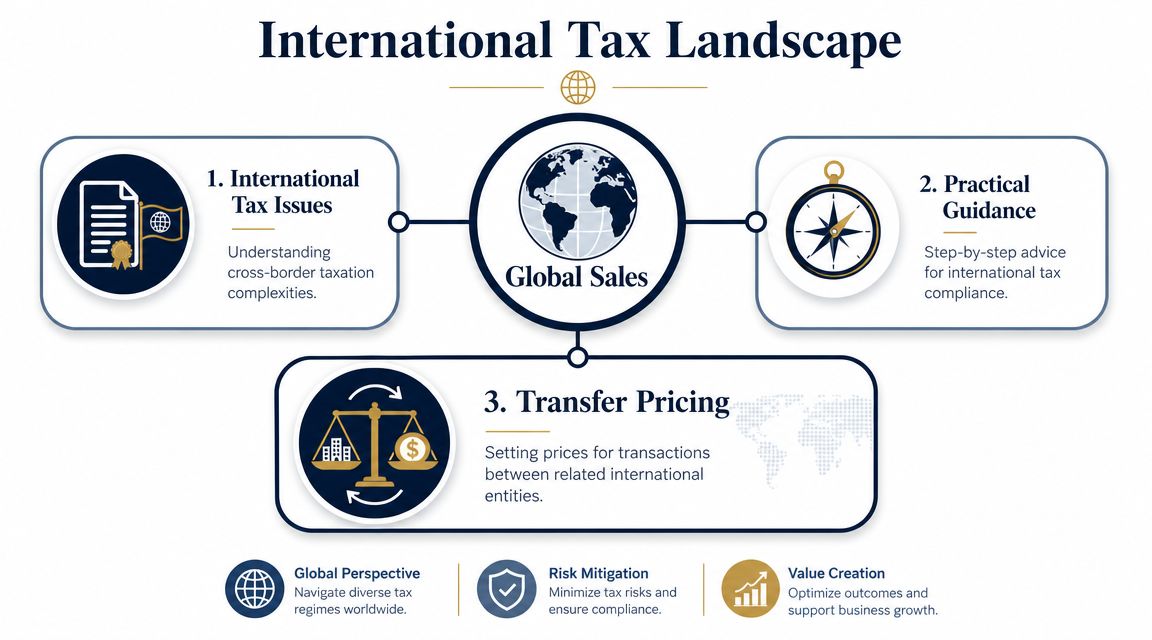
Founders often assume international indirect tax works like a slightly different version of state sales tax. It doesn't. The mechanics, filings, and registration triggers can differ materially by country and selling model.
The practical mistake is waiting too long to map the flow of goods. If inventory sits in-country, if a marketplace is involved, or if your entity structure changes midstream, your compliance path can shift quickly.
A useful operating checklist looks like this:
International growth exposes old shortcuts. Founders who used one entity for everything often hit friction when they want local banking, local hiring, or cleaner regional operations. That's when tax starts following legal form more closely.
You don't need a maze of entities just to seem complex. But if the business is operating through multiple countries, the structure needs to reflect commercial reality. Otherwise, you create compliance risk and messy financial reporting.
If goods, people, and decision-making are spread across countries, your tax structure has to match that reality closely enough to defend it.
The simplest analogy is this. If you own two warehouses in two countries and one “sells” product or services to the other, you still need a defensible price for that internal transaction. Tax authorities don't let related companies pick arbitrary numbers just because the owner is the same.
That applies when a U.S. parent licenses IP to a foreign subsidiary, provides management services, or sells inventory into a local operating company. The intercompany price affects where profit shows up, which is exactly why authorities care.
A practical transfer pricing review should answer:
| Question | Why it matters |
|---|---|
| What functions does each entity perform? | Profit should generally follow real activity and responsibility |
| Who owns the risks and key assets? | Inventory risk, marketing spend, and IP ownership affect pricing logic |
| What intercompany flows exist? | Goods, services, royalties, and management charges all need attention |
The biggest mistake isn't “aggressive transfer pricing.” It's having no coherent story at all. If your books show intercompany transactions but your agreements, invoices, and operating reality don't line up, due diligence gets painful and audits get harder to defend.
For most brands, the first step is modest. Draw the legal structure. Map the product flow. Map the cash flow. Then make sure intercompany pricing reflects what the entities do.
Founders usually think about tax as an annual cost issue until the business gets close to sale. By then, some of the most valuable planning windows are already behind them.
Exit tax planning starts early because buyers don't just evaluate growth and margin. They evaluate legal cleanup, tax exposure, and whether the structure supports a clean transaction. Sloppy compliance creates price chips. So does uncertainty around owner add-backs, nexus exposure, and entity-level risk.
A lot of tax advice is overly focused on the current year. That's understandable, but narrow. A founder can save money annually and still leave much more on the table at exit if the structure doesn't support the right outcome.
This is why early entity choices matter so much. If your long-term plan is a meaningful sale, tax optimization strategies should include exit modeling well before a banker enters the picture. You want to know what kinds of deals your structure supports, what frictions it creates, and where cleanup would be expensive.
The same broad principle that makes tax-loss harvesting useful also applies to founder planning around a sale. Under U.S. rules, tax-loss harvesting can offset realized capital gains and up to $3,000 of ordinary income annually, as described by HCVT's discussion of after-tax income strategies. The larger lesson for founders is about timing. When gains are recognized, when losses are harvested, and when deductions are accelerated can materially change after-tax outcomes.
That doesn't mean founders should force portfolio tactics into business decisions. It means they should think in timing terms before a transaction, not after the LOI is signed.
If you expect to sell in the next few years, tighten these areas now:
If selling is on your horizon, this guide on how to sell your Amazon business step by step is useful as an operating checklist alongside the tax work.
The founders who keep the most at exit usually do one thing well. They make tax decisions years before they become urgent.
Most brands don't need every tax strategy right now. They need the right sequence. Priority should follow stage, complexity, and cash constraints.

At this stage, the goal is clean setup and clean records. Fancy strategies don't help if the books are unreliable.
Focus on:
As operating complexity begins to outpace basic bookkeeping, tax planning should move closer to operations and forecasting.
The priorities shift:
| Priority | What to do |
|---|---|
| COGS accuracy | Audit landed cost treatment, inventory flow, and gross margin logic |
| Credit review | Reassess whether product, software, or process work creates hidden incentive opportunities |
| Cash-aware timing | Evaluate deductions and deferrals against working capital needs, not in isolation |
| Team structure | Review employee versus contractor treatment before shortcuts turn into cleanup |
At this point, tax is no longer just compliance support. It's part of enterprise design.
The focus becomes more strategic:
Strong tax optimization strategies usually look boring in execution. Clean books, timely elections, defensible structure, and decisions made before year-end pressure sets in.
The best ROI usually comes from hiring the right specialists before you think you need them. If you're upgrading your finance bench, a practical place to start is reviewing options to Hire CPAs who understand growing businesses and can coordinate with legal counsel when the structure gets more complex.
A good tax team for an e-commerce brand usually includes a CPA, a tax attorney when structure or transactions warrant it, and an internal finance lead who can translate operations into tax-relevant facts. That mix matters because most tax mistakes don't happen in the return. They happen when nobody connects the warehouse move, the new 3PL, the overseas contractor, or the inventory financing decision to the tax consequences early enough.
The founders who win here aren't guessing more intelligently. They're reviewing earlier, documenting better, and making fewer rushed decisions in December.
If you're building at the level where tax strategy, cash flow, inventory, and exit planning all need to work together, Million Dollar Sellers puts you in the room with founders who've already solved those problems at scale. It's where serious e-commerce operators compare what works behind the scenes, pressure-test decisions with peers, and scale with fewer expensive blind spots.
Join the Ecom Entrepreneur Community for Vetted 7-9 Figure Ecommerce Founders
Learn MoreYou may also like:
Learn more about our special events!
Check Events