A grassroots stand by seven-figure Amazon sellers that grew from one day of silence into an ongoing, seated dialogue with Amazon.
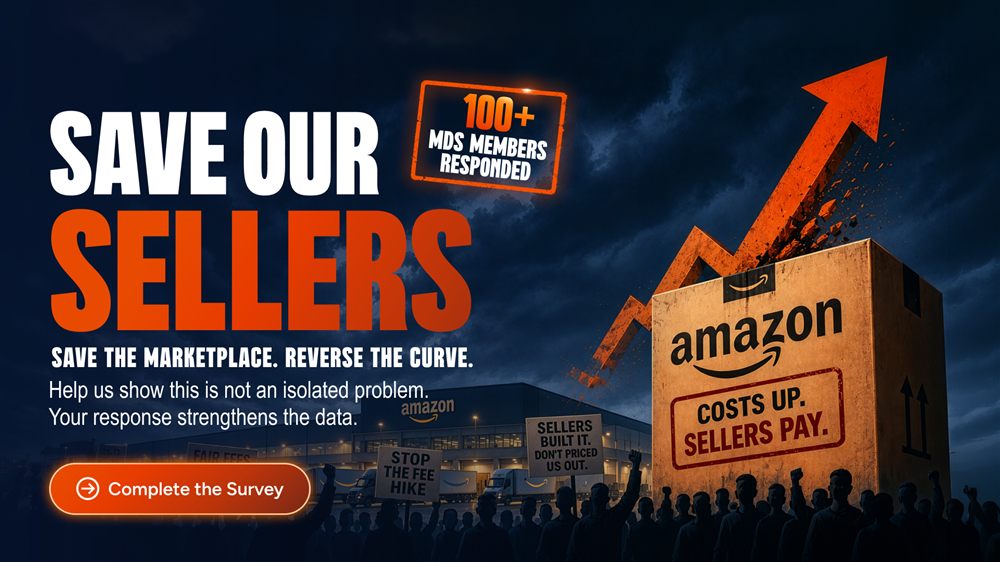
Backed by data, national press and a community that refused to be treated as a "small subset", SOS turned a single-day ad boycott into a seat at the table inside Amazon.
In early 2026, a wave of Amazon policy changes hit independent sellers at once: a shift to holding seller funds for seven days after delivery (the "DD+7" reserve), a new 3.5% fulfillment fuel surcharge, and a plan to remove the ability to pay for ads by credit card.
For the husband-and-wife teams and small brands that make up most of the marketplace, these weren't paper cuts. They were cash-flow shocks.
7 days
Seller earnings held 7 extra days after delivery under the new DD+7 reserve policy.
3.5%
Announced as temporary, then confirmed as a permanent fulfillment cost increase.
No card
Ad costs auto-deducted from disbursements, removing cashback and 30-60 days of billing float.
"Sellers have complained for years, but this feels different. This is no longer just about irritation. It's about cash extraction."
Eugene Khayman, MDS co-founder
On April 15, 2026, hundreds of seven-figure sellers turned off their Amazon advertising for a full day. Organized through MDS, a community of 700+ brands doing billions in combined annual revenue, it was the closest thing Amazon sellers have to a unified voice taking a stand.
The boycott worked as a wake-up call. It drew national press, sparked internal conversation inside Amazon, and delivered an early tangible win: the credit-card ad-payment change was pushed from April to August 1.
700+
Sellers in the MDS community.
$14B
Combined annual GMV represented.
24 hrs
Of unified silence that moved the needle.
We partnered with a PR firm to carry sellers' concerns into the national conversation, not as an attack, but as a constructive case for a healthier marketplace.
The campaign drew coverage from CNBC, Modern Retail, Forbes and AdExchanger, as well as Reuters and AP.
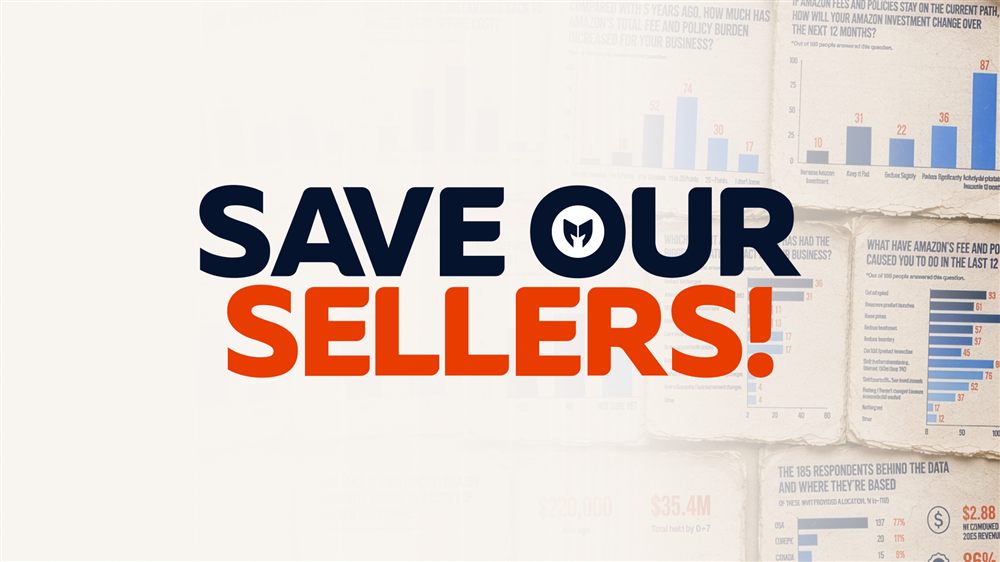
We launched the SOS Campaign Survey across our community. The picture was stark: sellers across every revenue tier say Amazon's compounding fees are eroding margins, straining cash flow, and pushing growth investment off the platform.
Based on responses from 180+ e-commerce founders across all revenue tiers. SOS Campaign Survey, 2026. Most-cited pain points: inbound placement fees and the DD+7 payout delay.
An earlier survey, published June 6, 2026, found that 62% of sellers said Amazon-related costs took at least half of their Amazon revenue before product costs, 60% said the fee and policy burden led them to raise prices, and 86% reported a materially heavier burden than five years earlier. These findings are self-reported and directional, and response bases vary by question.
This is what $14 billion in GMV saying "enough" looks like.
The SOS campaign generated organically what no ad spend could manufacture: a real seller community, data in hand, speaking in one voice across social, press, and the halls of Amazon itself.
The goal was never conflict. It was conversation. Amazon opened its door to us, leading to direct calls with our members and an Amazon x MDS roundtable. Executives committed to more proactive communication about platform changes.
Apr 15
24-hour ad blackout across hundreds of MDS sellers. Amazon responded within 24 hours.
Apr – Jun
CNBC, Forbes, Reuters, and AP cover the story. The campaign enters the national conversation.
Jun
180+ sellers surveyed. Data grounds the campaign: 56%, 47%, $35.4M in held funds.
Jul
Amazon x MDS sit down together. Executives commit to proactive communication on future policy changes.
Sep
In-person meeting at Amazon Accelerate continues the dialogue. Community leaders present.
Now
The campaign continues. Every voice counts. The conversation is still open.
"Somebody needs to take a stand on Big Tech platform overreach."
MDS member, Amazon Seller Growth Summit, July 2026
Gimme Five turns the reinvestment argument into a specific ask: five percentage points of margin returned to sellers, so they can reinvest in products, inventory, advertising, quality and teams. It also calls for a coordinated view of seller fees, so the cumulative cost of selling is weighed alongside growth opportunities. It is a campaign proposal.
SOS didn't end with a headline. It's an ongoing effort to make Amazon's marketplace work better for the independent sellers who power it, through transparency, fairer cash-flow policies, and genuine partnership.
Take the 2026 SOS seller survey, subscribe to the MDS newsletter, follow Eugene Khayman on X, or read the Gimme Five campaign on X or LinkedIn.
An MDS-led seller advocacy initiative that brings seller experiences and research into public conversation.
The combined effect of marketplace fees, advertising and fulfillment costs, cash-flow pressure and policy changes, and whether sellers have room to reinvest.
Five percentage points back to sellers' bottom lines, plus better coordination of cumulative fees. It is a campaign proposal.
Subscribe to the MDS newsletter and follow Eugene Khayman on X.
Yes, through the 2026 SOS seller survey, which asks for name and email. Published findings are shown with dates and methodology notes.


