Chilat Doina
January 18, 2026
If you're a serious Amazon seller, an Amazon FBA freight forwarder is more than just a vendor who moves your boxes. They're the critical partner responsible for getting your products from your manufacturer's doorstep all the way to an Amazon fulfillment center. This is the crucial link in your supply chain, the team that wrangles cargo bookings, paperwork, and customs to make sure your inventory actually shows up.
A great forwarder can turn the nightmare of international shipping into a genuine competitive advantage.

It’s a common mistake to think of freight forwarding as a commodity service—just finding the cheapest way to get products from Point A to Point B. But that mindset can cost you dearly.
A top-tier partner does way more than just book space on a container ship. They’re your boots on the ground, your logistics expert who protects your business from the countless landmines buried in global trade.
Think of them as your first line of defense against soul-crushing customs delays, hidden fees that pop up out of nowhere, and having your entire shipment rejected at an Amazon warehouse. For anyone serious about scaling, the right forwarder isn't an expense; it's an investment in a resilient and profitable supply chain.
To manage your forwarder effectively, you need to speak their language. Knowing a few key terms isn't just helpful; it's non-negotiable. These terms define exactly who is on the hook for costs and risks at every single stage of the journey.
This isn’t just technical jargon. These terms directly impact your landed cost and, ultimately, your profit margins.
To get started, here's a quick rundown of some essential freight forwarding terms every Amazon seller should know.
Understanding these terms is your best defense against unexpected costs. A quick conversation about Incoterms before your shipment leaves the factory can save you from a nasty six-figure surprise bill for port fees or duties down the line.
A common mistake for new importers is misinterpreting Incoterms, leading to unexpected six-figure bills for port fees or customs duties. Always clarify these terms in writing before your shipment leaves the factory to avoid margin-destroying surprises.
A truly great freight forwarder often provides or partners with a third-party logistics (3PL) business storage solution. This is a game-changer. It allows you to hold inventory outside of Amazon's ecosystem, avoiding their punishing long-term storage fees while you strategically drip-feed products into FBA as needed.
This flexibility is more critical than ever, with Amazon constantly tightening its inbound requirements and adding new inventory placement fees. An experienced FBA forwarder is already on top of these changes. They know the latest palletization rules, labeling specs, and scheduling quirks to make sure your shipment doesn't get turned away at the warehouse door.
The reality is, despite rising costs, over 80% of third-party sellers rely on FBA. This isn't changing. As sellers expand globally, they need Amazon's fulfillment network, which means they need specialized logistics partners who know how to play by Amazon's rules.
Ultimately, your forwarder is the guardian of your supply chain. They’re the ones navigating port congestion, finding new routes when things go wrong, and making sure your customs paperwork is flawless. That operational expertise is what prevents stockouts, protects your sales velocity, and turns your logistics from a liability into a powerful asset for growth.
Picking an Amazon FBA freight forwarder is one of those make-or-break decisions for your brand. This isn't just about getting a few quotes and picking the cheapest one. It's about finding a true partner who can either supercharge your growth or become a constant headache holding your business back.
The right partner is like an extension of your own team. The wrong one? They can get your inventory stuck at the port for weeks, racking up fees and costing you sales.
The very first shift in mindset is to stop shopping on price alone. Sure, cost matters, but a suspiciously cheap quote is often a red flag for what's to come—surprise port fees, painful customs penalties, or even having your entire shipment rejected by Amazon. A solid partner talks about your total landed cost, not just the initial freight rate.
Your vetting process needs to be a deep dive. You're looking for a forwarder who lives and breathes Amazon FBA, not a general logistics company that just happens to move boxes. A generalist won't get the tiny but critical details of FBA prep, labeling, and Amazon's notoriously difficult delivery appointment system. You need a specialist.
So, start asking for proof. Don't just take their word for it.
This is how you separate the pros from the pretenders. It's also vital to understand how they physically handle your inventory. Some forwarders do everything in-house, but many use a network of partners for things like warehousing and prep work. There's nothing wrong with that, but you need to know who is touching your products. Sometimes, working directly with a specialized partner is the better move. For a deeper look at this, check out our guide on the best 3PL for ecommerce.
The most expensive mistake an FBA seller can make is choosing a forwarder based on the lowest initial quote. True cost is measured in reliability, communication, and the ability to prevent problems before they happen—not just the line items on an invoice.
Once you have a shortlist, it's time to dig into the details. The answers you get here will tell you everything you need to know about their competence and whether they’re the right fit.
Operational & FBA Specific Questions
Don’t just rely on their answers, either. Data from other high-volume sellers is pure gold. A recent survey of 47 seven- and eight-figure Amazon sellers offered a rare look under the hood of various freight forwarders, comparing them on actual quotes, transit time reliability, and FBA prep accuracy. This kind of peer-reviewed data is priceless, as it shows you who performs well when the pressure is on. You can discover more about these freight forwarder rankings to see who top sellers trust.
Once you’ve found your partner, make it official with a Service Level Agreement (SLA). This isn’t about being difficult or showing mistrust; it’s about creating clarity. An SLA sets clear, measurable expectations for everyone and prevents a lot of "he said, she said" arguments later on.
A good SLA for an FBA freight forwarder should cover:
This simple document turns a casual arrangement into a professional partnership, giving your supply chain a solid foundation of accountability.
Moving products across the world might sound intimidating, but it really just boils down to a clear, repeatable process. Once you've picked your freight forwarder, the real partnership begins. This is your playbook for getting goods from the factory floor, through customs, and into an Amazon FBA warehouse, ready for Prime.
Think of it less like a single task and more like a project you're managing with your forwarding partner. Your job is to provide accurate information and make the big decisions; their job is to handle the complex logistics of actually moving the freight.
The first big decision you'll face is choosing how to ship your goods. This single choice dramatically impacts both your timeline and your final landed cost, so it's not a decision to make lightly.
It's the age-old question for every importer. Do you want it fast or do you want it cheap?
Many seasoned sellers use a hybrid strategy. You might air ship 10% of a production run to cover you for the next month, while the other 90% makes the slow journey across the ocean.
Your goal isn't just to move boxes; it's to manage cash flow. Choosing the right shipping method for the right situation is a critical skill for keeping your capital working for you, not tied up in transit.
Getting from a plan to a physical shipment involves three core phases: getting a quote, vetting the details, and officially onboarding your shipment with your forwarder.
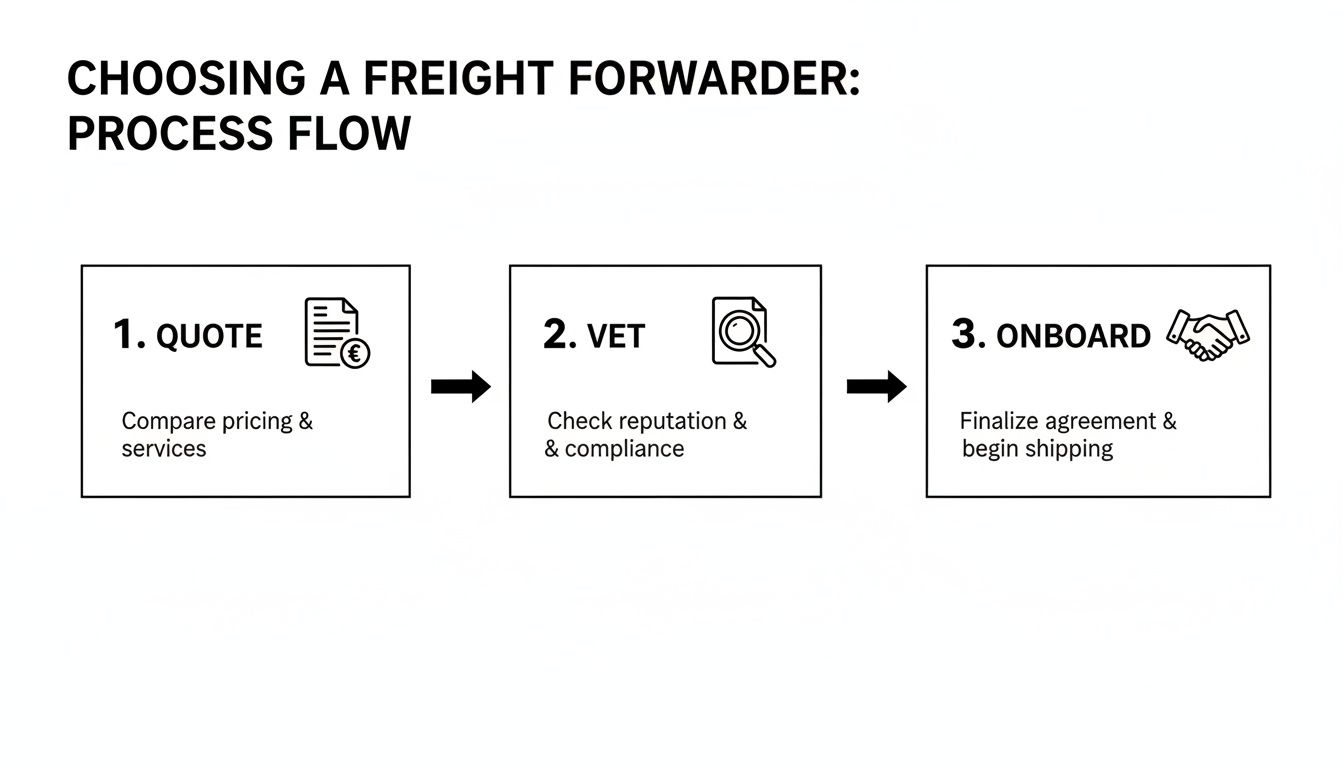
This breaks down the initial steps into a much more manageable flow, taking you from that first inquiry all the way to a confirmed booking.
Your freight forwarder can't move anything without the right paperwork. Period. Bad or missing documents are the #1 reason shipments get stuck in customs for weeks. You and your supplier are on the hook to get this right.
There are two documents you absolutely cannot mess up:
You have to be militant about accuracy here. A simple typo on the commercial invoice can get your entire shipment flagged, leading to massive delays and potential fines. Your forwarder should give the documents a once-over, but the ultimate responsibility is yours. For a deeper dive into the mechanics of moving goods globally, understanding the fundamentals of international supply chain management will give you valuable context for your FBA business.
Getting your products to the destination country is only half the job. That last leg of the journey—from the port or airport to an Amazon fulfillment center—is where a lot of new sellers get tripped up. This is what we call the "final mile."
Amazon runs a tight ship. You can't just have a truck roll up to their warehouse whenever they feel like it. Your freight forwarder has to book a specific delivery appointment through a system called Amazon's Carrier Central portal.
This is where a freight forwarder who specializes in Amazon FBA really earns their keep. They know the ins and outs of this system and have streamlined processes for booking these appointments. They also know how to handle Amazon's frustrating inbound placement system, which loves to split a single shipment into multiple deliveries heading to different warehouses across the country.
To make any of this happen, you need to provide your forwarder with the FBA shipment labels from your Seller Central account. These labels are non-negotiable. Without them, Amazon has no idea who the inventory belongs to, and your shipment will be rejected at the door. Our full guide on https://milliondollarsellers.com/blog/shipping-from-china-to-amazon-fba walks through this specific part of the process in much more detail.
At the end of the day, managing your first shipment successfully comes down to clear communication and planning ahead with your logistics partner. Understand each step, and you’ll sidestep the common mistakes and build a supply chain you can actually rely on.
Getting your shipment from the factory to the port is really just half the journey. The final stretch—clearing customs and delivering to an Amazon warehouse—is where things often go sideways, leading to crippling delays and surprise fees. This is precisely where a specialized Amazon FBA freight forwarder proves their worth.
A single mistake on a customs form or a failure to meet Amazon's rigid inbound standards can get your entire shipment rejected. This isn't just an annoying setback; it’s a direct hit to your cash flow, kills your sales velocity, and messes up your inventory health.
When it comes to customs, precision is everything. There’s simply no room for "close enough." Every single product you import needs a Harmonized System (HS) code, a global classification standard that tells customs officials exactly what you’re bringing into the country.
Getting this code wrong can be a complete disaster. An incorrect HS code can flag your shipment for inspection, leave it sitting in a warehouse for weeks, and saddle you with the wrong duty rates (which are almost always higher). A seasoned forwarder will help you verify these codes from the get-go, protecting you from these expensive, time-consuming blunders.
Then there’s the commercial invoice. It must be a perfect match for the physical goods, detailing the value, quantity, and description down to the last item. Any mismatch is a massive red flag for customs agents, often triggering a lengthy and costly manual inspection.
Think of your freight forwarder as your customs compliance shield. Their job is to make sure every piece of paperwork is flawless before your cargo even lands, turning a potentially chaotic process into a predictable checkpoint.
Amazon’s fulfillment centers run on a strict, and constantly changing, set of rules. A general freight forwarder might get your goods to the right city, but an FBA specialist knows how to navigate that critical final mile.
This has become even more important as Amazon muscles into the logistics game itself. Analysis shows Amazon's own freight services have shaken up the industry, offering sellers some fee reductions but also enforcing even stricter compliance on third-party forwarders. Prep errors that used to slide now lead to harsh rejections, which is why your partner must be an expert in Amazon's playbook to prevent cost overruns of 10-15%. You can dive deeper into this shift by reading the full story on Amazon's impact on the supply chain.
Here are the key areas where your forwarder’s expertise is make-or-break:
The fallout from mistakes at this stage is no joke. To put it in perspective, here’s a look at some common issues and how a proactive forwarder steps in to prevent them from ever happening.
Ultimately, successfully getting your goods into Amazon is all about proactive management, not reactive firefighting. A skilled forwarder anticipates these challenges, making sure your supply chain remains a smooth, efficient, and profitable engine for your brand.
Once you've dialed in a reliable logistics process, the real fun begins: optimizing it for profit. Squeezing every last bit of efficiency out of your supply chain isn't just about hunting for a cheaper freight quote; it's a strategic game that directly pads your bottom line.
For sellers who are serious about scaling, moving beyond basic shipping is a must. This is where you actively manage your cargo to lower costs, improve cash flow, and keep your inventory health in Amazon's good graces.
One of the most powerful cost-saving tools you have is consolidation. It's almost always cheaper per cubic meter to pay for a Full Container Load (FCL) than it is to ship Less than Container Load (LCL). With LCL, you're sharing container space, and you're paying a premium for it.
This is where a savvy Amazon FBA freight forwarder becomes your best friend. They can consolidate shipments from several of your suppliers into a single container before it ever leaves the origin port. This move alone can shave 15-25% off your ocean freight bill.
The trick is to plan your production runs so they line up. If you've got three different suppliers finishing up orders within a week or two of each other, talk to your forwarder. They can hold that inventory and ship it all together in one go.
The logistics world has its own high and low seasons. Unsurprisingly, shipping rates go through the roof in the months leading up to Q4 and other major holidays. If you can get ahead and plan your inventory needs far in advance, shipping during quieter months like March-April can save you a bundle.
Another smart play is the hybrid shipping model. This is where you split a single large order into two separate shipments:
This balanced approach keeps you in stock without forcing you to pay premium air rates for your entire production run. It’s a sophisticated way to manage both inventory levels and shipping expenses.
A savvy seller doesn't just ship products; they manage a portfolio of shipping options. By blending air and sea freight based on product velocity and seasonality, you turn logistics from a fixed cost into a flexible, strategic advantage.
One of the biggest profit killers for FBA sellers is Amazon's storage fees—both the long-term ones and the new low-inventory-level fees. Sending a massive shipment directly to an FBA warehouse can absolutely wreck your Inventory Performance Index (IPI) score and saddle you with punishing surcharges.
The solution? Use your freight forwarder’s warehouse or a partner 3PL as a strategic pit stop.
Instead of shipping 5,000 units to Amazon all at once, you ship them to your forwarder's facility. From there, you can drip-feed smaller shipments of 500-1,000 units into FBA as you need them. This simple strategy packs a few huge benefits:
This all comes back to knowing your numbers. You can only understand your true profitability by looking at your total landed cost—the sum of the product cost, shipping, duties, insurance, and every other fee. For a complete breakdown, our guide explains how to calculate landed cost to reveal the real profit on every unit. By optimizing each piece of the puzzle, you turn your supply chain into a well-oiled profit machine.
Even the most experienced sellers get tripped up by international logistics. Let's tackle some of the most common questions that come up when you start working with an FBA freight forwarder.
This is a classic "it depends" question, but I can give you some solid rules of thumb.
For sea freight, you want to lock things in 4-6 weeks before your products are actually ready to leave the factory. This gives your forwarder enough breathing room to book container space (which isn't always a given), get everything squared away with your supplier, and handle all the upfront export paperwork without breaking a sweat.
But if you're shipping during peak season—think the Q4 holiday rush from August to October—you absolutely need to extend that timeline. I'd recommend booking 6-8 weeks in advance. Container space gets incredibly scarce, and prices go through the roof. Booking early is your single best defense against crippling delays and last-minute cost spikes.
Air freight is a whole different ballgame. The timeline is much tighter. Booking 7-10 days in advance is usually plenty of time.
Think of a customs bond as an insurance policy that you're required to have by U.S. Customs and Border Protection (CBP). If your commercial import is valued at over $2,500, this bond guarantees that all duties, taxes, and fees will get paid to the government. No bond, no entry. It's that simple.
You'll run into two main types:
Your freight forwarder can get you set up with a bond, and skipping this step is a rookie mistake that will leave your goods collecting dust at the port.
Quick tip: Your forwarder might offer to let you use their own customs bond for a fee. This is super convenient for your first couple of shipments. But as you grow, buying your own continuous bond is a no-brainer. The long-term savings really add up.
Yes, and honestly, this is one of the biggest reasons to hire a forwarder who specializes in Amazon FBA. It's a non-negotiable skill.
When you create a shipping plan in Seller Central, Amazon's algorithm often splits your inventory, telling you to send pallets to three or four different fulfillment centers scattered across the country. It’s a logistical headache.
A seasoned FBA forwarder won't even flinch. Their process is built for this. They'll receive your entire shipment at their own warehouse, break it down precisely according to your Amazon-generated plan, relabel everything for each destination, and then manage all the final-mile truck deliveries to get your boxes to the right fulfillment centers. This service is what keeps you compliant and helps you dodge Amazon's own (and very expensive) inventory placement service fees.
Navigating the world of FBA logistics requires more than just a good forwarder; it requires a network of peers who have already solved the problems you're facing today. In the Million Dollar Sellers community, 7-, 8-, and 9-figure founders share vetted recommendations and real-world strategies for building resilient supply chains. Discover how MDS helps serious sellers scale smarter.
Join the Ecom Entrepreneur Community for Vetted 7-9 Figure Ecommerce Founders
Learn MoreYou may also like:
Learn more about our special events!
Check Events