Chilat Doina
July 11, 2026
Amazon sold 800 million Climate Pledge Friendly products in 2023, up 121% from 2021, and the program covered more than 2.2 million items while driving 100 million customer switches to sustainable alternatives according to SPS Commerce's overview of the program. That's not a niche badge anymore. It's a scaled buying signal inside the biggest marketplace most brands depend on.
Serious sellers should treat the green leaf like any other conversion asset. It affects click behavior, purchase confidence, and merchandising visibility. The brands that win with Climate Pledge Friendly products usually don't start with mission statements. They start with SKU economics, certification fit, and a tight submission process.
Amazon moved hundreds of millions of Climate Pledge Friendly units last year. For sellers doing real volume, that makes the badge a catalog growth decision, not a branding exercise.
The commercial value is simple. The leaf gives shoppers a fast trust cue inside a crowded results page, and it does it without asking them to read your bullets, compare your materials, or decode vague sustainability claims. On Amazon, speed wins. Any signal that reduces hesitation can improve click share on competitive terms, especially when your offer is surrounded by similar products at similar price points.
That matters most for brands already operating at scale. A small conversion gain on a top ASIN can justify months of certification work if the economics hold. That is why I treat Climate Pledge Friendly eligibility like any other margin-backed listing asset. Model the upside, estimate the submission cost, and use a straightforward ROI calculation framework before you commit team time.
The badge tells buyers that the product qualified through an accepted certification or Amazon-approved pathway. That verification is what gives it selling power. It is not greener copy. It is a third-party or program-backed claim attached to the listing.
For operators, the main advantage is merchandising efficiency. The badge can improve how a product is perceived before the shopper ever reaches your A+ content. It also gives retail, ops, and sourcing teams a concrete project with clear submission criteria instead of an open-ended brand initiative.
Practical rule: Treat Climate Pledge Friendly eligibility like a conversion asset with compliance requirements.
The best candidates are rarely random SKUs pulled from the middle of the catalog. They are products where the path to approval is credible and the payoff is large enough to matter.
I would screen for three things first:
Packaging is where a lot of larger brands find the fastest operational win. Reducing box size, cutting excess materials, and improving shipping efficiency can support a badge path while also lowering freight and FBA costs. If packaging is the easiest starting point in your catalog, it helps to explore Afida's packaging solutions with the right lens. Unit economics, prep impact, damage rates, and supplier execution all matter more than the marketing story.
A 12% sales lift in the first year gets attention fast. So does a 13.3% increase in Gross Merchandise Sales within 12 weeks and a 10% rise in product page clicks. Those results come from the data summarized in this LinkedIn research post referencing Amazon internal data and academic findings.
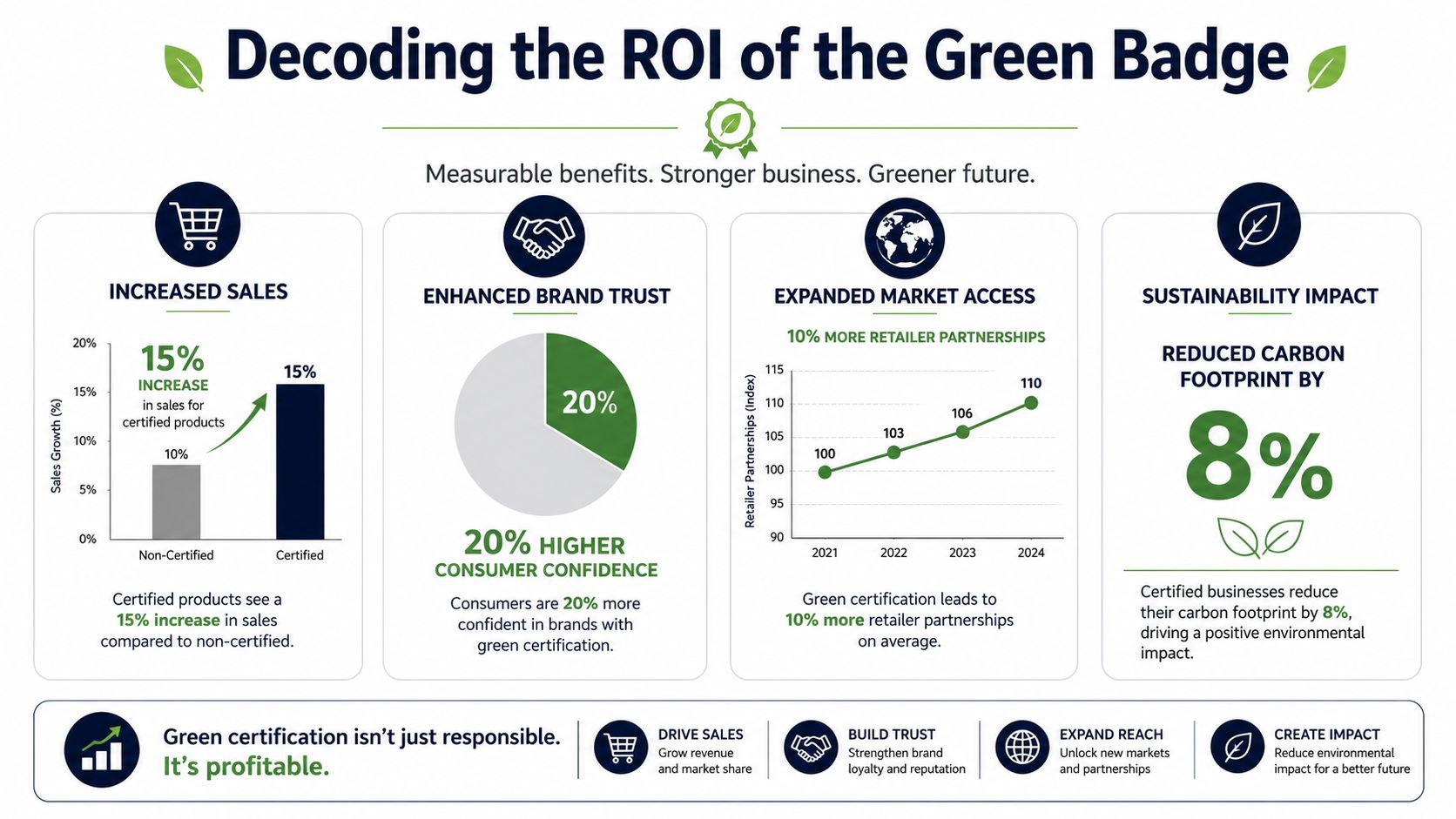
For a 7- or 8-figure seller, those numbers matter because badge economics show up in two places. First, more shoppers click. Second, qualified traffic converts better if the listing already has solid reviews, pricing discipline, and clean inventory coverage.
That last part matters. The badge can improve an efficient listing. It will not fix a weak hero image, margin-killing coupon strategy, or an ASIN sitting one stockout away from rank loss.
The right way to evaluate Climate Pledge Friendly is the same way you evaluate any catalog change. Model the certification cost, packaging changes, operational hours, and expected contribution margin lift by ASIN. This guide to ROI calculation for business decisions is a useful baseline if your team needs a clean framework.
I look at four numbers first:
High-volume ASINs usually justify the work faster because even a modest conversion gain compounds quickly. Slow movers are harder to justify unless the certification path is cheap or the badge supports a broader retail objective.
The upside is not distributed evenly.
The same research found the strongest revenue impact in Patio, Lawn & Garden with a 77% revenue increase and Baby Products with a 36% revenue increase after badge adoption. It also found the badge performed best for products priced between $4 and $11, where sales increased 12.2%, and that products generating over $10,000 in weekly revenue saw double-digit revenue gains after getting the badge.
That pattern is commercially useful. Categories tied to safety, home use, or household consumption tend to benefit more from sustainability signals. Lower-priced products can also respond well because the badge reduces hesitation without asking the shopper to justify a premium ticket.
Packaging-led certifications can improve the math further if they cut cube, weight, or prep complexity at the same time. Teams exploring that route should review Online Brand Growth on Amazon FFP because packaging changes only produce real ROI when they hold up across freight, FBA fees, damage rates, and submission requirements.
I would prioritize ASINs in this order:
The best Climate Pledge Friendly wins come from products that are already commercially healthy. The badge adds force to existing demand. It does not create demand from scratch.
The common mistake is treating CPF like a broad brand project. Serious operators treat it like selective capital allocation. Pick the ASINs where approval is achievable, payback is short, and the operational work creates side benefits in freight, FBA, or conversion.
There are two routes into Climate Pledge Friendly that matter for operators. Use a recognized third-party certification, or qualify through Amazon's Compact by Design program. The decision should come from margin math, documentation quality, and how much product or packaging change your team can execute without slowing the business.
Amazon recognizes a large set of qualifying standards. That does not mean one badge strategy should cover the full catalog. Strong brands match each ASIN to the path it can complete with clean records, reasonable costs, and a short payback period.
Third-party certification fits products that already have a standards match. That usually means the product attributes themselves carry the claim, such as material content, chemical restrictions, responsible sourcing, or recycled inputs. If your factory already maintains those records and your category benefits from visible trust signals, this route can justify the extra work.
Compact by Design is usually the cleaner operator's choice because it starts with efficiency. Smaller packaging, lower shipping volume, better product-to-package ratio, or concentrated formulations can improve freight and FBA economics while also creating a path to the badge. That makes it attractive for brands that control packaging decisions and can move fast with vendors.
For founders comparing fulfillment and packaging routes, this explainer on Online Brand Growth on Amazon FFP is useful context because teams often lump Amazon's packaging programs together even though the qualification rules and business case are different.
| Attribute | Compact by Design | Third-Party Certification |
|---|---|---|
| Primary fit | Products with clear packaging or design efficiency gains | Products that already align with an approved external standard |
| Speed to decision | Usually faster if packaging specs and dimensional data are clean | Usually slower because certifier review and supplier records add steps |
| Operational burden | Centered on dimensions, weight, packaging inputs, and shipping profile | Broader review across materials, manufacturing, testing, and chain-of-custody records |
| Brand signal | Strong inside Amazon because it earns CPF eligibility | Strong on and off Amazon if the certification is shopper-recognizable |
| Best use case | Brands with direct control over packaging and product configuration | Brands whose current product specs already support certification |
| Main risk | Teams redesign packaging but miss Amazon's qualifying thresholds or documentation needs | Teams pick a standard their factories cannot support with complete evidence |
Use a decision screen, not instinct.
Start with cost and control. If your team owns packaging, can get dielines and specs quickly, and sees a realistic freight or FBA benefit from downsizing, Compact by Design usually deserves the first look. It gives you two shots at ROI. Better economics on the unit, and the badge.
Choose third-party certification when the product already has a clean standards fit and the paperwork is close to ready. This is often the better move for brands selling products where composition and compliance affect conversion, but only if the supplier file is disciplined. If the factory says it can “get the docs later,” expect delays.
Pause the project if supplier records are inconsistent, product specs vary by PO, or no one owns compliance documentation. Before you commit, run a vendor and documentation check. This supplier vetting checklist for ecommerce brands is a useful filter because CPF delays often start with the factory, not with Seller Central.
What works is matching the certification path to the product's current operating reality and your team's actual level of control.
A good Compact by Design candidate has oversized packaging, stable dimensions, and a supplier that can revise specs without a six-month development cycle. A good third-party candidate already has the underlying testing, sourcing records, or material certifications in place. In both cases, the winning move is the same. Pick the route with the lowest execution risk and the clearest business upside.
The expensive mistake is forcing the wrong path. Teams lose time when they chase a certification their factory cannot document, or they redesign packaging for an ASIN they do not really control. Serious sellers treat CPF as an operations project tied to margin, speed, and catalog quality. That standard alone eliminates a lot of failed submissions.
Most brands overcomplicate this process. The operational sequence is straightforward if you assign one owner and force clean documentation from the start.
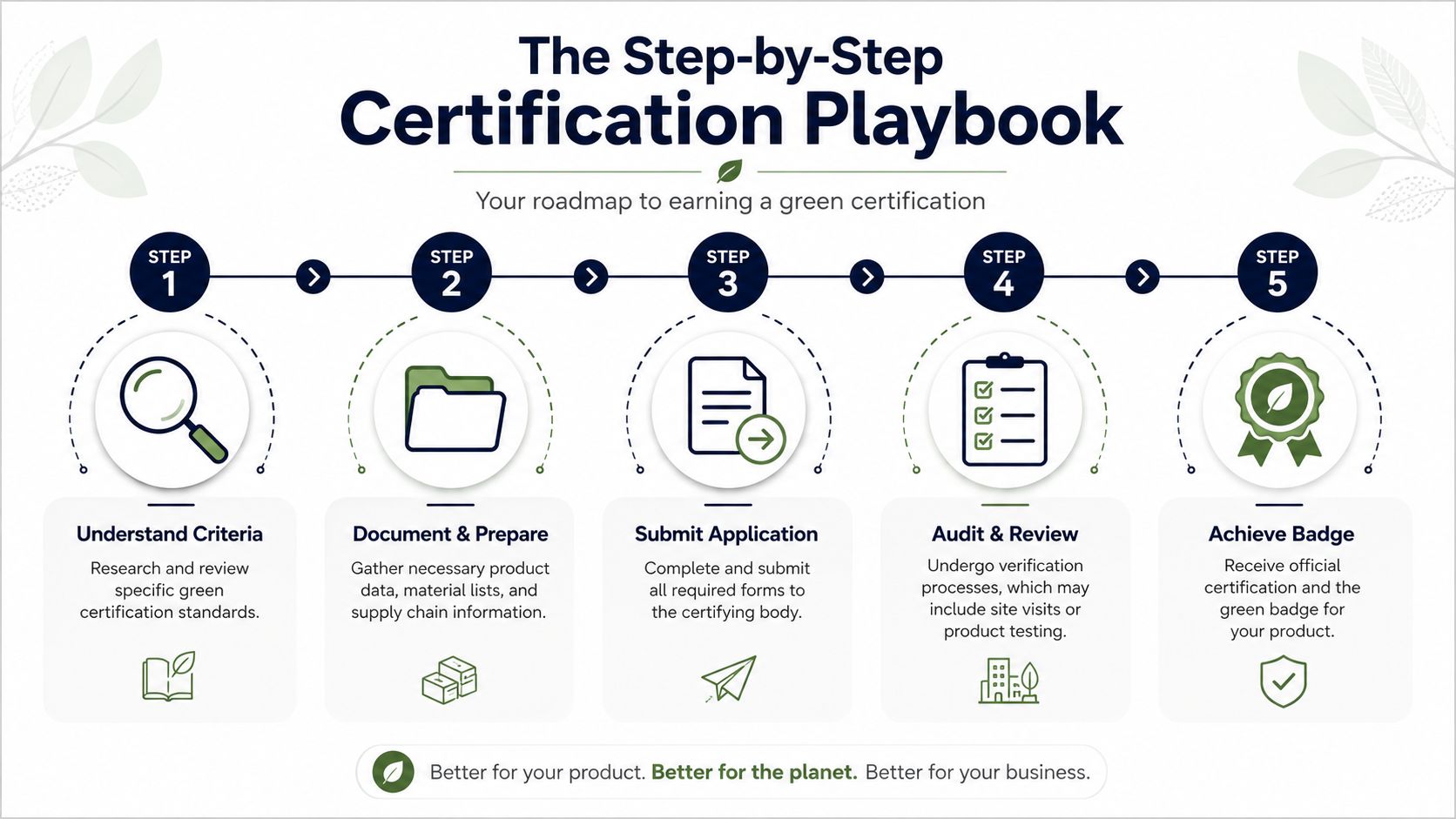
CarbonBright outlines four key stages to qualify: select a recognized certification, conduct a Life Cycle Assessment, implement targeted product or packaging improvements, and submit certified ASINs through the CPF Product Template for validation in Seller Central, as explained in their CPF process guide.
Start with the roadmap below, then build your internal task list around it.
Don't begin with your hardest product. Start with ASINs that have clean BOM data, stable supplier relationships, and enough revenue weight to matter.
A bad candidate looks like this: multiple factories, inconsistent packaging specs, changing formulations, and unclear ownership of compliance documents. That SKU can still get certified later. It just shouldn't be first.
At this stage, many teams realize they don't have the records they thought they had.
For an LCA or certification review, pull the underlying product data into one place:
If this information sits across email threads, spreadsheets, and supplier WhatsApp messages, fix that before you apply.
A short visual walkthrough can help your ops team understand the flow before they start gathering files:
The point of this stage isn't to chase abstract sustainability language. It's to make targeted changes that support qualification.
Common examples include switching from virgin materials to recycled inputs, reducing unnecessary packaging volume, improving recyclability, and tightening product design so the shipped unit uses space more efficiently. These changes can support the certification path and improve freight economics at the same time.
If your packaging engineer and your marketplace manager aren't talking to each other, this project will move slowly and cost more than it should.
Once certified, submit the eligible ASINs via the CPF Product Template in Seller Central or Vendor Central. Amazon then validates the certification status before the badge appears.
This is the point where discipline matters. Use the exact ASIN set tied to the approved product configuration. Don't assume a family variation automatically inherits qualification. Don't assume a previous listing update carried over all the details correctly.
For larger brands, the cleanest internal setup usually looks like this:
That structure avoids the common problem where everyone touches the project but no one owns the result.
Climate Pledge Friendly projects don't usually fail because the product is impossible to certify. They fail because the brand loses control of the details.
One of the most common breakdowns is misalignment between certification scope and ASIN categorization, which can prevent the badge from appearing even after a product has been certified. Hohenstein also notes that Amazon charges zero fees for the program itself, while LCA provider fees typically range from $2,000 to $8,000 per product, and brands often need annual recertification to keep the badge active, according to its CPF guidance.
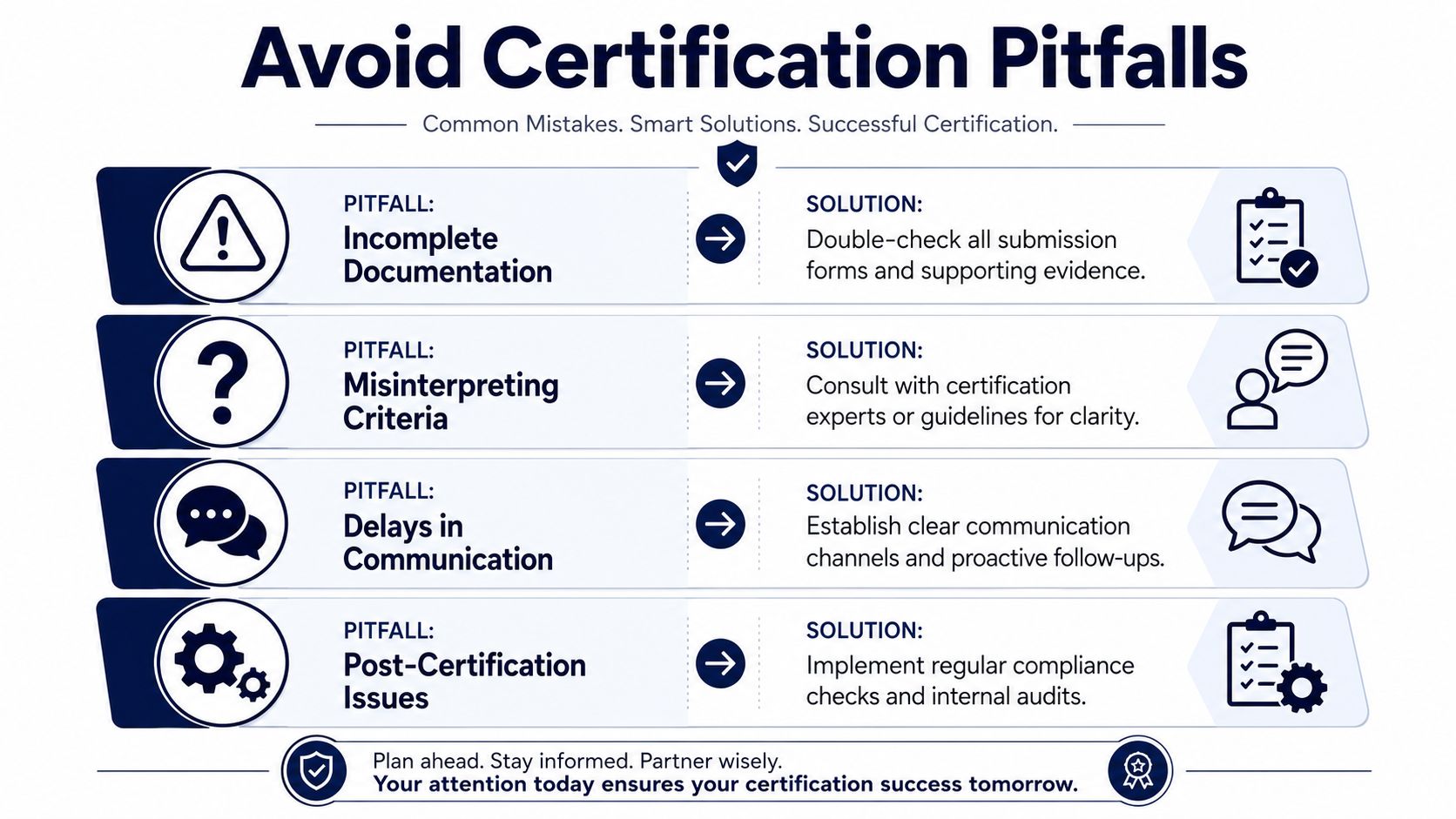
The first expensive mistake is picking a certification before checking whether its scope matches the exact ASIN structure on Amazon. A product may be certified externally but still fail inside Amazon if the listing setup, variation logic, or category mapping doesn't line up with the certificate.
The second is weak LCA inputs. Hohenstein notes that incomplete data collection can break the process, especially when teams ignore disposal-phase emissions or transportation logistics in carbon footprint work. That's not a paperwork issue. It's a validity issue.
Use a pre-submission check before anyone uploads the template.
Badges often fail at the handoff points. Supplier to certifier. Certifier to Amazon. Ops to marketplace manager.
Treat this like a compliance-linked revenue project. That means version control, one owner, and a hard checklist.
What doesn't work is “we already got certified, so Amazon should handle the rest.” Amazon won't clean up your ASIN logic, decode vague supplier files, or remind you that a renewal is due. The badge appears when your internal systems are tighter than average, not when your intentions are.
Certified ASINs do not produce a return on their own. The return shows up when the badge is tied to better click-through, cleaner conversion paths, and stronger ad economics.

Treat the badge like a conversion asset, not a decoration. If the detail page does not explain why the product qualified, shoppers see a symbol but get no reason to prefer your offer over the next result.
The fastest fix is inside A+ Content. Use a comparison chart module that puts your certified product next to a standard alternative and calls out one concrete improvement, such as reduced plastic packaging or recycled material content. Then support that with one lifestyle image and one infographic image in the main image stack so the claim appears before and after the click. That sequence gives the badge context without making claims Amazon or the certifier did not approve.
Brand Story is another missed placement. Use those cards to show the product line, then route traffic to other certified ASINs so the badge improves average order value instead of helping only one hero SKU.
The rest of the listing still has to convert. This guide to Amazon listing optimization is a useful framework because CPF tends to work best on pages that already have tight titles, sharp image logic, and bullets built around purchase objections.
Run certified ASINs in ads if they already convert within range. The badge can improve click quality, but it does not rescue weak pricing, poor reviews, or soft creative. I would rather put ad dollars behind a certified SKU with stable conversion and slightly lower traffic than force spend into a badge-bearing ASIN that still has unresolved listing problems.
Use the badge in Sponsored Brands, Store placements, and retargeting creative where the claim can be repeated clearly. Keep the message specific. “Certified under Climate Pledge Friendly” works. Broad environmental language that your listing cannot substantiate creates compliance risk and usually underperforms anyway.
For broader growth planning, Next Point Digital's Amazon insights pair well with a merchandising and ad review. Serious brands win more from CPF when they build a full system around it: certified traffic drivers, certified cross-sells, and certified detail pages that explain the reason to buy in plain English.
The commercial goal is simple. Raise conversion enough to justify certification cost, improve ad efficiency on the right ASINs, and make the listing harder to commoditize.
Join the Ecom Entrepreneur Community for Vetted 7-9 Figure Ecommerce Founders
Learn MoreYou may also like:
Learn more about our special events!
Check Events