Chilat Doina
June 8, 2026
Beyond the hype, choosing an ecommerce conference in 2026 is really a capital allocation decision. You're not just buying a pass. You're buying access, compressed learning, partner discovery, and a temporary shift in your attention away from the business. For a founder running a 7 to 9 figure brand, that trade has to pay back in better decisions, stronger relationships, or faster execution.
That bar is higher now. Ecommerce is operating at a scale that justifies highly specialized event ecosystems. UNCTAD reported that ecommerce sales across 43 economies approached US$25 trillion in 2021 and almost US$27 trillion in 2022, which helps explain why conferences have split into distinct rooms for retail innovation, marketplaces, growth, payments, and operator-only networking.
The challenge is that many events still market themselves the same way. They promise insight, networking, and innovation. Busy founders need a sharper filter. Some conferences are pipeline events. Some are learning events. Some are for relationship deepening. If you choose the wrong format for your current bottleneck, even a strong event becomes expensive noise.
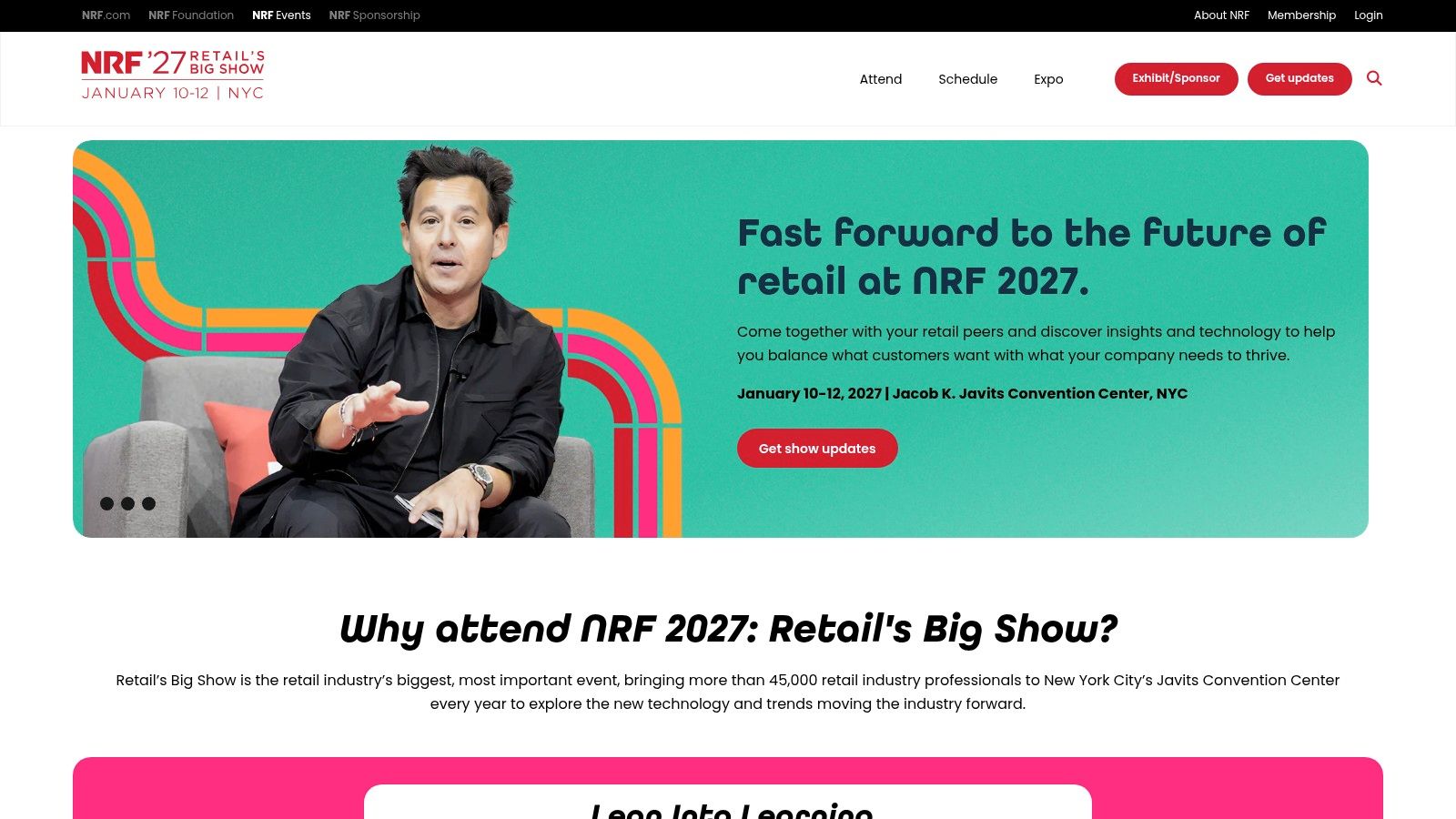
NRF Retail's Big Show is where I'd send a founder who needs market-wide visibility fast. If your brand is evaluating replatforming, fulfillment partners, in-store tech, payments, retail media, AI tooling, or omnichannel infrastructure, NRF compresses months of vendor outreach into a few days.
Its biggest strength is breadth. Its biggest weakness is also breadth.
This isn't an ecommerce-only room. If you want deep Amazon account tactics or highly tactical DTC media buying sessions, NRF can feel too wide. But if you're making executive-level decisions across channels, that width is useful.
NRF makes sense when your questions are strategic, not narrow. You're not going to New York to learn one ad hack. You're going to compare categories, pressure-test your roadmap, and meet partners that can support the next phase of the business.
A founder should prioritize NRF when the agenda includes questions like:
Practical rule: Book meetings before you book flights. NRF punishes reactive attendees.
The event is massive, with 45,000+ professionals and a large expo floor. That means spontaneous discovery is possible, but disciplined calendars win. Founders who show up with no pre-set meetings usually leave with a tote bag full of brochures and vague follow-ups.
Use NRF as a deal-screening environment. Have your team build a shortlist of categories first, then book only the vendors and operators tied to this year's priorities.
A good split is simple:
If you're still comparing event formats, this guide to Amazon and ecommerce conference options helps clarify when broad retail shows outperform niche seller events.
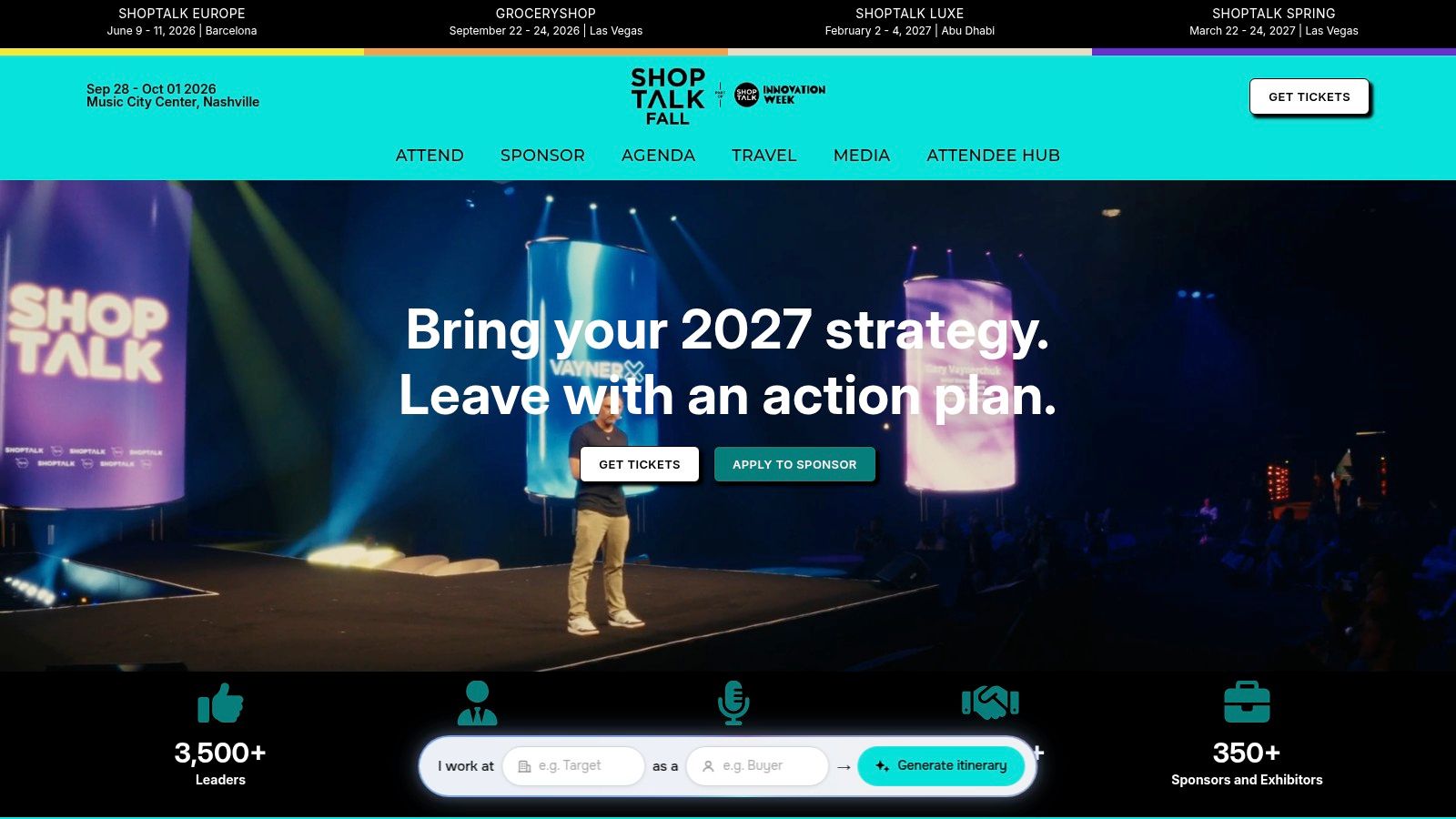
Shoptalk Fall is one of the cleaner bets for founders who value engineered networking over wandering an expo hall. Some conferences leave meetings to chance. Shoptalk pushes them into the calendar.
That structure matters more than ever because ecommerce founders are operating in a market where U.S. retail ecommerce sales reached $326.7 billion in Q1 2026, accounting for 16.9% of total U.S. retail sales. The operators and vendors in this room aren't discussing a side channel. They're discussing a core one.
Shoptalk Fall is strong when you want qualified conversations with senior people and you don't want to build the meeting book yourself from scratch. For a founder, that usually means one of three goals: strategic partnerships, channel expansion, or next-year roadmap planning.
The timing helps. Fall events often catch teams while budgets, priorities, and annual planning are still fluid enough to influence.
What works well here:
What doesn't work as well:
The right Shoptalk meeting can replace six weeks of outbound partner discovery.
Treat Shoptalk Fall like a business development sprint. Don't over-index on sessions unless a topic maps directly to an initiative already on your roadmap.
Before the event, define your “meeting thesis.” For example: new retail media partner, better returns infrastructure, wholesale expansion, or AI support tooling. Then filter your meetings hard. If a conversation doesn't connect to a current bottleneck, skip it.
For a founder with a senior team, this is also a good event to divide and conquer. One person can run partner meetings. Another can cover innovation sessions. A third can focus on relationship dinners.
eTail West is more practical than glamorous, and that's why operators keep going back. If NRF is the macro lens and Shoptalk is the curated networking machine, eTail West sits closer to the day-to-day realities of growth, conversion, lifecycle, merchandising, and channel performance.
That operator bias matters in a market where execution is getting harder. Grand View Research projects global ecommerce will reach USD 39.70 trillion in 2026 and USD 155.98 trillion by 2033 at a 21.6% CAGR. Growth is still there. The easy wins aren't.
The best eTail conversations usually come from peers who are managing similar trade-offs right now. Teams trying to improve merchandising, increase site efficiency, sharpen retention, and squeeze more from paid channels generally get more useful tactical input here than at broader retail shows.
The setting also helps. Hotel-style conferences tend to create more repeat interactions than giant convention-center events. You see the same people at breakfast, between sessions, and later at side conversations. That often leads to more candid discussion.
A few trade-offs to keep in mind:
Come to eTail West with one operating problem, not a general desire to “learn.” That problem might be declining conversion quality, lifecycle revenue mix, rising acquisition costs, or merchandising complexity.
Then use the event in layers:
If your business is wrestling with onsite performance and paid efficiency, eTail usually produces more deployable ideas than a broad innovation expo.
Prosper Show is the marketplace seller's conference. If Amazon is a major revenue engine for your business, Prosper is one of the few ecommerce conferences where the hallway conversations can be as valuable as the sessions.
Serious operators compare notes on catalog issues, advertising pressure, compliance changes, fees, and fulfillment realities without needing to explain the basics first.
Prosper works best for founders whose biggest upside or biggest risk sits inside marketplaces. The room tends to be more useful when your questions are operational and tactical, not just inspirational.
That's especially relevant in a tougher acquisition environment. IRP Commerce reports that average ecommerce conversion rate fell from 1.81% to 1.70% year over year, while average CPA rose from 7.91% to 9.71% in 2026 market data cited by Grand View Research context. That combination makes marketplace efficiency, listing performance, and ad discipline much more urgent.
Prosper is good for:
Don't attend Prosper to “network with sellers.” Attend with three marketplace problems your team hasn't solved internally.
Skip any instinct to treat Prosper as a passive learning event. The highest ROI move is to send the person who owns marketplace P&L, plus a founder or senior operator who can make decisions fast.
Before the trip, list the issues that currently leak profit. Think advertising structure, inventory planning, reimbursement process, catalog suppression risk, or agency fit. Build your schedule around those, not around speaker fame.
Prosper underperforms for pure DTC founders. If Amazon is peripheral, your time is probably better spent elsewhere.
A founder walks into Amazon Accelerate with a stalled ASIN portfolio, rising ad costs, and a support queue that has gone nowhere for weeks. By the end of the event, the value is rarely the keynote. It is the clarity on what Amazon is prioritizing, who can answer hard questions, and which changes deserve action when your team gets back.
Amazon Accelerate is the conference for brands that treat Amazon as a major revenue channel, not a side marketplace. The strategic advantage is proximity to the platform itself. You get earlier signal on program changes, operational priorities, and product direction than you will from agency recaps or LinkedIn summaries a month later.
For a 7 to 9 figure brand, that matters because Amazon problems are rarely isolated. A catalog issue can hit conversion. A fulfillment change can affect margin. An ad update can alter spend efficiency across an entire portfolio. Accelerate is one of the few events where those threads show up in the same room.
The upside here is specific. Founders and marketplace leaders can pressure-test decisions against Amazon's current direction instead of planning off stale assumptions.
That makes Accelerate a strong fit for:
There are trade-offs. Accelerate is narrower than a general ecommerce event, and the official nature of the conference means some sessions stay high level. Founders whose growth agenda is centered on owned-channel retention, creative testing, or broad omnichannel strategy usually get less value per hour here.
If paid media on Amazon is becoming a bigger line item, review this perspective on the future of Amazon advertising for CPG before you go. It helps frame the questions worth asking on-site.
Treat Accelerate like an operating meeting, not a learning retreat.
Bring a short list of unresolved issues tied to revenue, margin, or risk. Good examples include brand registry friction, variation problems, FBA fee pressure, retail readiness gaps, TACoS drift, or weak conversion on priority ASINs. The goal is to leave with direction your team can act on in the next 30 days.
Send the person who owns Amazon P&L. If the account is large enough, send that operator plus a founder or senior executive who can make decisions quickly. Speed matters here. The event pays off when your team can turn a useful conversation into a budget shift, agency change, listing overhaul, or inventory decision without waiting three weeks for internal alignment.
Use the unofficial calendar too. Some of the best operator conversations happen outside the venue, in tighter rooms where people speak more candidly about what is and is not working. This guide to Amazon Accelerate side events and parties is a practical place to start.
Accelerate is rarely the right conference for a brand that only sells on Amazon because it "should." It is a strong investment for founders who know Amazon is material to enterprise value and want better information before the next platform shift hits their P&L.
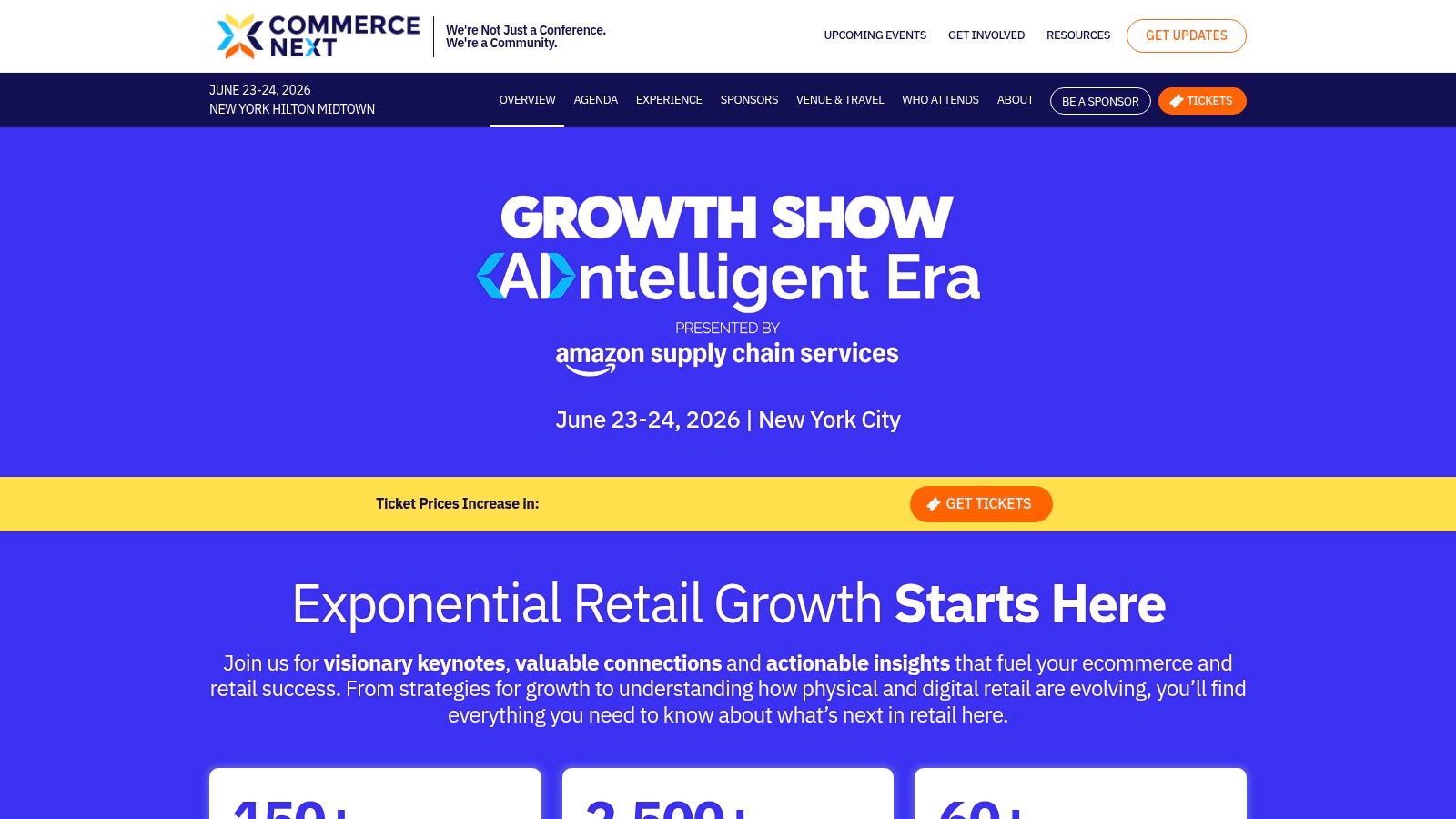
CommerceNext Growth Show fits a specific job. A founder walks in with rising acquisition costs, mixed retention performance, and a marketing team asking for three new tools. Two days later, the right version of success is clarity. Which channel deserves more budget, which customer segment is being under-monetized, and which vendor pitch should die on the spot.
That focus is why this event earns a place on the calendar for 7 to 9 figure brands. CommerceNext skews toward operators responsible for growth targets, not broad retail spectatorship. The conversations tend to stay close to P&L. Paid media efficiency, lifecycle marketing, creative performance, site conversion, measurement gaps, and retention economics get more airtime than generic trend talk.
The timing also matters. Mobile behavior, rising ad costs, and weaker attribution have made growth less forgiving. Founders do not need another conference that tells them personalization matters. They need sharper answers on where margin is leaking and which tests can improve revenue in the next quarter.
CommerceNext is strongest for brands that already have traction and need better decision-making, not basic education. If your team runs meaningful spend across Meta, Google, email, SMS, affiliates, or retail media, the event can help tighten execution across those channels.
What tends to work well here:
The trade-off is straightforward. CommerceNext is less useful if your main goal is large-scale vendor sourcing or enterprise retail relationship building. NRF usually wins there. CommerceNext wins when the primary problem is growth efficiency.
Send your founder plus the person who owns growth. That usually means a CMO, VP Growth, or head of ecommerce. Divide the agenda on purpose. One person should prioritize strategy sessions and peer conversations. The other should take vendor meetings and pressure-test tools against current bottlenecks.
Go in with three questions tied to money. Examples: Why is new customer CAC rising faster than AOV? Where is repeat purchase breaking by cohort? Which channel deserves incremental budget over the next 90 days? If a session or meeting does not help answer one of those, skip it.
Treat networking like pipeline building, not social activity. This guide to networking strategies for entrepreneurs is a useful framework if your team tends to leave good introductions sitting in a notes app.
CommerceNext is a strong investment for founders who want better growth decisions fast. It is a weaker fit for teams still trying to understand ecommerce fundamentals or shop a massive field of vendors.
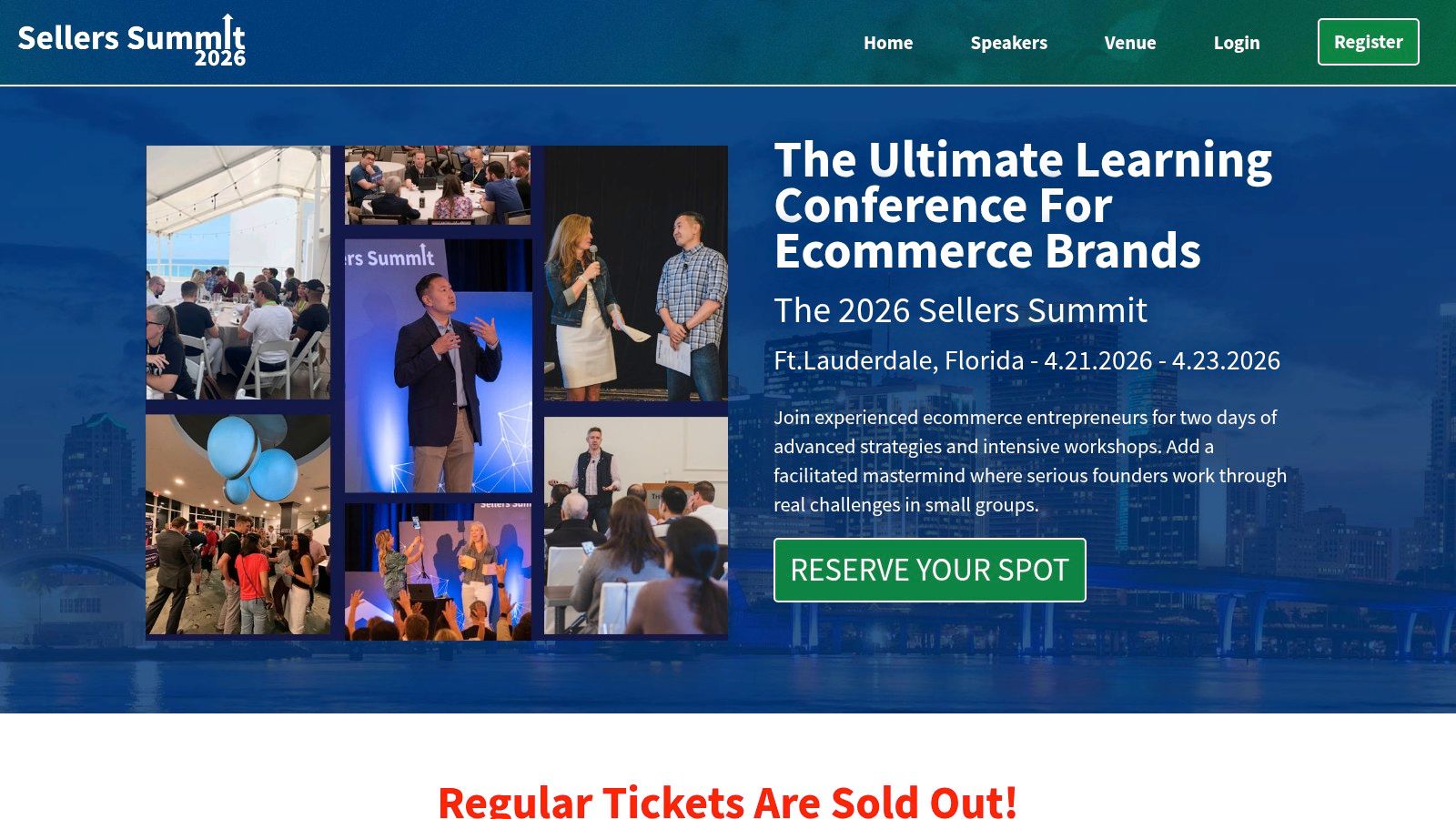
Sellers Summit is the opposite of the mega-show model. Smaller room. More direct access. Less theatre. For many founders, that's exactly the point.
If your business doesn't need a giant expo and instead needs tactical workshops, real Q&A, and conversations with people close to execution, this format can outperform bigger conferences by a wide margin, even if the brand names on stage are less flashy.
A lot of founders overbuy conference size. They assume a bigger event means bigger ROI. That's often false. When the problem is specific, smaller operator-led rooms tend to deliver better answers.
That's especially true now that conference markets are fragmenting into specialized formats. Recent event coverage shows more segmentation across B2B ecommerce, retail innovation, supply chain, payments, and AI-driven go-to-market changes, which reinforces a simple reality. The best conference is the one that matches your bottleneck.
Sellers Summit is strong for:
It's weaker for founders who want broad vendor discovery or enterprise-scale partner sourcing.
Come prepared to participate, not observe. Boutique events reward specificity. Bring current landing pages, ad questions, listing issues, email flows, or CRO problems. Ask direct questions and pressure-test your assumptions in the room.
If relationship building is part of your reason for attending, sharpen that skill before you go. This guide on networking for entrepreneurs is a useful reminder that founder-level networking isn't about collecting contacts. It's about building a few relationships that compound.
| Event | 🔄 Implementation complexity | ⚡ Resource requirements & efficiency | 📊 Expected outcomes | 💡 Ideal use cases | ⭐ Key advantages |
|---|---|---|---|---|---|
| NRF: Retail's Big Show (New York, NY) | High, large-scale logistics and advanced scheduling required | High, significant travel, registration and time investment | Broad vendor discovery; strategic omnichannel and macro retail insights | Executive networking, partner scouting, strategic omnichannel planning | Unmatched breadth of retailers/brands/tech partners |
| Shoptalk Fall (Nashville, TN) | Medium–High, curated 1:1 meetings need preparation and coordination | High, premium pricing and travel; high ROI for targeted meetings | Senior-level partnerships and forward-looking retail innovation signals | Curated meetings with retailer/brand decision-makers; Q4 roadmap planning | High signal-to-noise via structured meetings and senior attendees |
| eTail West (Palm Springs, CA) | Medium, hotel-style venue simplifies on-site logistics | Medium, moderate travel; vendor participation can raise cost | Tactical ecommerce improvements in conversion, merchandising and performance | Day-to-day ecommerce operators, DTC teams focused on CRO and revenue | Operator-focused sessions and practical peer case studies |
| Prosper Show (Las Vegas, NV) | Medium, marketplace-focused agenda and seller-centric rules | Medium–High, Vegas venue costs; targeted seller passes improve efficiency | Actionable marketplace tactics: FBA/fulfillment, ads, compliance, catalog ops | Marketplace (especially Amazon) sellers seeking operational guidance | Best concentration of serious Amazon sellers and marketplace experts |
| Amazon Accelerate (Seattle, WA) | Medium, Amazon-centric content; timing requires flexible planning | Medium, travel to Seattle; registration timing varies yearly | Direct access to Amazon roadmap, policy updates and product announcements | Amazon-heavy brands needing authoritative updates on ads, fees, ops | Authoritative source with direct Amazon product and policy teams |
| CommerceNext Growth Show (New York, NY) | Low–Medium, community format with targeted meeting programs | Medium, smaller scale than mega-expos; hosted meetings competitive | Highly actionable growth tactics for acquisition, retention and LTV | Growth leaders focused on performance marketing and retail media | Actionable growth content and efficient, community-driven meetings |
| Sellers Summit (Fort Lauderdale, FL) | Low, boutique, capped workshops simplify logistics | Low–Medium, smaller venue and ticketed capacity; limited seats | Immediate, deployable playbooks across PPC, listings, CRO and CRM | Founders and operators seeking hands-on tactics and small-group learning | Intimate workshops with high likelihood of practical takeaways |
You approve the flights, hotel, ticket, dinners, and two days out of the business. Then you get back with a tote bag, a few loose ideas, and no clear financial return. That is a planning failure, not a conference problem.
For a 7 to 9 figure founder, every event should start with a simple question: what decision will this trip help you make faster or better? Set the objective before you register. It might be a shortlist of three agencies, a direct answer on Amazon policy risk, or five operator conversations around retention economics. If the outcome is vague, skip the event.
The right conference depends less on brand prestige and more on your current bottleneck. NRF and Shoptalk are useful when you need broad market context, senior introductions, or a read on where enterprise retail is spending. Prosper, Accelerate, and Sellers Summit are better choices when the issue is execution and you need answers from operators who are in the trenches right now. CommerceNext and eTail often sit in the middle, with enough strategic signal for leadership and enough tactical depth for the team responsible for growth.
Use a simple ROI filter. Ask four questions:
That last question matters more than founders admit. Sending the CEO to a tactical event can be a waste. Sending a head of marketplace, retention, or partnerships with a tight brief often produces a better return.
Execution decides the value. Book meetings before the agenda fills up. Pick one theme for the trip so your conversations stack instead of scattering across twenty topics. Build your follow-up before you leave, with owner, deadline, and next step attached to every useful conversation. If your team needs a cleaner operating system for the trip itself, these business travel templates help keep schedules, meetings, and follow-ups organized.
The highest-return founders also treat conferences as a spike in access, not their only source of insight. A significant advantage comes from staying close to credible operators between events, especially when a pricing change, channel shift, or platform issue needs an answer this week. Communities like Million Dollar Sellers play that role for many established brands by keeping experienced sellers connected through peer discussion, private events, and vetted introductions.
If you want conference-level conversations without waiting for the next trade show, Million Dollar Sellers is built for that kind of founder environment. It connects established ecommerce operators across Amazon, DTC, and omnichannel, with peer-driven discussions, curated events, and trusted introductions that can turn sporadic learning into an ongoing strategic edge.
Join the Ecom Entrepreneur Community for Vetted 7-9 Figure Ecommerce Founders
Learn MoreYou may also like:
Learn more about our special events!
Check Events