Chilat Doina
April 9, 2026
Most advice about top DTC brands is still stuck in the cheap-CAC era. It overweights aesthetic, founder story, and social buzz, then treats growth like a creative problem instead of an operating system. That playbook breaks fast once paid media gets expensive, retail partners get selective, and repeat purchase becomes the difference between a good quarter and a painful one.
That shift is already visible in the numbers. Customer acquisition costs for DTC brands average $68 to $84 in 2025, up 40% to 60% from 2023, according to these DTC brand statistics. Easy customer acquisition is gone. Brands now earn growth through better retention, tighter merchandising, stronger category logic, and smarter channel mix.
At the same time, DTC is no longer niche. The U.S. DTC ecommerce market reached $239.75 billion in 2025, representing 19.2% of total retail ecommerce, as covered in this DTC ecommerce market breakdown. That matters because it changes the benchmark. Founders are not competing to prove DTC works. They are competing inside a mature, crowded model where only durable operators keep compounding.
So this is not another list of cool brands with nice packaging.
This is a teardown of seven leaders worth studying in 2026. Not because every tactic travels cleanly across categories, but because each brand shows a repeatable pattern: one acquisition engine, one monetization model, one retention loop, and one channel decision that explains its staying power.
If you want broader strategic context before diving into the brand breakdowns, read 12 Actionable Ecommerce Growth Strategies for 2026.
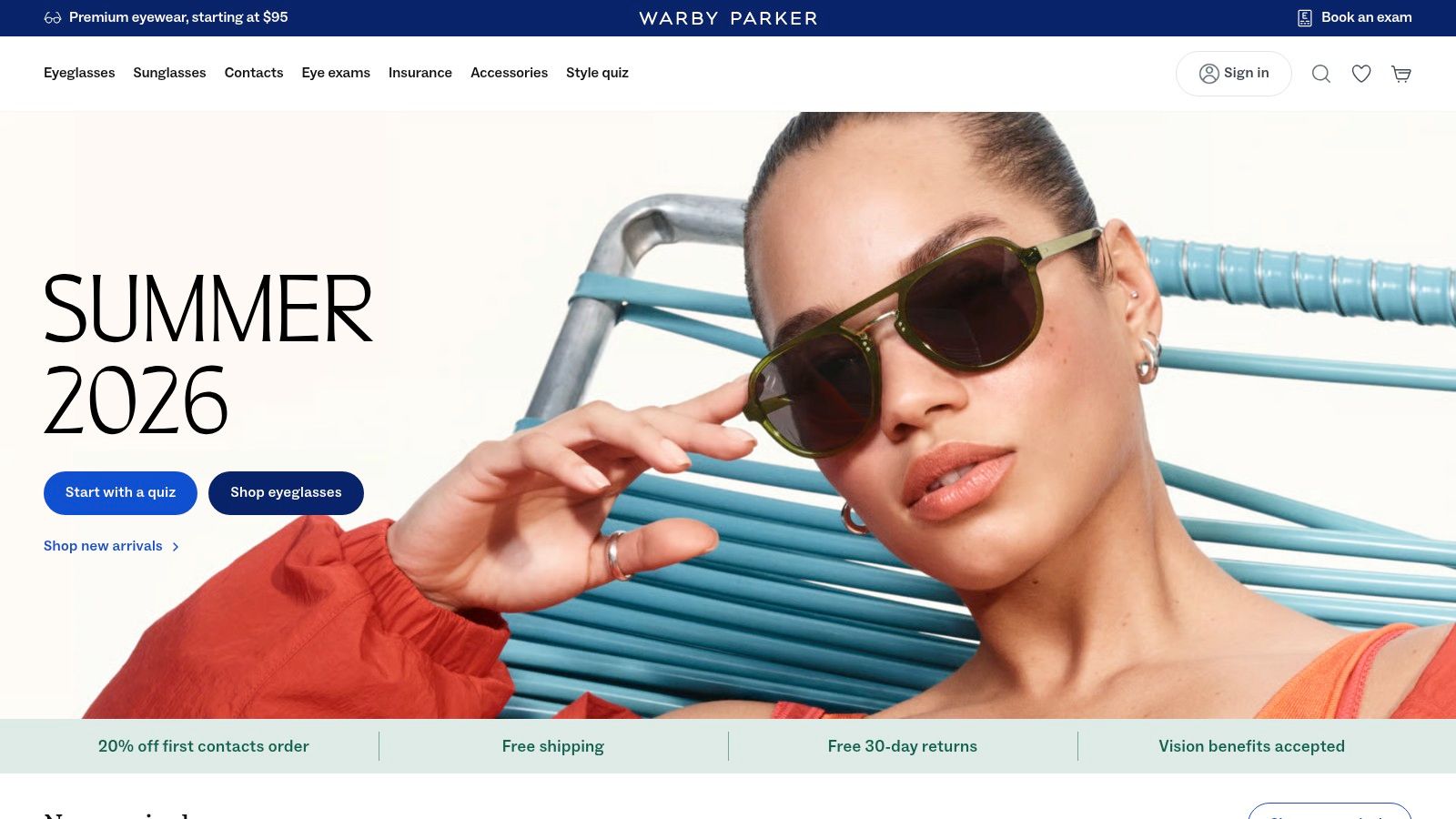
Warby Parker is one of the few brands that still gets cited for its original DTC disruption and remains useful to study now that the model is harder.
The old lesson was simple: cut out middlemen, lower prices, win online.
The current lesson is better: own the economics where you can, then add physical distribution only where it improves conversion, trust, and lifetime value. If you need a quick reset on the model itself, this overview of what direct to consumer means is the right frame.
Warby Parker did not just sell frames online. It built a vertically integrated eyewear system around frames, prescription lenses, contacts, and eye exams. That matters because eyewear is not a pure impulse category. It sits between fashion, healthcare, and service.
Founders should pay attention to the stack, not just the brand.
A shopper can discover a frame online, confirm fit in-store, book an exam, reorder contacts, and stay inside one ecosystem. That is much harder to displace than a single-product hero SKU.
Warby Parker also gives founders a clean example of how top DTC brands mature. The brand started as DTC-first, but it increasingly behaves like a strong omnichannel operator. The interesting part is not that it expanded into stores. Plenty of brands do that badly. The interesting part is that stores make strategic sense in this category because they reduce hesitation for a high-consideration purchase.
Three parts stand out.
If your category has tactile hesitation, physical retail should solve a conversion problem. It should not exist just to make the brand feel bigger.
Warby Parker’s model is strong, but it is not frictionless.
Retail introduces occupancy costs and more operational complexity. Service-led categories also create staffing and scheduling headaches that pure ecommerce founders often underestimate. And when a brand reduces top-of-funnel sampling, some customers who would have converted after trying the product may drop out.
This is the primary takeaway. Warby Parker wins because it matched channel strategy to category friction. Copying the storefront without the underlying logic usually leads to expensive retail theater.
Hims & Hers matters because it built a DTC business around continuity of care, not around pushing a monthly box.
That distinction changes everything. Founders often chase subscription because the revenue is cleaner on a spreadsheet. Hims & Hers earns repeat purchase by attaching the offer to problems that persist, require follow-through, and benefit from a simpler path to treatment. If you are refining your own acquisition and retention system, this breakdown of direct-to-consumer marketing strategy is a useful companion.
The company sits across diagnosis, consultation, treatment, fulfillment, and ongoing management in categories like hair loss, dermatology, sexual health, mental health, and weight care.
That structure gives Hims & Hers an advantage many DTC brands never get. The first conversion is not the whole event. It is the entry point into a longer customer relationship with built-in reasons to return, update treatment, add related products, and stay engaged.
This is what founders should study.
A customer might arrive with one urgent problem, but the brand does not treat that purchase like a one-off transaction. It turns intent into a guided flow, then uses relevance to extend value over time. That is a stronger retention loop than the standard consumables playbook of reminders, bundles, and cancellation friction.
You do not need to operate in telehealth to apply the logic.
Build around an ongoing customer condition, routine, or goal state. Then make the next step feel obvious.
Hims & Hers executes this well in a few specific ways:
That sequence is hard to fake. If the offer solves an ongoing problem and the operating model supports that promise, subscription feels natural. If not, subscription becomes a pricing mechanic customers eventually resist.
This model looks elegant from the outside and gets messy fast in execution.
Healthcare-adjacent businesses carry compliance risk, claim scrutiny, prescribing constraints, fulfillment pressure, and customer support demands that can break trust quickly. Expansion also gets harder as the product mix broadens. Margins, inventory planning, and service quality can shift fast when new categories have different operational requirements.
Founders should pay attention to that tension. Hims & Hers did not win because recurring revenue is attractive. It won because the brand aligned acquisition, clinical flow, fulfillment, and retention around repeatable need states.
Subscription works when the customer already has a reason to come back. If retention depends on discounts, oversized bundles, or cancellation friction, the economics look better than the customer experience is.
That is the useful lesson here. Hims & Hers built retention into the structure of the offer itself, which is far more defensible than trying to bolt subscription onto a product customers only occasionally need.
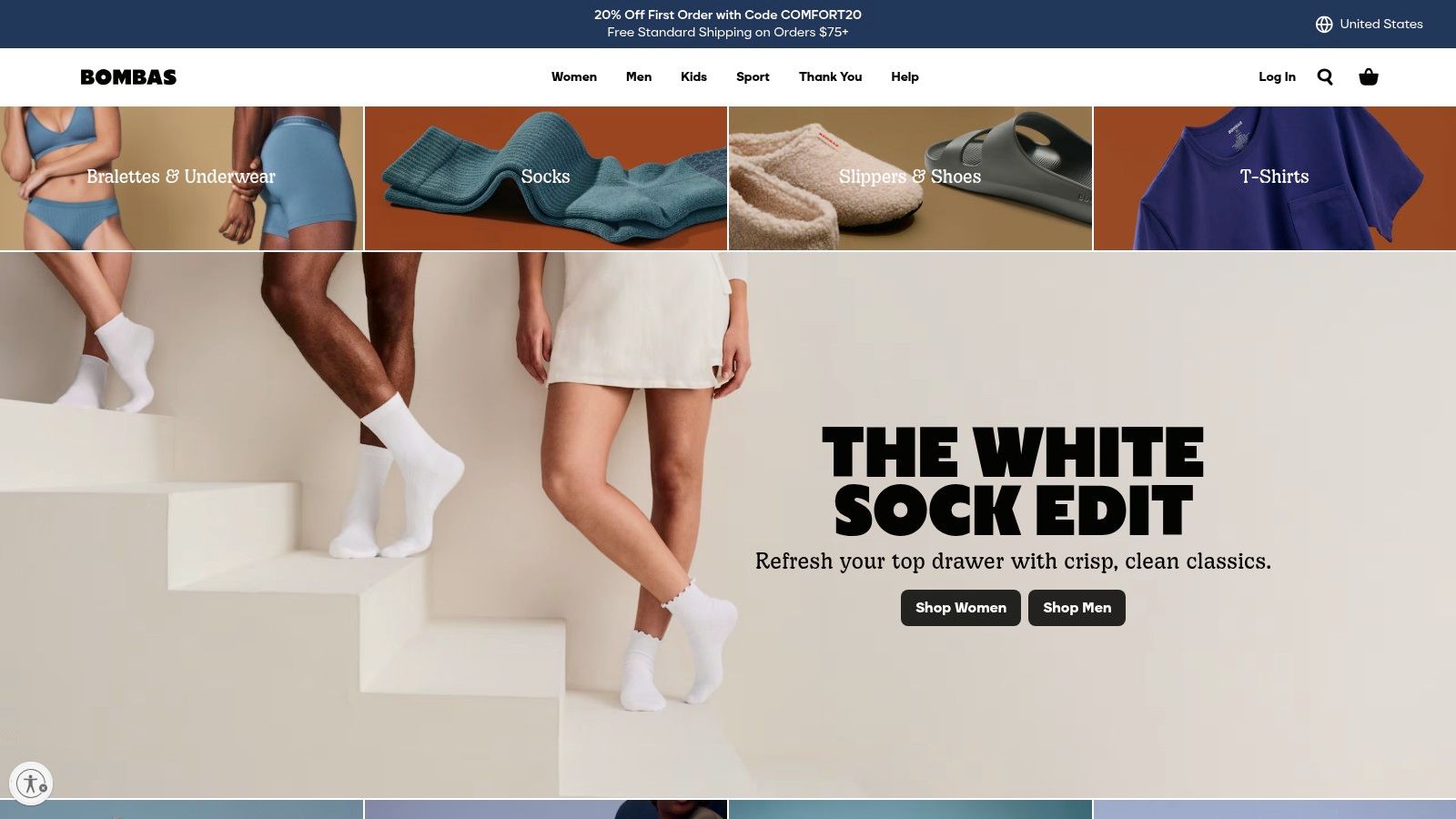
Bombas looks simple from the outside. Socks. Underwear. Tees. Slippers. A strong mission. Good creative.
That surface read misses why the brand matters.
Bombas is one of the cleaner examples of a DTC company that embedded brand purpose into the commercial model without letting the mission replace merchandising discipline. That balance is rare. A lot of mission-led brands either lean too hard on the story or bury the story under aggressive discounting once growth gets tougher.
The “buy one, donate one” promise gets attention, but the operating lesson is elsewhere.
Bombas built a comfort-first basics brand where the mission sharpens brand preference, while the product quality supports repeat purchase and word of mouth. That sequence matters. If the product disappoints, the mission becomes a one-time acquisition hook. If the product lands, the mission becomes memory structure.
The brand also expanded intelligently. It did not jump from socks into random adjacent categories to look bigger. It broadened into related basics that increase basket size and let customers consolidate routine purchases with one trusted brand.
Many founders misunderstand this lesson. They think “mission” is the moat. It is not. Mission helps a strong product get chosen faster.
For a broader view of how strong brands turn positioning into acquisition and retention systems, this article on direct-to-consumer marketing lays out the right mindset.
A few tactical patterns stand out:
There is also a pricing lesson here. Donation-driven economics require discipline. You cannot run a mission-heavy cost structure and still merchandise like a generic discount brand.
Every impact promise has a margin consequence.
That does not make the model weak. It makes sloppy pricing dangerous. If your AOV, contribution margin, and promo calendar are not tightly managed, mission can become a permanent tax on the business. Bombas works because the story, product, and price architecture support each other.
Founders studying top DTC brands should pay attention to that alignment. Not every customer-facing promise belongs in your P&L. Bombas is effective because it made the promise central and built the economics around it, rather than adding it later as marketing garnish.
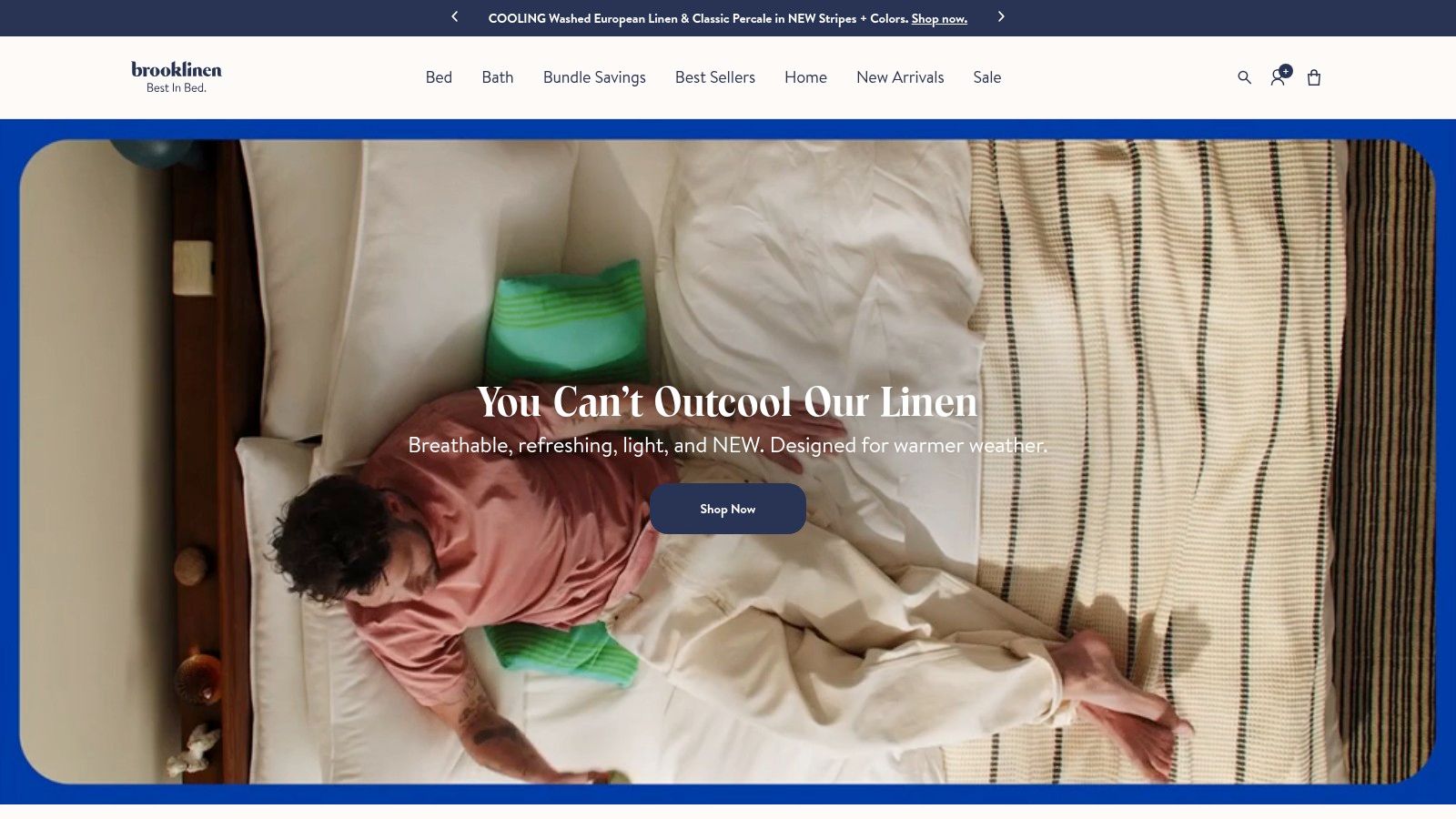
If you sell in a mature category, Brooklinen is more useful to study than most flashy challenger brands.
Bedding is not a novelty category. It is crowded, highly comparable, promo-heavy, and full of consumer confusion around material quality. Brooklinen’s merchandising strategy is the core story.
Brooklinen reduces a messy purchase into a set of easier choices. Classic Percale, Luxe Sateen, Linen. Those product lines do more than organize the catalog. They help customers self-sort by feel and preference without forcing them to become textile experts.
That sounds basic. It is not.
A lot of home brands still overload shoppers with technical material claims, then wonder why conversion lags and returns stay painful. Brooklinen turns material education into a selling system. It also pairs that with bundle merchandising, which is exactly what this category needs. Sheets, pillowcases, duvet covers, and towels are naturally cross-sellable when the presentation is clean.
Brooklinen’s playbook is strong in three places.
First, naming and packaging of the assortment. Shoppers can understand the ladder quickly.
Second, bundle logic. The brand does not just sell SKUs. It sells room-ready combinations that increase order value.
Third, promo and launch cadence. In mature categories, newness and merchandising refresh matter because they give existing customers a reason to re-engage.
If customers need a glossary to understand your core offer, you do not have a product education problem. You have a merchandising problem.
Brooklinen also shows why top DTC brands can keep growing without constantly inventing new hero products. Often the lift comes from better framing, better bundles, and better post-purchase expansion into adjacent home categories.
This model has limits.
Frequent promotions can train customers to wait. That is one of the easiest traps in home goods. A strong bundle strategy can increase AOV, but if every campaign conditions the customer to expect another sale next week, margin quality degrades over time.
There is also a quality perception risk in categories where tactile feel matters and expectations vary widely. If the promise on-site feels more premium than the product feels in-hand, refund pressure rises fast.
Brooklinen is still a strong study because it proves a mature category can support a compelling DTC business when the assortment is organized around customer decision-making, not internal product taxonomy.

Glossier is one of the best examples of a brand that outgrew the mythology built around it.
For years, founders talked about Glossier as if community alone explained the business. That was always incomplete. Community helped the brand get early attention and product-market resonance. It did not remove the need for channel strategy, retail presence, or retail-grade product velocity.
Glossier is stronger to study now because it stopped pretending DTC purity was the point.
The brand built its early identity through content, creator alignment, and products that felt easy to understand and easy to talk about. Boy Brow, Cloud Paint, and You are not just successful SKUs. They are products with simple mental hooks and strong word-of-mouth qualities.
But the bigger strategic move was omnichannel expansion.
Recent analysis notes that many leading brands that started as DTC-first now derive a large share of revenue from wholesale and physical retail, with Warby Parker and Glossier often cited in that shift, as discussed in this piece on DTC brand comparison and omnichannel resilience. That is the part founders should focus on.
Glossier’s move into Sephora did not dilute the brand by default. It expanded trial, replenishment convenience, and category visibility. That only works when the brand already has enough identity to survive outside its owned environment.
Glossier succeeds on three fronts:
This is a smarter omnichannel model than “we opened stores because everyone else did.” Sephora drives discovery and convenience. Brand-owned stores deliver immersion and social proof.
Founders often misread Glossier and copy the visible layer.
They launch a soft-toned brand identity, lean on creators, and assume community will compensate for weak distribution or slow restock cycles. It will not. Glossier’s model works because the product line is legible, the hero SKUs are memorable, and the brand adapted its channels once scale demanded it.
The practical lesson is blunt. Community is not a moat unless it changes merchandising, product development, and channel performance.

A lot of founders dismiss SKIMS because celebrity was the accelerant.
That misses the operational quality of the business. Celebrity can create awareness. It does not automatically create repeatable demand across shapewear, underwear, loungewear, and menswear. Plenty of celebrity-backed brands get the launch and miss the second order.
SKIMS is worth studying because it converts attention into a disciplined drop machine.
The brand combines three things unusually well: strong fit logic, inclusive sizing, and constant product refresh through new silhouettes, fabric stories, and colorways.
That combination matters in apparel because fit confidence is a conversion lever. If customers trust the size range and product intent, they buy faster. If they do not, traffic gets expensive and return rates creep up.
Here, SKIMS separates from weaker hype brands. The product line is broad, but the assortment still feels organized around use cases. That makes launches feel like extensions of an existing wardrobe system, not random grabs for revenue.
The demand model is also sharp. Drops create urgency, while the broader catalog keeps the business from becoming purely event-driven. That balance is difficult. Too much scarcity and you frustrate customers. Too much open-ended availability and the brand loses heat.
Look past the celebrity and study the mechanics:
There is a broader lesson here for top DTC brands in apparel. Brand heat helps, but fit clarity closes the sale.
SKIMS also shows the cost of constant demand pressure.
Hype cycles can create stockouts, fragmented inventory, and customer frustration around size availability. Premium pricing can hold if product quality and fit keep pace. If not, social proof starts working against the brand as quickly as it once helped it.
Scarcity works when it signals demand. It fails when it exposes planning problems.
That is why SKIMS is useful to study. It shows how a brand can channel attention into recurring merchandising momentum, but it also shows how quickly that machine can wobble if inventory discipline slips.
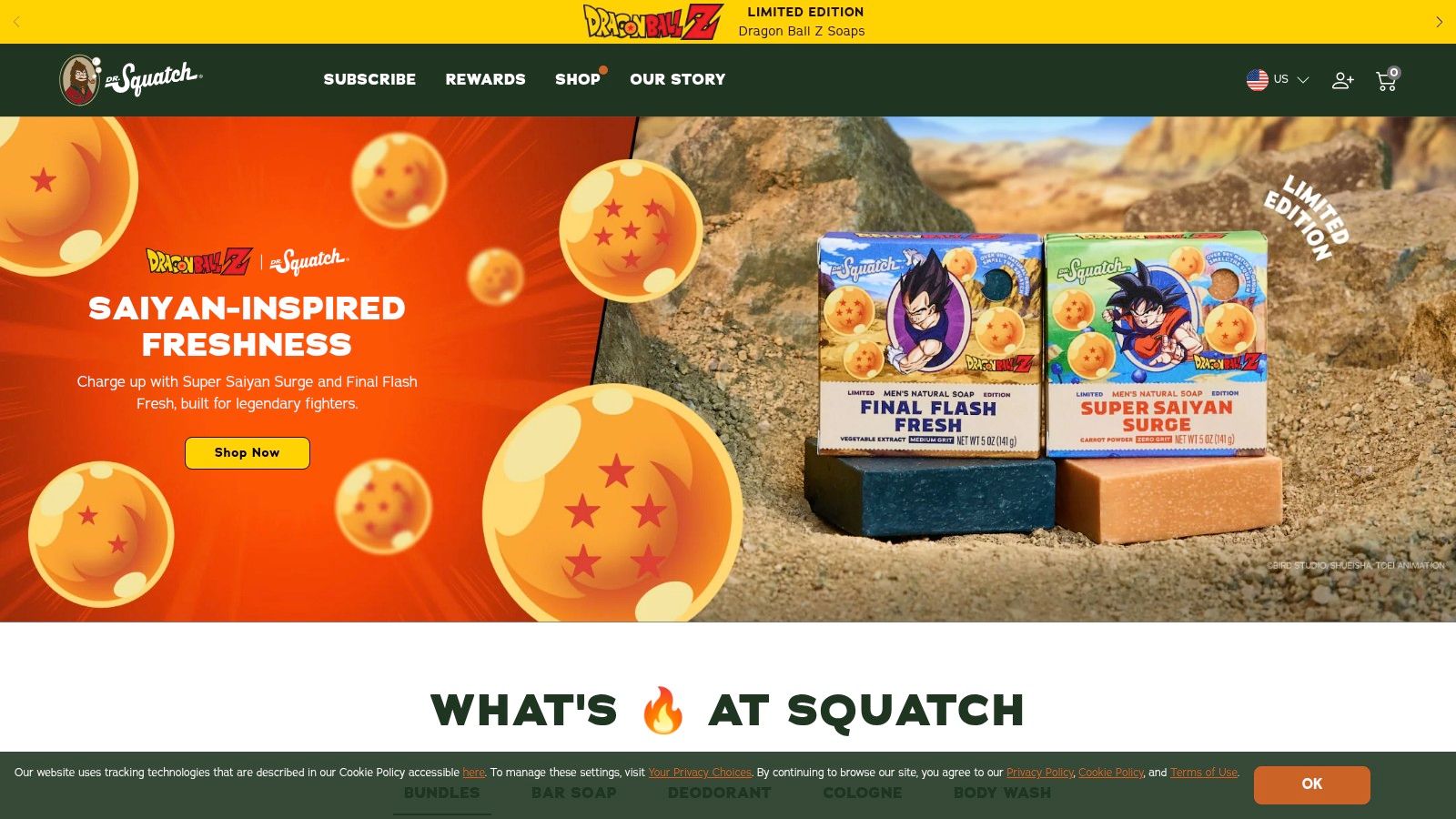
Dr. Squatch is a useful case study because it proves a point many founders miss. In personal care, brand voice does not sit on top of the product strategy. It shapes the entire funnel.
A lot of men’s grooming brands sanitize themselves into sameness. Dr. Squatch committed to a clear point of view and built merchandising around it. The tone is blunt, playful, and specific. The products, naming, bundles, and ad concepts all reinforce the same identity, so customer acquisition does not feel disconnected from the post-purchase experience.
That alignment is why the brand works.
The best Dr. Squatch products do more than sell units. They carry the acquisition story. Pine Tar is the obvious example. It is distinctive, easy to remember, visually demonstrable in paid creative, and broad enough to introduce the rest of the catalog.
That matters in consumables. The first purchase has to feel simple, and the second purchase has to feel inevitable. Dr. Squatch structures the path well. Hero SKUs pull in new customers, bundles raise cart value, and subscription gives satisfied buyers a low-friction reorder path.
The smart move is not just offering subscribe-and-save. Plenty of brands add subscription and still struggle with retention. Dr. Squatch makes replenishment fit the product behavior. Once a customer finds a scent or routine they like, reordering feels practical rather than forced.
The lesson is not the humor alone. It is the operating model behind the humor.
The category expansion is also disciplined. Soap, deodorant, hair care, cologne, giftable kits. The assortment has grown, but it still reads as one brand with one customer in mind. That sounds obvious. It is not. A lot of DTC operators add adjacent products and dilute the reason customers showed up in the first place.
Dr. Squatch also shows the limits of great creative.
Personal care is sensory. Scent preference is personal. Texture, grit, lather, and longevity affect whether a customer comes back, and no amount of sharp ad copy fixes inconsistency after the first order. If the product experience varies too much, retention softens fast and paid acquisition gets more expensive because the back end no longer supports the front end.
That is what makes Dr. Squatch worth studying among top DTC brands. It is not just a viral creative machine. It is a brand that connects positioning, hero products, bundling, and replenishment into a repeatable growth system founders can adapt.
| Brand | Implementation Complexity 🔄 | Resource Requirements ⚡ | Expected Outcomes 📊 | Ideal Use Cases 💡 | Key Advantages ⭐ |
|---|---|---|---|---|---|
| Warby Parker | High: vertical integration plus retail and clinical ops | High: retail leases, optical lab, clinicians, inventory | Strong LTV and omnichannel revenue; margin pressure from retail & low-margin categories | DTC brands expanding into retail and clinical services (eyewear/health-adjacent) | Transparent pricing, excellent CX, recurring revenue via exams/contacts |
| Hims & Hers | High: clinical, regulatory and subscription infrastructure | High: licensed clinicians, pharmacy partnerships, compliance systems | High recurring revenue and cohort retention; category-driven growth volatility | Telehealth-enabled subscription care and personalized medicine | Strong subscription ARPU, accessibility, rapid category iteration |
| Bombas | Medium: product ops plus donation program management | Medium: inventory, nonprofit partnerships, mission marketing | Good loyalty and AOV; margins constrained by donation costs | Purpose-driven basics with simple SKUs and social impact positioning | Mission resonance with consumers, perceived comfort and durability |
| Brooklinen | Medium: assortment tiering, bundle merchandising and promo testing | Medium: inventory, merchandising, content and promo management | Sustained DTC growth via bundles and repeat purchases; price sensitivity risk | Home textiles/commodity categories needing merchandising and bundles | Clear value ladder, product education that reduces returns and boosts AOV |
| Glossier | Medium‑High: community-led product dev plus omnichannel retail partnerships | Medium‑High: influencer/PR, retail ops, experiential stores | High brand awareness and omnichannel lift; risk of commoditization with price changes | Beauty brands leveraging content/community and wholesale retail (Sephora) | Community-driven R&D, strong influencer alignment, retail amplification |
| SKIMS | Medium: drop cadence, inclusive fit and multi-channel rollout | High: many SKUs, manufacturing, marketing and retail execution | Rapid sell-through and high DTC demand; volatility from hype and stockouts | Celebrity-backed apparel and shapewear with drops and inclusivity focus | Exceptional brand heat, inclusive sizing, strong conversion and social proof |
| Dr. Squatch | Low‑Medium: consumable product focus with subscription and retail | Medium: manufacturing, creative/video ads, fulfillment and subscriptions | Strong repeat/subscription potential; product subjectivity may limit some customers | Male-focused personal care consumables using bold creative and subscriptions | Distinctive brand voice, effective performance creative and subscription retention |
The lesson from these seven brands is less flattering than a lot of founders want it to be. Growth rarely breaks because the brand is not interesting enough. It breaks because the system behind the brand is weak.
Warby Parker reduced purchase friction in a high-consideration category. Hims & Hers built continuity around recurring customer need, not forced subscription logic. Bombas tied mission to a product people already wanted to buy again. Brooklinen used merchandising, bundles, and offer structure to win in a crowded category. Glossier turned audience attention into product demand, then expanded distribution to reduce channel risk. SKIMS paired cultural relevance with disciplined assortment, sizing, and launch mechanics. Dr. Squatch made consumables easier to repurchase through distinct creative and a clear subscription path.
That is the key takeaway from any serious review of top DTC brands. Founders do not need another list of brands that look impressive on Instagram. They need the operating logic underneath the growth. The useful question is not, “Which brand should I copy?” It is, “Which part of this playbook fits my margins, category dynamics, and customer behavior?”
Three patterns matter.
Retention now carries more of the burden than many teams planned for. As noted earlier, repeat purchase rates across DTC leave very little room for sloppy post-purchase experience, weak replenishment logic, or a catalog that gives customers nowhere to go after the first order. Brands that keep growing usually have a retention mechanism by design. Refill cycles, adjacent products, bundles, education, subscriptions, loyalty, SMS timing, creative sequencing. The exact mix changes by category, but the principle does not.
Emotional affinity also gets misread. Founders hear “community” and start posting more content. That is a shallow interpretation. What compounds is customer identity plus product utility. People come back when the brand makes them feel correctly understood and the product keeps doing its job. If either side is missing, retention softens fast.
Omnichannel belongs in the conversation sooner than many pure-play operators admit. Not because wholesale is fashionable, but because channel expansion can reduce CAC pressure, improve trust, create replenishment convenience, and broaden discovery. It can also wreck margin, create forecasting problems, and blur your positioning if the rollout is undisciplined. The right move depends on contribution margin, reorder behavior, and whether physical presence solves a real customer problem.
That trade-off is the work.
Reading teardowns helps, but execution is where brands either mature or stall. Founders have to decide which hero products deserve a subscription path, which adjacent SKUs increase LTV instead of cluttering the assortment, when retail expands reach versus compresses profit, and how much complexity the team can absorb. Those are operator questions, not branding questions.
For teams already at that stage, communities such as Million Dollar Sellers can be useful. The value is not inspiration. It is access to founders comparing real performance across Amazon, DTC, and wholesale, with enough scar tissue to tell you which tests are worth running and which mistakes are expensive but avoidable.
Tools matter too, but only in their proper place. If your team is rebuilding PDPs, launching new offers, or refreshing merchandising creative, tools such as put product on model AI can help speed up asset production. Speed helps. Clear strategy matters more.
Established ecommerce operators go to Million Dollar Sellers when they want sharper answers than public Twitter threads and recycled conference decks. If you run a serious brand and want access to proven founders, candid execution talk, and a vetted peer network built for scale, apply to join Million Dollar Sellers.
Join the Ecom Entrepreneur Community for Vetted 7-9 Figure Ecommerce Founders
Learn MoreYou may also like:
Learn more about our special events!
Check Events