Chilat Doina
June 10, 2026
You're staring at a 2026 event calendar, trying to decide whether to spend the next quarter's travel budget on a founder room, a giant retail expo, or another seller conference that promises more than it delivers. That decision gets expensive fast. The wrong event costs airfare and tickets, but the bigger loss is a week of missed operating time and a notebook full of ideas your team never uses.
Ecommerce is large enough, competitive enough, and fragmented enough that event selection has become an operating decision. UNCTAD estimated business e-commerce sales across 43 economies reached almost US$27 trillion in 2022 after rising from almost US$25 trillion in 2021. As a result, ecommerce events now sit inside a mature market where operators are looking for specific answers on AI, retention, marketplaces, retail, and omnichannel execution.
The better question is simple. Which room matches your stage and gives you a return you can measure?
A 7-figure Amazon seller usually needs tactical conversations about margin, PPC efficiency, and channel expansion. An 8-figure DTC brand may get more value from meetings on retention, wholesale, and team structure. A 9-figure omnichannel operator is playing a different game entirely, with enterprise retail relationships, systems integration, and executive-level partnerships on the table. Those are not the same buying decisions, so they should not lead to the same event calendar.
This guide filters events by business stage, model, and outcome. It highlights where private operator communities like entrepreneur mastermind groups for ecommerce founders can outperform broad conferences, where a major expo makes sense, and where high-level operators can justify the time because the room is strong enough to change real decisions. If you want a wider list after this shortlist, browse quso.ai's calendar.
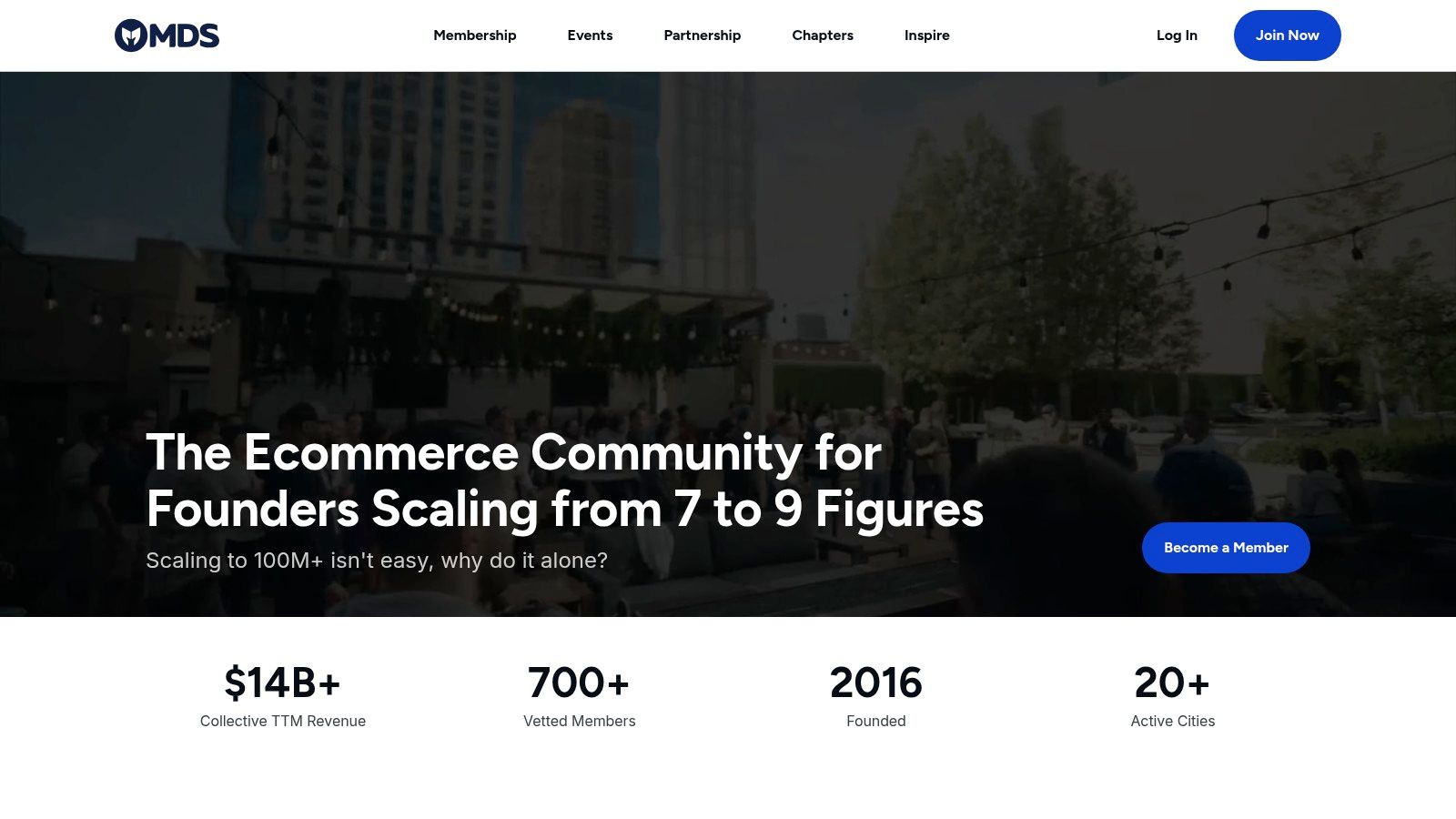
Million Dollar Sellers is the one I'd put at the top for operators who are past theory and need high-trust conversations with people already carrying similar complexity. This isn't a general conference built for broad appeal. It's an invite-only founder community with live events, local chapters, masterminds, and a flagship summit designed for sellers who are already in motion.
The biggest difference is the quality of the room. When you're talking with founders managing Amazon, DTC, TikTok Shop, wholesale, or full omnichannel growth at the same time, the conversation changes fast. People stop asking beginner questions and start comparing margin structures, team design, channel conflict, inventory risk, and what's working right now.
Most ecommerce events give you density. MDS gives you relevance. That's a much bigger advantage.
A large expo can help you discover vendors. A peer-vetted founder room helps you pressure-test decisions before they become expensive. If you're a 7-figure Amazon seller pushing into DTC, or an 8-figure brand trying to clean up channel sprawl, that's often worth more than another keynote.
Practical rule: The more complex your brand gets, the more valuable closed-door operator conversations become.
There's also a format advantage here. Instead of treating events as isolated moments, MDS extends the value before and after the room. That matters because most event ROI doesn't fail at the event. It fails in the weeks after, when nobody follows up, nobody implements, and nobody keeps score. Communities with ongoing accountability solve that better than standalone conferences. If mastermind-style learning is part of how you make decisions, this breakdown of mastermind groups for entrepreneurs is worth reading.
MDS is best for:
Trade-offs are real.
If your business is at the point where one strong introduction can change your hiring, channel, or acquisition roadmap, Million Dollar Sellers is one of the highest-signal ecommerce events available.
Visit Million Dollar Sellers.
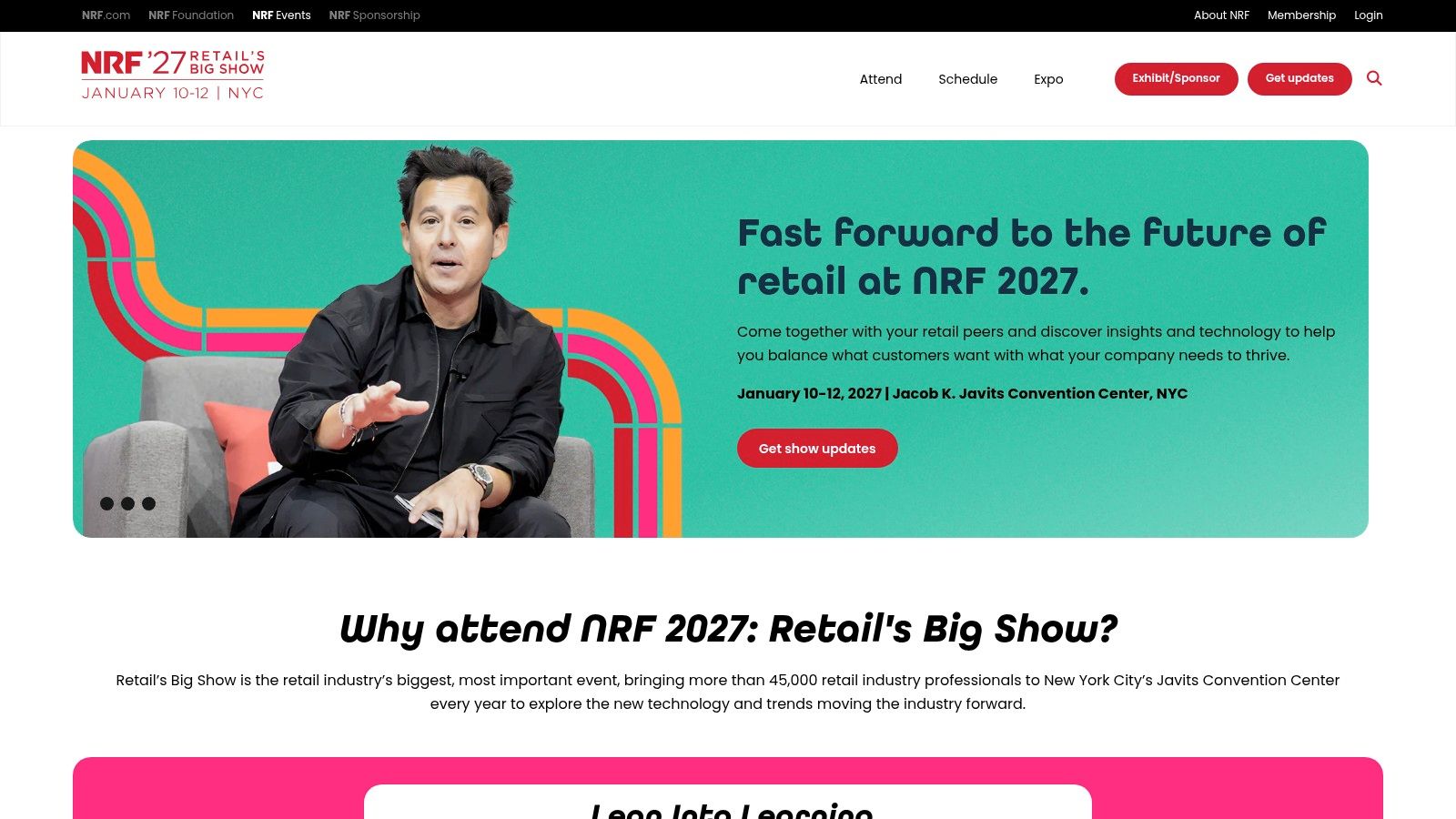
NRF is the room for scale. If your brand is moving past pure ecommerce into real omnichannel complexity, NRF is the place to observe how enterprise retail thinks about commerce, stores, fulfillment, payments, and technology in one place.
This isn't where I'd send a newer Amazon-first seller looking for tactical listing advice. It is where I'd send a leadership team that needs to evaluate platforms, validate macro priorities, and compare retail infrastructure without doing twenty separate vendor demos over the next quarter. If you want a wider view of the category, MDS has its own perspective on ecommerce events that's useful alongside a big-show option like this.
NRF works best when your questions are cross-functional. Think areas like:
For ticket context, major retail conferences often land in the US$1,500 to US$3,000+ range, with Adobe Summit cited at US$2,295 and a US$400 early-signup discount. That pricing tells you what these events are really selling. Not basic education. Access, vendor density, and decision speed.
Go to NRF with a schedule, a vendor shortlist, and three internal priorities. If you show up to “see what's interesting,” the event will bury you.
The downside is obvious. NRF is huge. Without discipline, you'll collect notes and conversations but leave without a clear next move. For enterprise and upper-midmarket brands, though, that breadth is exactly the point.
Visit NRF Retail's Big Show.
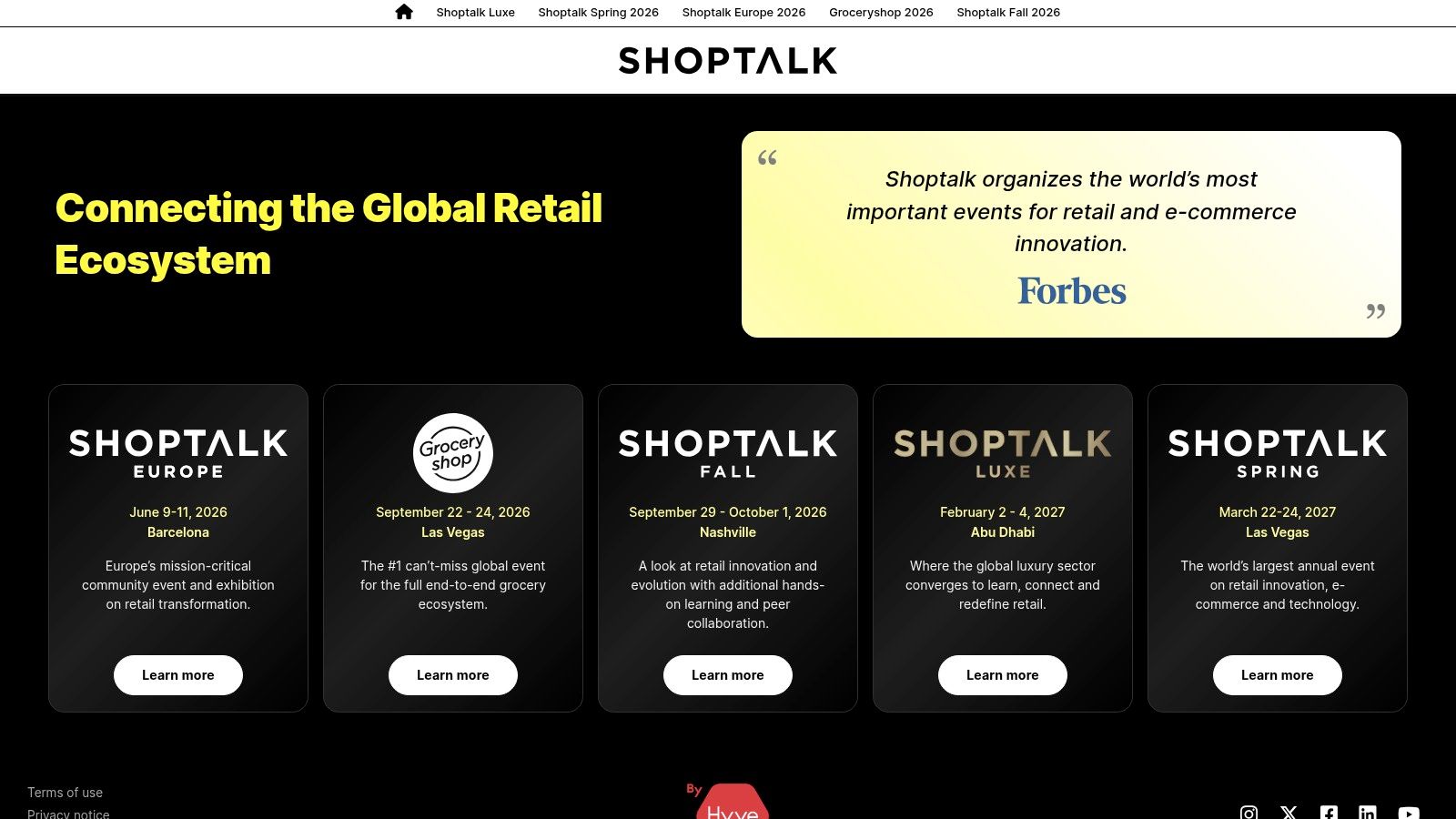
Shoptalk is one of the better choices if you value structured meetings more than wandering an expo floor. That's the core reason many operators keep it on the calendar. The event is built around making introductions happen faster, especially if partnerships, tech deals, or retail media conversations are a priority.
For DTC and omnichannel brands, that's a meaningful distinction. A lot of ecommerce events say they're good for networking, but what they really offer is proximity. Shoptalk is stronger when you want actual meeting volume with decision-makers and you don't want to rely on chance.
This is the event I'd choose when the goal is one of these:
Coverage of 2026 event trends already points to AI, loyalty, and omnichannel integration as rising priorities, with some conference curation explicitly separating broad events from more specialized rooms focused on implementation rather than generic ecommerce education, as noted in ConvertCart's conference roundup. Shoptalk fits that shift. It's less about ecommerce 101 and more about where operators place bets now.
The trade-off is that sessions often skew strategic. That's useful if you're choosing partners, exploring retail media, or building cross-functional initiatives. It's less useful if your team wants hands-on execution playbooks for Amazon ads, listing optimization, or creative testing next week.
Visit Shoptalk.
eTail Palm Springs tends to hit a practical middle ground that many growth-stage brands need. It's established enough to attract serious operators and solution providers, but it usually feels more manageable than the biggest retail shows.
That matters because conference ROI often drops when the room gets too broad. eTail stays close to ecommerce execution. Customer acquisition, conversion, retention, and omnichannel operations all tend to show up in a way that's useful for brand teams trying to improve the business they already have, not just admire where the market is going.
If your team wants sessions tied to revenue levers rather than pure industry theater, eTail is a strong candidate. It usually works well for:
One reason I like this category of event is simple. It's easier to turn a solid conversation into a real working relationship when you're not fighting the chaos of an oversized expo. You can spend more time on fit and less time on logistics.
The best events for mid-market brands are often the ones with enough scale to attract strong vendors, but not so much scale that every conversation turns superficial.
The downside is fit. If your business is heavily Amazon-first, you may find the content a bit broader than you want. If you're a senior operator at a very large omnichannel brand, NRF or Shoptalk may offer better enterprise density.
Prosper Show is where I'd send a serious marketplace seller who wants tactical signal. If your revenue still runs primarily through Amazon, and you care about ads, operations, listings, reimbursements, agency selection, and expansion into adjacent marketplaces, this is one of the most relevant rooms on the calendar.
This isn't a broad retail strategy event dressed up for sellers. It's built around marketplace operators and the provider ecosystem around them. That concentration is useful because it shortens the path from learning to implementation.
Prosper is strongest for operators who need answers in areas like:
The limitation is just as clear. If you're running a balanced DTC plus retail plus Amazon stack, Prosper can feel narrow. But for 7-figure to 9-figure marketplace brands, narrow is often exactly what you want. Broad events can waste time when your real bottleneck is account-specific execution.
Another reason Prosper matters now is the B2B side of commerce around sellers and vendors. The U.S. International Trade Administration notes that global B2B e-commerce is projected to grow at a 14.5% CAGR through 2026. That's one reason specialized seller events continue to matter. The merchant economy around software, logistics, agencies, and supply chain services keeps expanding with it.
Visit Prosper Show.
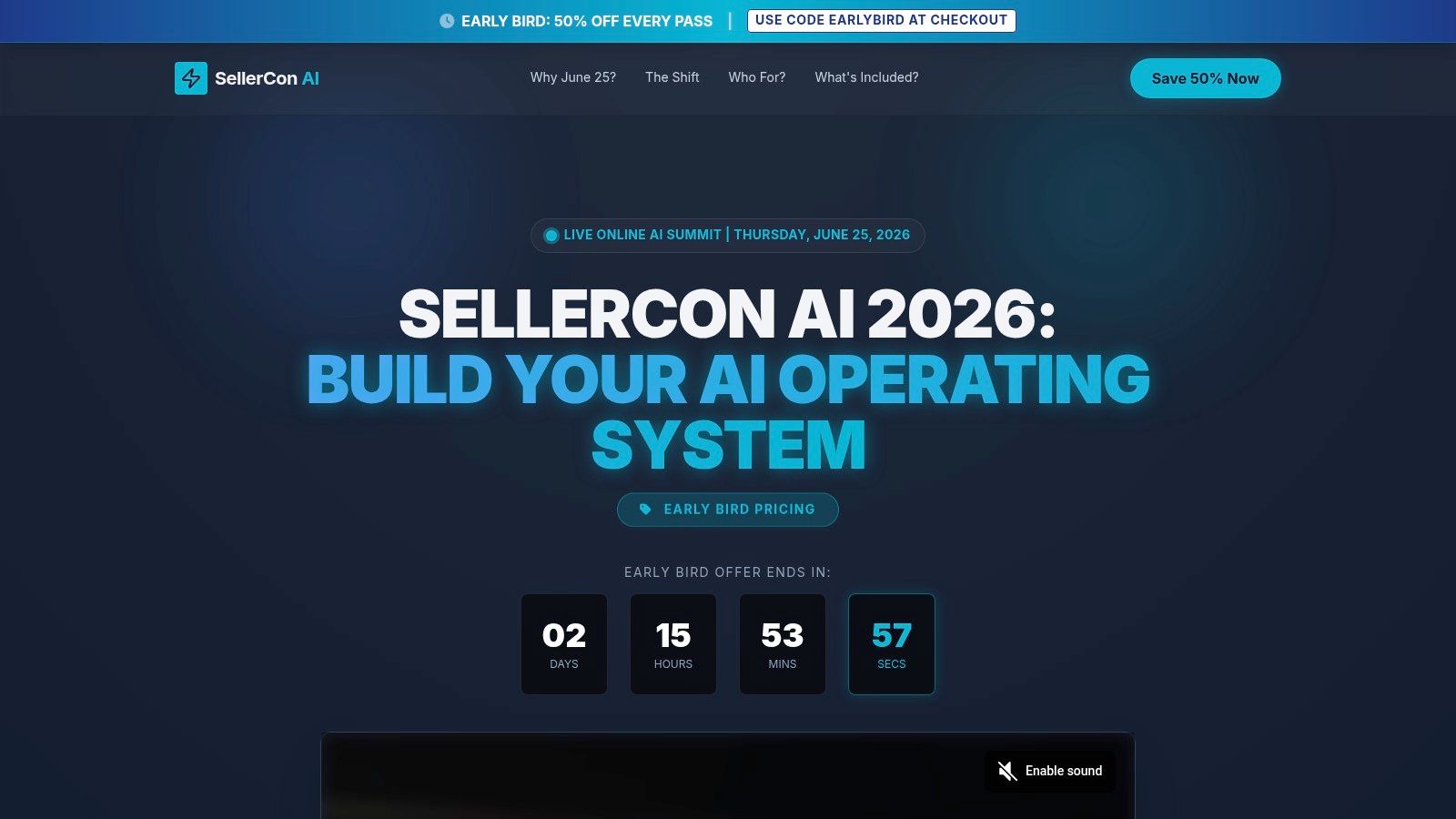
A common scenario: the team knows AI matters, has tested a few tools, and still has no clear operating plan. SellerCon AI 2026 fits that moment well. It is built for teams that want to turn scattered experiments into a short list of workflows they can ship.
That makes this event a stronger fit for execution-focused operators than for founders who mainly want broad networking. The value comes from compressed learning around one priority: using AI in content, ads, SEO, automation, and internal operations without dragging the project out for another quarter.
Choose SellerCon AI when the primary question is not whether to use AI, but where it should show up first and who should own it. I would put it on the shortlist for teams asking:
As noted earlier, ecommerce is already operating at enough scale that small workflow gains matter. That is why focused AI events are getting more useful. Operators do not need another abstract case for adoption. They need working examples, implementation priorities, and a realistic sense of the trade-offs.
The trade-off is clear. A virtual, one-day event usually produces weaker relationship-building than a strong in-person room. But if your goal is faster execution, that can be a fair swap. Teams that come in with a defined problem set tend to leave with better returns, especially if they pair the event with practical reading on AI for ecommerce before they attend. There is also a broader systems question behind all of this, particularly as agent-driven buying changes how brands think about integrations and Ecommerce API infrastructure.
SellerCon AI is best for operators who already know their bottleneck and want faster implementation, not more conference sprawl.
Visit SellerCon AI.
Sellers Summit is the event I'd recommend to founders who want tactical learning in a smaller room. It's not trying to be the biggest show in ecommerce. That's part of the appeal. You go there when you want sessions that feel close to workshop territory and conversations that don't disappear into conference sprawl.
This format is especially useful for operators in the messy middle. Maybe you've outgrown beginner content, but you're not trying to run enterprise vendor procurement at scale. You need practical advice on sourcing, ads, content, analytics, and operations from people who've done the work.
A lot of founders underestimate how much conference size shapes learning quality. Smaller events usually help in three ways:
One of the biggest gaps in public coverage of ecommerce events is ROI measurement. Most event guides focus on networking and learning, but they stop short of explaining how different event formats should be evaluated after the fact. As noted in Sticky.io's 2026 trade show analysis, that leaves founders without a solid framework for choosing between large shows, focused summits, and lower-cost regional or niche events.
Sellers Summit is strong when your goal is implementation. It's less ideal if you need a giant vendor floor or enterprise partnership pipeline. But for founder-operators who want useful conversations and immediate tactical value, it's often closer to what moves the business.
Visit Sellers Summit.
| Item | Implementation Complexity 🔄 | Resource Requirements ⚡ | Expected Outcomes ⭐📊 | Ideal Use Cases 💡 | Key Advantages |
|---|---|---|---|---|---|
| Million Dollar Sellers | High 🔄 (invite, vetting, active participation) | High ⚡ (≈$7.5k/yr + events, time commitment) | High ⭐📊 (rapid revenue growth, deals from network) | Founders scaling $1M–$500M+ seeking operator peer help | Founder‑only, vetted network; 1,000+ hours content; SOPs & partner offers |
| NRF: Retail's Big Show | Medium 🔄 (multi‑track planning, agenda navigation) | High ⚡ (travel, multi‑day attendance, large expo) | High ⭐📊 (trend validation, enterprise vendor discovery) | Enterprise leaders & brand teams needing cross‑functional strategy | Broadest US retail exposure; deep vendor pool; executive keynotes |
| Shoptalk Spring 2026 | High 🔄 (pre‑scheduled 1:1s and curated meetings) | High ⚡ (premium pricing, Las Vegas lodging) | High ⭐📊 (fast partnership conversion, strategic deals) | DTC/omnichannel brands and marketplace operators seeking deals | Efficient 1:1 meetups; senior‑level attendee mix; retail media focus |
| eTail Palm Springs | Medium 🔄 (manageable conference scale, curated sessions) | Medium ⚡ (resort travel; moderate fees) | Medium‑High ⭐📊 (practical tactics for conversion & retention) | DTC brands and growth teams focused on CRO and operations | Intimate setting; hands‑on ecommerce content; curated networking |
| Prosper Show | Medium 🔄 (expo navigation, heavy tactical sessions) | Medium‑High ⚡ (travel, expo time, vendor meetings) | High ⭐📊 (actionable marketplace tactics; tech stack upgrades) | Amazon/Walmart/TikTok sellers (7–9 figure brands) | Deep Amazon‑centric content; concentrated advanced operators & vendors |
| SellerCon AI 2026 | Low 🔄 (single‑day virtual, condensed format) | Low ⚡ (no travel; optional paid bundles) | Medium ⭐📊 (practical AI playbooks, 90‑day implementation) | Teams adopting AI for content, ads, SEO and automation | Virtual convenience; focused AI tactics; recordings & follow‑ons |
| Sellers Summit | Low‑Medium 🔄 (small, workshop logistics) | Medium ⚡ (travel; limited capacity) | Medium‑High ⭐📊 (immediate how‑tos and mentor access) | Founders and small teams wanting hands‑on, tactical workshops | Practitioner‑led sessions; high signal networking; accessible mentors |
The event itself is only the trigger. The payoff comes later, when you decide what to implement, who to follow up with, and what gets ignored. Most founders lose event ROI because they return to a packed inbox, let a week pass, and never convert notes into action.
Start with triage. Within a few days of getting home, sort everything into three buckets: ideas worth testing, people worth following up with, and vendors worth evaluating. If something doesn't fit one of those buckets, it probably wasn't that important.
Then build a simple post-event operating plan.
This matters more now because ecommerce events sit inside a fragmented market. Some are built for awareness. Some are built for partnerships. Some are built for implementation. If you don't define the job of the event before you attend, you'll struggle to judge whether it worked after the fact.
I'd also separate event ROI into two categories. First is immediate return, such as a vendor shortlist, a solved problem, or a new partnership. Second is strategic return, which shows up when a conversation changes your roadmap, your hiring, or your channel mix months later. The best events can do both, but you only capture that value if someone on your team owns the next step.
A conference doesn't create growth. Your team does, after the conference, when someone makes the hard call to change something.
That's why ongoing peer access matters so much. A two-day event can give you momentum, but it usually can't provide sustained accountability. Communities do that better. They keep the conversation alive, help you sanity-check implementation, and turn one strong event into a durable advantage. For founders operating at a high level, that's where Million Dollar Sellers stands out. It doesn't treat networking as a moment. It turns it into an always-on strategic asset.
If you're already operating at a serious level and want more than another conference badge, Million Dollar Sellers is worth a close look. It combines exclusive events with an always-on founder network, which is often the difference between hearing a good idea and executing it.
Join the Ecom Entrepreneur Community for Vetted 7-9 Figure Ecommerce Founders
Learn MoreYou may also like:
Learn more about our special events!
Check Events