Chilat Doina
December 18, 2025
Finding a winner on Amazon starts with a clear filter. Think of it as a three-part puzzle: demand, margins, and sampling. Nail each piece and you’ll dodge common pitfalls before ordering a single unit.
Below is the decision flow that walks you through Demand, Margin, and Sampling checks. Each gate must pass before you scale up.
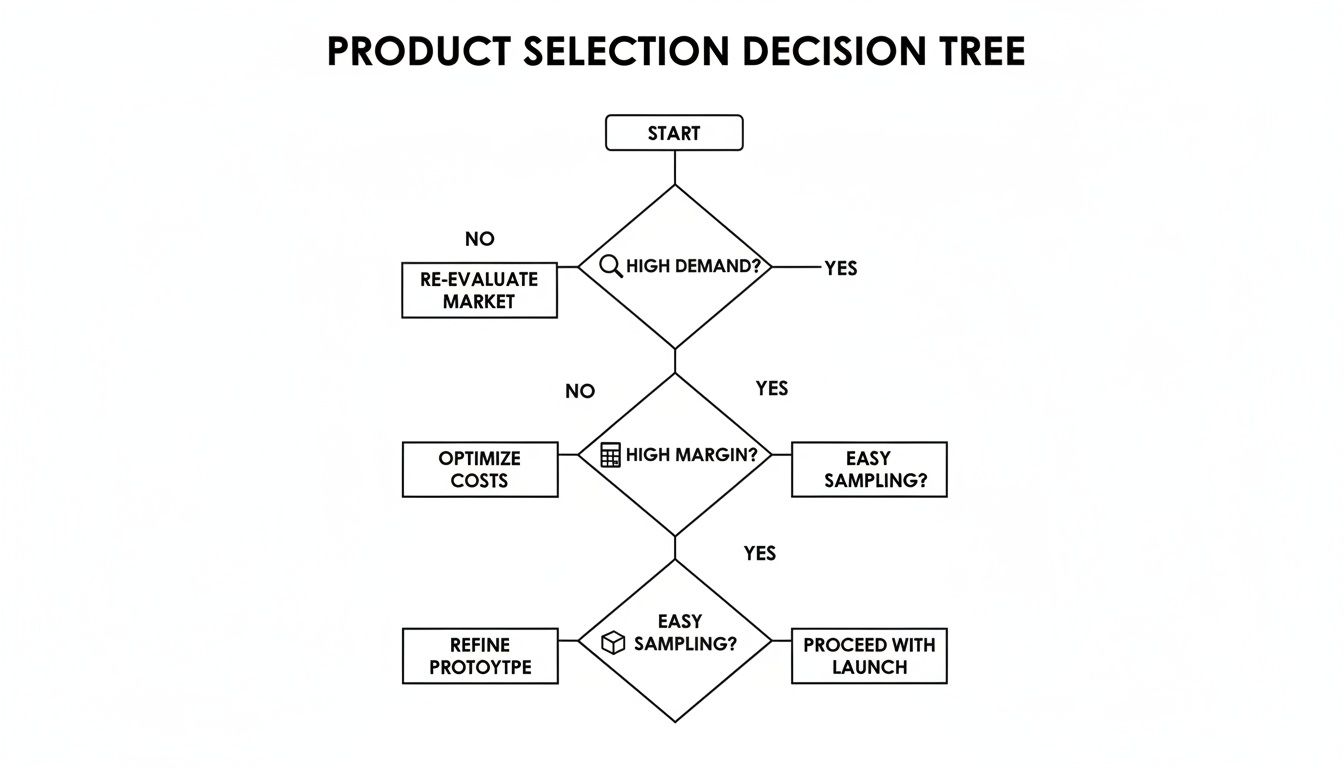
That flow makes one thing clear: if demand isn’t there, no margin calculation or sample test will save you. Each filter tightens your focus on viable products only.
Here’s a quick snapshot of the main filters you’ll apply before placing any big orders.
CriteriaWhat To MeasureExample ToolDemandEstimated weekly sales (≥50 units)Helium 10MarginNet profit after all costs (≥30%)Amazon FBA CalculatorSamplingBuild quality and packaging checksAlibaba
Use this table as your checklist. If an idea fails one of these, go back to the drawing board. You’ll save both time and money by sticking to clear, data-driven gates.
Passing through these filters feels like ticking off safety nets. By the time you launch, you’ve already weeded out the risky bets.

Scouring Amazon for a game-changing niche is part art, part data crunching. Dive into subcategories and you’ll find little corner markets ready for a smart entry.
I’ve seen plenty of niches with a Best Seller Rank sitting between 3,000 and 20,000; they pull in steady orders without giant brands dominating every sale. But don’t stop there—drop into Google Trends and you might spot a surge that others haven’t noticed yet.
Price tags matter as much as demand. I usually target items priced $15–$40. They trigger impulse buys and still pack a solid margin. Anything under $10 gets razor-thin profits; above $100 requires deep pockets and expert positioning.
Before you spend a penny, test each idea against two simple rules: consistent demand and competitors you can realistically outrank. It keeps your budget focused on winners.
Most of my research starts with Helium 10 or Jungle Scout feeding into a clean spreadsheet. I pull in three numbers: BSR, monthly sales estimate, and average review count.
I also bookmark Amazon’s Movers & Shakers. When a product jumps in rank, that’s your early warning. This triage takes me 2–3 days, and by the end I’ve usually narrowed down three promising niches for deeper cost modeling.
Reviews are your barrier to entry. I aim for niches where the top products average under 300 reviews, so a new launch can surface faster.
Picking niches with fewer than 300 reviews gives you a 60% higher chance to reach page one within a month
CriteriaIdeal RangeExample ToolBest Seller Rank3,000–20,000Jungle ScoutAvg Review Count< 300Helium 10Google Trends ScoreRising Year-OverGoogle TrendsSeasonal Spike MonthIdentified EarlyTrendster
Use this table as your quick sanity check before committing.
Last winter, I tracked resistance bands climbing every December. Google Trends showed a 120% spike—so I got inventory landing in early January.
Here’s what I did:
The result? A complete sell-out within two weeks and a 15% conversion rate on the first round of PPC.
Check out our guide on Best Sellers on Amazon FBA for deeper dives into top-performing categories.
Nailing niche research sets you up for every next step: unit economics, supplier scouting, and beyond. Master this first, and the rest falls into place.
Metric-driven niches stand a far better chance than gut-feel picks. I like to begin with monthly search volumes—then convert those into weekly sales estimates. In practical terms, you want to see at least 50 units per week, which hints at steady buyer interest rather than a one-time spike.
A quick scrape of the Buy Box reveals how crowded your niche is. I usually pull:
These figures tell a lot. If the top listings average under 500 reviews, you’ve found a soft spot where fresh entries can shine before the big players lock down social proof.
When you dive into each listing’s title, images, bullet points and description, gaps become obvious. That rough image or weak headline you spot? That’s your opening. A crisp photo or a keyword-rich bullet list can move you up the ranks overnight.
Amazon is vast—around 9.7 million active sellers worldwide, with over 90% of SKUs coming from third parties. In my last product hunt, I filtered subcategories by daily demand trends and seller congestion. It saved me from launching against walls of low-cost providers.
Tracking BSR day-to-day for a month uncovers real momentum rather than short-lived promotions. For instance, a listing that dips sharply for two days might owe that to a coupon push, not organic demand.
Here’s how my dashboard looked on a typical search results page:
See those lower-ranked offers with fewer reviews? That’s where a polished listing and competitive price give you an edge.
Combine these metrics—search volume, BSR trends and listing quality—and score each niche on demand versus competition. This forms the backbone of your entry strategy.
To keep things objective, I build a simple rubric and only test products that check all the boxes:
CriterionThresholdActionEstimated Weekly Sales≥ 50 unitsPassAverage Review Count< 500 reviewsPassListing QualityHigh-res images + complete bulletsPass
Apply this table to every candidate. If a niche misses the mark, move on. This filter ensures you focus on opportunities where sales potential outpaces the risk of entrenched competition.
Translating keyword data into sales forecasts doesn’t need to be guesswork. Here’s the quick formula I use:
Estimating sales from search data helps you set realistic revenue targets.
With this baseline, you immediately see if a niche can hit 50 units per week. Layer on your BSR analysis and listing audit, and you’ve got a clear product selection framework.
Stay agile, keep testing, and refine your approach as the market shifts.
You can’t launch on Amazon without knowing exactly where your profits are hiding—and where they’re leaking. A thorough landed cost model lays everything out, from factory floor to customer’s doorstep. Getting this right up front saves headaches (and cash) down the road.
Think of your landed cost model as a financial blueprint for every unit. It captures every expense so you’re not caught off guard when you kick off your PPC campaigns.
Include these line items before you spend a single dollar on ads:
Below is a sample margin model for a product priced at $25. This table breaks down cost components so you can see how each piece chips away at your margin.
Cost ComponentExample CostPercentage Of Sale PriceProduct Unit Cost$8.0032%Freight And Customs$2.5010%Amazon FBA And Handling Fees$4.0016%PPC Launch Budget$3.7515%Net Profit$6.7527%
As you can see, FBA fees alone can consume around 16% of your sale price. Aim for a minimum 30% profit after all fees and ad spend. Adjust your inputs until those margins are solid.
Below is a view of Amazon’s FBA fee calculator outlining each fee component.
While you’re crunching numbers, reach out to both domestic and overseas suppliers. Getting quotes side by side helps you spot the real trade-offs.
Order multiple samples. A small investment now prevents big surprises later.
Once samples land on your desk, it’s time to dig deep. A clear QC process avoids mistakes that can tank your launch.
A pre-shipment inspection flags flaws before you pay for full production.
A reliable freight partner can shave weeks off your timeline and cut costs.
Compare quotes from at least three forwarders. Ask about door-to-door insurance and confirm Incoterms like DDP.
Shipping OptionCost FactorTransit TimeBest ForLCL (Less-Than-Container)Lower volume, flexible20–30 daysSmall batches under 5 CBMFCL (Full Container Load)Best per-unit cost30–45 daysHigh-volume orders or regular restocks
Starting with an LCL shipment keeps your MOQ low while you test sales velocity.
Structuring payments around audit checkpoints keeps you protected.
Third-party QC or video inspections give you real-time confidence.
“Margin attrition often hides in small fees like labeling or storage.” — Experienced Amazon seller
A customs broker becomes your best friend when you’re navigating duties and HS codes.
Also, double-check FBA prep requirements—polybag sealing, suffocation warnings, and so on—before placing your bulk order.
Everything comes together in this last gate. Run a final audit to ensure your margins still hit your target.
Clearing this final checkpoint means you’re ready to scale without nasty surprises.
Check out our guide on how to calculate product costs for step-by-step formulas and a free template by visiting How To Calculate Product Costs.
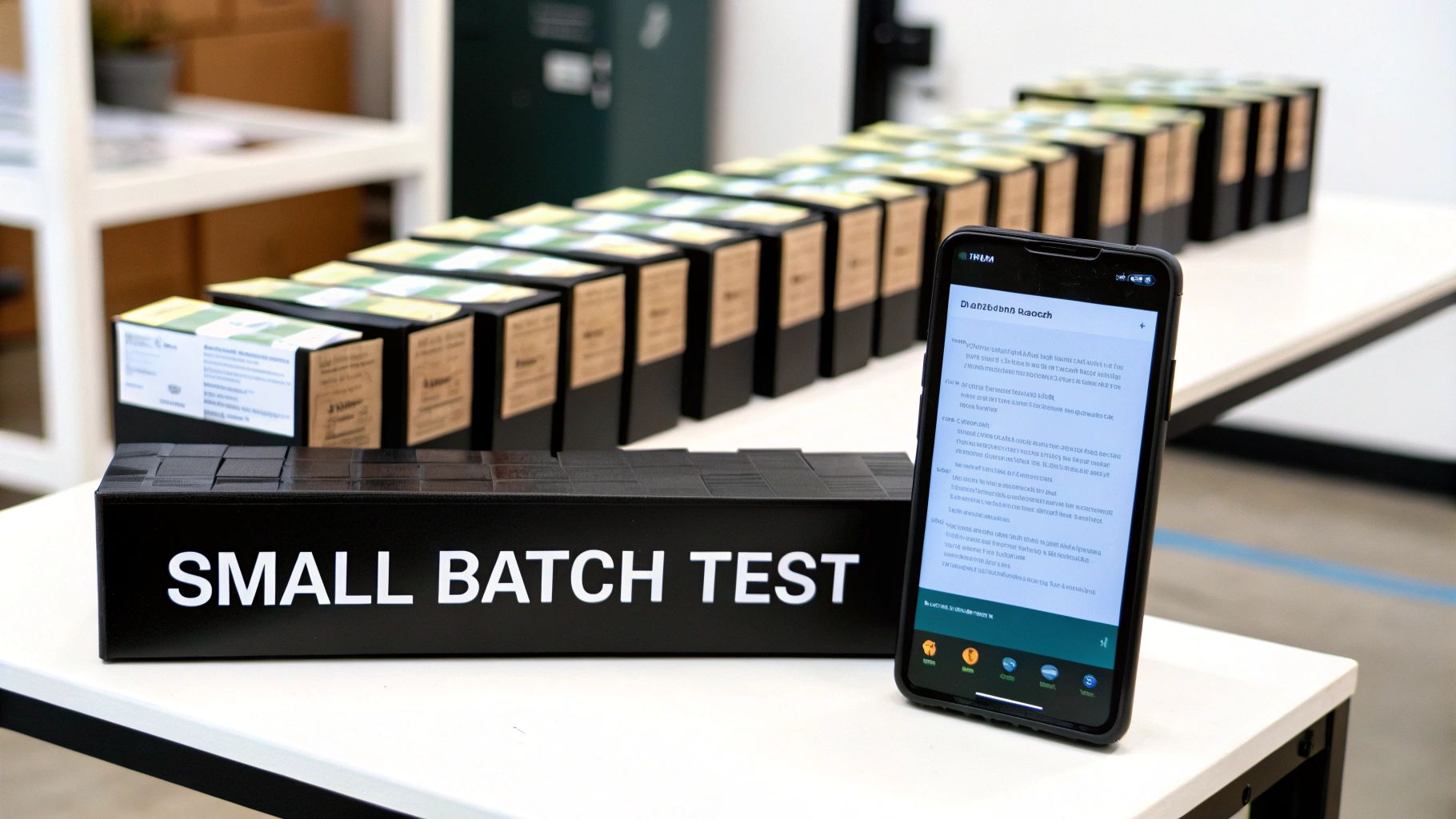
Small-batch testing is where ideas meet reality. Instead of a massive inventory commitment, you’re shipping just 20–50 units to FBA. Those first sales turn guesses into hard numbers.
An optimized listing makes every click count. Think crisp, high-resolution photography paired with concise, benefit-driven copy.
Once your page looks polished, kick off PPC campaigns around top keywords. Keep daily spend in check so you learn fast without breaking the bank. Watch for that sweet spot: a 10% (or higher) conversion rate signals strong market fit.
Small tweaks here can spark big gains later. Focus on clarity and persuasion.
Checklist For Your Test Listing:
Early reviews are gold. Use automated follow-up emails and strategic coupon codes to encourage honest feedback. Ask buyers about packaging, sizing, and ease of use—those insights guide your next supplier conversation.
"A 10% conversion rate in a small run almost always translates to sustainable success when scaled." — Top Amazon Seller
Packaging hiccups? Material concerns? Pay attention. One seller altered box dimensions after buyers reported bent corners. The result: a 50% drop in damages on the follow-up batch.
The PPC dashboard becomes your decision engine. Track clicks, impressions, cost-per-click, and conversion together.
MetricThresholdActionConversion Rate≥ 10%Green light to scaleACOS≤ 30%Keep bids steady or increaseReview Count≥ 10 reviewsExplore new color/style variants
Clear these gates, and you’re ready to raise your reorder. Reach out to your supplier with updated quantities and negotiate better MOQs.
You might be interested in our guide on initial sample sourcing and pricing strategies; read more about buying on Alibaba to streamline your supplier selection
https://milliondollarsellers.com/blog/how-to-buy-on-alibaba
Finalize your bulk order only once reorder triggers and lead times are locked in. Aim for twice your test-run quantity to cushion early sales.
Negotiate payment terms tied to inspection milestones. That way, you avoid stock outages and stay in the Buy Box.
With everything aligned, allocate your full budget and ramp production confidently. From here, growth is a matter of increasing ad spend by about 20% each month.
You’ve proven your product converts, so now you need a roadmap that builds lasting momentum. It starts with a brand narrative that shines through every piece of packaging and listing detail.
Keep in mind: differentiation isn’t static. As feedback rolls in, every tweak—from bundle options to price points—feeds into your next scaling decision.
A memorable brand story goes beyond marketing speak; it reflects why you started in the first place. Take an eco-friendly kitchen gadget: weave your commitment to responsible sourcing into listing copy, packaging, and customer emails.
“Packaging is your first handshake with the customer—make it memorable.” — Experienced Seller
Once your main search terms are humming along, it’s time to branch out. Look at your PPC data and pull 5 adjacent keywords—think colors, materials or unique features—to test next.
Often, long-tail phrases convert at higher rates thanks to lower competition. Refreshing your keyword mix and updating listings every quarter keeps you in Amazon’s best light.
Keyword TypeMonthly SearchesConversion RateCore Keyword10,00012%Long-Tail Variant2,5008%New Feature Search1,2007%
Without clear targets, scaling feels like throwing darts blindfolded. Map out quarterly milestones—like launching in a new marketplace or expanding your SKU roster—and tie each goal to a concrete KPI.
MilestoneKPI TargetNew Marketplace Launch5% of salesBundled Product Release10% uptickKeyword Expansion15% click lift
“Reinvesting 20–30% of profits back into growth keeps momentum alive.” — MDS Community Insight
Align your cash flow and supplier lead times to avoid overstocking or stockouts.
Vigilant tracking of rival listings reveals opportunities before they become threats. Set up daily alerts for Buy Box swings, Best Seller Rank shifts and fresh image uploads.
“Staying one step ahead of competitors is as important as scaling ads.” — Veteran Seller
Your product selection on Amazon isn’t a one-and-done decision—it’s a continuous cycle of feedback, iteration and growth.
What Metrics Matter Most When Choosing A Product To Sell On Amazon?
It all boils down to real demand and solid profits. I zero in on:
Seeing consistent demand of 50 units per week or more tells you this niche isn’t just a flash-in-the-pan trend.
These four figures separate promising ideas from time sinks:
“Focusing on search volume and margin early cuts out weak ideas fast.”
When these numbers line up, you can move forward without second-guessing.
How Many Competitors Is Too Many?
A crowded field will eat your ad budget alive. I look for categories where the top listings average under 500 reviews—that gap gives you breathing room to build trust and win the Buy Box.
To vet competition:
Lower review counts often mean sloppy listings, which you can outshine with sharper images and tighter copy.
You don’t need a fortune to test a concept. Start with 20–50 units in your first batch and set aside 10–15% of your sale price for PPC testing. That balance delivers genuine conversion data without blowing your budget.
Before launch, make sure to:
A sustained 10%+ conversion rate is your green light to scale.
Quality control starts long before you place a bulk order. My go-to checklist:
This routine unearths hidden issues early and keeps your launch on track.
Ready to refine your sourcing and sales strategy? Join the top e-commerce minds in Million Dollar Sellers at https://milliondollarsellers.com for exclusive insights and peer support. Unlock expert feedback on real product ideas now. Access exclusive tools and templates today.
Join the Ecom Entrepreneur Community for Vetted 7-9 Figure Ecommerce Founders
Learn MoreYou may also like:
Learn more about our special events!
Check Events