Chilat Doina
January 14, 2026
Selling your Amazon business is more than just a transaction; it's the culmination of your hard work. The process involves turning your operation into a polished, turnkey asset, getting a realistic valuation, finding the right buyer, and navigating the often-tricky due diligence and closing.
The real secret? The heavy lifting happens months before you ever list it. Meticulous preparation is what separates a good exit from a great one, directly impacting your final sale price and how smoothly the whole deal goes down.

Before you even dream of an offer, the most critical work begins. This is where you need to stop thinking like a day-to-day operator and start thinking like an asset builder. The goal is simple: create a business that a new owner can step into and scale from day one with as little friction as possible. This isn't just about tidying up; it's a strategic overhaul designed to squeeze every last drop of value out of your brand.
Exiting an Amazon business has become a major wealth-creation event for e-commerce entrepreneurs, and for good reason. Third-party sellers are the engine of Amazon's marketplace, generating a staggering $42.5 billion for the platform in a single quarter and now accounting for 62% of all units sold. This just goes to show the immense value that's locked inside established FBA businesses.
The first place any serious buyer will look is your financials. They need a crystal-clear, undeniable picture of your profitability.
Your top priority should be getting your Profit and Loss (P&L) statements professionally organized for the last three years. Make sure you're using accrual-based accounting, not cash-based. It gives a far more accurate view of your business's health and is the standard buyers expect.
From there, you'll need to "recast" your financials to calculate the Seller's Discretionary Earnings (SDE). This is where you add back any expenses a new owner wouldn't have to shoulder. Think of it as showing the true earning potential of the business.
Common add-backs include:
Clean, verifiable books build immediate trust and can dramatically increase your valuation multiple. On the flip side, messy financials are the fastest way to kill a deal or get a lowball offer you'll regret.
Key Takeaway: Your business is only as valuable as its financial records prove it to be. Invest in a good bookkeeper and get your P&Ls buyer-ready at least 6-12 months before you plan to sell.
A business that can run without you is infinitely more attractive to a buyer. This is where your Standard Operating Procedures (SOPs) become a golden ticket.
You need to document everything. I'm talking about every key process, from how you order inventory and manage PPC campaigns to your customer service protocols and new product launch checklists. This shows a potential buyer that the business won't fall apart the second you hand over the keys.
At the same time, you have to protect your brand—it’s your most valuable asset. Securing your intellectual property isn't optional; it's a requirement.
Make sure you have:
All this work is built on the foundation of maintaining optimal Amazon account health.
A strong brand is also a diversified one. If all your revenue comes from a single "hero" SKU, that's a huge red flag for a buyer. Start working on expanding your product catalog to create multiple revenue streams and show clear growth potential. This deepens your competitive moat and proves your brand has legs beyond just one hit wonder. You can learn more by checking out our guide on building a powerful ecommerce brand strategy: https://milliondollarsellers.com/blog/ecommerce-brand-strategy.
To help you get started, here's a checklist of the key areas to focus on in the months leading up to your sale.
This table breaks down the crucial tasks you should tackle to get your business in prime selling condition. Systematically working through these items will not only make the sales process smoother but can significantly boost the final price you receive.
Tackling this checklist isn't just about preparing for a sale; it's about building a better, more resilient business. Even if you decide not to sell, these actions will make your company stronger and more profitable.
Putting a price tag on your business is easily one of the most stressful parts of selling. Aim too high, and you'll chase away serious buyers before they even get to the table. Price it too low, and you risk leaving a life-altering amount of cash behind.
Valuation is part art, part science. It’s a mix of hard numbers and what the market is willing to pay, but it all boils down to one simple, universally accepted formula.
The heart of any Amazon business valuation is Seller’s Discretionary Earnings (SDE) times a market multiple. Just think of SDE as the real cash flow your business generates for a single owner before things like taxes and interest get involved. This number is way more revealing than the net profit on your P&L statement; it gives a potential buyer a much clearer picture of what they’d actually be taking home.
To get to your SDE, you’ll start with your net profit and then add back specific expenses that are unique to you as the owner. A new owner wouldn't have these same costs, so adding them back in reveals the business's true earning power.
Some common SDE add-backs are:
Your number one goal here is to present a clean, easily verifiable SDE based on your trailing twelve months (TTM) of financials. Messy books are a massive red flag for buyers—it erodes trust almost instantly and will definitely drag down your valuation.
For a more granular look, our guide on how to value an ecommerce business breaks this down even further.
SDE is the straightforward part—it’s just math. The multiple, on the other hand, is where the "art" of valuation really comes into play. This multiplier is all about how a buyer perceives the risk and growth potential of your business. A solid, well-run brand with obvious growth levers will always fetch a higher multiple than one that seems risky or has plateaued.
A well-prepared Amazon business with squeaky-clean books, a strong brand, and documented systems can often command a 4x to 5x multiple on its SDE. In contrast, a less-organized business with high owner dependency might only achieve a 2.5x to 3x multiple.
So, what are the key factors that move the needle on your multiple?
A huge piece of getting an accurate valuation is truly understanding your operational metrics. You need to know how to calculate Customer Acquisition Cost (CAC), because you can bet that’s a number buyers will dig into during due diligence. Nailing this shows you have a firm grip on what actually drives your profitability and helps justify that premium multiple you're after.
You've got your valuation and your books are in order. Now comes the big question: who's going to buy this thing? This part of the process is way more than just finding the highest bidder. Who you sell to will completely dictate how the deal is structured, how fast it closes, and what your life looks like after the sale.
Think of it this way: not all money is green. Each type of buyer has a different playbook, a different set of motivations, and a different idea of what your brand is really worth to them. If you can get inside their heads, you can position your business to appeal directly to their goals, which gives you a massive leg up when it's time to negotiate. The usual suspects are aggregators, strategic competitors, private equity firms, and individual investors.
Before we dive into the players, let's remember the common ground. Almost every conversation is going to start with this basic math.
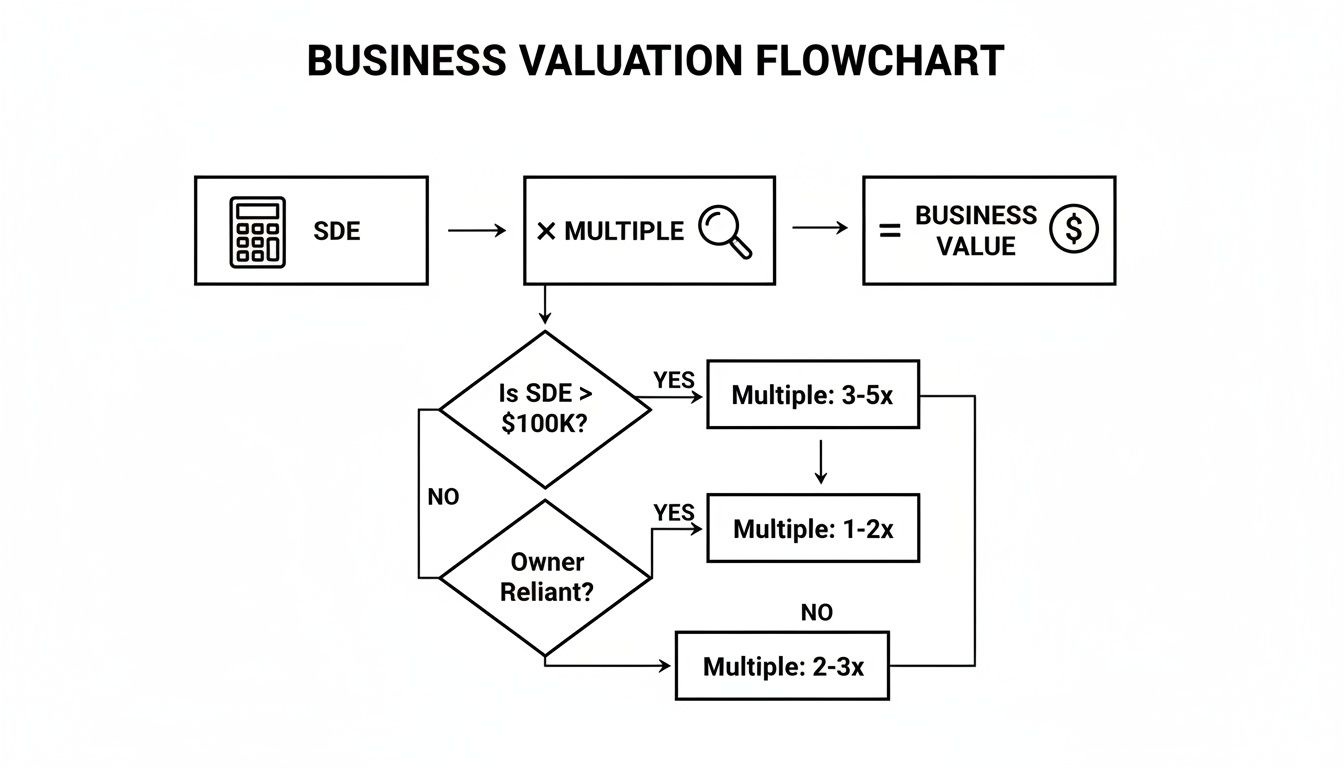
This simple formula—your Seller's Discretionary Earnings (SDE) times a market multiple—is the universal starting point for any price discussion, no matter who's on the other side of the table.
Amazon aggregators are the VC-backed powerhouses that exploded onto the scene a few years ago. Their model is straightforward: buy up a bunch of FBA brands, plug them into their centralized operations, and scale them with a huge war chest of capital.
Their main selling point is pure speed. These guys are built for acquisitions and can often close a deal in just 30-60 days from signing a Letter of Intent (LOI). They have a cookie-cutter due diligence process, which can make for a much smoother, less painful experience.
But that speed usually comes with a trade-off. Aggregators are known for offering lower multiples because their entire model depends on buying assets at a good price. You'll also see that their offers are often packed with stability payments or earn-outs, meaning a chunk of your payout is tied to how well the business performs after you've handed over the keys.
A strategic buyer is a whole different animal. This is often another company operating in your niche, maybe even a direct competitor you've been watching for years. They aren't just buying your profit and loss statement; they're buying your hard-won market share, your loyal customer list, your supplier contacts, or a piece of tech you developed.
This is where you can get the big payday. Because of these "synergies," strategics are often willing to pay the highest multiples. They see value that an aggregator or financial buyer simply can't, which can drive the price well beyond the standard SDE calculation.
The catch? The process is almost always slower and far more intense. Due diligence will feel like a full-body scan, and the negotiations can get bogged down in the complexities of integrating your business into theirs. And, of course, there's the very real risk of spilling your secret sauce to a competitor if the deal goes south.
Insider Tip: If you're talking to a strategic buyer, your first move is a rock-solid Non-Disclosure Agreement (NDA). Don't share anything sensitive without it. And mentally prepare for a marathon, not a sprint. They will want to look at everything.
This category covers everyone from sophisticated Private Equity (PE) firms to high-net-worth individuals looking for their next venture. A PE firm is looking for a stable, cash-flowing brand with obvious growth levers they can pull with their capital and operational teams. An individual investor might be an experienced entrepreneur who wants to buy themselves a full-time job or a passion project.
PE deals are typically very professional and structured, but they'll dig deep into your financials and growth plans. Individual investors can be a bit more flexible and creative on deal terms, but they might not have the cash for an all-upfront deal, which often leads to offers with significant seller financing.
With these buyers, you need to vet them just as much as they're vetting you. What are their plans for the brand you poured your life into? Do they even know e-commerce? This alignment is critical, especially if a big part of your payout is an earn-out or if you're planning to stay involved. Knowing how to sell your Amazon business means finding a successor whose vision you can trust.

Alright, you've found a buyer and shaken hands on a price. Now comes the real test: due diligence. This is where things get intense. The buyer is about to put every corner of your business under a microscope, verifying every single claim you've made.
Don't underestimate this phase. Being unprepared isn't just a minor hiccup; it can absolutely torpedo the entire deal. At best, it gives the buyer leverage to chip away at their offer. Think of it as a deep financial and operational audit, run by a team with a massive incentive to find problems.
Deals are won and lost right here. A clean, organized, and transparent due diligence process builds incredible trust and keeps the momentum going, paving the way for a smooth closing.
The foundation of a painless due diligence process is your virtual data room, or VDR. This is simply a secure, organized online folder where you’ll store every document the buyer and their team need to see.
My advice? Get this built before you even sign a Letter of Intent (LOI). It signals to any potential buyer that you’re a serious, professional seller who has their act together.
Your VDR is the single source of truth for the deal. It needs to be meticulously organized into logical folders so the buyer's team can self-serve and find what they need without constantly pinging you for files.
Here’s a quick rundown of the must-haves:
Getting this right is a game-changer. For an exhaustive list, check out our due diligence checklist for an acquisition.
Negotiation is so much more than haggling over the final sale price. The terms of the deal—the "how" and "when" you actually get paid—are often just as critical as the headline number. The goal is to maximize your cash at closing while making sure the buyer feels set up for a successful transition.
Remember the value you're bringing to the table. The Amazon marketplace is exploding, powered by sellers just like you. Third-party sellers now account for a staggering 60-66% of all units sold on the platform. This activity is a core driver behind Amazon's monster $73 billion in retail sales in a single quarter.
Well-run brands, especially those optimized for Prime, are incredibly valuable assets. As they scale into 7-figure revenue territory, it's not uncommon to see exit multiples average 4x SDE.
Pro Tip: The best negotiation tactic is a great backup plan. Having multiple interested buyers in your back pocket gives you the ultimate leverage to stand firm on the terms that matter most to you.
Beyond the purchase price, several key components of the deal will be up for discussion. If you understand these moving parts, you can trade concessions strategically to get what's most important.
Here are the common points you'll be negotiating:
This is where your advisory team—your broker, M&A lawyer, and accountant—earns their keep. They've seen hundreds of these deals. Lean on their experience to navigate the complexities and make sure you don't sign terms that will come back to bite you later. A truly successful negotiation on how to sell your Amazon business is one where both you and the buyer walk away feeling like you got a great deal.
You’ve navigated the valuation, fielded offers, and survived the intensity of due diligence. Now, the finish line is finally in sight. This last stage is all about precision—executing the legal paperwork flawlessly and orchestrating a handover so smooth the new owner can grab the reins without a single hiccup.
This isn’t just about getting paid. It’s about protecting yourself legally and making sure the business you poured your heart into continues to thrive. A botched transition can even jeopardize your payout, especially if your deal includes a holdback or an earn-out. This is the last mile, and every detail matters.
The cornerstone of the entire sale is the Asset Purchase Agreement (APA). This is the legally binding contract that spells out every single detail of the transaction. It's a dense, complex document, and you should never try to navigate it without an experienced M&A attorney in your corner.
The APA specifies exactly what the buyer is purchasing. For most Amazon businesses, this means assets like your inventory, supplier relationships, trademarks, and of course, the Amazon Seller Central account. Just as importantly, it defines what they are not acquiring—typically your legal business entity (like your LLC) and any of its associated debts or liabilities.
While your lawyer will handle the fine print, you need to have a firm grasp on the clauses that directly impact you.
Critical Insight: The APA isn't a formality; it's your shield. Pay very close attention to the indemnification "cap" and the "survival period" for your warranties. A typical survival period is 12-18 months, which is how long the buyer has to bring a claim against you for any inaccuracies discovered after the sale.
While the APA is being finalized, a few other critical things need to happen to get the deal across the line. These steps ensure the transfer of money and assets is secure and transparent for everyone involved.
One of the most immediate tasks is the final inventory count. Since your inventory value is a huge part of the purchase price, you'll need a physical or cycle count right before closing to lock in a final, accurate number. This value is often reconciled after the closing, with a final payment adjustment made to either you or the buyer.
At the same time, the acquisition funds will be moved into an escrow account. This is simply a neutral third-party service that holds the buyer's money until every condition in the APA has been met. Once both sides give the green light, the escrow agent releases the funds to you. Using escrow is standard practice and provides a vital layer of security.
The way your deal is structured has a massive impact on your final take-home pay and post-sale obligations. Below is a quick comparison of the most common structures you'll encounter.
Ultimately, the best structure depends entirely on your risk tolerance and confidence in the business's future trajectory under new ownership.
The work isn't over the moment the money lands in your bank account. A successful handover is the final piece of the puzzle and is absolutely critical for the new owner's success. Most deals contractually require the seller to provide support for a transitional period, usually between 30 to 90 days.
The goal here is a clean transfer of your operational knowledge. The best way to do this is to create a detailed transition plan that outlines key training areas and a clear schedule.
Your plan should cover these key areas:
This transition period is your final act as the owner. By handling it professionally and thoroughly, you not only meet your contractual obligations but also give the brand you built the best possible shot at future growth. It allows you to walk away confidently, ready for your next adventure.
Even with the best playbook in hand, selling your business can feel like you're in uncharted territory. It's totally normal to have a flood of questions as you get closer to the finish line.
Let's walk through some of the most common things we hear from sellers. Getting these details sorted out now will save you a ton of stress and prevent any last-minute surprises.
This is probably the number one question on every seller's mind, and for good reason. No, you don't just hand over your password. That would be a recipe for disaster.
The real process is a formal, Amazon-approved transfer. What usually happens is the buyer creates a new user profile on your existing Seller Central account and is granted admin permissions. After a short period to make sure everything is running smoothly, your original user access is removed. This has to be handled with surgical precision to avoid tripping any of Amazon's alarms and getting the account suspended. It's always a critical line item on the final closing checklist.
Selling your business is a big payday, but it's not free. You need to get a handle on the costs so you know what you'll actually walk away with. While every deal is unique, there are a few key expenses you should plan for.
Think of these professional fees not as a cost, but as an investment. They protect you and are essential for squeezing every last dollar out of your deal.
Yes, you definitely can, but it does add an extra layer of paperwork. The bottom line is that your SBA loan must be paid off in full at closing.
Heads Up: You need to get your lender and the SBA involved early. The buyer's funds will go into an escrow account, which will first wire the payoff amount to the bank before the rest of the cash is released to you. Don't wait until the last minute to start this conversation.
Your job isn't done the day the money hits your bank account. Pretty much every deal includes a transitional support period, which is a key point of negotiation in the purchase agreement.
This period usually lasts somewhere between 30 and 90 days. You'll be contractually on the hook to provide training and support to the new owner. This means making introductions to your suppliers, walking them through your SOPs, and being available to answer all their questions. A smooth, helpful handover is often directly tied to you getting your full holdback payment, so it's in your best interest to be a good partner. When you're thinking about how to sell your Amazon business, you have to plan for this final, crucial phase.
At Million Dollar Sellers, we've watched hundreds of our members navigate successful seven, eight, and even nine-figure exits. Our private community gives you the peer support and expert insights you need to maximize your valuation and pull off a flawless sale. If you're a top-tier seller ready to scale smarter and plan your ultimate exit, learn more about joining MDS.
Join the Ecom Entrepreneur Community for Vetted 7-9 Figure Ecommerce Founders
Learn MoreYou may also like:
Learn more about our special events!
Check Events