Chilat Doina
July 6, 2026
TikTok Shop hit $33.2 billion in global GMV in 2024, and the U.S. alone produced $9 billion in just 16 months according to Onramp Funds. If you're still treating it like a side-channel test, you're already behind operators who see it for what it is: a distribution layer with native checkout attached.
Most experienced founders don't fail on TikTok Shop because they don't understand ecommerce. They fail because they import Amazon habits into a feed-driven system, underestimate compliance, and launch without a creator engine. The result is predictable. Approval delays. Weak listings. No affiliate traction. Ad spend poured onto pages that have no social proof.
How to sell on TikTok Shop at a high level isn't complicated. Winning on it is. The brands that get traction move in a very specific order: qualify cleanly, structure the catalog for creators, seed reviews fast, build a content loop, then layer paid distribution on top of proof.
TikTok Shop is already large enough to punish hesitation. As noted earlier, global GMV climbed past $33 billion in 2024, and the U.S. ramp has been fast enough that serious operators should treat this as a channel allocation decision, not a side experiment.
The upside is obvious. The part experienced founders miss is fit.
TikTok Shop rewards products that can earn conversion inside a feed, inside creator content, and inside live commerce without asking the customer to do extra work. A strong PDP alone will not carry you here. The product has to read fast on video, survive creator interpretation, and still make margin after affiliate payouts, samples, returns, and promo pressure.
That is why some established brands scale quickly while other seven-figure sellers stall. The winning group enters with a channel thesis. They know which SKUs can drive impulse purchase, which offers creators will pick up, and how much operational strain the business can absorb before service quality drops.
For a useful external perspective on content and conversion mechanics, this guide to maximizing TikTok sales is worth reviewing alongside your internal launch plan. If you're evaluating channel fit across your broader commerce portfolio, this breakdown on TikTok sellers is a helpful reference point for established brands.
Early on TikTok Shop does not mean first. It means early relative to your category's operational maturity.
In crowded categories, creators already know which brands ship on time, approve samples quickly, and convert traffic without refund headaches. Once that reputation sets in, it gets harder to recruit quality affiliates at efficient economics. Brands that enter cleanly get better creator relationships, stronger review velocity, and more useful conversion data before CAC inflation catches up.
The opportunity is strongest for brands with a few specific traits:
I have seen brands with modest followings outperform larger competitors because they treated TikTok Shop like an operating system, not just another sales channel. They built around creator adoption, conversion proof, and inventory discipline from day one.
That is the key opportunity. Established ecommerce brands already have the pieces that matter most: product quality, merchandising instincts, supply chain control, and retention infrastructure. TikTok Shop pays off when those strengths are configured for speed, creator usability, and native checkout.
Most onboarding problems start before the first upload. Sellers assume approval is an account setup task. It isn't. It's a qualification filter, and TikTok is strict because the platform has to protect trust at checkout.
Documentation for category qualification causes 40-60% of new seller applications to be rejected, and TikTok requires real-life product photos showing full packaging, ingredient labels, manufacturer addresses, plus valid invoices from the last 12 months for resellers. The same source notes that 90% of tutorials miss these details according to SPS Commerce.
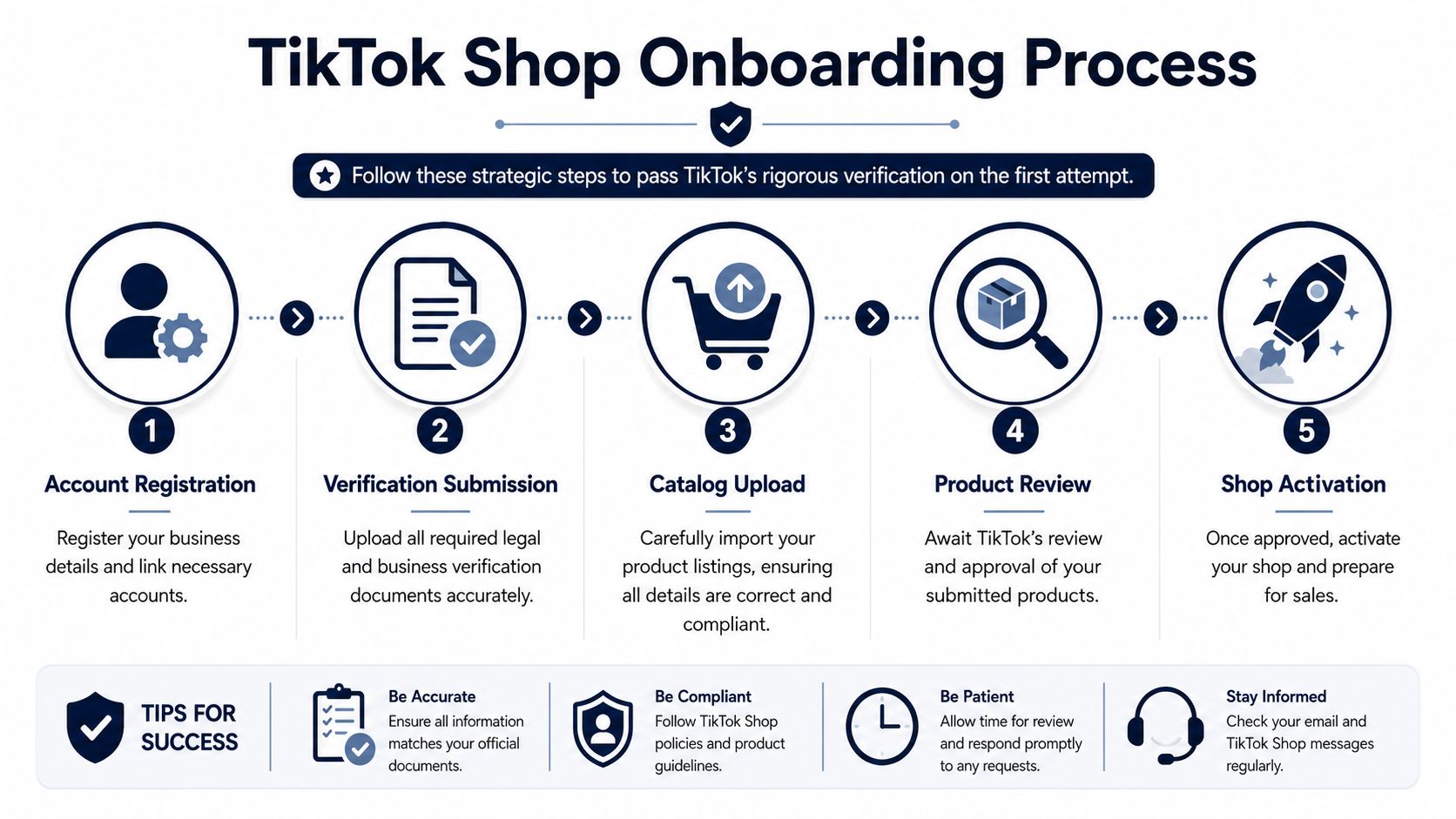
The teams that get through quickly don't “fill things in.” They build an approval packet.
Use this standard before anyone touches Seller Center:
| Item | What TikTok cares about | Common failure |
|---|---|---|
| Business identity | Names match across docs | Entity mismatch |
| Category support | Packaging and labels are visible | Cropped or polished images that hide details |
| Reseller legitimacy | Invoice recency and supplier clarity | Old invoices or incomplete supplier docs |
| Product authenticity | Real-world product evidence | Studio images only |
If you sell in restricted categories, assume your first submission will be scrutinized more heavily. Founders often delegate this to a junior operator or agency VA. That's fine for data entry. It isn't fine for compliance judgment. Someone on the leadership team should review the packet before submission.
There is a tactical setup sequence that experienced operators should follow once the account is approved. Sellers register in Seller Center, choose their region, upload verified IDs, tax documents, and payout details. After approval, they upload product images, pricing, inventory quantity, and SKU codes. That onboarding workflow averages under 10 minutes for qualified accounts according to this TikTok Shop setup walkthrough on YouTube.
The same walkthrough highlights a tactic many brands overlook: set a main selling price with a higher list price so TikTok can display a discount presentation. Used responsibly, that improves click behavior because the feed is crowded and shoppers make decisions fast.
Practical listing rules for founders:
Practical rule: The first review cycle costs more than the first shipment cycle. A rejected listing burns time, internal attention, and launch energy all at once.
A lot of seven-figure brands wait to turn on affiliate collaboration until “the page looks better.” That's backwards. The page gets better because affiliates start testing it.
In Seller Center, enable Open Collaboration and add products to open campaigns with a 20-30% commission structure. The same YouTube source notes examples like $10-$15 on a $50 product, and says product-tagged videos from creators drive 70% of TikTok Shop GMV compared with seller-only content. That should shape your launch priorities from day one.
The catalog isn't just for shoppers. It's for creators scanning whether your offer is worth their time.
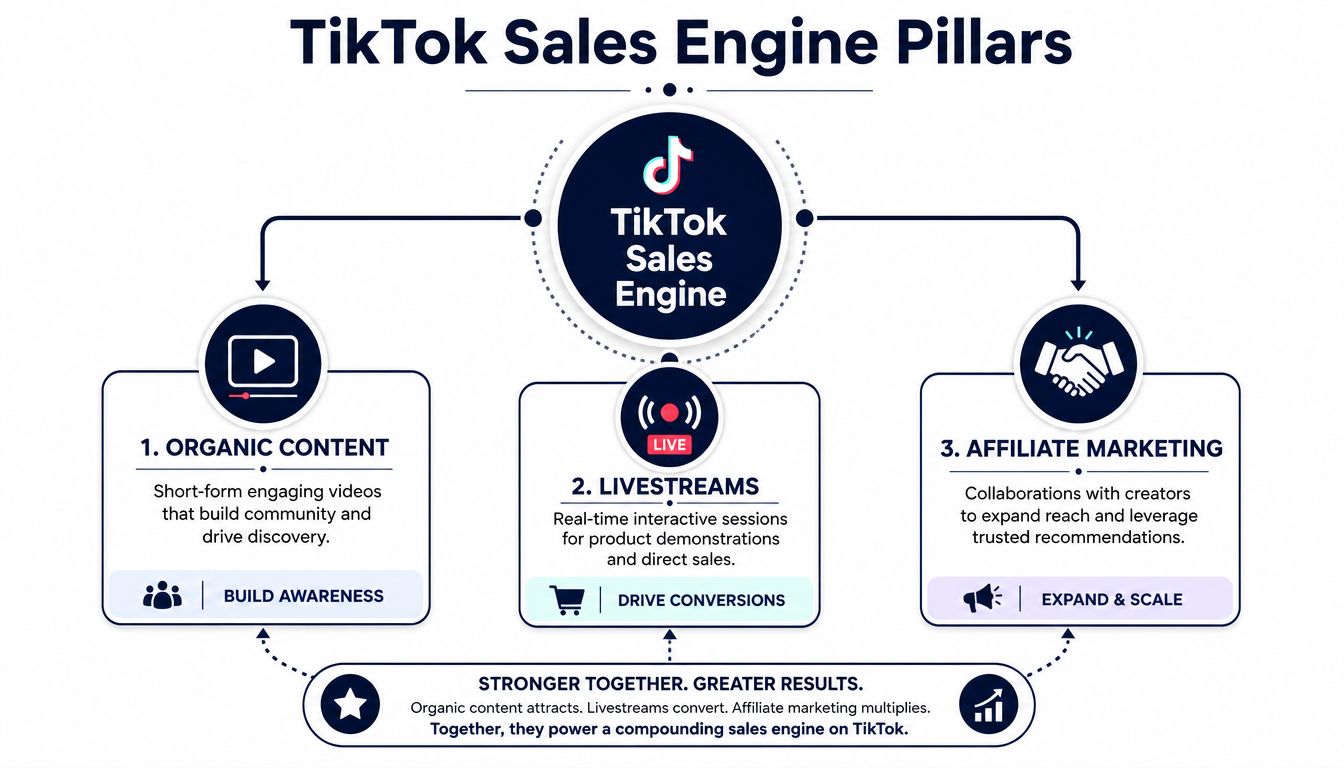
Brands that win here don't separate content, affiliates, and live selling into three departments that barely talk. They run one integrated engine. Content proves the offer. Reviews remove friction. Affiliates scale reach. Lives convert intent while the product is hot.
The cleanest launch tactic for a new product isn't expensive creator seeding at scale. It's controlled review seeding. According to this YouTube breakdown on TikTok Shop review seeding, the first 20-30 reviews often determine whether TikTok's algorithm rewards a listing. The same source says listings with 25+ reviews get 3x more affiliate applications and 4x higher conversion rates.
That changes the order of operations.
If a product has no reviews, most creators assume they're taking platform risk by promoting it. If a product has visible proof and early order flow, creators see momentum and lean in. That's why review seeding is really an affiliate acquisition tactic disguised as a conversion tactic.
A practical launch sequence looks like this:
Organic content, livestreams, and affiliates should feed each other.
The most effective operating habit is to recycle what works. If a creator angle converts, turn it into a seller post. If a seller post drives strong product page behavior, recruit affiliates around that script. If a live segment closes repeatedly, clip it into ad creative.
For brands building a more structured content workflow, this guide on user-generated content campaigns is useful because it treats UGC as a system, not random asset collection.
If your affiliate program feels slow, the issue usually isn't creator supply. It's weak proof on the listing, unclear economics, or delayed sample handling.
A common mistake is pushing paid traffic at a dead listing because the media buyer wants data. Paid spend doesn't fix a product page with no reviews, weak hooks, or zero creator pickup. It just makes the diagnosis more expensive.
The better framework is simple:
| Scenario | Best move |
|---|---|
| Organic content is getting attention but sales are inconsistent | Boost the strongest seller or creator post to validate conversion |
| A product page has social proof and affiliate traction | Launch direct shopping campaigns to scale checkout volume |
| A creator video is outperforming your brand content | Put spend behind the creator asset, not your in-house rewrite |
This is how to sell on TikTok Shop without confusing activity for traction. Creative comes first. Distribution follows proof.
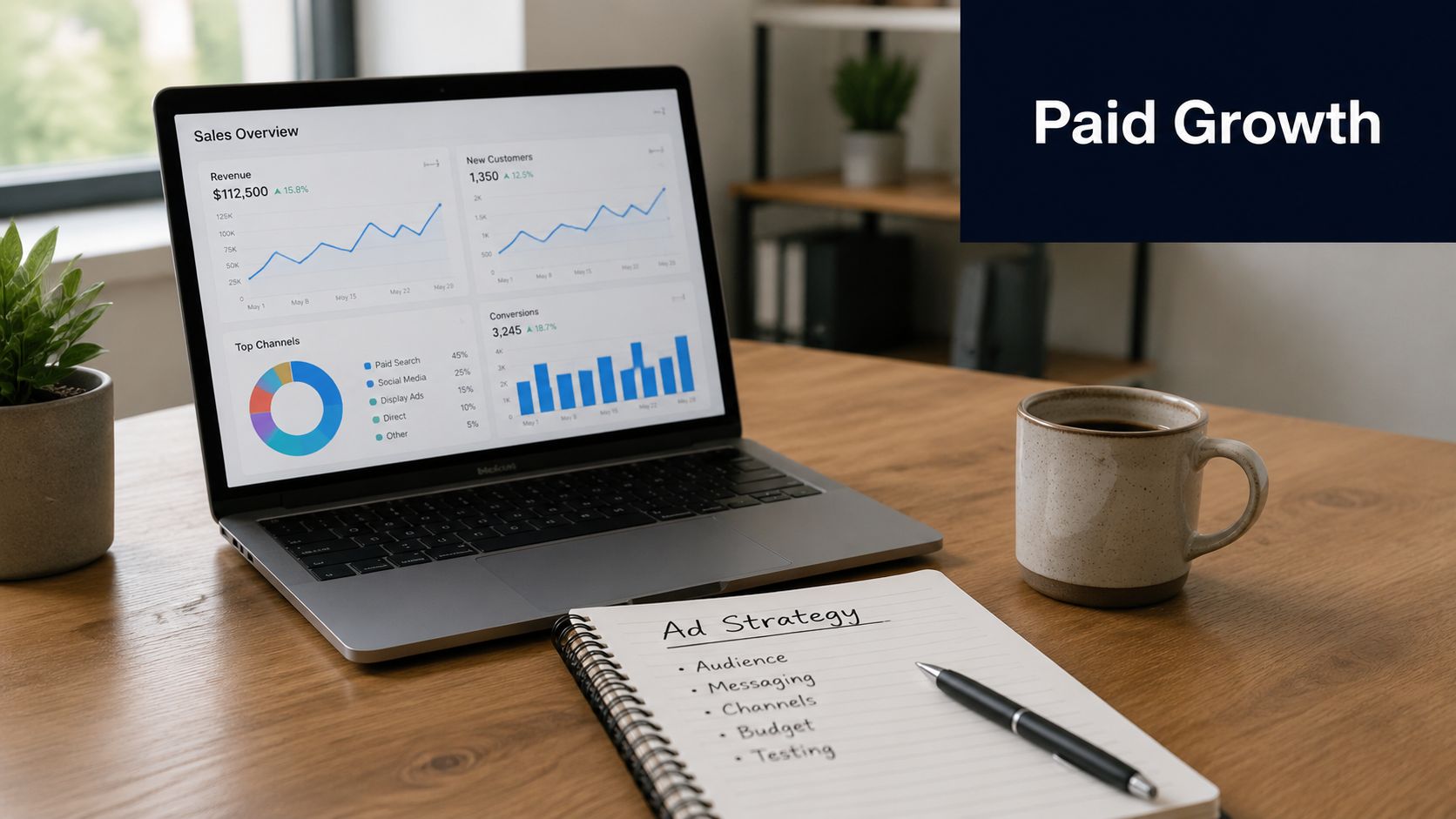
Paid media on TikTok Shop works best when you use it as an amplifier of existing demand signals. If your creative is unproven, your listing has weak proof, and your operations are shaky, ads will expose all three.
Founders often blur these together. They shouldn't.
Boosting a strong organic or affiliate post is usually the fastest way to put budget behind content that already feels native. Dedicated shopping campaigns are better once you've confirmed the offer, know which creative angle wins, and want a more repeatable acquisition machine. If your media team needs a technical checklist before launch, this resource on 2026 TikTok ad requirements is handy for creative specs and formatting compliance.
The strategic split is straightforward:
The biggest paid-media advantage on TikTok Shop is that creator content often outperforms polished brand creative because it enters the feed with less friction. If an affiliate video is already converting, don't rewrite the concept into something more “on brand.” Keep the proof intact and add spend behind it.
That approach also reduces creative waste. Your affiliates and organic team generate the testing volume. Paid media scales the winners.
A useful planning lens is to pair this with your broader e-commerce PPC discipline. The difference is the asset source. On Google or Amazon, the platform often starts with intent. On TikTok, the ad has to create intent in the feed.
Here's a practical walkthrough to think through setup and execution:
Founders usually ask when to scale budget. The fundamental question is whether fulfillment and support can absorb the demand if the campaign catches.
Use this quick decision matrix:
| If your priority is | Lean toward |
|---|---|
| More brand control, custom inserts, and unified multi-channel stock | Your existing 3PL |
| Faster operational simplicity inside the TikTok ecosystem | Fulfilled by TikTok |
| Tight control over service tone and returns handling | Your own support plus 3PL |
| Lower internal logistics burden during testing | TikTok-managed fulfillment options |
Ads don't just buy sales. They stress-test your backend.
Most operators obsess over content and underinvest in post-purchase execution. On TikTok Shop, that's expensive because weak fulfillment doesn't just create refunds. It hurts reviews, creator confidence, and the odds that a winning product keeps compounding.
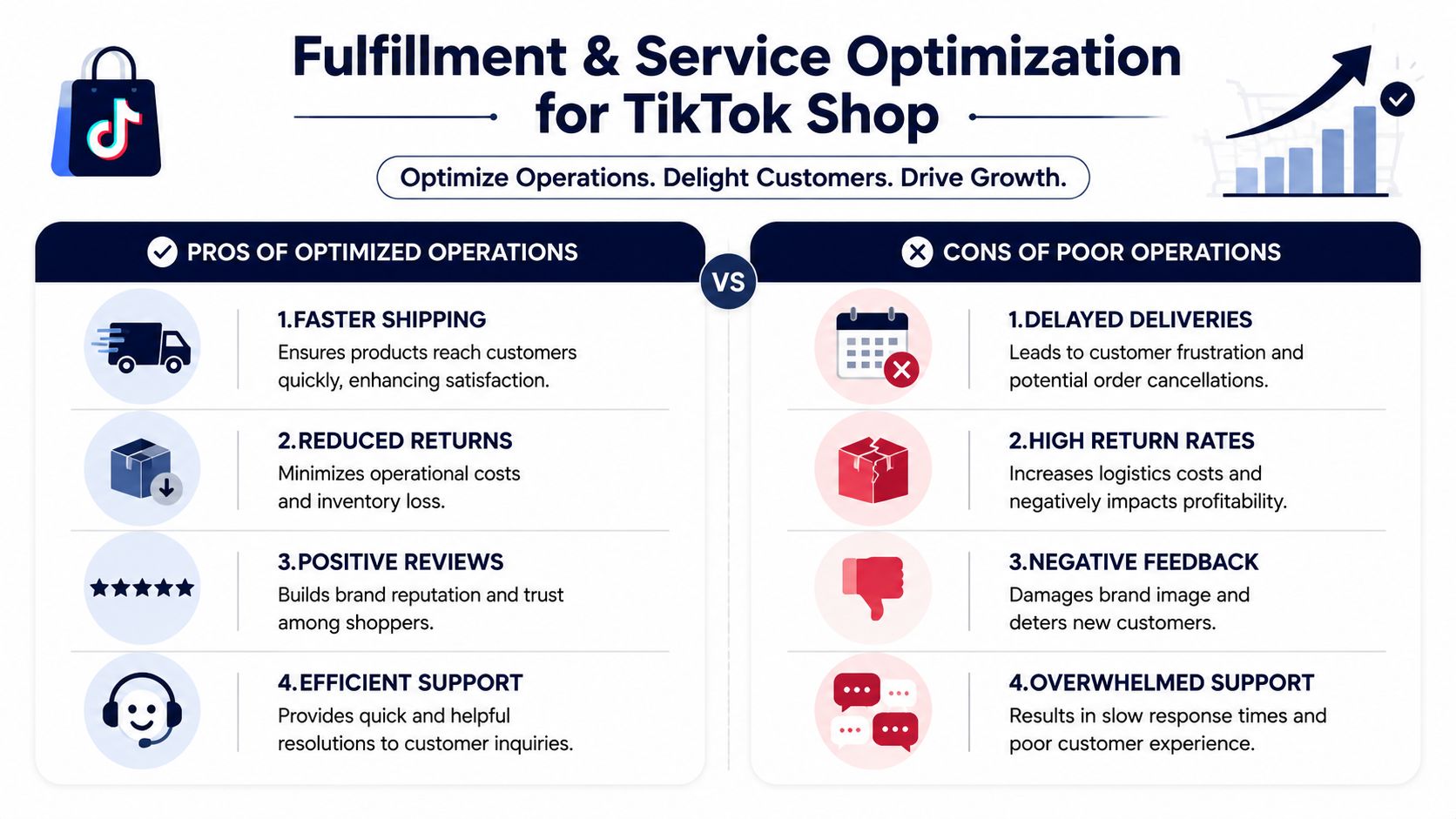
For established brands, the Fulfilled by TikTok versus 3PL decision isn't about convenience alone. It's about where you want control.
| Decision factor | Existing 3PL | Fulfilled by TikTok |
|---|---|---|
| Branding control | Stronger | More limited |
| Multi-channel inventory visibility | Better if your stack is mature | Simpler inside one ecosystem |
| Operational flexibility | Higher | Lower |
| Ease of getting started | More setup | More turnkey |
A 3PL usually makes more sense if TikTok is one part of a larger omnichannel business and your operations team already has SLA discipline. Fulfilled by TikTok can make sense if speed and simplicity matter more than custom packaging or cross-channel inventory nuance.
If your brand runs on Shopify and you want a practical implementation path, this walkthrough on connect Shopify to TikTok Shop is a useful operational reference.
The most misleading metric in TikTok commerce is raw view count. The most useful signals are operational and behavioral.
Look for these patterns instead:
The best predictor of a durable creator partnership isn't reach. It's whether the creator keeps choosing your product after the first commission cycle.
On TikTok Shop, customer service isn't a back-office function. It affects storefront credibility.
Brands that respond quickly, resolve issues clearly, and keep fulfillment tight make life easier for creators. That's a hidden advantage. Affiliates prefer products they can promote without dealing with audience backlash in comments and DMs.
To achieve sustainable sales on TikTok Shop, recognize that important operational lessons are frequently learned belatedly. A great product with shaky operations becomes a short-term spike. A solid product with reliable service becomes a creator-friendly asset.
Before launch, force the team to answer strategic questions, not setup questions. “Is the account approved?” matters. “Is the offer structured to attract creators and survive scale?” matters more.
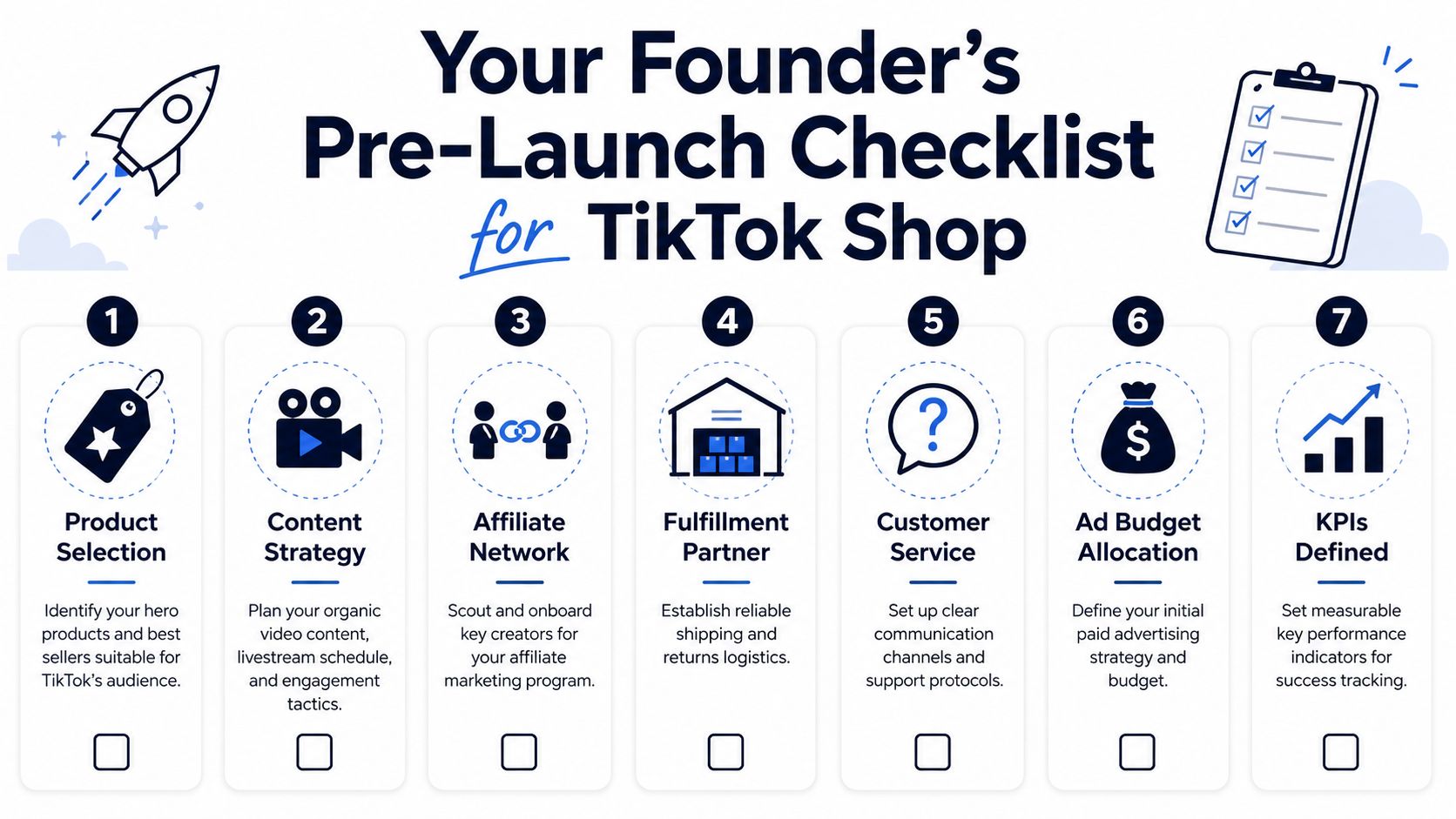
Don't launch TikTok Shop as another storefront. Launch it as a coordinated commerce system. The catalog, creator program, content machine, paid media, and post-purchase experience all depend on each other. If one is weak, the rest get more expensive.
If you're a serious operator who wants to compare notes with founders building at the highest level, Million Dollar Sellers is where top ecommerce entrepreneurs share the kind of tactical, behind-the-scenes execution detail that rarely gets published publicly.
Join the Ecom Entrepreneur Community for Vetted 7-9 Figure Ecommerce Founders
Learn MoreYou may also like:
Learn more about our special events!
Check Events