Chilat Doina
October 20, 2026
Stop reading brand management books in the order everyone recommends them. Starting with the most famous title rarely solves the problem in front of you, whether that's unclear positioning, weak recognition on a marketplace shelf, or a product line expanding faster than your brand architecture. Pick the book that matches your next decision, apply one framework, and move on.
A strong brand isn't a logo, slogan, or viral campaign. It's the result of connected choices about customer value, positioning, identity, distribution, experience, and reputation. These ten books solve different parts of that system. Some are rigorous references. Others are fast, practical tools for positioning or distinctive assets. A few help leaders organize teams and portfolios as complexity grows.
Use this list as a decision tool. If customers don't understand your product, start with positioning. If they understand it but can't remember you, start with distinctive assets. If your team can't execute consistently, start with identity process. When you turn the resulting messages into ads and short-form creative, a tool such as ShortGenius AI ad generator can help you produce variations faster, but it can't fix an unclear brand decision. Get the strategy right first, then scale the output.
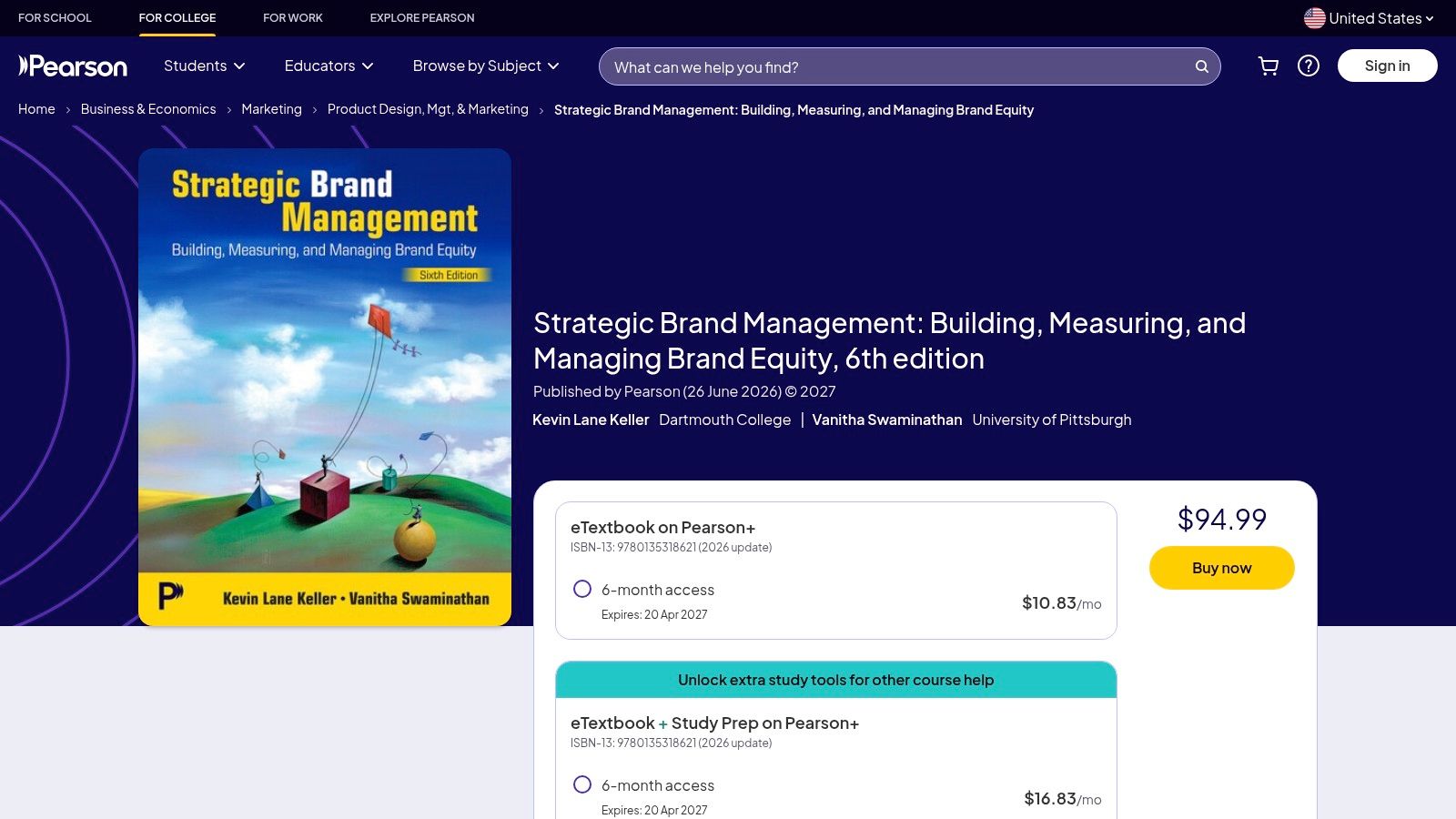
Buy Strategic Brand Management from Pearson if you need one end-to-end reference. Its customer-based brand equity framework connects positioning, brand elements, marketing programs, and measurement to how customers respond. That scholarly foundation matters. A bibliometric analysis using Semantic Scholar identified Keller's 1993 customer-based brand equity article as the most cited brand-related work in its dataset, with 13,988 citations.
Use it to align marketing, product, and leadership around what your brand should mean and how you'll know it's working. Pair its measurement chapters with practical questions for measuring brand perception and a working guide on how to measure brand equity in an ecommerce business, then convert concepts into awareness, consideration, repeat purchase, and retention indicators.
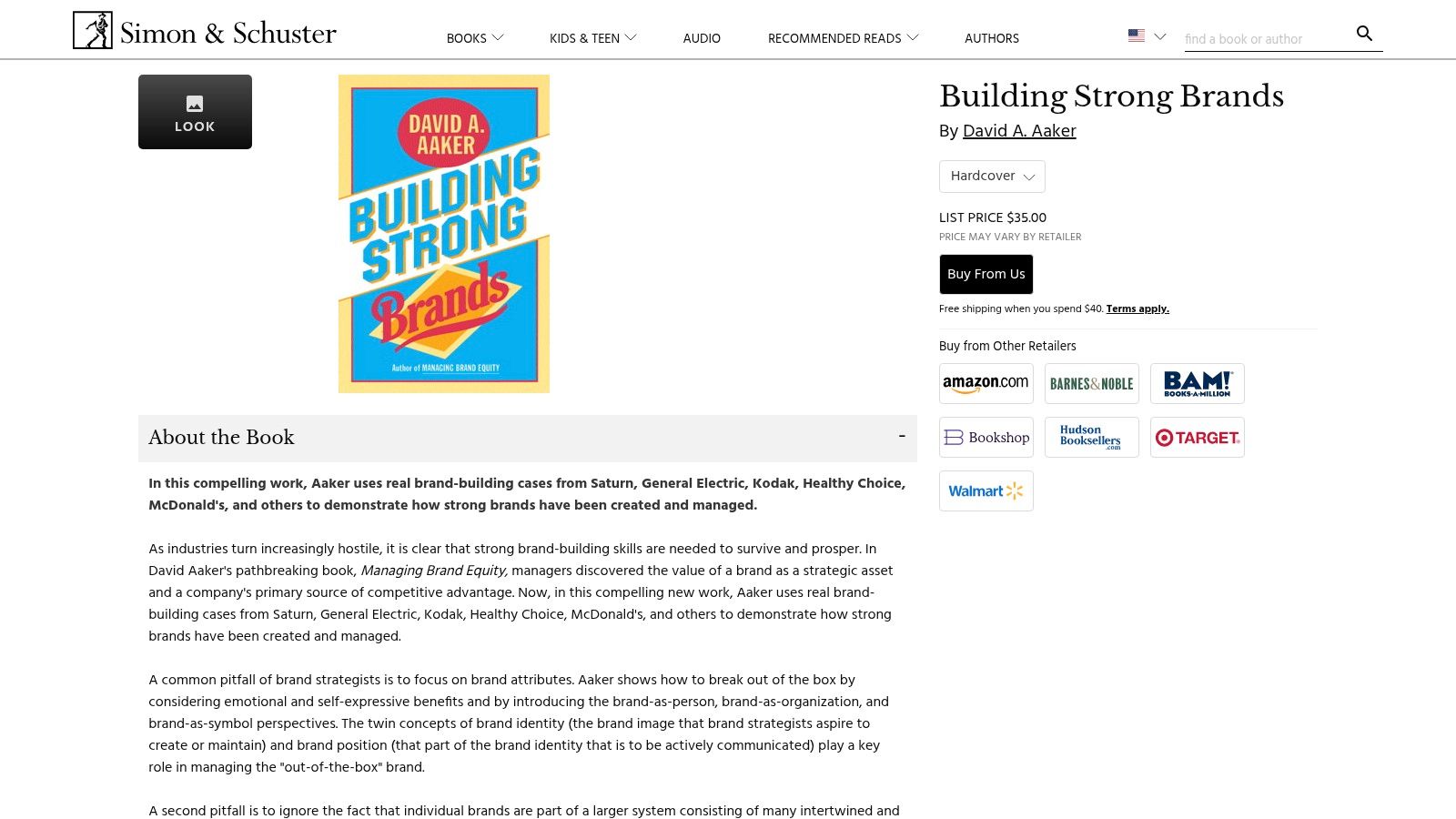
Read Building Strong Brands from Simon and Schuster when your brand is defined only by product features and promotions. Aaker separates intended brand identity from what customers perceive, then explores associations, perceived quality, and emotional and self-expressive benefits.
The book sits in an important sequence. As documented in Aaker's publication history, Managing Brand Equity appeared in 1991, Building Strong Brands followed in 1996, and Brand Leadership arrived in 2000. That progression moved the field from measuring brands as assets toward building and leading them strategically.
Treat identity as a management decision, not a design brief. Decide what customers should associate with you before you brief packaging, ads, or a redesign.
The trade-off is clear. You'll get a foundational long-term perspective that works for established companies and smaller businesses, but the 1990s examples and media context feel dated. It doesn't address modern marketplaces directly, so adapt its identity work to listings, reviews, creator content, and fast-moving channels yourself.
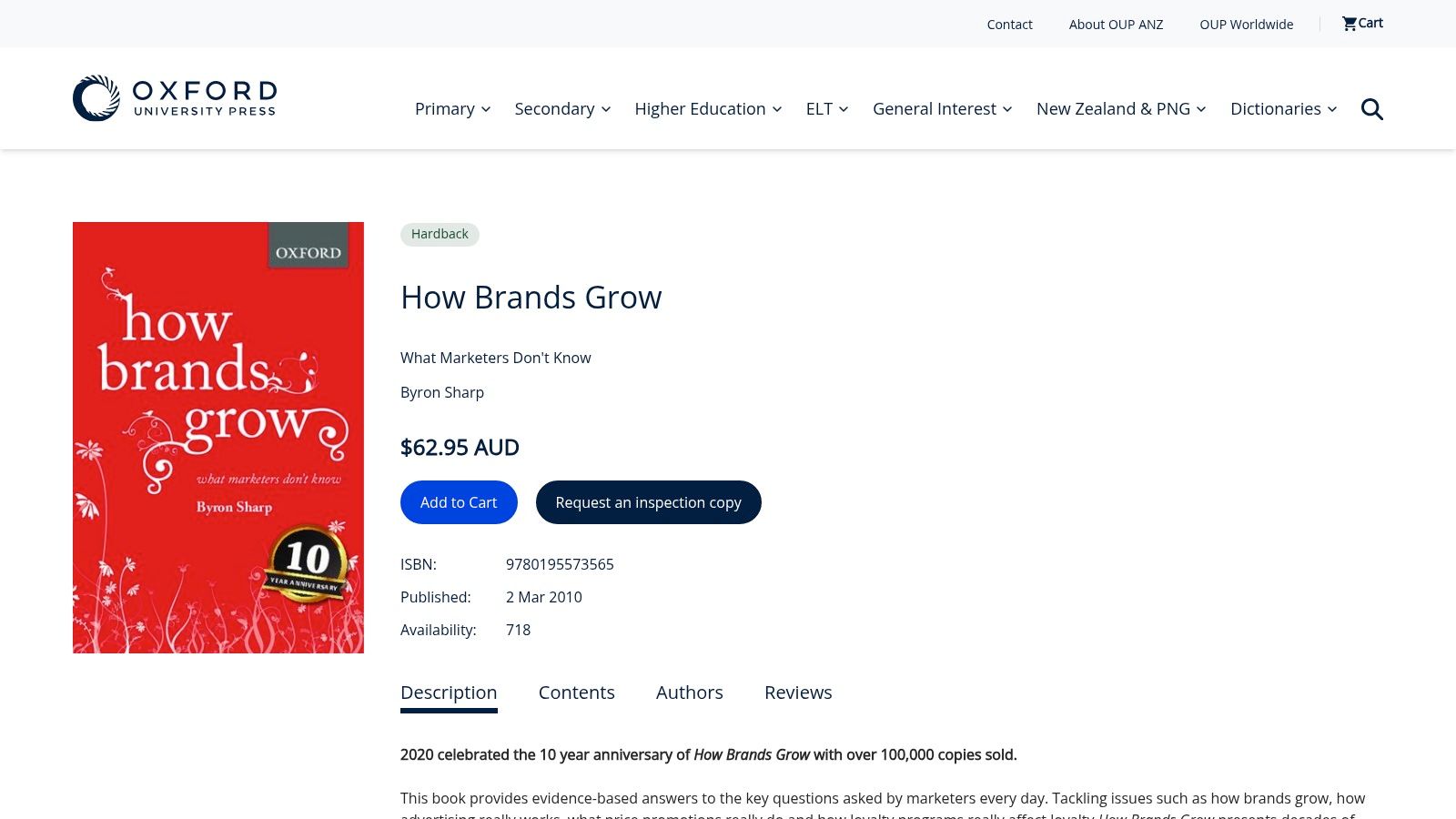
Choose How Brands Grow from Oxford University Press Australia if your growth plan depends heavily on loyalty rhetoric or narrow segment targeting. Sharp draws on empirical research across categories and markets to examine buyer reach, advertising, price promotions, and loyalty. His central operational concepts are mental availability and physical availability.
For ecommerce, translate those ideas directly. Mental availability means shoppers think of you in buying situations. Physical availability means they can find and buy you easily across search, marketplaces, retail, and your own store. That lens forces useful questions about discoverability, distribution gaps, and whether your media reaches category buyers rather than only past purchasers.
The evidence will improve your growth discussions, but it isn't a plug-in playbook. Some recommendations feel counterintuitive or overly generalized, and Sharp doesn't map every conclusion to your category or business model. Test his claims against your repeat rate, channel economics, and new-to-brand data instead of replacing one set of assumptions with another.
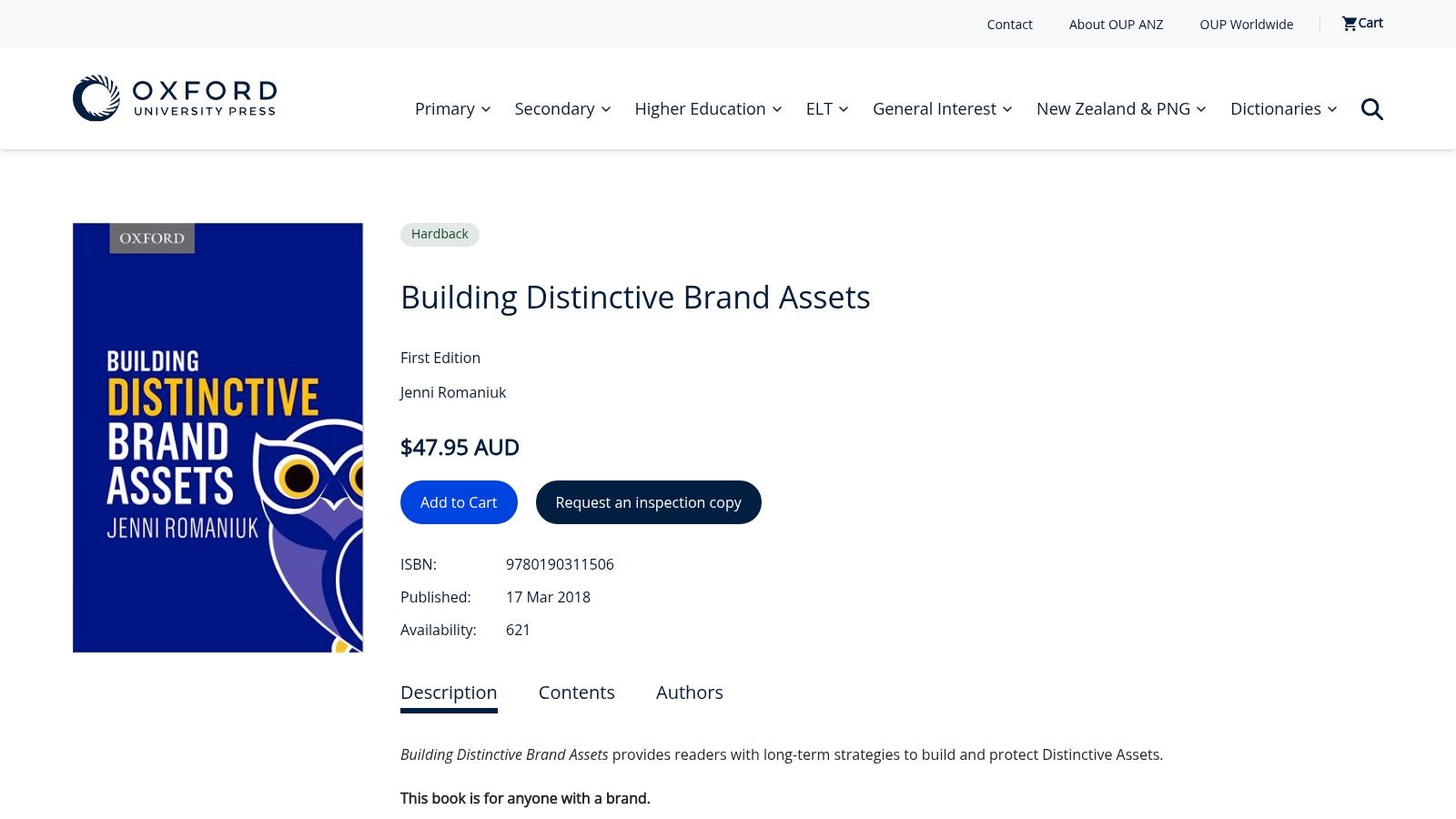
If shoppers recognize your product but credit the ad, package, or review to a competitor, start with Building Distinctive Brand Assets from Oxford University Press Australia. Romaniuk gives you a framework for selecting, building, measuring, and protecting cues such as color, packaging, words, sounds, and taglines.
Her test is practical. Strong assets need fame, meaning buyers notice and recall them, and uniqueness, meaning they link the cue to your brand rather than the category. Apply that test before a redesign. You may discover that a color, phrase, or pack structure your team finds boring is exactly what customers use to identify you in a crowded search result.
Don't redesign from internal boredom. Measure recognition first.
Pick up Designing Brand Identity from Wiley when you're planning a rebrand or your identity has fragmented across packaging, Amazon, your website, and paid social. The sixth edition follows a multi-phase process from research and positioning through identity design, touchpoint development, launch, and asset management.
That's its value. Founders often jump straight to logos and guidelines, then wonder why different teams interpret the brand differently. Wheeler and Meyerson give cross-functional teams a shared sequence covering naming, packaging, websites, advertising, and brand guidelines. Pair the process with a practical walkthrough on how to build brand identity for a growing business so the work produces usable rules, not a decorative brand book.
This is a strong visual and process reference, not a commercial growth strategy. It won't tell you whether your positioning can support a price premium or which channel deserves more investment. Its breadth can overwhelm early-stage founders, and parts of the work require specialist design or research help. Use it to create consistency after strategic choices are clear.
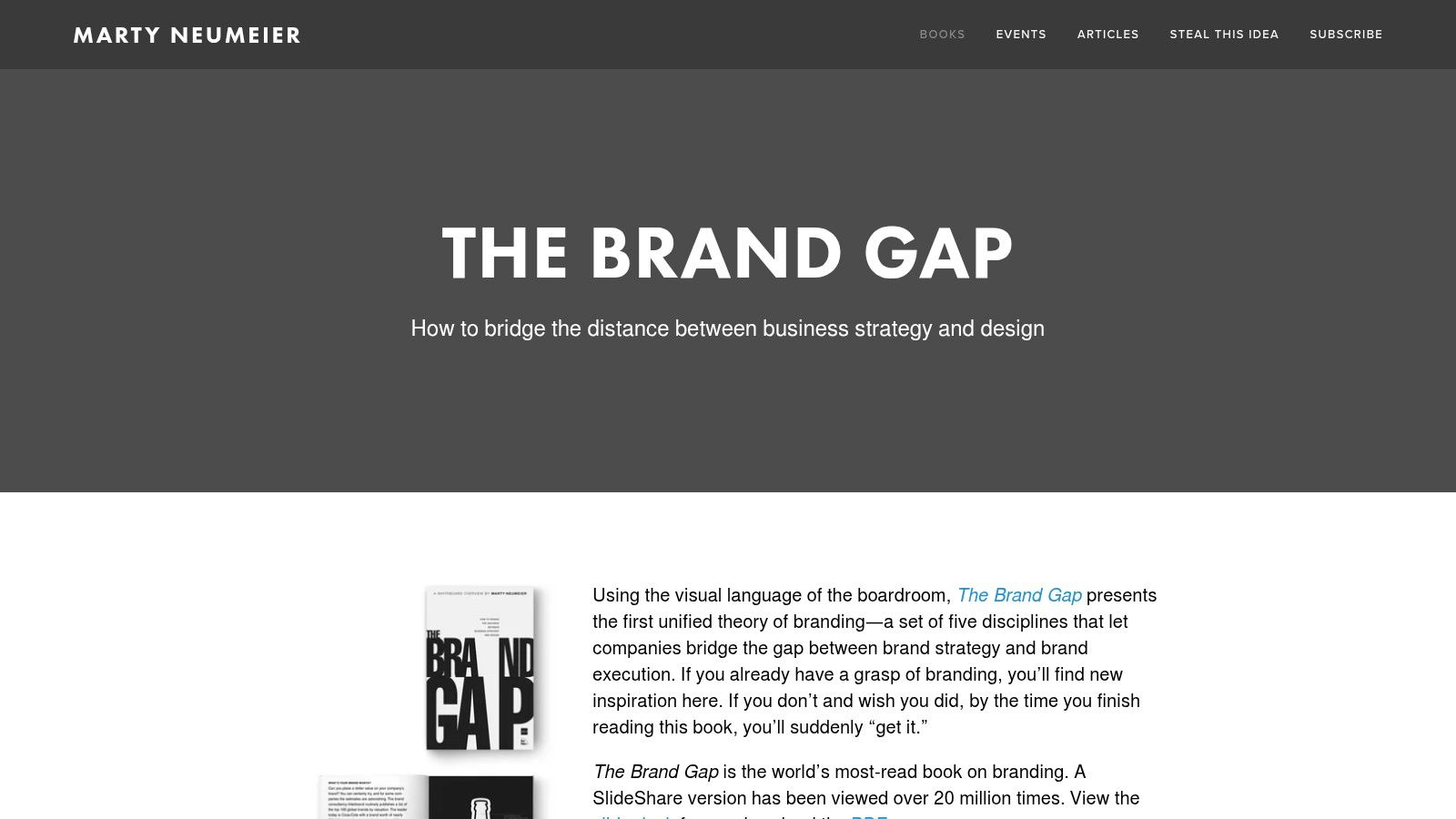
The Brand Gap from Marty Neumeier is the fastest useful read on this list. Give it to founders, marketers, and designers who use the word brand differently and need shared language quickly. Neumeier bridges business strategy and creative execution through five disciplines, differentiate, collaborate, innovate, validate, and cultivate.
Use it as a workshop book. Ask where you're genuinely differentiated, who needs to collaborate earlier, what you're testing with customers, and how employees experience the brand internally. The glossary and practical prompts make those conversations easier without academic overhead.
Best use: Read it before a brand workshop, not as your only brand strategy resource.
The limits follow from its brevity. Concepts are intentionally simplified, implementation detail is light, and the digital context from its first publication period isn't fully current. It shows that branding extends beyond logos and advertising, but you'll still need Keller, Romaniuk, or Dunford when you move from alignment into measurement, assets, or positioning decisions.

Read The 22 Immutable Laws of Branding from Ries when your positioning is broad, your product line keeps expanding, and customers can't summarize what you stand for. Ries and Ries present short principles focused on focus, differentiation, category creation, and owning an association in the customer's mind. The expanded edition adds commentary, illustrations, and internet branding material.
The format helps teams debate real choices. Should a successful product become a sub-brand? Are you creating a category or merely adding variants? Does a line extension strengthen recognition or dilute the reason people buy? Those questions are valuable even when you reject the authors' answer.
Don't take the word laws at face value. The framing makes nuanced choices sound absolute, many examples come from an earlier marketing era, and the book gives limited measurement or implementation guidance. Use it to challenge unfocused strategy, then validate your decision with customer research, search behavior, and commercial data rather than doctrine.
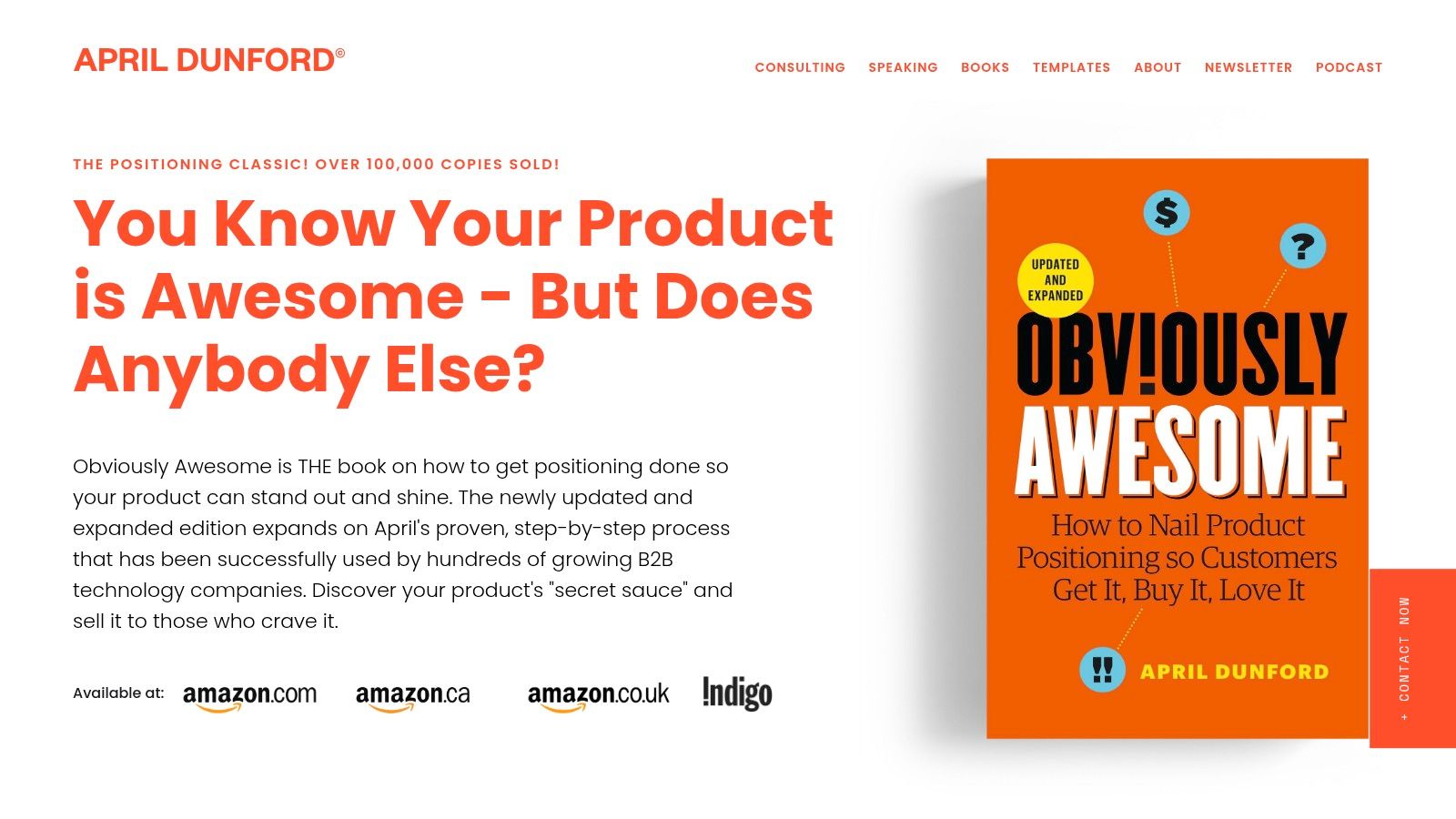
Your product may be strong and still be positioned badly. Obviously Awesome from April Dunford fixes that specific problem with a structured process for identifying differentiated value, understanding the alternatives customers compare you with, and choosing the market context that makes your strengths obvious.
Work through it with your best customers in mind. What do they value that alternatives don't provide? Which buyers care most? What category frame makes those advantages legible in five seconds on a product page? The output should sharpen your listing headline, hero image, comparison chart, ad opening, and sales message, not sit in a strategy deck.
Dunford wrote primarily for B2B technology, so consumer and marketplace teams must translate some examples. Positioning is also only one part of brand management. It won't build your distinctive assets, architecture, or measurement system. Still, if customers don't get it, those later systems won't save you.
Turn to Brand Leadership from Simon and Schuster when growth creates organizational complexity. You're adding products, sub-brands, channels, or markets, and campaign-level thinking no longer keeps the portfolio coherent. Aaker and Joachimsthaler address brand architecture, leadership, organizational structure, and culture as connected management problems.
A formal approach to how to develop brand strategy across a growing portfolio becomes essential when managing multiple brands. Decide which brands lead, which support, where the master brand should appear, and who owns trade-offs between short-term revenue and long-term brand assets. Without those rules, each channel team optimizes locally and weakens the whole system.
Read it when scale, not initial awareness, is the constraint.
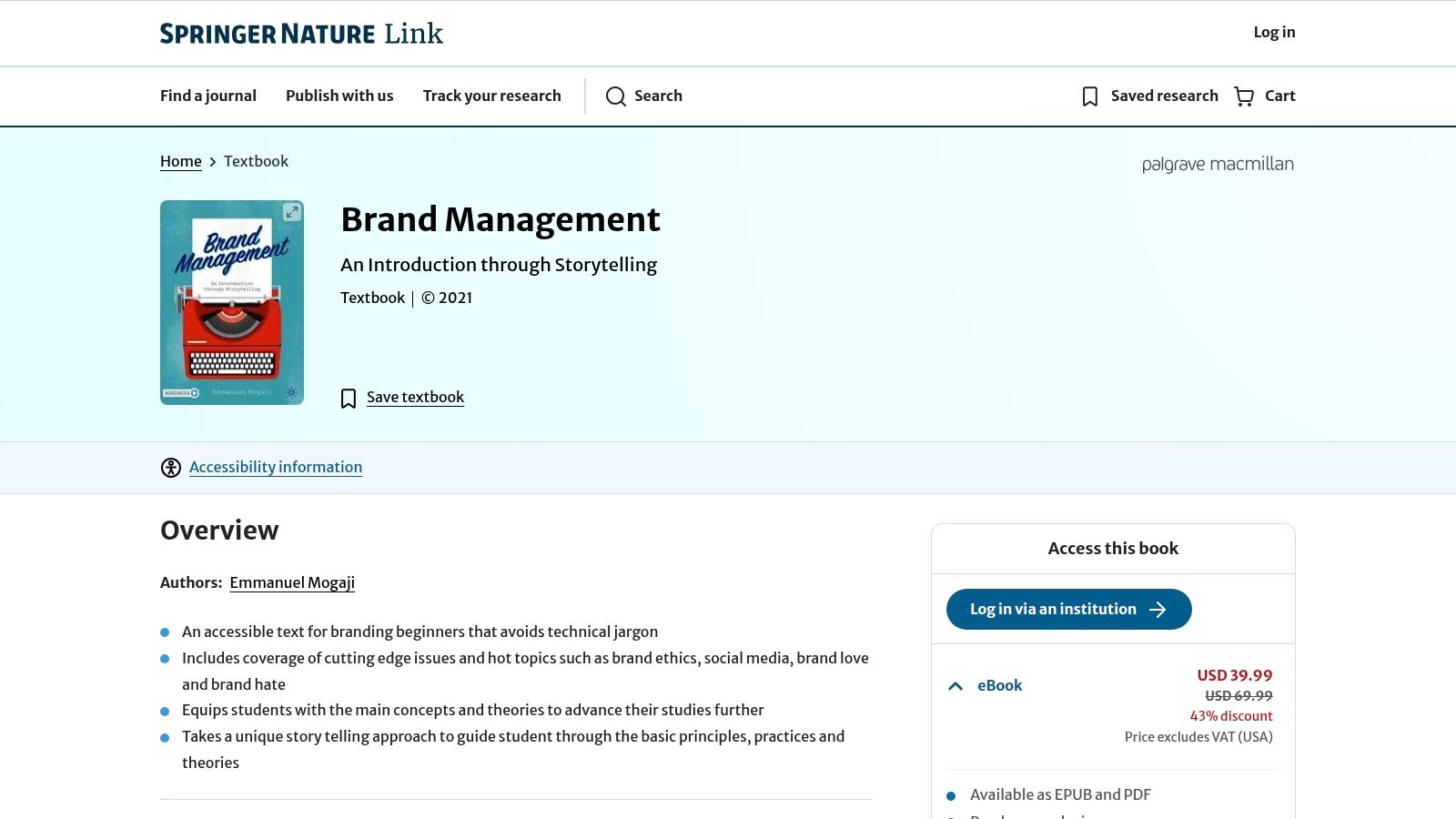
New brand managers don't need to start with the densest textbook. Brand Management An Introduction through Storytelling from Springer offers broad, accessible coverage of positioning, identity, digital branding, equity, extensions, mergers and acquisitions, architecture, ethics, and social media. The storytelling approach makes the discipline easier to enter.
Buy it for onboarding or structured self-study. It helps a new hire understand how topics connect before specializing in growth, assets, or identity. Print and digital formats also make it useful as both a reference and a searchable working resource.
Be clear about what it won't do. It's a general introduction, not an ecommerce playbook, and some topics receive introductory rather than deep treatment. A founder who needs to fix positioning this month should choose Dunford. A manager who needs the full map of the field should choose Mogaji first, then use Keller for depth.
| Book | Core Focus & Strengths | E-commerce Fit | Best For 👥 | Standout Value |
|---|---|---|---|---|
| Strategic Brand Management, Keller & Swaminathan | ★ Comprehensive framework for brand equity, positioning, marketing, and measurement | Broadly applicable; requires effort to translate into action | Founders and brand leaders seeking a rigorous foundation | 🏆 End-to-end reference; 💰 publisher pricing varies |
| Building Strong Brands, David A. Aaker | ★ Brand identity, customer associations, and perceived quality | Valuable strategic lens; examples and channel context are dated | Leaders building long-term brand meaning | ✨ Foundational brand-asset perspective; 💰 price varies |
| How Brands Grow, Byron Sharp | ★ Research-led insights on reach, availability, advertising, and loyalty | Useful for growth planning; findings need adapting to each business | Operators reassessing marketing and growth assumptions | 🏆 Evidence-based challenge to conventional wisdom; 💰 price varies |
| Building Distinctive Brand Assets, Jenni Romaniuk | ★ Practical framework for building and measuring recognizable brand cues | Strong fit for packaging, listings, ads, and cross-channel consistency | Teams refining visual and verbal brand assets | ✨ Fame-and-uniqueness framework; 💰 price varies |
| Designing Brand Identity, Wheeler & Meyerson | ★ Visual, phased guide to research, identity, launch, and asset management | Useful for scaling consistent brand execution; may require specialists | Teams planning a rebrand or unified identity system | 🏆 Cross-functional process and case studies; 💰 price varies |
| The Brand Gap, Marty Neumeier | ★ Concise bridge between business strategy and creative execution | Accessible shared language; not a detailed implementation manual | Founders, marketers, and designers | ✨ Five memorable brand-building disciplines; 💰 price varies |
| The 22 Immutable Laws of Branding, Ries & Ries | ★ Short principles on focus, differentiation, and positioning | Good discussion starter; examples and “laws” may feel dated or absolute | Founders clarifying category and brand focus | ✨ Memorable, team-friendly format; 💰 price varies |
| Obviously Awesome, April Dunford | ★ Action-oriented process for product positioning and messaging | Can sharpen product messaging; examples lean toward B2B tech | Teams struggling to explain product differentiation | 🏆 Practical positioning steps; 💰 price varies |
| Brand Leadership, Aaker & Joachimsthaler | ★ Brand architecture, leadership, and long-term asset building | Helpful when expanding products or channels; less tactical day to day | Leadership teams managing a growing brand portfolio | ✨ Links brand strategy with organizational execution; 💰 price varies |
| Brand Management: An Introduction through Storytelling, Emmanuel Mogaji | ★ Broad, approachable introduction to brand management | Covers digital topics; general primer rather than an e-commerce playbook | New brand managers and readers building fundamentals | ✨ Storytelling-led overview; 💰 print and digital formats available |
The best book isn't the most thorough or the most recent. It's the one that improves the decision you're making now. Define value before designing identity. Build recognizable assets before scaling spend. Create leadership and architecture rules before adding more products and channels. That sequence prevents expensive rework.
Use this reading path. Start with Neumeier for shared language or Mogaji for a broad foundation. Move to Dunford if customers don't understand your differentiated value, then Keller and Swaminathan or Aaker to formalize equity and identity. Add Sharp to challenge growth assumptions, Romaniuk to audit recognition, and Wheeler and Meyerson to execute identity consistently. Read Ries and Ries as a focus check, and save Brand Leadership for portfolio and organizational complexity.
Format matters less than application, but keep durable references accessible. In the broader market described by Grand View Research's global books market analysis, educational books represented 32.4% of the global books market in 2025, hard-copy formats accounted for 75.8%, and online distribution represented 40.5%. A practical approach is to keep print for deep reference and use searchable digital editions when you're applying a framework to a live listing, campaign, or rebrand.
Don't expect these books to settle two modern problems completely. First, they underdevelop AI governance. The RWS Unlocked 2025 research across 14 markets found that more than 80% of consumers want AI-created text, images, and video clearly labeled, while 62% say disclosure would increase trust. Your team therefore needs rules for disclosure, human review, synthetic imagery, support agents, and inaccurate claims. Transparency isn't just compliance. It can protect credibility.
Second, brand measurement can't rest on last-click reports. A 2025 study involving six ecommerce brands found last-click measurement captured only 18% of revenue driven by Meta, with branded paid search overvalued by 105% and paid social undervalued by 83%. Use geo experiments, holdouts, lift tests, cohort retention, new-to-brand sales, and contribution margin together. Separate demand creation from demand harvesting before you move budget.
Finally, remember that modern branding has older roots. The archived edition of Managing Brand Equity belongs to a longer history in which marks identified origin, signaled quality, and created trust. Your packaging, reviews, trademarks, and listings perform those same jobs today. Choose one book, turn its framework into a one-page decision or experiment, assign an owner, and measure the result. That's how reading becomes a brand system.
Million Dollar Sellers gives ecommerce founders and brand owners direct access to experienced operators who are solving positioning, brand growth, marketplace expansion, and creative execution problems at scale. Bring your next brand decision to a peer network built for candid strategy sharing, vetted recommendations, and practical execution support by visiting Million Dollar Sellers.
Join the Ecom Entrepreneur Community for Vetted 7-9 Figure Ecommerce Founders
Learn MoreYou may also like:
Learn more about our special events!
Check Events