
Chilat Doina
December 7, 2025
As an e-commerce founder, you're probably wearing a dozen different hats. One minute you're the head of marketing, the next you're deep in logistics, and by afternoon, you're on the front lines of customer service. Sound familiar? That constant juggling act is the fastest way to burn out and watch your growth flatline.
The real problem is you’re stuck working in your business, not on it.
This is exactly where a virtual assistant (VA) changes the game. They come in and take over the repetitive, time-sucking tasks that drain your focus and energy. Imagine handing off the daily grind of processing returns on Shopify, updating product listings, or fielding all those social media DMs. Once those tasks are off your plate, your attention can snap back to high-impact activities that actually move the needle.
Bringing on a VA isn't just about outsourcing work; it's about reclaiming your time to focus on scaling your brand. It creates the bandwidth you need to drive real growth.
Instead of getting swamped by administrative details, you can finally concentrate on the big-picture initiatives that only you can lead.
Here’s what that actually looks like:
The goal isn't just to delegate tasks; it's to delegate outcomes. A great VA doesn't just follow a to-do list—they take ownership of their role, freeing you up to think bigger.
If you're considering this, you're in good company. The global virtual assistant market is absolutely booming and projected to hit $19.5 billion by 2025. Small and medium businesses are the main engine behind this growth, making up nearly 45% of the market. This isn't a fluke—it's a sign that entrepreneurs everywhere are realizing that smart delegation is a non-negotiable for survival and growth.
To give you a bird's-eye view, here's a quick roadmap of the process we're about to walk through.
PhaseKey ActionGoal1. DefineMap out the specific tasks and responsibilities for the role.Create a crystal-clear job description and define success metrics.2. FindSource candidates from reputable platforms and networks.Build a strong pool of qualified applicants who fit your needs.3. HireScreen, interview, test, and onboard your top choice.Select the best candidate and set them up for long-term success.
This simple three-phase approach breaks down what can feel like an overwhelming process into manageable steps.
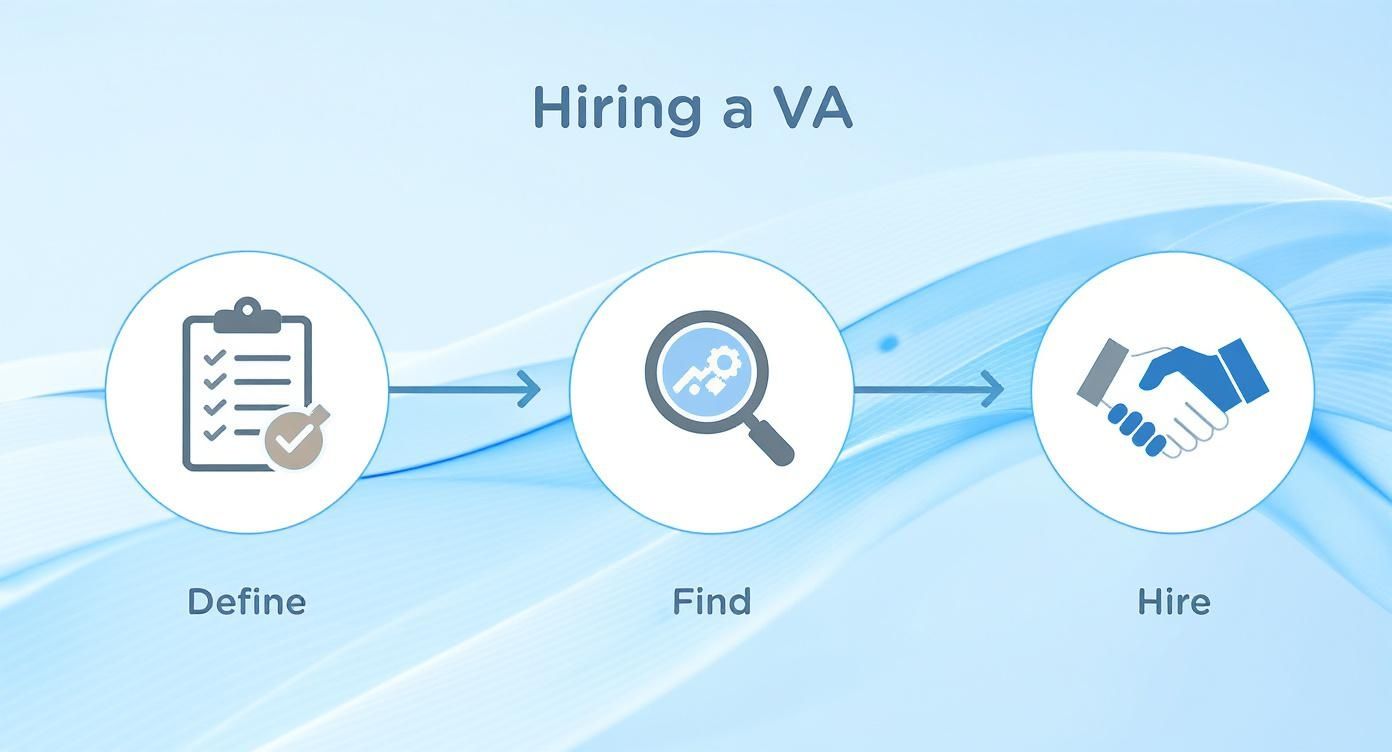
Each of these stages—defining the role, finding the talent, and making the hire—is a critical piece of a successful outsourcing strategy.
Mastering delegation is one of the most powerful skills you can develop as an entrepreneur. For a deeper look, check out our guide on the 5-reasons-to-delegate. It all starts with the simple recognition that your time is better spent steering the ship than rowing it.
Jumping onto a hiring platform without a clear plan is a one-way ticket to frustration and a bad hire. Before you even think about looking for a virtual assistant, you have to nail down exactly what you need them to do. The best hires always start with a crystal-clear picture of the role, and that begins with a simple audit of your own time.
Seriously, track everything you do for one full week. Use a basic spreadsheet or even a notes app, but be brutally honest. Log it all—from answering customer emails and processing Shopify returns to whipping up social media graphics in Canva and tweaking product descriptions.

At the end of the week, it's time to categorize. Which tasks actually generated revenue or pushed your business forward? And which ones were repetitive, administrative, or could be easily taught to someone else? That second list is pure gold—it’s the foundation of your new VA’s job description.
Vague task lists attract generalist candidates. If you want an e-commerce pro, you need to get specific about the platforms, software, and responsibilities they’ll be handling. The goal is to move beyond a generic term like "customer service" and get into the nitty-gritty.
Here are a few concrete examples of tasks perfect for an e-commerce VA:
The clearer you are about the tools and tasks, the more accurately you can screen for the right skills. A VA who already knows their way around Klaviyo email flows is infinitely more valuable than one who has only used Mailchimp—if Klaviyo is what your business runs on.
This detailed list does more than just clarify the role for you; it becomes the core of your job post. It signals to top candidates that you’ve actually thought this through and know exactly what you need, making your offer stand out. Defining these tasks is also a critical first step in building a scalable e-commerce team structure that lets you plug in new talent as the business grows.
Now that you have a defined task list, you can put a realistic budget behind it. The cost of hiring a virtual assistant varies wildly depending on their location, experience, and the complexity of the work. One of the most common mistakes founders make is trying to find the absolute cheapest person possible, which almost always backfires with poor-quality work and wasted time.
Instead, think in terms of value. A skilled VA from the Philippines with deep e-commerce experience might cost $8-$15 per hour, while a U.S.-based assistant could easily run you $25-$50+ per hour. The key is to match the rate to the skill level required. Basic data entry will be on the lower end, but managing complex marketing funnels or providing high-level executive support is going to command a higher rate.
You’ll also need to decide on a payment model.
For your first VA, I almost always recommend starting with an hourly arrangement for a set number of hours each week (say, 10-20 hours). It’s the safest way to test the waters, build trust, and scale up as your confidence and workload grow. With this clarity on tasks and budget, you're perfectly set up for the next step: finding the right talent.
Okay, you've figured out what you need a VA to do and what you can afford to pay them. Now comes the real challenge: where do the good e-commerce VAs actually hang out?
You need to know which channels to hit and, just as importantly, how to write a job post that doesn't just get lost in the noise. This isn't just about listing an opening; it’s about marketing your role to attract high-caliber people who will be genuinely pumped to join your brand.

The talent pool is massive, and for good reason. In the U.S. alone, hiring a full-time VA can save a business over $11,000 a year, since you're sidestepping a lot of traditional overhead. That kind of savings has fueled a global market where major freelance platforms host a staggering 35 million freelancers. That’s a lot of potential hires.
Your search for the perfect VA can lead you down a few different paths. Each one has its own vibe and is better suited for different needs.
When you're looking at the big platforms, it's worth digging into the differences between them. A quick read-up on Upwork vs Fiverr can give you a better feel for which one aligns with the type of talent you’re looking for.
A great job description does more than just list tasks—it sells the dream. The best VAs have their pick of projects, so your post needs to hook them and make them want to work with you. Ditch the boring, corporate job listing format.
Start with a title that’s specific and interesting. Instead of "Virtual Assistant Needed," go with something like, "E-commerce Customer Support Pro for Fast-Growing Skincare Brand." Right away, they know the industry and the core of the role.
Your job post is a marketing tool. Use it to sell your brand’s mission and culture. The best people aren't just looking for a paycheck; they're looking for a place where they can do meaningful work.
Next, lay out the responsibilities clearly, pulling directly from that task list you already made. Get specific about the software they’ll be using every day.
Here’s how to structure a job post that works:
One last pro tip: add a simple instruction to weed out anyone who isn't paying attention. A quick "In your application, tell us your favorite e-commerce brand and why" will save you hours. It’s a simple filter that instantly shows you who has an eye for detail.
Getting a flood of applications is a great feeling, but the real work starts now. This is where you separate the genuinely capable candidates from those who just know how to write a good-looking resume.
A solid, structured screening and interview process is your best defense against a bad hire. Trust me, it will save you countless hours and headaches down the road. The goal here isn't just to check boxes on their experience; it's to see their skills in action and get a real sense of how they'll fit with your workflow. This moves the whole process from guesswork to a data-driven decision.
Your first scan of the applications should be fast and ruthless. No exceptions.
Your detailed job post should have included a few small, specific instructions—like asking candidates to name their favorite e-commerce brand. This is your first filter. Anyone who skipped this simple step gets disqualified immediately. It's a huge tell that they either lack attention to detail or couldn't be bothered to read the full description.
Next, do a quick scan for pure relevance. Does their past experience actually line up with the day-to-day tasks you outlined?
This first pass should slash your applicant pool down to a manageable shortlist of people who actually read your post and have the right background.
Don't get distracted by fancy resumes. Focus on tangible proof and direct relevance to the e-commerce tasks you need done. A candidate with two solid years of Shopify product listing experience is almost always more valuable than a generalist VA with ten years of broad administrative work.
A resume tells you what a candidate claims they’ve done. A skills test shows you what they can actually do for you. This is, without a doubt, the most important step in the entire hiring process and should be non-negotiable for your top candidates.
Keep it short and sweet—the test shouldn't take them more than 30-60 minutes to complete. The key is to make it a realistic simulation of a task they would actually be doing in the role. You're not trying to trick them; you're trying to see their thought process, communication style, and raw ability firsthand.
Reviewing their submissions will tell you almost everything you need to know. Did they handle the angry customer with grace and a clear next step? Did they catch the typo in the SKU? Their performance on this test is a far better predictor of future success than any answer they could give in an interview.
The final step is the live interview, which you can easily do over a video call. Now that you've seen their skills in action, you can skip the generic questions like "What are your greatest strengths?" and get to what really matters: their reliability, communication habits, and problem-solving approach.
I always frame my questions around real-world scenarios.
By combining a tough application review, a practical skills test, and these kinds of insightful interview questions, you can move forward with total confidence. You'll know you’ve found someone who not only looks good on paper but can actually execute and slot right into your e-commerce operations.
You've sifted through applications, nailed the interviews, and finally made your pick. Fantastic! But hiring a virtual assistant doesn't stop once the contract is signed. The first few days and weeks are make-or-break for building a solid, long-term partnership.
Let's be real: even the most amazing VA can't read your mind. Tossing a list of tasks at them and hoping for the best is a recipe for frustration on both sides. A killer onboarding process, on the other hand, builds their confidence, makes your expectations crystal clear, and empowers them to start adding real value from day one. This is how a good hire becomes a great one.

The virtual assistant world is exploding, mainly because of founders like you looking for expert help without the overhead. By 2025, the market is expected to hit around $27.9 billion, and some forecasts show it climbing to a staggering $125.7 billion by 2030.
This boom means there’s more talent out there than ever. But it also means you absolutely need solid systems to bring them into your business smoothly. You can see more stats on this explosive growth on scoop.market.us.
The secret weapon of any top-tier remote team? Standard Operating Procedures (SOPs).
Don't get spooked by the corporate jargon. An SOP can be as simple as a five-minute screen recording. The whole point is to document how you do things so your VA can get tasks done the right way, every time, without having to ping you with the same questions over and over.
I’m a huge fan of using tools like Loom for this. Just hit record on your screen and talk through a process—like how you handle a return in Shopify or set up a new email flow in Klaviyo. A quick video is almost always better than a wall of text.
You can stash these video SOPs in a central spot using a tool like Notion or even just a well-organized Google Drive folder. For more complicated workflows, you might want a more detailed written guide. If you're starting from scratch, we have a great post on how to create standard operating procedures that your team will actually want to use.
Crisp, clear communication is everything. Set up a dedicated channel for your VA in a tool like Slack. This keeps all work chat in one place, separate from the black hole of email or your personal WhatsApp. Be upfront about expectations for response times and daily check-ins.
Next up is getting them the keys to the kingdom—or at least the parts they need. Use a password manager like LastPass or 1Password. It's the only secure way to share logins without actually handing over your passwords.
Here’s a quick checklist of what they’ll probably need:
Your onboarding system should be a well-oiled machine. Granting access, sharing SOPs, and setting up communication channels should happen before their first day, allowing them to hit the ground running.
Finally, you need to define what a "win" looks like. Vague goals get you vague results. You need to set clear Key Performance Indicators (KPIs) for their role right from the start.
For an e-commerce VA, this might look like:
Lock in a regular time to connect, review these numbers, and give feedback. A quick 15-minute call every Monday morning can be enough to set priorities and clear up any roadblocks. This steady rhythm builds trust and keeps everyone aligned, turning your new hire into a genuine extension of your team.
Of course, here is the rewritten section, crafted to sound like an experienced human expert and match the provided examples.
Even with a perfect plan on paper, a few last-minute questions can stop you right in your tracks. It’s totally normal. You’re about to bring someone new into your business, and you want to do it right.
Let's walk through the common hurdles that trip up e-commerce founders and get you some clear, practical answers. Think of this as the final piece of the puzzle—the part that closes the gap between knowing you should hire a VA and actually pulling the trigger.
This is easily the biggest logistical headache for most founders, but it's much simpler than it seems. For international VAs, especially in major hubs like the Philippines, the process is already well-established.
The goal is just to get everything down in writing. It protects both you and your VA and sets clear, professional expectations from day one.
Don't get bogged down in the legal details. A simple, clear agreement covering responsibilities, payment, and confidentiality is enough to get started. Clarity is the goal, not a mountain of paperwork.
Handing over the keys to your business systems can feel a little scary. I get it. But with a few smart security habits, you can delegate tasks without giving away the farm. It all boils down to two things: limited access and secure credentials.
First off, get a password manager like LastPass or 1Password. This is non-negotiable. Never, ever email or send passwords over Slack. These tools let you grant access to specific accounts without ever showing the actual password, and you can shut off access in a single click.
Second, only grant access on a "need-to-know" basis. Your new VA doesn’t need god-mode access to everything right away.
Orders and Products, not your Finances or Settings.These small steps create a secure sandbox for your VA to work in. They get the tools they need to do their job, and you don't have to worry about your core data.
So many founders wait too long. They fall into the trap of thinking they need to hit a certain revenue number or get everything perfectly organized before they hire someone. That’s backward.
The right time to hire isn't when you're already drowning; it's when you see the water level starting to rise.
You need a VA when:
Don't wait until you're completely overwhelmed. The move is to hire proactively to prevent burnout. It’s one of the single most powerful things you can do to buy back your time and get back to growing your business.
At Million Dollar Sellers, we know that smart delegation is the foundation of any 8- or 9-figure brand. Our private community is where top e-commerce entrepreneurs share the exact playbooks they use to build and manage world-class remote teams. If you’re ready to scale your operations and learn from founders at the top of their game, see what MDS is all about.
Join the Ecom Entrepreneur Community for Vetted 7-9 Figure Ecommerce Founders
Learn MoreYou may also like:
Learn more about our special events!
Check Events