Chilat Doina
December 20, 2025
If you want to bump up your average order value (AOV), you need to give customers compelling reasons to add just one more thing to their cart before they check out. It really comes down to a few proven plays: bundling complementary products, setting a free shipping threshold, and nailing your upsell and cross-sell flows. When done right, these strategies make bigger purchases feel like a smarter, more valuable choice for the shopper.

Before we jump into the "how-to," let's get clear on why AOV is so much more than just another metric on your dashboard. With customer acquisition costs (CAC) constantly on the rise, getting more revenue from every single transaction isn't just nice—it's a game-changer for your bottom line.
Focusing on AOV marks a fundamental shift in thinking. Instead of relentlessly chasing new customers, you start maximizing the value of the ones you already have.
Think about it this way: every single order has fixed costs baked in—payment processing fees, packaging, even the marketing dollars that brought the customer to you. When you increase your AOV, you're spreading those fixed costs over a larger revenue base. This directly pads your profit margins on every sale, making your business far more resilient and sustainable.
A business with a low AOV is on a treadmill. It has to work much harder, constantly acquiring more customers just to keep revenue flat. On the other hand, a business with a healthy AOV can hit the same revenue goals with fewer transactions. That means less strain on your marketing budget and fewer headaches for your operations team.
This efficiency is the secret to scaling profitably.
This guide will break down the three pillars of boosting your AOV:
The key here is that when you master these strategies, you're not just pushing more product. You're solving your customer's problems more completely. A great upsell or bundle feels like helpful, curated advice—not a hard sales pitch. That’s how you build trust and earn their loyalty.
The ripple effect of a higher AOV goes way beyond a single transaction. It’s a core component of a healthy, long-term business model.
A higher AOV is a direct contributor to a higher customer lifetime value. For anyone serious about strategic growth, understanding your customer lifetime value calculation is non-negotiable. Every extra dollar you add to an average order compounds over the entire life of that customer relationship.
Product bundling is easily one of the most direct ways to pump up your average order value. But here’s the secret: it only works if the bundle feels like a complete, no-brainer solution for your customer.
This isn’t about just mashing slow-moving products together with your bestsellers and hoping for the best. The real goal is to create a curated experience that solves a genuine problem. It’s less about the discount and more about the convenience and discovery. Think of a skincare brand offering a "Complete Morning Routine" kit. The customer gets a cleanser, serum, and moisturizer in one click, saving them the mental energy of piecing it all together. You're essentially giving them an expert-curated shortcut to the result they want.
So, where do the best bundle ideas come from? They're already hiding in your sales data. Before you start guessing which products belong together, you need to dive into your order history.
Look for items that people are frequently buying in the same transaction. This is the low-hanging fruit—your customers are literally telling you what makes sense to package together.
For example, if you sell coffee, you might see that a huge chunk of customers buying your signature espresso blend also grab a specific milk frother. That’s your cue. Packaging them as a "Home Barista Starter Kit" is a natural fit. This data-driven approach takes the guesswork out of the equation and grounds your bundles in real-world customer behavior.
Tools inside platforms like Shopify or other third-party analytics apps can help you run a "market basket analysis." This shows you which products are natural companions, giving you a clear roadmap for creating bundles that feel intuitive and genuinely helpful.
A great bundle doesn't just sell more products; it sells a solution. When a customer sees a bundle that perfectly addresses their goal—whether it's setting up a home office or starting a new fitness regimen—the perceived value skyrockets, making the purchase an easy decision.
A well-executed bundling strategy can boost AOV by 10-30%. To put that in perspective, the global e-commerce AOV recently sat around $144.57, which was an 8.7% jump from the previous year. In big markets like the Americas, where the regional AOV is about $98, bundling has become a go-to tactic to fight back against economic shifts and rising ad costs. You can discover more insights about e-commerce AOV from OpenSend.
Choosing the right bundling strategy is key to maximizing its impact. Each approach has its own strengths and is suited for different types of products and customer mindsets.
Effective Product Bundling Strategies
Bundling StrategyDescriptionBest ForPotential AOV LiftPure BundlesItems are only available together in an exclusive kit and cannot be purchased individually.Creating exclusivity, limited-time offers, or special edition collections. Works well for holiday or event-based promotions.High (20-30%)Mixed BundlesProducts can be bought separately, but purchasing them together offers a discount or added value.Everyday products, complementary items, or starter kits. The most common and versatile bundling method.Moderate (10-25%)"Build Your Own"Customers select from a predefined list of products to create their own personalized bundle for a set price.Products with many variants (e.g., apparel, cosmetics, food). Empowers customers and increases engagement.Moderate-High (15-25%)
Ultimately, the best strategy is the one that provides the most value and convenience to your customer. Don't be afraid to test different approaches to see what resonates.
Not all bundles are created equal. The right approach really depends on your catalog and what makes your customers tick. For more foundational tips, you can also check out our guide on adding products to your e-commerce store.
Here are a few structures worth trying:
While product bundles are a fantastic way to increase average order value, not every sale needs to be a pre-packaged kit. Sometimes, the biggest AOV lift comes from a simple, well-timed nudge. This is where upselling and cross-selling come in—two closely related tactics that add genuine value for the customer and more revenue for you.
Upselling is the art of guiding a customer toward a better, more feature-rich version of the product they're already set on buying. Think offering the 256GB iPhone when they've added the 128GB version to their cart. It solves the same core need but delivers a superior experience.
Cross-selling, on the other hand, is all about recommending complementary items that make the original purchase even better. If someone buys a new digital camera, a smart cross-sell would be a memory card, a camera bag, or a tripod. It’s the classic "Do you want fries with that?" approach, but for e-commerce.
The best upsells and cross-sells never feel like a sales pitch. They feel like expert advice. The whole game comes down to two things: relevance and timing. Get it wrong, and you just seem pushy, which can actually drive up cart abandonment. But a thoughtful suggestion that truly improves their purchase? That builds trust and makes customers feel like you get them.
The secret is to frame every offer as a benefit to the customer, not just a sale for you. Talk about how it saves them time, solves a future problem, or unlocks a better experience. When the value is crystal clear, clicking "add to cart" becomes a no-brainer.
For these offers to actually convert, they need to be woven seamlessly into the shopping journey. Blasting a visitor with pop-ups the second they land on your site is a surefire way to annoy them. Instead, you need to be strategic about placement.
Here are the money-making spots:
This simple flow chart breaks down the core process for building offers that actually resonate.
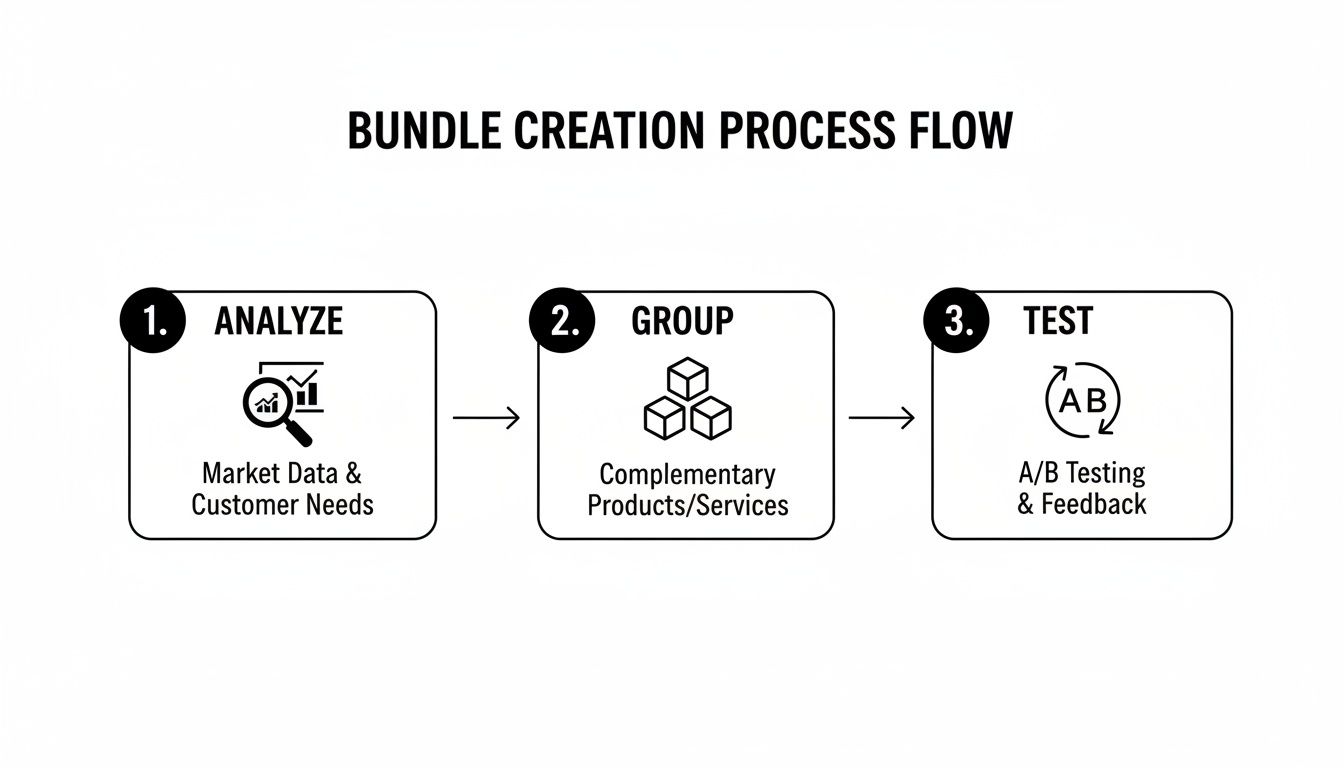
As you can see, it all starts with understanding what your customers are already doing. From there, you can group items logically and then test, test, test.
Alright, let's move from theory to what this actually looks like in practice. A great offer always feels like a natural part of the shopping experience.
Upsell Example: A High-End Blender
Imagine a customer is looking at your standard $99 blender. Right there on the product page, you could show a comparison table against your $149 premium model. You'd clearly highlight the more powerful motor, the larger pitcher, and the longer warranty. By laying out the superior benefits, you’re not just selling—you’re helping them make a more informed decision.
Cross-Sell Example: A New Laptop
When a customer adds a laptop to their cart, a slide-out cart drawer could pop out with a few smart suggestions:
These aren't random products. They are logical add-ons that protect and improve the main purchase. It’s also key to keep the price of these cross-sells relatively low compared to the main item. Impulse buys are much easier when they feel like a small fraction of what someone is already spending. Through disciplined testing, you can turn your checkout into a powerful AOV engine.
The generic "customers also bought" widget just doesn't cut it anymore. Shoppers today expect a level of relevance that feels like you're reading their minds. This is where AI and personalization engines change the game, shifting your AOV strategy from guesswork to surgical precision.
These aren't just basic recommendation tools. They analyze individual shopper behavior in real-time—browsing history, past purchases, what they looked at but didn't buy, and even their search terms—to build a unique profile. The result is hyper-relevant product suggestions that feel genuinely helpful, not just like a sales pitch.
Think of it as the difference between a store clerk pointing you to the bestseller rack versus a personal stylist who already knows your taste. AI-powered personalization can surface dynamic suggestions right on your homepage, in product carousels, and even during checkout that line up perfectly with what that shopper wants right now.
For example, if someone is looking at hiking boots, a smart system won't just show them more boots. It'll suggest high-performance wool socks, a waterproofing spray, or a lightweight daypack. It's anticipating their need and offering the entire solution for their upcoming adventure. That’s how you increase the cart size without being pushy.
Making shoppers feel understood is a powerful way to build trust and drive revenue. It shows you're paying attention, which not only encourages them to add more to their cart today but also builds the kind of loyalty that fuels real, sustainable growth.
Personalization isn't just a buzzword; it's a proven AOV driver. A massive 98% of online retailers report AOV gains from tailored recommendations. As the average e-commerce AOV climbed to $144.57, personalization was a major reason why.
Shopify data shows that the top 20% of stores hit an AOV of $109+ by putting personalized product recommendations on their pages, in carts, and at checkout. This alone can boost order values by a solid 10-30%. You can dig into the latest e-commerce personalization statistics to see the full impact.
Jumping into AI doesn't require a massive technical overhaul. Plenty of modern e-commerce platforms and third-party apps make this surprisingly accessible, automating sophisticated offer flows that would be impossible to manage by hand.
Here are a few high-impact ways to put AI to work:
These systems get smarter over time. The more data they gather, the more accurate their recommendations become. This creates a powerful feedback loop where every interaction fine-tunes your ability to show the right offer to the right person at the perfect moment.
The e-commerce world is packed with powerful tools designed to make this level of personalization achievable for brands of any size. For a closer look at what's out there, our guide on how to use AI for e-commerce breaks down the platforms and strategies top sellers are using to get real results.
Ultimately, integrating AI into your AOV strategy is about creating a smarter, more responsive shopping experience. When you show customers you understand their needs and can anticipate what will make their purchase even better, you build a connection that translates directly into higher order values and a much healthier customer lifetime value.
Beyond clever bundles and upsells, some of the most effective AOV boosters tap directly into how people think about money. Smart pricing and strategic incentives aren't about tricking anyone. They're about reframing the value proposition to make it easier for customers to say "yes" to a slightly bigger purchase.
Instead of just buying a product, the customer is suddenly working toward a tangible reward. That simple shift in perspective is incredibly powerful.
The free shipping threshold is probably the most reliable AOV-boosting tool in the entire e-commerce playbook. It works because of a simple psychological truth: people hate paying for shipping. Many would rather spend an extra $10 on another product than pay $5 for delivery. It's not always logical, but it's human nature.
The real trick is setting the right threshold. If it's too high, you'll just frustrate people and send your cart abandonment rate soaring. A common rule of thumb is to set it about 30% higher than your current AOV.
But here’s a better way: base it on your modal order value—the most frequently occurring order total. If you see that most people are spending around $40, setting a $55 free shipping threshold feels like an achievable nudge, not an impossible leap. It’s just enough to encourage them to find one more small item to toss in their cart.
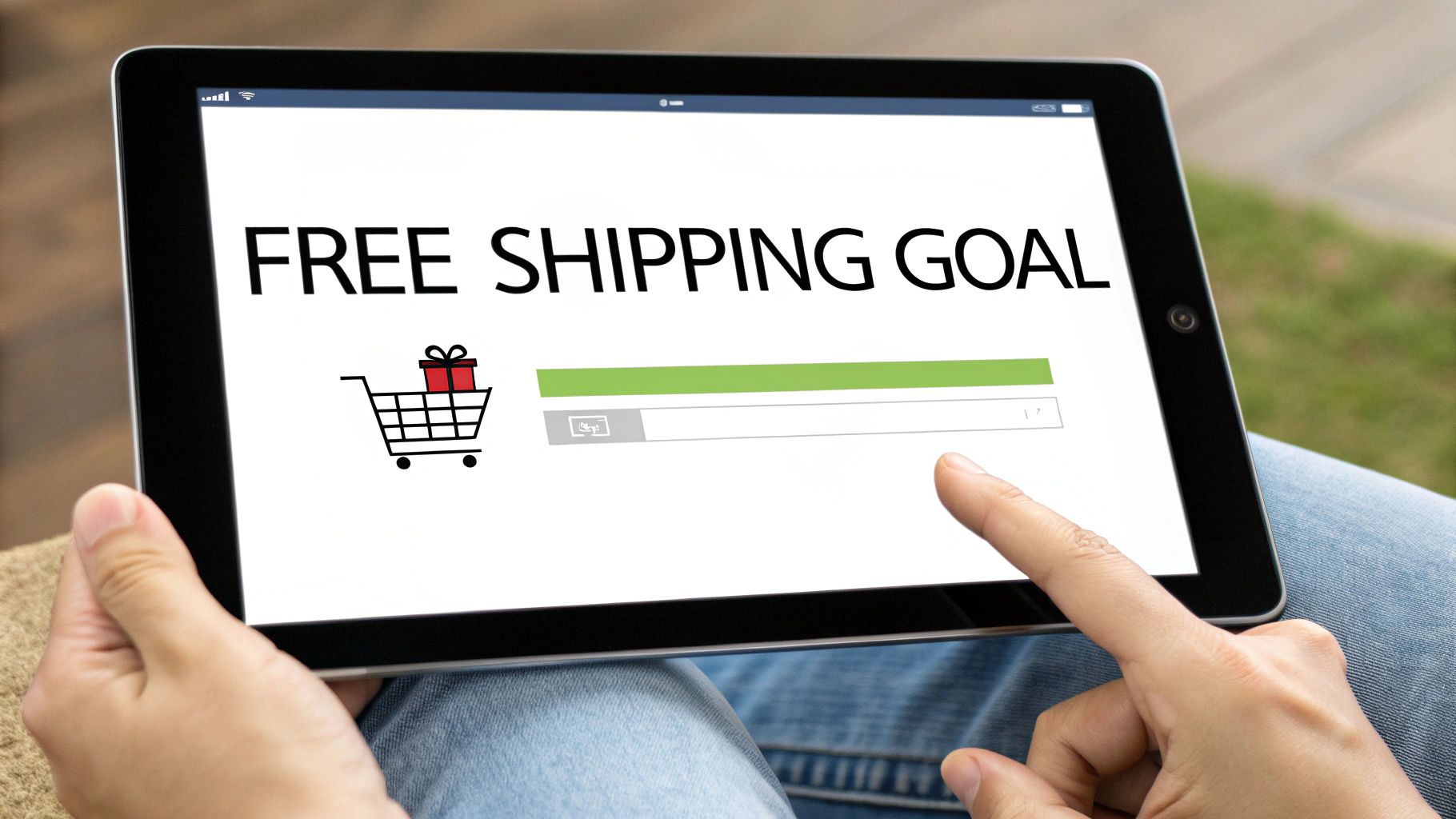
Pro Tip: Don't just set the threshold—make it visual. A dynamic banner or a progress bar in the cart showing customers exactly how close they are to free shipping is a game-changer. It gamifies the experience and provides a clear, compelling call to action.
Once you’ve picked your number, shout it from the rooftops. A persistent site-wide banner and in-cart reminders are non-negotiable.
Much like the free shipping threshold, offering a small gift or a discount for hitting a specific cart value can be a huge motivator. This works best when the incentive feels genuinely valuable and relevant to your brand.
You could try a few different angles:
The key is structuring the tiers to encourage a meaningful jump from your current AOV without feeling out of reach. If you're looking for more inspiration, it's worth exploring some creative incentive marketing strategies to see what else might fit your brand.
Another powerful psychological tool is offering Buy Now, Pay Later (BNPL) options like Klarna or Afterpay at checkout. These services break a larger purchase into smaller, often interest-free installments, making high-ticket items feel far more manageable.
That mental shift from a single $200 purchase to four easy payments of $50 dramatically lowers the psychological barrier to purchase. This encourages customers to go for more premium items or simply add more to their carts without feeling the immediate financial sting.
The data backs this up. Shopify has shown that stores implementing BNPL see major AOV lifts, especially in categories like electronics and home goods. Top-performing stores in these niches see AOV jump to $120+, with benchmarks for home goods hitting an impressive $266.
Of course. Here is the rewritten section, designed to sound completely human-written and natural, following all your requirements.
While tactics like bundling and upsells are great for a quick AOV win, the real, sustainable growth comes from turning casual shoppers into loyal fans. This is where loyalty programs and subscriptions come in. They shift the whole game from a single transaction to building predictable, recurring revenue.
The secret isn't just to reward purchases. It's to build a system that actively encourages customers to spend more to unlock better and better perks. This creates a natural pull for them to add just one more thing to their cart, every single time.
A tiered loyalty program is, hands down, one of the most effective ways to grow AOV over time. Forget the simple "spend X, get Y points" model. Instead, you create different status levels that customers can climb by spending more with you.
Each tier unlocks more valuable and exclusive benefits, basically gamifying the shopping experience. It gives your best customers a tangible reason to stick with you and not spread their spending around.
A simple structure might look something like this:
This kind of model creates a direct line between higher spending and real, desirable rewards. It makes your customers feel seen and valued for their loyalty.
If you sell anything consumable, a "subscribe and save" model is a non-negotiable. It locks in future sales and builds a reliable revenue stream while giving customers what they want: convenience and a small discount. It’s a classic win-win.
A subscription isn't just a recurring order; it's a gateway to higher lifetime value. Once a customer is subscribed, you've earned their trust and opened a direct channel for future, highly relevant offers.
But the AOV boost doesn't end with the first subscription. You can build powerful upselling opportunities right into the experience. For example, let subscribers add a one-time product to their next shipment with a single click—maybe with an exclusive discount. It’s a completely frictionless way to introduce them to new or complementary items, bumping up the value of their regular delivery without making them rethink their core subscription.
Let's tackle some of the most common questions that pop up when brands start getting serious about increasing their average order value.
Honestly, a "good" AOV is a moving target. It depends entirely on your industry, product costs, and profit margins. Chasing a universal number is a fool's errand.
Instead, the real goal is to consistently improve your own baseline. A great rule of thumb is to aim for an AOV that's at least three times your customer acquisition cost (CAC). So, if you spend $30 to get a new customer, a $90 AOV is a healthy place to be. Focus on tracking your own progress month-over-month. That’s the number that actually matters.
Constantly. But don't throw everything at the wall at once.
The best approach is to test one new strategy at a time so you can clearly measure its impact. For example, roll out a free shipping threshold this quarter. Next quarter, test a few different product bundle variations.
Run A/B tests to see what really works, and let each test run long enough to get solid data. For most e-commerce brands, that means at least 2-4 weeks to hit a statistically significant sample size.
This way, you isolate the variables and learn what truly moves the needle instead of just guessing.
They absolutely will if you do it wrong. The difference between helpful and annoying comes down to one thing: relevance.
A pushy, irrelevant offer is just noise. Think about it—offering premium batteries for a new gadget feels like a helpful suggestion. Suggesting a random, unrelated product just gets in the way. The key is to be genuinely helpful, not aggressive.
Always frame your suggestions as a benefit to the customer, make them super easy to decline, and never, ever make them a roadblock in the checkout process. When you get it right, customers don't see it as a hard sell. They see it as great service.
Million Dollar Sellers is an exclusive community where top e-commerce entrepreneurs share the proven strategies that actually work to scale their brands. Learn directly from 7, 8, and 9-figure founders by exploring Million Dollar Sellers.
Join the Ecom Entrepreneur Community for Vetted 7-9 Figure Ecommerce Founders
Learn MoreYou may also like:
Learn more about our special events!
Check Events