Chilat Doina
September 2, 2026
A founder can usually feel the problem before the dashboard shows it. Revenue is growing, the team has expanded beyond the original operators, and yet the same questions keep returning: Who is moving contribution margin? Who's carrying work that never appears in a weekly report? Why does one manager recommend a raise while another rates similar work as ordinary?
At a small ecommerce company, informal feedback can work because the founder sees the ad account, product pipeline, customer issues, and fulfillment problems firsthand. As the business adds channels, SKUs, marketplaces, and managers, that visibility disappears. Performance review systems replace memory and proximity with a repeatable operating layer that connects individual decisions to the P&L.
The breaking point usually arrives. A DTC brand has enough orders, paid media activity, customer support tickets, and marketplace exceptions that the founder can't remain in every Slack thread or inspect every Amazon case log. The founder still knows the business, but no longer sees enough daily work to distinguish a strong operator from someone who communicates confidently.
Three symptoms tend to appear together:
That isn't merely an HR inconvenience. It's a silent tax on growth. Every new channel and hire adds operating complexity, but informal feedback provides no reliable method for sorting signal from noise. A marketplace operator may protect account health while sacrificing short-term volume, while a paid media manager may produce attractive ROAS at the expense of contribution margin. Without role-specific standards, both can be judged by whichever metric is easiest to remember.
A formal review gives the company a defensible record for raises, promotions, recognition, performance improvement plans, and exits. It also gives managers a way to discuss missed expectations before a difficult conversation becomes a surprise. Founders building the management layer can also use resources on how to scale a team and performance management for high-growth teams to pressure-test their approach.
Operator's rule: Install the system before the founder's calendar becomes the system.
Performance reviews became widespread in major markets during the twentieth century. One historical summary reports that about 60% of U.S. employers had adopted performance evaluation practices by the end of World War II, rising to around 90% by the 1960s. The history of performance reviews also identifies the 1950 U.S. Performance Rating Act, which established government appraisal systems and a three-level language of outstanding, satisfactory, and unsatisfactory. The lesson for ecommerce founders is simple: reviews are a management mechanism that scales with organizations. They aren't a ceremony reserved for large corporations.
A performance review system is an operating layer between daily work and business decisions. It converts scattered evidence into a repeatable way to decide who needs support, who can take on broader scope, and how compensation should reflect contribution to the brand or marketplace P&L.
The system has three connected zones.
Inputs should combine quantitative and qualitative signals:
The goal is not to collect every available data point. It is to identify the small set of outcomes that show the role's economic contribution. A marketplace operator may influence Buy Box performance and account health, while a brand growth lead may own contribution margin, launch execution, and customer demand quality.
Mechanics include cadence, templates, rating definitions, manager preparation, calibration meetings, and the software or documents that store the record. These mechanics determine whether two managers apply similar standards to similar work.
A rating scale helps only when each level describes observable performance. “Exceeded expectations” has little value if managers cannot explain which outcome exceeded the agreed bar, what the employee controlled, and why the result mattered to the business. Calibration is where leaders test those judgments against one another before compensation or promotion decisions are finalized.
Outputs include compensation changes, promotion recommendations, recognition, development plans, PIPs, succession decisions, and retention actions. A review that produces only a score creates paperwork, not management infrastructure.
Three models appear often in ecommerce teams:
| Model | Cadence | Best For | Manager Time Burden | Comp Decision Quality |
|---|---|---|---|---|
| Traditional annual rating | Once yearly | Stable structures with formal planning | Low between cycles, high at year-end | Moderate when documentation is strong |
| Continuous feedback | Ongoing conversations | Fast-moving teams with mature managers | High and inconsistent | Variable unless evidence is captured |
| Hybrid stack and flow | Weekly, monthly, quarterly, and annual layers | Scaling brand and marketplace organizations | Moderate and distributed | Strongest when calibration follows each cycle |
The traditional annual model creates a clear compensation event, but it can lose the context around a failed launch or successful recovery from months earlier. Continuous feedback surfaces problems sooner, yet documentation varies widely by manager. The hybrid model combines structured review points with operating conversations, making it the strongest default when ROAS, contribution margin, and inventory conditions shift quickly.
A 2026 report found that organizations with a formal review component reported 16% higher effectiveness in assessing performance and 41% higher effectiveness in distributing compensation based on performance. The same 2026 Performance Management Report reports that 56.3% review only annually, while 7.6% review more than twice per year. Annual reviews still serve compensation decisions, but they should sit inside a broader operating rhythm rather than carry the entire feedback system.
Cadence should follow the business calendar, not an abstract HR preference. A brand launching seasonal SKUs, resetting paid media budgets, and negotiating marketplace terms needs more than one annual conversation, but it also can't pull every manager into a heavyweight review every week.
Annual reviews align naturally with fiscal planning and compensation budgets. They're efficient for a small leadership group, but they compress too much history into one meeting and make recency bias hard to avoid.
Biannual reviews can fit a business with two major commercial seasons. One cycle may follow a major marketplace event or holiday preparation, while the next captures the post-season reset. This provides more context without creating constant administration.
Quarterly reviews match merchandising, advertising, inventory, and channel planning. They give managers a useful window for evaluating outcomes, though the company must distinguish a temporary market constraint from a controllable execution failure.
Continuous feedback works best through weekly 1:1s, launch retrospectives, and fast coaching. It keeps PDP, ad-set, and fulfillment issues visible, but it becomes unreliable when managers don't record decisions and commitments.
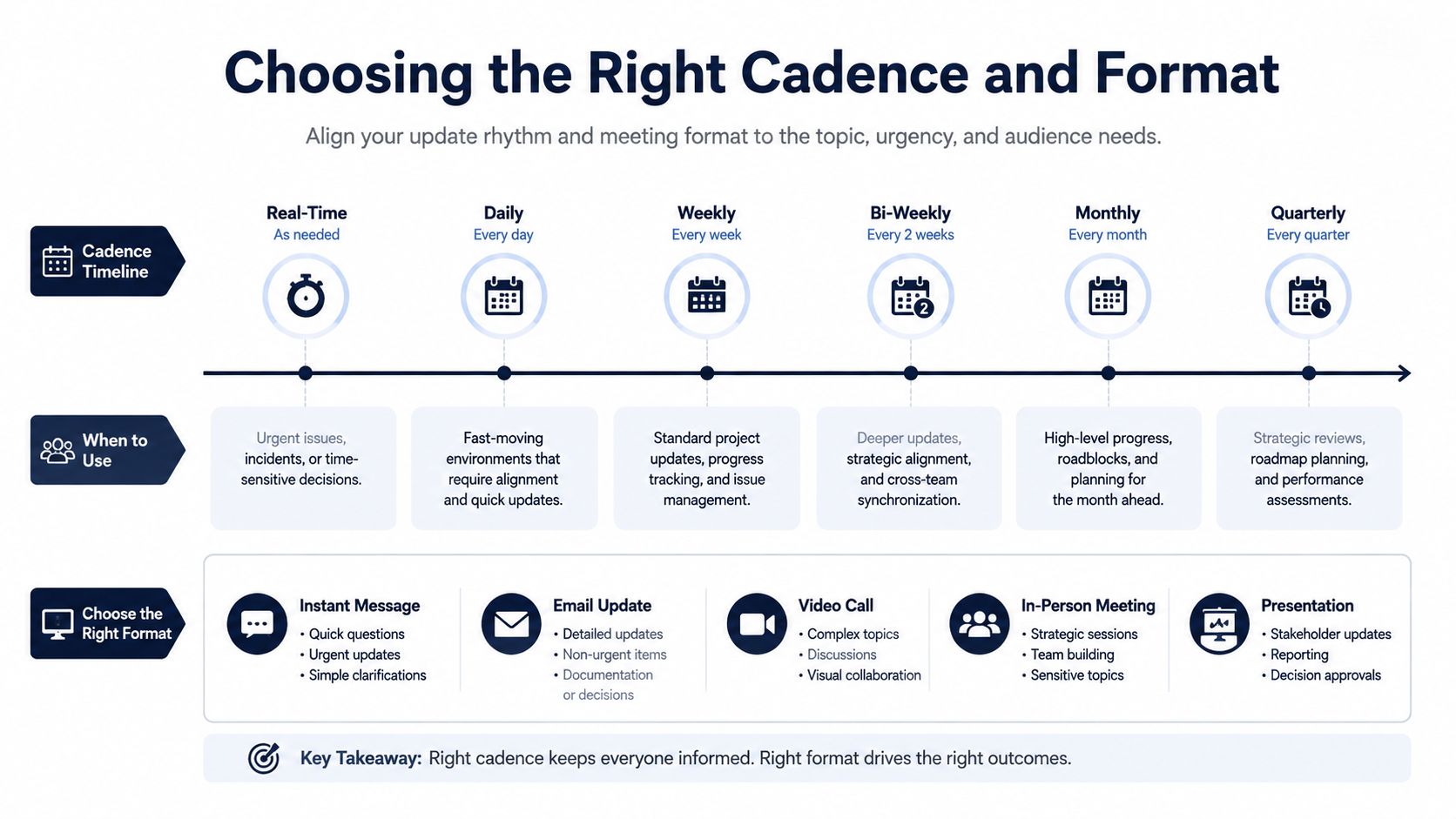
For a scaling ecommerce organization, a layered rhythm is usually more practical:
This structure separates operating feedback from formal judgment. A cash bonus can still align with a planning window, an Amazon Vendor Central negotiation, or a seasonal launch, while the manager has already addressed problems rather than saving them for year-end.
The paper trail matters, too. Clear notes give the company a fair basis for a PIP or termination discussion, and they show the employee what was expected, what happened, and what support was offered. The system shouldn't make managers bureaucratic. It should make important decisions less dependent on memory.
A review system works when accountability is explicit and the scorecard reflects how the business creates value. Start with the operating model, then add the meeting mechanics.
Name the review owner, the manager of managers, and the executive sponsor. The review owner maintains the calendar, templates, and records. The manager of managers checks whether ratings are supported by evidence and whether leaders are coaching consistently. The executive sponsor resolves disputes and protects the process from becoming optional during busy seasons.
Write those responsibilities down. Teams looking for a broader structure can use accountability systems as a reference point, but the owner inside the company must still be named.
A generic competency template won't tell you whether a marketplace operator protected margin or whether a creative lead improved the quality of testing. Each scorecard should combine role outcomes with the behaviors that make those outcomes sustainable.
For example, a paid media scorecard may include efficient growth, TACoS contribution, testing discipline, and budget judgment. A merchandising scorecard may cover sell-through, inventory decisions, forecast quality, and channel mix. A creative scorecard should measure useful output and iteration without allowing speed to override brand integrity.
Give each person a small group of quantifiable outcomes. Weight them according to the P&L rather than distributing equal importance across convenient metrics.
A KPI is useful only if the employee can influence it and the company can explain its relevance.
After managers complete initial ratings, hold a structured calibration session. Review the evidence, compare similar roles, test whether the rating reflects the whole cycle, and surface promotion or support decisions.
Calibration committees typically adjust only about 25% of initial ratings, according to research on subjective performance evaluation. When adjustments occur, downward changes tend to be more frequent and larger than upward changes. The research on calibration committees also identifies a trade-off: calibration can reduce manager leniency and improve consistency, but it can push ratings toward the middle. Use it to normalize manager variance, not to force agreement.
Define how calibrated outcomes influence bonuses, equity refreshes, promotions, and recognition. The exact formula depends on cash flow and role design, but employees should understand which part of their reward reflects company performance, team performance, and individual contribution.
Then roll it out in stages:
The first version should be usable, not perfect. A clear scorecard reviewed consistently will outperform a complex platform nobody trusts.
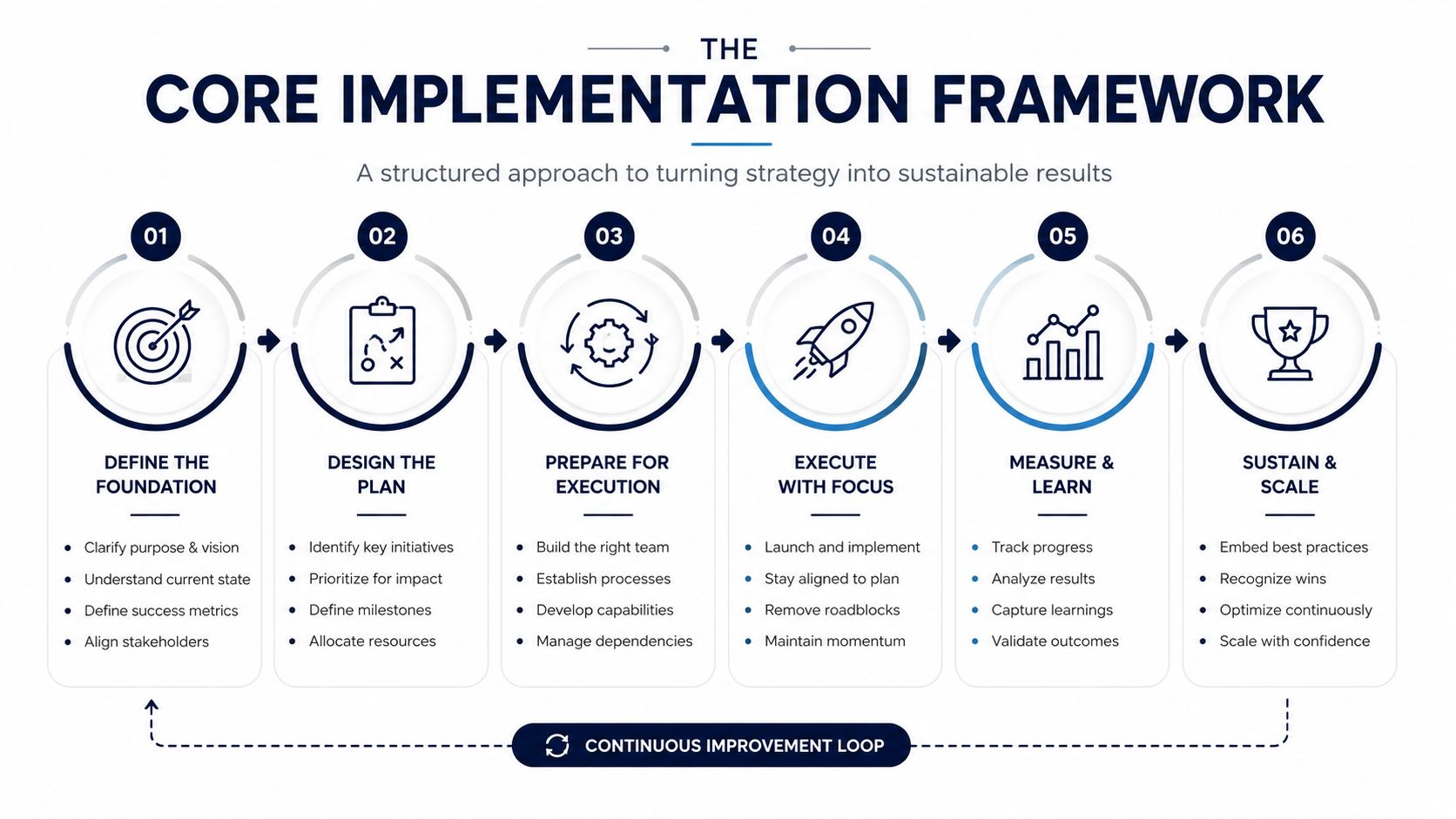
A short visual walkthrough can help managers understand how the framework fits together before the first cycle.
A usable template should fit on a page and force a manager to discuss evidence. It isn't a script. The manager still needs to explain context, listen to the employee, and make a clear decision before the meeting ends.
Start with TACoS, Buy Box win rate, account health, and inventory turn. Add prompts such as: Did the operator anticipate promotional constraints? Did deal planning protect margin? Were seasonal risks identified early? Did the operator resolve account issues in a way that prevented recurrence?
Use a simple scale such as Below expectations, Meets expectations, Exceeds expectations, and Exceptional. Each rating needs a written example tied to the review period. The development goal might be: “Build a seasonal readiness process that identifies inventory, listing, and promotion risks before the next launch window.”
Focus on contribution margin by SKU cluster, repeat purchase behavior, paid retention loops, and merchandising decisions tied to channel mix. Ask whether the manager improved the quality of assortment choices, protected brand economics, and used customer behavior to shape offers instead of chasing top-line volume alone.
A practical development goal could be: “Create a monthly SKU-cluster review that connects merchandising actions to contribution margin and repeat purchase signals.”
Rate output velocity, on-brief delivery, iteration speed, and brief interpretation. Don't let production speed outrank brand integrity. A fast team that produces unusable or off-brand assets creates downstream cost for media buyers, merchandising, and the customer.
Prompts should include: Did the creative lead identify the commercial problem behind the request? Did revisions improve the work? Did the team document learnings for future briefs? The development goal might be: “Create a reusable testing brief that records the hypothesis, audience, asset variation, and post-launch learning.”
| Role | Core KPIs | Behavioral Prompts | One Development Goal |
|---|---|---|---|
| Marketplace operator | TACoS, Buy Box win rate, account health, inventory turn | Did planning protect margin and seasonal readiness? | Build a repeatable seasonal risk review |
| DTC brand manager | Contribution margin, repeat purchase, retention loops, channel mix | Did decisions improve assortment quality and economic value? | Connect monthly SKU reviews to commercial outcomes |
| Creative lead | Output velocity, on-brief delivery, iteration speed, interpretation quality | Did the team preserve brand integrity while learning quickly? | Standardize hypothesis-led creative briefs |
Managers who want more prompts and structure can review guidance on how to make performance reviews meaningful. Adapt the language to the role, and keep one development commitment visible until the next check-in.
Most review systems don't fail because the company chose the wrong software. They fail because leaders use a formal process to preserve informal habits.
Forced ranking is the clearest example. A marketplace operator and a creative director may both be excellent, but their work produces different signals and faces different constraints. Evidence on forced-distribution systems finds that they can misclassify roughly one-third of employees even in idealized settings, with error rates rising above 50% when team-quality differences and manager variation enter the picture. A controlled study also found no performance gain for creative tasks, alongside higher stress and a weaker connection between creativity and supervisor ratings, as summarized in the analysis of forced-ranking systems. Compare people within sensible role families instead of forcing the entire company into one curve.
Other failure modes require equally direct counter-moves:
Retention also depends on what happens between formal meetings. Clear expectations, useful coaching, visible recognition, and credible growth paths belong in the operating rhythm, alongside practical staff retention tips that address the broader employee experience.
Reviews become credible when managers use them to make decisions throughout the year. Treat them as an event, and employees learn to perform for the meeting. Treat them as an operating rhythm, and the meeting becomes a checkpoint inside a system people already understand.
Founders should measure the review system the same way they measure a channel or operating process. Completion alone isn't enough. A completed form can coexist with weak coaching, inflated ratings, and no improvement in the business outcomes the review was meant to influence.
Track leading indicators such as:
A performance metrics dashboard can help founders keep these signals alongside commercial reporting rather than hiding them inside an HR-only view.
| Team Size | Key Effectiveness Metrics | System Changes to Introduce |
|---|---|---|
| Small startup | Completion quality, scorecard clarity, follow-through | Named review owner and role-based scorecards |
| Growing team | Calibration variance, manager consistency, promotion evidence | Skip-level reviews and structured calibration |
| Larger brand operation | Top-performer retention, KPI movement, pay equity, decision speed | Separate development and compensation processes |
At approximately 25 employees, a founder can consider skip-level reviews to detect problems managers may not surface. Around 40 employees, a formal calibration committee can create cross-team consistency. At 75 or more, separating compensation planning from developmental reviews can keep pay decisions from overwhelming coaching. These are practical triggers, not universal laws. Introduce each layer when the current system stops producing reliable evidence.
The system should become more disciplined as headcount grows, not more ceremonial. If revenue improves but managers still can't explain who created durable value, the review process isn't working. If scorecard outcomes become clearer, high performers receive credible recognition, and underperformance receives timely support, the system is doing its job.
Measure the process by the P&L accountability it creates. The best performance review systems make better decisions easier, earlier, and more consistent.
Million Dollar Sellers offers invite-only peer access for serious ecommerce founders, with strategy sharing, curated events, mastermind conversations, and practical insight from operators running Amazon, DTC, and omnichannel brands. Visit Million Dollar Sellers to learn how the community can help you build stronger accountability systems and scale with greater clarity.
Join the Ecom Entrepreneur Community for Vetted 7-9 Figure Ecommerce Founders
Learn MoreYou may also like:
Learn more about our special events!
Check Events