Chilat Doina
June 27, 2026
Your latest marketing campaign went viral. Sales are climbing across Amazon, Shopify, and retail channels. Then the avoidable problems hit at once: one SKU is oversold, a supplier misses a ship date, customer support gets flooded, and cash gets trapped in the wrong inventory.
That's the moment when most founders realize operations isn't back-office admin. It's margin protection. It's brand protection. It's growth capacity. In a market this large, weak systems get exposed fast. The global logistics market is projected to reach $3.60 trillion in 2026, up from $3.32 trillion in 2025, and global eCommerce logistics surged by 12% in 2025 according to Explore WMS logistics and supply chain statistics.
For 7- to 9-figure sellers, the best supply chain management tips aren't generic procurement advice. They're the operating decisions that let you stay in stock, protect contribution margin, and move faster than competitors when conditions change. If you also care about execution discipline beyond purchasing and freight, these best practices for logistics managers are worth reviewing alongside the tactics below.
Most inventory problems start with bad visibility, not bad intent. Teams think they have stock because Amazon FBA, a 3PL, and a warehouse each show a different number. Then marketing launches, operations trusts the wrong dashboard, and the brand pays for the mismatch.
Real-time visibility fixes that by creating one operating picture across channels. For a seller running Amazon, Shopify, wholesale, and maybe a replenishment program, that means one place to see what's sellable, what's inbound, what's reserved, and what's at risk.
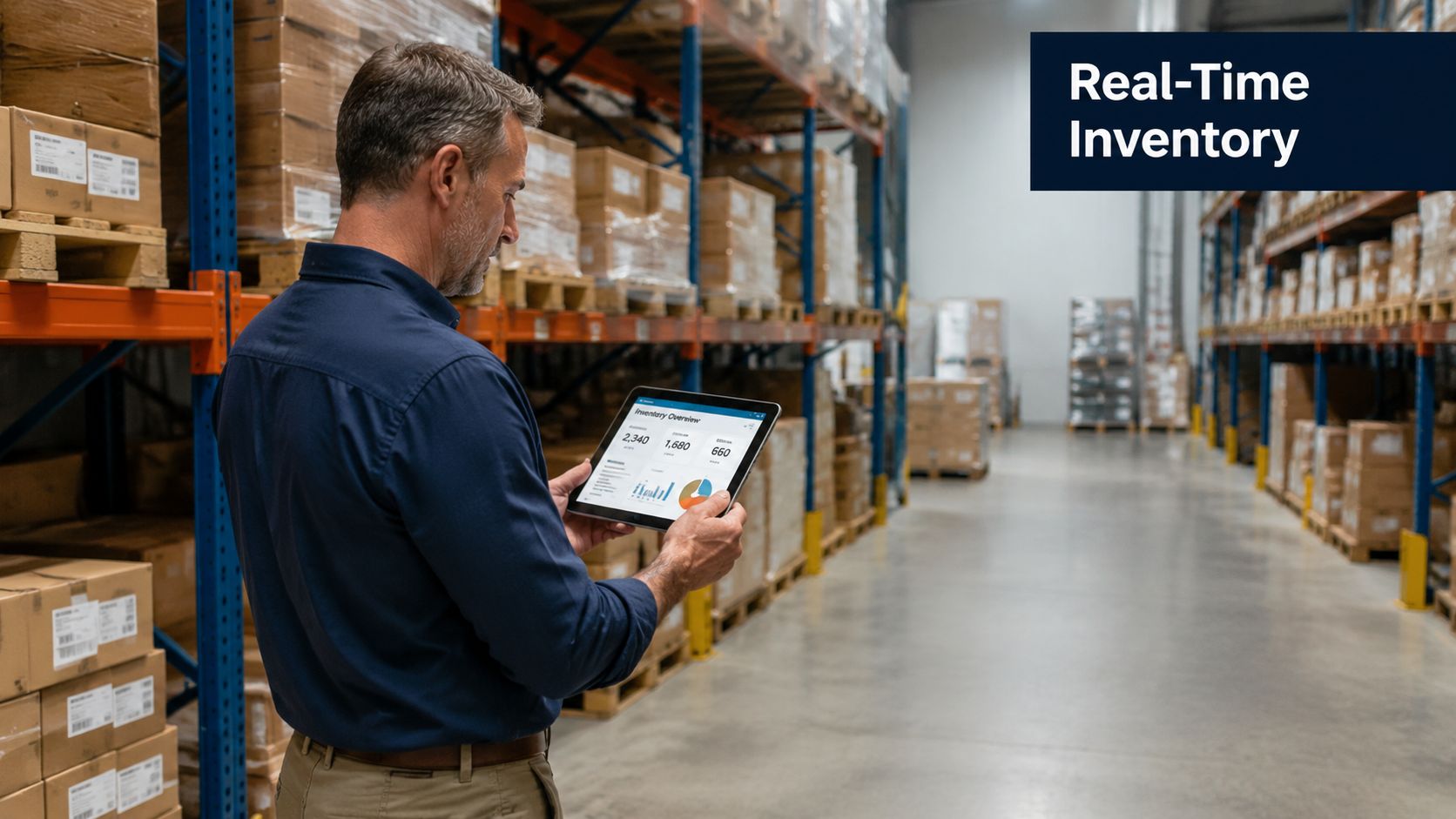
Don't try to map every SKU on day one. Start with the products that drive most of your revenue. In practice, that often means syncing your hero SKUs first across FBA, FBM, your 3PL, and your store backend.
Tools vary by complexity. Amazon-heavy operators often start with Sellerboard or InventoryLab for channel clarity. Larger brands usually outgrow single-channel tools and move toward NetSuite or another ERP when purchase orders, landed costs, and multi-location replenishment need to sit in one system.
Practical rule: If your ops lead and your finance lead pull different stock numbers for the same SKU, you don't have visibility. You have competing guesses.
A few practices consistently work:
A factory misses a ship window two weeks before your peak sales period. If 80 percent of your volume sits with that one partner, you are no longer managing supply chain risk. You are absorbing it.
Top operators treat suppliers as part of their operating system, not a line item to squeeze once a quarter. McKinsey notes that companies can lose significant value from major supply chain disruptions over time, which is why high-growth brands build optionality before they need it, not during a crisis, in its research on supply-chain risk and resilience. Among 7- and 8-figure sellers, the goal is simple: keep supply flowing when weaker competitors stall.
Loyalty helps when a supplier is deciding whose PO gets pushed through first. It does not replace redundancy.
The strongest setup usually includes three layers:
That structure costs more to maintain. Unit pricing can be worse at the backup factory. Forecasting gets harder because volume is split. QA work increases because more than one plant needs oversight.
It is still the right trade in categories where stockouts punish rank, cash flow, and customer retention.
Good relationships are built on useful information. Send demand signals early. Confirm material constraints before they become production delays. Review defect trends, on-time delivery, lead time variance, and response speed in writing.
A quarterly business review is usually enough for stable suppliers. For fast-scaling SKUs, monthly reviews are better.
Publish supplier scorecards internally so sourcing, ops, and finance are working from the same facts.
I have seen brands call a factory a "great partner" while that supplier missed dates for three straight months and made undisclosed changes to sub-suppliers. Scorecards cut through that kind of storytelling. They also make negotiations cleaner because the discussion moves from price alone to performance, capacity access, payment terms, and recovery expectations.
If your team needs a better planning baseline before those supplier conversations, these inventory forecasting methods for eCommerce brands will help tighten the inputs.
Diversification is not only about disaster prevention. It gives you negotiating power, faster test capacity, and more control over margin.
A backup supplier can pressure-test quotes from your primary. A regional partner can cover smaller runs that would otherwise clog your main factory. A second manufacturing geography can reduce exposure to tariffs, port congestion, or political disruption without forcing a full network redesign.
The operators who do this well also use better tools to monitor supplier performance, documentation, and communication. If you want to discover essential AI tools, start with the ones that help your team summarize supplier updates, flag exceptions in POs, and keep vendor records current across systems.
The practical standard is straightforward. No revenue-critical SKU should depend on one supplier, one factory, or one country if you are trying to scale past 8 figures.
A promotion hits harder than expected, Amazon rank improves, and the SKU that looked stable two weeks ago is suddenly headed for a stockout. By the time the PO is placed, the factory lead time has already turned a demand win into a margin problem.
That is the gap serious operators close.
Forecasting at 7 and 8 figures cannot sit inside an ops spreadsheet. It has to connect demand signals from marketing, finance, inventory, and supply planning so the team can make earlier decisions on purchase orders, cash, and risk. Top sellers build that muscle because forecasting is not only about avoiding stockouts. It is how they protect ranking, preserve ad efficiency, and decide where to place inventory with intent.
McKinsey's research on AI in supply chains points to better forecast accuracy and planning responsiveness when companies use advanced analytics instead of static historical models. That is why strong teams combine channel data, sell-through by SKU, promo calendars, stockout history, and lead-time variability in one planning view, then use tools like Keepa, Jungle Scout, Tableau, Looker, or custom Shopify dashboards to review it every week. For brands also tightening fulfillment flow, this guide to improving warehouse efficiency helps connect forecast quality to what happens after inventory lands.
Different demand patterns need different rules. Treating every SKU the same usually creates overstock in the middle and shortages at the edges.
For teams tightening their process, these inventory forecasting methods for eCommerce brands are a useful reference point, especially when you need a better planning cadence.
I have seen the best operators treat forecasting as range management, not single-number planning. They run a base case, an upside case, and a downside case, then decide which SKUs deserve inventory protection and which ones should stay lean. That discipline matters more than fancy software.
A lot of founders are also using support tools outside traditional ops software. Some of the newer AI tools for founders can help teams summarize assumptions, flag anomalies, and speed up weekly planning reviews. On the execution side, brands preparing for higher unit velocity often evaluate Material Handling USA ASRS options early, because better forecasts are far more valuable when downstream storage and retrieval can keep up.
Q4 hits, orders spike, and the warehouse that looked efficient in August suddenly starts bleeding cash. Pick paths get longer, mis-picks rise, split shipments increase, and customer support inherits the mess. That is usually the point where founders realize fulfillment is not a back-office function. It is a margin system.
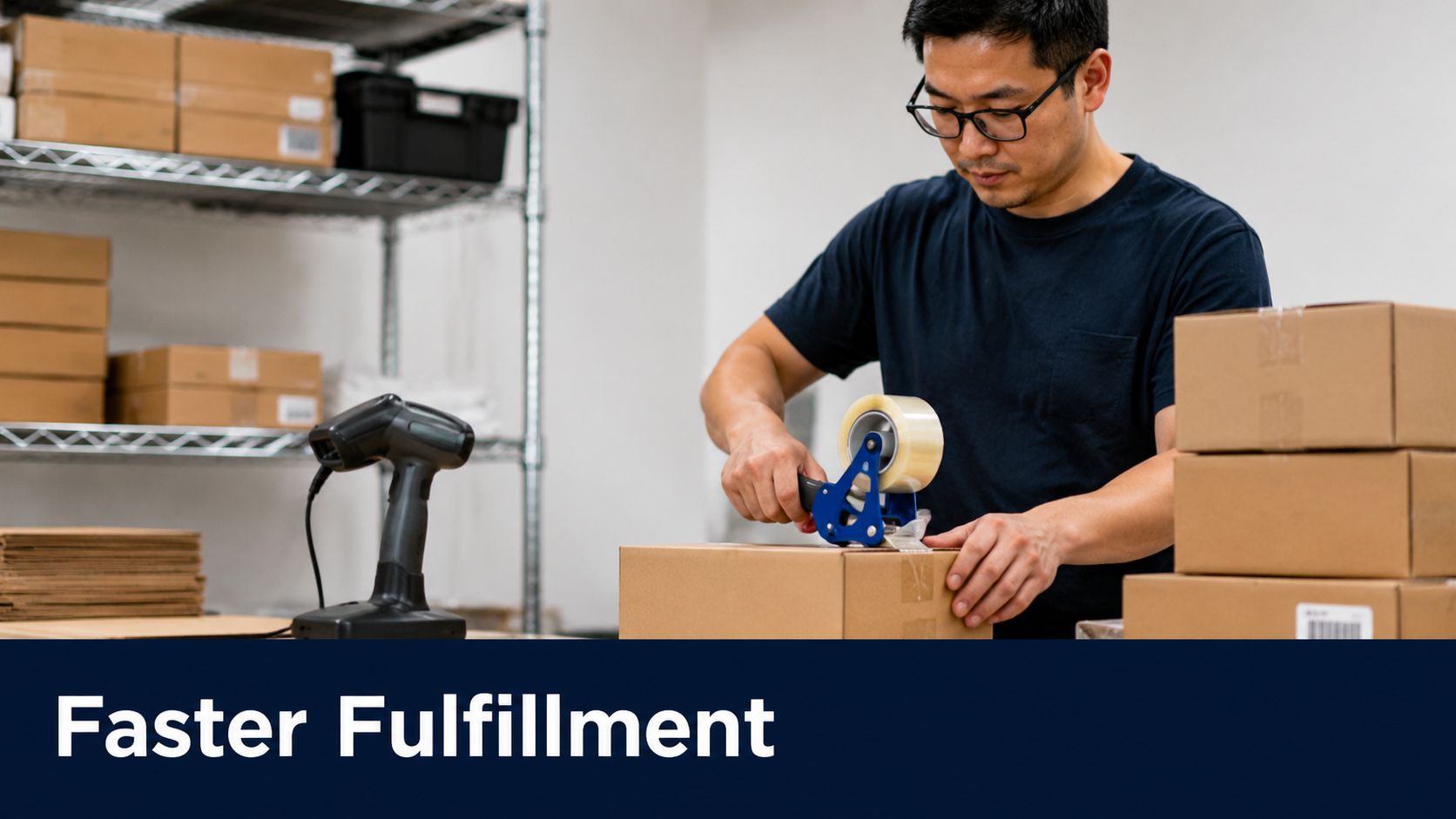
As the U.S. Census Bureau reports in its Quarterly Retail E-Commerce Sales release, e-commerce volume in the U.S. continues to climb. For 7- and 8-figure sellers, that raises the cost of sloppy fulfillment. A warehouse that ships accurately and fast gives you lower support volume, better marketplace metrics, and more room to protect contribution margin when freight or ad costs move against you.
More space rarely fixes a bad process. It often makes it more expensive.
Start with flow. High-velocity SKUs should sit closest to pick and pack. Replenishment should happen on a schedule, not only after a bin runs dry. Every handoff needs a scan, especially if the team is dealing with bundles, kits, or multiple storage zones.
For teams reworking layout, labor, and pick paths, this guide on improving warehouse efficiency is a useful operational reference.
The operators I trust treat warehouse design as a capacity decision, not an admin task. They look at units per labor hour, order cycle time, dock congestion, packing accuracy, and cost per order by channel. That is how top sellers turn fulfillment into an advantage instead of accepting it as overhead.
A few changes usually produce the fastest gains:
This short walkthrough gives a useful visual of how strong warehouse systems support scale:
The trade-off is not speed versus cost. It is fixed control versus flexible capacity. In-house fulfillment gives tighter process ownership and usually better feedback loops for custom packaging, kitting, and exception handling. A 3PL reduces capital spend and can add capacity faster, but only if their SLA discipline, inventory accuracy, and account management are good enough for your SKU mix. Sellers scaling past 8 figures usually win by choosing the model that fits their operational complexity, then measuring it hard every week.
Vendor-managed inventory works best when a supplier already understands your demand patterns and can replenish faster than your internal team can react. It's not a fit for every category, but for packaging, inserts, staple components, and repeatable products, it can remove a lot of purchasing drag.
The mistake is rolling out VMI too broadly. If the supplier can't see your real sell-through or doesn't have stable production, you're just outsourcing guesswork.
Start with products that have relatively steady demand and a trusted supplier. Share point-of-sale data, order trends, and promotional calendars so the supplier can make informed replenishment decisions instead of reacting late.
This setup tends to work well when you also define the rules clearly:
The best VMI relationships feel less like procurement and more like shared planning.
Founders who run this well don't disappear after signing an agreement. They still review inventory health, challenge assumptions, and make sure the supplier is planning against real demand rather than old averages.
Quality issues rarely stay confined to operations. They hit reviews, returns, account health, retailer trust, and customer lifetime value. A product defect doesn't just create a refund. It creates a reputation problem.
That's why strong brands inspect quality in stages, not just at the end. They vet the factory, approve samples carefully, define defect standards, and inspect before goods leave the country of origin and again when needed on receipt.

“Good quality” isn't a usable standard. Specific defect definitions are. So are annotated photos, approved golden samples, packaging requirements, and compliance documentation by market.
Many experienced sellers use third-party inspection firms such as SGS, Bureau Veritas, or TÜV when they need a neutral check before final payment. That extra step often feels expensive until one failed production run reaches customers.
The practical controls that matter most are straightforward:
Some of the most expensive mistakes come from compliance, not craftsmanship. Labeling, material restrictions, testing requirements, and documentation vary by category and market. Good operators build those checks into the product development cycle instead of trying to fix them after inventory is already paid for.
Nearshoring sounds attractive because shorter lead times and lower freight exposure solve real headaches. But founders often jump in with a simplistic assumption that “closer” automatically means “better.”
It doesn't. The core decision is whether faster response and lower disruption exposure outweigh higher unit costs. That answer changes by SKU, tariff environment, and product margin.
A useful benchmark comes from SAP's supply chain disruption guidance, which cites QAD's analysis that nearshoring may increase unit costs by 12% to 18% while reducing lead time by 40%, but only if tariffs exceed 15%. That's exactly why blanket advice on nearshoring often misleads sellers.
The strongest approach is usually mixed sourcing. Keep part of production in established Asian factories for cost efficiency, then add nearshore partners for speed, flexibility, or tariff insulation on specific lines.
Good candidates for nearshoring often include:
What doesn't work is moving a whole catalog at once because one trade policy headline created urgency. Test non-core SKUs first. Compare landed cost, lead time reliability, communication quality, and defect rates before expanding the relationship.
Just-in-time inventory is useful, but it's also one of the most misunderstood supply chain management tips. Too many brands hear “lean” and strip buffers out of categories that still need protection.
JIT works when demand is stable, suppliers are dependable, and replenishment can happen quickly. If any one of those breaks, the system gets brittle fast.
Subscription products, staple consumables, and high-velocity repeat items often fit. Trend-sensitive products, long-lead imports, and volatile launch items usually don't.
The practical move is a mixed model. Use JIT for your most predictable items, then hold more conventional safety stock for products with longer lead times or demand swings.
A few rules keep JIT from becoming self-inflicted chaos:
JIT is a precision tool. If you apply it to unstable demand, it becomes a stockout machine.
The founders who make JIT work also invest in supplier communication and inventory visibility. Without both, there's no time to correct errors before customers feel them.
A 7-figure brand can hide bad shipping decisions for a while. An 8-figure brand usually can't. Once order volume climbs, carrier selection starts showing up everywhere: contribution margin, delivery reliability, customer support load, and repeat purchase rate.
Shipping should be routed by economics, not habit. The right service depends on parcel weight, dimensions, destination zone, promised delivery window, and the margin on that order. If the team sends every package through the same carrier and service level, it creates a tax on growth.
Top operators build a tiered shipping setup on purpose. Standard shipping protects margin on lower-value orders. Expedited service gives customers a paid speed option. Premium or marketplace-critical orders may justify tighter delivery windows because the downstream value is higher.
That structure works best when the offer is clear before checkout and communication stays tight after purchase. Customers are usually reasonable about transit time when the promise is specific and updates are consistent.
A practical carrier mix often includes:
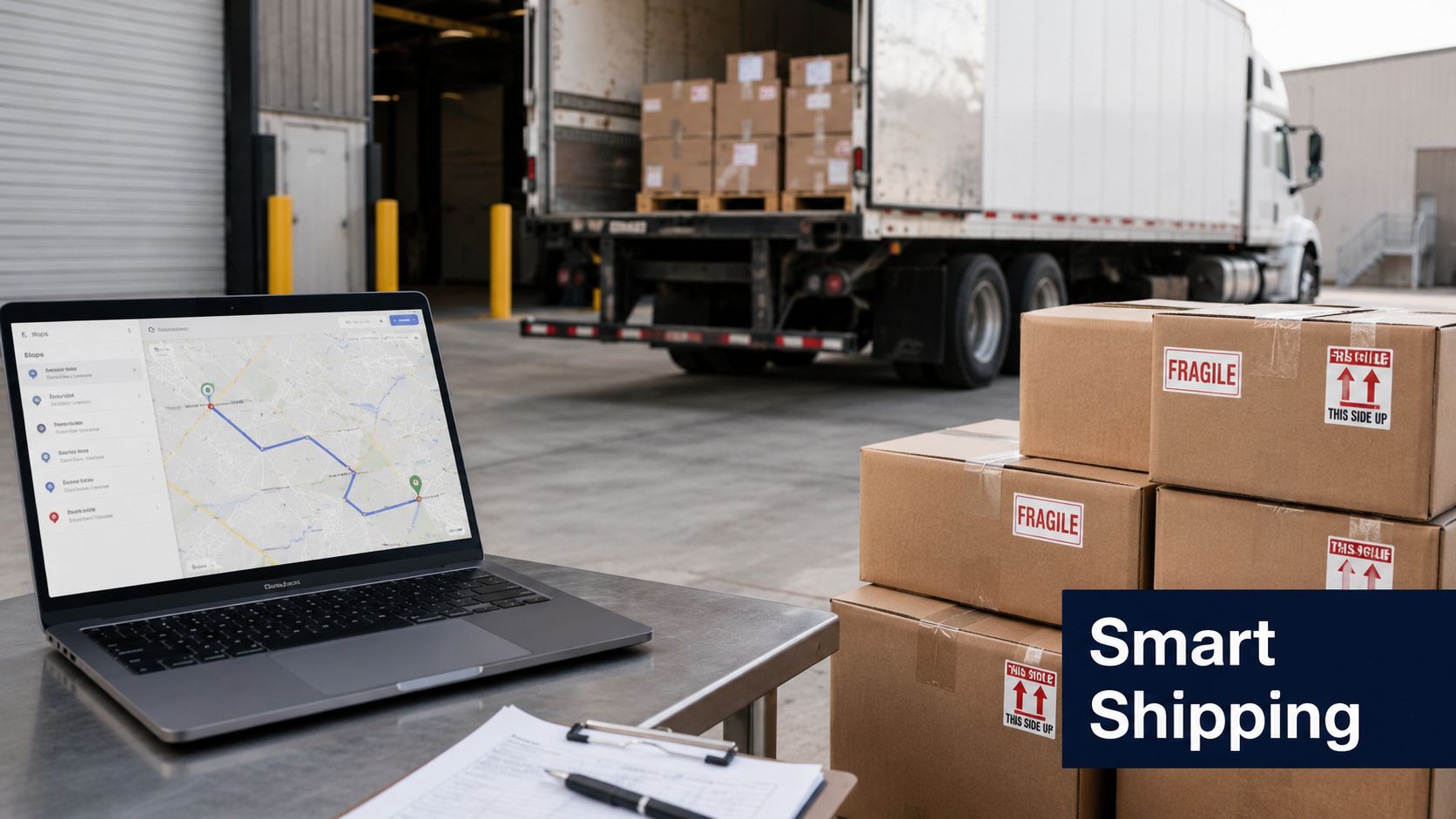
There's a trade-off here. More carrier options usually mean more routing rules, more invoice auditing, and more operational oversight. For larger brands, that added complexity is often worth it because it reduces single-carrier exposure and gives the team more control when rates rise or service levels slip. That same discipline also supports broader supply chain risk management strategies, especially when disruptions hit a specific lane, hub, or carrier network.
Your best factory misses a production window two weeks before Black Friday. A customs hold hits the backup shipment. Paid traffic is already booked, wholesale POs are committed, and finance wants to know whether to expedite, allocate, or cut forecast. That is not the moment to start debating who decides what.
Resilient operators plan those calls in advance. At the 7- to 9-figure level, supply chain resilience stops being an operations hygiene project and starts acting like a competitive advantage. Brands that recover faster protect margin, keep inventory flowing, and often pick up demand while slower competitors are still explaining delays.
The goal is not to predict every disruption. The goal is to know your response before the disruption shows up.
A written playbook beats tribal knowledge every time. The scenarios that matter are specific and expensive: a primary supplier goes offline, a port delay pushes landed dates past a launch, a tariff change kills contribution margin, or a hero SKU sells through faster than the forecast can catch up.
For founders building a stronger operating model, these supply chain risk management strategies are worth folding into the planning process.
Use a practical structure:
I have seen this separate disciplined brands from reactive ones. The disciplined team may still take a margin hit, but they limit it. The reactive team loses days, then pays more for worse options.
There is another layer here. Resilience depends on how often the team practices decision-making under pressure. Run tabletop exercises once a quarter. Pick one disruption scenario, force owners to make the call, and document what broke in the process. That work usually exposes critical gaps: outdated supplier contacts, no approved backup packaging, unclear reorder authority, or a cash constraint nobody surfaced during normal planning.
Internal credibility matters too. Teams that publish fill rate, lead time variance, stockout exposure, and supplier performance every month usually keep leadership trust when something slips, because the operating pattern was visible before the disruption.
| Strategy | 🔄 Implementation Complexity | ⚡ Resource Requirements | 📊 Expected Outcomes | ⭐ Ideal Use Cases | 💡 Key Advantages & Tips |
|---|---|---|---|---|---|
| Implement Real‑Time Inventory Visibility Systems | 🔄 Medium, SaaS integration & data cleanup (2–4 weeks) | ⚡ Moderate, SaaS fees $100–$500/mo, IT & training | 📊 High, fewer oversells/stockouts; better reorder timing | ⭐ Multi‑channel sellers (FBA, DTC, marketplaces) | 💡 Sync top 20% SKUs; set reorder points; monthly audits |
| Develop Strategic Supplier Relationships & Diversification | 🔄 Medium, sourcing + relationship building (3–6 months) | ⚡ Low (time‑intensive), travel, audits, contract setup | 📊 High, reduced single‑source risk; better pricing leverage | ⭐ Seven/eight‑figure sellers needing resilience | 💡 Use supplier scorecards; visit annually; keep backups |
| Master Demand Forecasting Using Data Analytics | 🔄 Medium, model building & data integration (4–8 weeks) | ⚡ Medium, tools $200–$1,000/mo, analytics skills, 12+ months data | 📊 High, lower holding costs; fewer stockouts; improved planning | ⭐ Seasonal/high‑volume sellers needing prediction | 💡 Tier SKUs; update weekly; include marketing events |
| Optimize Warehouse & Fulfillment Operations | 🔄 High, WMS, hardware, process redesign (8–16 weeks) | ⚡ High, $5k–$50k+, staff training, equipment | 📊 High, faster fulfillment, lower error rates, reduced unit cost | ⭐ Multi‑channel high‑volume sellers or in‑house ops | 💡 ABC layout; barcode scanning; consider 3PL for scale |
| Establish Vendor‑Managed Inventory (VMI) Programs | 🔄 Low–Medium, agreements & data access (6–12 weeks) | ⚡ Low, coordination, minimal capital outlay | 📊 Medium, reduced working capital & admin for staples | ⭐ High‑velocity, consistent SKUs with trusted suppliers | 💡 Start with top products; set SLAs; include buyback clauses |
| Implement Advanced Quality Control & Compliance Processes | 🔄 Medium, process integration, immediate start possible | ⚡ Low–Medium, inspections $1k–$10k/order, trained staff | 📊 High, fewer returns/defects; protected brand reputation | ⭐ FBA sellers, regulated products, high‑value SKUs | 💡 Use third‑party inspectors; set AQL and supplier scorecards |
| Leverage Nearshoring & Diversify Manufacturing Locations | 🔄 Medium, supplier qualification & testing (3–6 months) | ⚡ Medium, evaluation costs; generally higher unit cost vs Asia | 📊 High, shorter lead times, lower freight, faster iterations | ⭐ Brands needing speed‑to‑market and risk reduction | 💡 Pilot non‑core SKUs; evaluate landed cost holistically |
| Deploy Just‑In‑Time (JIT) Inventory for Select SKUs | 🔄 Medium, process discipline & reliable suppliers (4–8 weeks) | ⚡ Low, depends on supplier reliability and visibility systems | 📊 Medium, lower holding costs; higher stockout vulnerability | ⭐ High‑velocity, predictable items with short lead times | 💡 Limit to stable SKUs; keep 5–10% safety stock; forecast tightly |
| Implement Logistics Optimization & Smart Carrier Selection | 🔄 Low–Medium, integrate shipping platforms (1–2 weeks) | ⚡ Low, $50–$500/mo platforms; carrier negotiations | 📊 Medium, shipping cost savings 10–25%; improved delivery | ⭐ Multi‑channel shippers with varied package profiles | 💡 Use rate shopping rules; monitor carrier KPIs; optimize packaging |
| Build Supply Chain Resilience via Scenario Planning & Risk Mgmt | 🔄 Low, planning & playbook creation (2–4 weeks) | ⚡ Low, time, modeling tools, contingency reserves | 📊 High, faster crisis response; reduced disruption losses | ⭐ Companies prioritizing continuity and investor confidence | 💡 Map top risks; create response playbooks; review quarterly |
The biggest shift for a growing e-commerce brand is moving from isolated fixes to an integrated operating system. Real-time inventory visibility supports better forecasting. Better forecasting improves purchasing. Better supplier diversification strengthens JIT, nearshoring, and risk planning. Once those pieces connect, the supply chain stops acting like a constant source of surprises.
This underscores the value behind these supply chain management tips. Each tactic matters on its own, but the payoff compounds when they work together. A brand with clean inventory data can spot problems faster. A brand with multiple qualified suppliers can react without panic. A brand with disciplined warehouse processes and smarter carrier selection protects margin while maintaining customer trust.
The strongest operators also accept the trade-offs. More resilience usually means more complexity. More optionality can mean more systems, more supplier management, and more planning overhead. That's still a better deal than finding out during peak season that your growth outpaced your operations.
If you're deciding where to start, pick the point of highest friction. For one brand, that's inventory accuracy. For another, it's supplier concentration. For another, it's forecasting that ignores marketing reality. Fix the bottleneck that's currently costing you the most money, time, or credibility.
Then build from there. Tighten one process. Document it. Review it. Add visibility. Add backups. Add clear ownership. The brands that scale cleanly aren't lucky. They build systems that make good decisions easier and bad surprises less frequent.
There's also a peer advantage here that most founders underestimate. Operators running at 7, 8, and 9 figures have already tested which shortcuts fail, which vendors overpromise, and which workflows hold up under pressure. Learning that in a room full of experienced sellers is faster than discovering it alone through expensive mistakes.
If you're building an Amazon or DTC brand and want sharper operating insight from founders who've already scaled through these challenges, Million Dollar Sellers is where those conversations happen. It's an invite-only community of serious e-commerce operators sharing what works behind the scenes across sourcing, forecasting, logistics, and growth.
Join the Ecom Entrepreneur Community for Vetted 7-9 Figure Ecommerce Founders
Learn MoreYou may also like:
Learn more about our special events!
Check Events