Chilat Doina
April 15, 2026
What do you need from a top 100 DTC brands list?
For founders and operators, that question matters more than the list itself. One ranking might sort brands by modeled online revenue. Another tracks traffic growth. Another reflects creator activity, loyalty, or directory coverage. If you use the wrong list for the job, you end up benchmarking against noise.
That distinction is critical because DTC is large, crowded, and unevenly distributed. Plenty of brands can generate attention. Far fewer build meaningful scale, and fewer still sustain it. A founder researching competitors, acquisition channels, or whitespace needs methodology first, names second.
That is why this article does not try to publish another subjective top 100. The better approach is to compare the sources that already do this well, then judge each one by what it measures and how useful it is in practice.
Some lists are best for sizing leaders. Some are better for spotting breakout momentum before revenue catches up. Some help with partner prospecting, influencer research, or broad category mapping. Each serves a different intelligence need, and each comes with trade-offs around freshness, scope, and signal quality.
These are the seven sources I would use, depending on whether the question is revenue, growth, creator traction, loyalty, or market coverage.
Need a fast answer to "which DTC brands are doing volume online?"
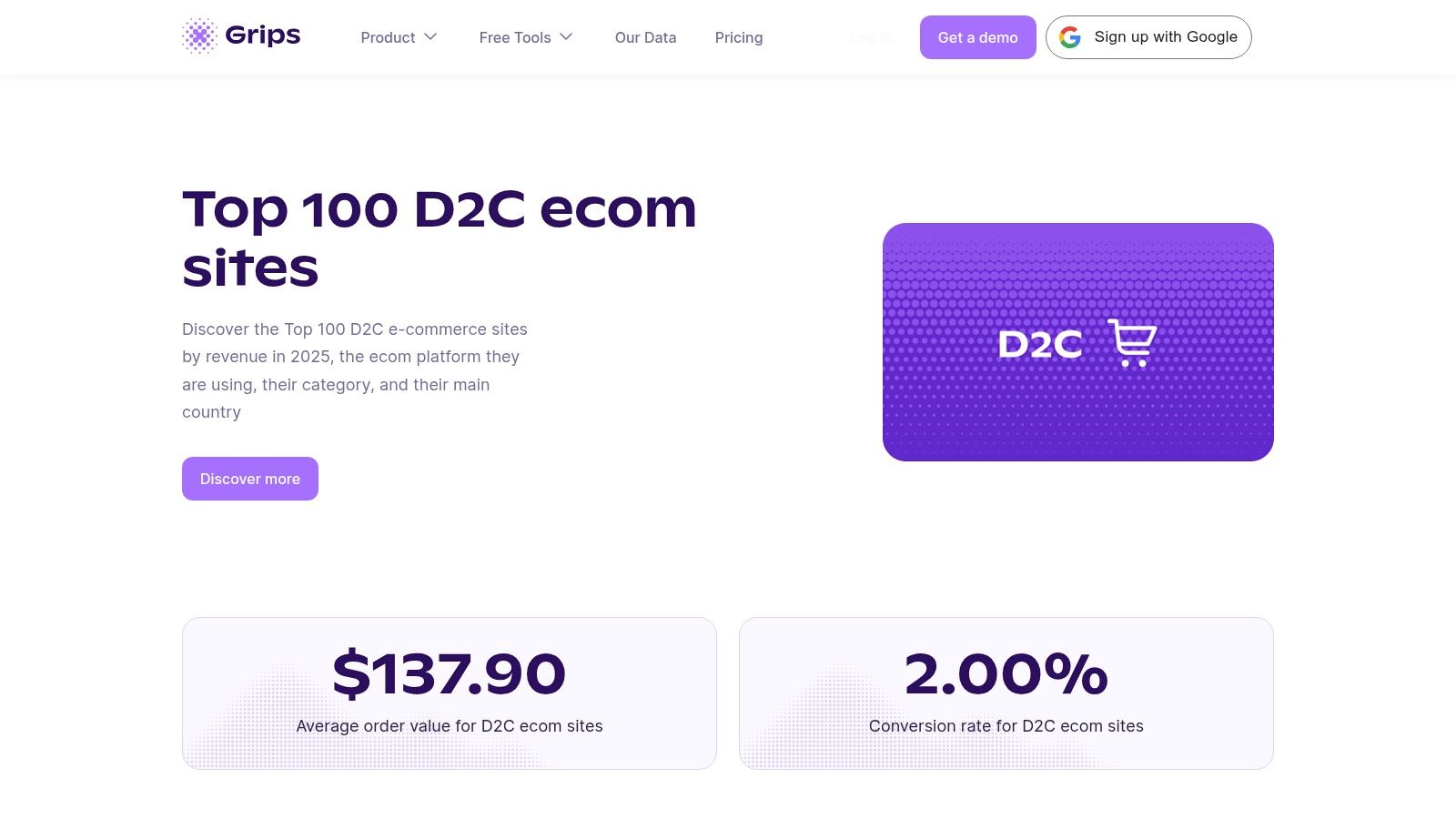
Start with Grips Intelligence’s Top 100 D2C E-commerce Sites. Among the sources in this article, this is the clearest revenue-first ranking. That matters because a lot of "top 100 dtc brands" lists are really popularity lists in disguise. Grips is more useful when the job is market sizing, competitor prioritization, or sanity-checking who has already reached scale.
Grips ranks brands by recent modeled online revenue. That makes its methodology easy to understand and easy to use. If a founder asks who leads a category, revenue is usually the metric they mean.
I also like the operational context around the ranking. Grips surfaces category, country, and platform data, which makes the list more than a scoreboard. It becomes a quick research tool. You can scan a category, see where leaders are concentrated, and spot recurring platform choices without building the view from scratch.
That is useful for a few common decisions:
This is modeled revenue, not reported financials.
That trade-off is fine for early-stage intelligence work. It is less reliable for precise benchmarking, board materials, or any decision that depends on exact numbers. I use lists like this to decide where to focus attention, then validate with brand-level research, ad library checks, retail distribution, pricing, and customer repeat behavior.
Coverage is the second constraint. Grips is strongest in major D2C markets, which makes it practical for founders selling in those regions. It is less helpful if your thesis depends on smaller international markets or a broader global map.
Use Grips when the question is scale.
If you want to know who already has meaningful online revenue in your category, this is one of the better places to start. If you want to know who is accelerating fastest, who is winning creators, or who has unusual loyalty strength, this is not enough on its own. But for revenue-led intelligence, it is the right first tab to open.
As noted earlier, durable DTC businesses are built on commercial performance, not attention alone. That is why a revenue-ranked source belongs at the front of this list.
Which brands are gaining share before their revenue scale is obvious?
Similarweb’s Digital 100 is useful for that question because it ranks online companies by growth in web and app audiences, not by modeled sales. That distinction matters. Founders do not always need a list of the biggest brands. Often they need a list of the brands that just started compounding.
Similarweb looks at year over year growth in web unique visitors and app monthly active users. In practice, that makes it a momentum list.
I use it to spot names that are winning attention fast enough to change a category. That can point to a new merchandising angle, a channel mix shift, or a brand that found a distribution engine before its peers caught up. It is also a practical way to pressure-test whether a competitor's buzz is isolated to one campaign or showing up as broader digital demand.
This source is especially helpful for founders in categories where discovery drives the top of funnel. Beauty, apparel, wellness, and lifestyle brands often show movement here before they show up on revenue-led rankings.
Growth rankings answer a different operating question than revenue rankings.
Revenue lists help size the incumbents. Similarweb helps identify the challengers. If I am building a competitive set, I want both. One tells me who already has scale. The other shows who may force pricing changes, creative shifts, or channel saturation in the next few quarters.
That is also why this list pairs well with other research inputs. Use it alongside paid social ad libraries, creator activity, landing page changes, and the top marketing agencies for ecommerce and growth brands if you want to understand who might be driving the acceleration behind the numbers.
Traffic growth can overstate business quality.
A brand can post sharp gains in visits or app usage and still struggle with conversion rate, retention, return rate, or contribution margin. Similarweb is not designed to answer those questions. It is designed to surface digital momentum.
That makes it a strong scouting tool, not a final scorecard.
This is also where founder judgment matters. A spike from one viral creator push is different from sustained growth across direct, search, repeat visits, and app engagement. If you sell in influencer-heavy categories, compare Similarweb's momentum signals with examples of brands actively leveraging influencer marketing to see whether creator distribution may be part of the story.
Use Similarweb when the question is speed.
If Grips is the right tab for scale, Similarweb is the right tab for acceleration. Founders who choose between those lenses instead of using both usually miss either the current leaders or the next serious threat.
Want to know which brands are winning attention before that shows up in broader DTC rankings?
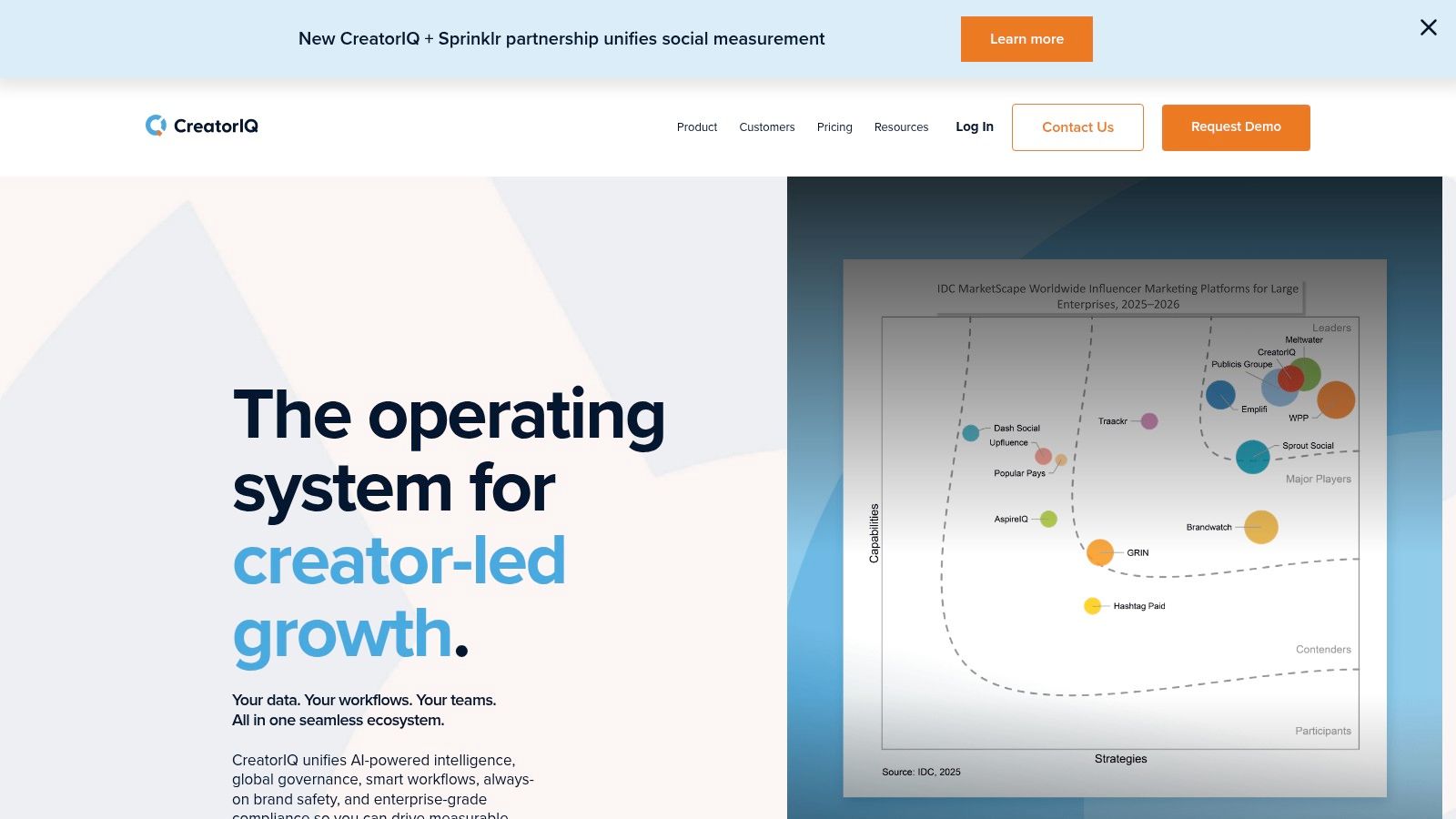
CreatorIQ is one of the better sources for that job. Its Top 100 Brands of the Year list is built around creator-led performance, not revenue or total site traffic. That distinction matters. Founders often search for a single “top 100 dtc brands” list when the actual question is narrower: who is turning creators, ambassadors, and social proof into demand at scale?
That is what CreatorIQ helps you examine.
CreatorIQ is useful because the methodology points in a different direction than the lists above. Instead of ranking brands by sales volume or digital growth, it focuses on creator ecosystem signals such as mentions, content output, and the impact of that content across social channels.
For founder research, that gives you a specific lens:
I use this kind of list less as a scoreboard and more as a pattern finder. If a brand keeps showing up here, I want to study the mechanics behind it: creator mix, posting cadence, audience fit, landing page continuity, and whether the brand has enough retention to make that acquisition model work.
In beauty, fashion, wellness, and celebrity-adjacent categories, creator performance is often upstream of growth. A brand can look ordinary in a traffic tool and still have a very strong acquisition engine because creators are generating trust, volume, and conversion intent before branded search fully catches up.
That makes CreatorIQ useful for brand intelligence with a social-commerce angle. It also pairs well with studying brands actively leveraging influencer marketing if you want concrete examples of how creator distribution shows up across different consumer categories.
Founders building retention into that model should also study how to build brand loyalty, because creator attention is expensive if it does not turn into repeat purchase behavior.
CreatorIQ is strong at identifying cultural momentum and creator-market fit. That makes it especially useful for teams evaluating influencer programs, ambassador seeding, affiliate-heavy launches, or products that depend on social demonstration to sell.
The trade-off is straightforward. High creator visibility does not confirm business quality. It does not tell you enough about margin, repeat rate, operational discipline, or whether demand is durable once paid seeding slows down.
That is the practical way to use this source. Study it for acquisition pattern recognition, not for final company ranking.
Best use: Research brands that convert creator activity into awareness and demand.
Weak spot: It cannot tell you whether that attention turns into a healthy, repeatable business.
Founder teams in creator-led categories, especially those comparing influencer-heavy competitors or looking for acquisition models that do not show up clearly in revenue-first lists.
If Grips helps answer who is biggest, and Similarweb helps answer who is accelerating, CreatorIQ helps answer who is winning the creator layer of the market. For many DTC brands, that is the layer worth studying first.
What if the brand you should study is not the one growing fastest, but the one customers refuse to leave?
That is the value of Brand Keys. Its Loyalty Leaders Top 100 gives founders a different lens than revenue lists, traffic rankings, or creator leaderboards. The methodology centers on consumer loyalty and brand engagement, which makes it useful for understanding durability rather than reach.
For operators, that distinction matters. A brand can buy growth for a quarter. It can rent attention through paid social, creators, or promotions. Loyalty is harder to manufacture, and usually more expensive to rebuild once it slips.
Brand Keys is not a DTC-only list, and that is part of the appeal. If you need a quick refresher on the direct-to-consumer business model, remember that customers do not separate brands by channel structure. They compare the full experience, then decide who gets the repeat order.
Brand Keys is best treated as an attitudinal benchmark. It helps answer a specific question: which brands hold customer preference strongly enough to keep winning after the first purchase?
That makes it useful for subscription businesses, replenishment categories, and any founder trying to improve repeat purchase rate without relying on constant discounting. I also like it for studying premium positioning. If a brand keeps loyalty in a crowded category, there is usually a lesson in product quality, messaging discipline, or customer experience.
The practical trade-off is clear. Loyalty rankings do not tell you who is largest online right now. They also do not reveal margin structure, CAC payback, or inventory efficiency. Use this list to study retention strength, not to estimate company size.
The best use case is triangulation.
If a brand shows up on a revenue-based list, a growth list, and a loyalty list, that deserves attention. It suggests the business is not just acquiring demand, but keeping it. That combination is much harder to build than a single spike in traffic or social buzz.
A few strong applications:
For teams working on retention more deliberately, this guide on how to build brand loyalty is a useful companion.
Brand Keys measures customer perception. It does not measure operating quality.
A founder can over-read this type of list and assume loyalty automatically means a healthier business. Sometimes it does. Sometimes it reflects years of brand equity built under a very different cost structure than the one newer DTC operators face now. That is why I would not use Brand Keys alone for competitor benchmarking.
Use it to identify brands worth dissecting for retention patterns. Then confirm the rest through revenue, traffic, merchandising, and offer analysis.
Founders who want to understand which brands have staying power, especially in categories where repeat behavior matters more than launch-week attention.
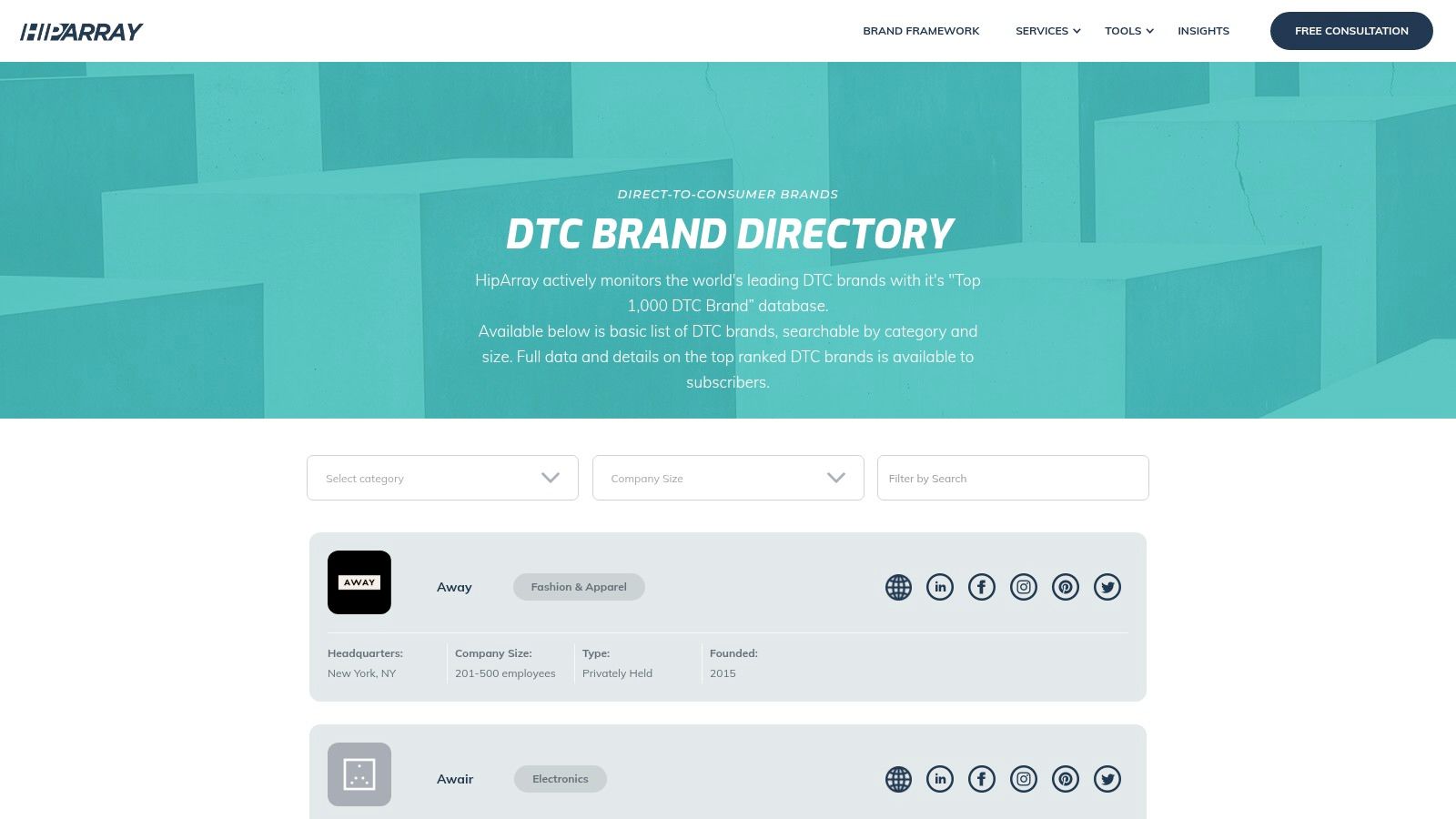
Not every intelligence task needs a ranking. Sometimes you just need a clean market map.
That’s where HipArray’s DTC Brand Directory is useful. It isn’t a “top 100” list in the strict sense. It’s a searchable directory of leading DTC brands with category and size filters. For actual operators, that can be more practical than another prestige ranking.
I use directories like this for three jobs: category scans, outreach list building, and white-space research.
If you’re entering a new niche, trying to identify acquisition targets, looking for potential collab partners, or building a competitor watchlist, breadth matters more than rank. HipArray gives you that breadth quickly.
It’s especially useful for founders who still need to sharpen their category definition. A lot of teams say “we’re in wellness” or “we’re in lifestyle,” but that’s too broad to benchmark effectively. A directory forces you to get more specific.
If your team needs a quick refresher on the model itself, this primer on what is direct-to-consumer is worth sending around before deeper research starts.
HipArray won’t tell you who has the best economics, strongest retention, or fastest growth. That’s not the job.
Data depth also varies. Some entries are more informative than others. So this is not where you go for final-answer intelligence. It’s where you go to build the list of brands that deserve deeper investigation.
That’s still extremely useful because broad coverage often exposes opportunities that ranked lists miss, including service-oriented or hybrid operators. Shopify’s enterprise coverage points out that many “top DTC brands” discussions underweight service-led models such as Jabra Enhance and backend brand builders such as Golden Hippo, while also noting examples like Mecca’s 10% beauty retail share and niche wellness surges like Nani Swimwear’s 784% growth in 2025, as discussed in Shopify’s overview of DTC brands. A broad directory is often where you first catch those edges.
Operator’s shortcut: Start broad with a directory. Narrow with revenue, traffic, or loyalty tools after you know the field.
Founders doing market mapping, category research, outreach preparation, or early-stage competitive discovery.
This is the least flashy tool on the list. It’s also one of the most practically useful.
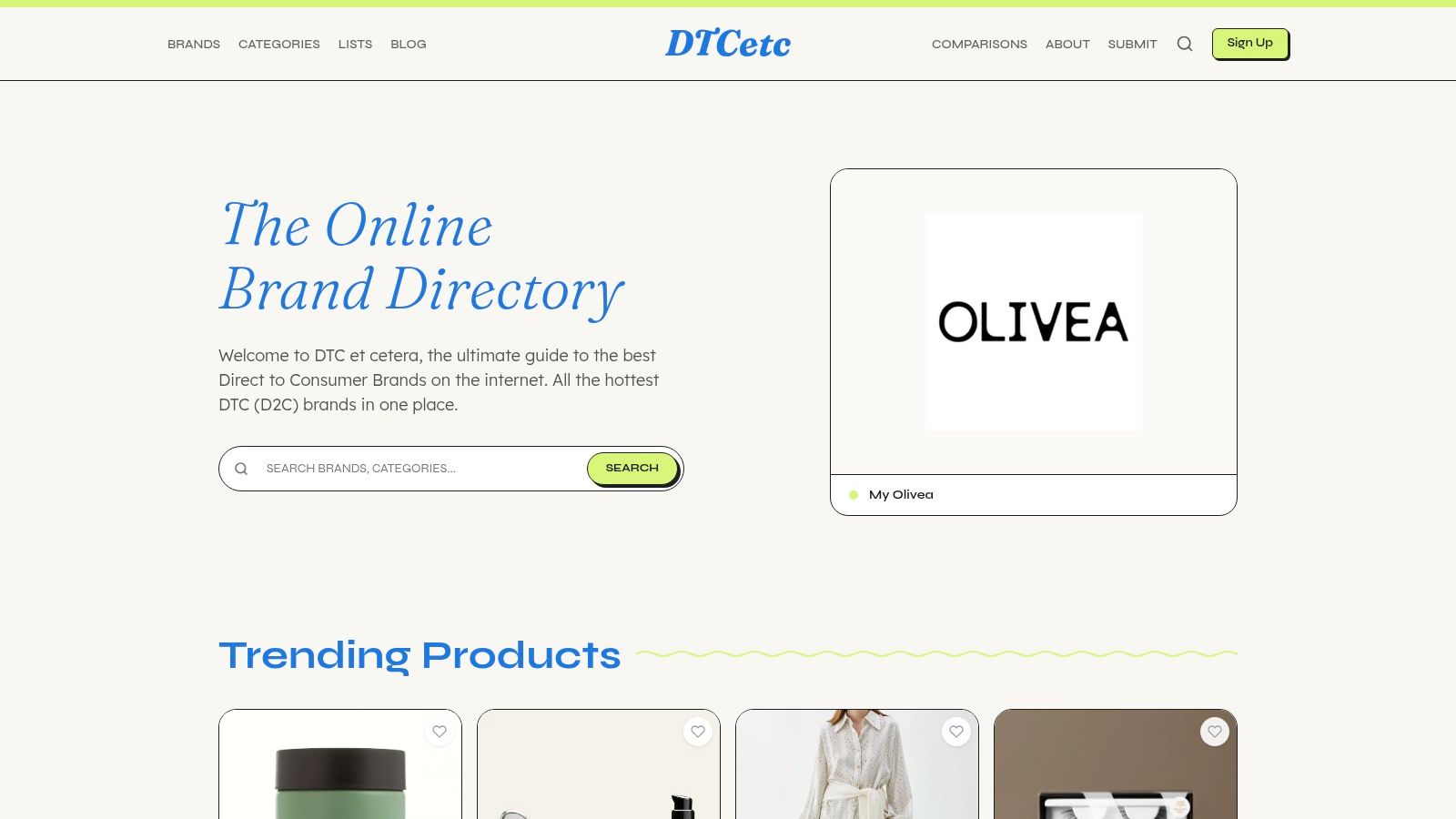
Need names faster than you need rankings?
DTCetc is useful for that job. It gives founders a broad, filterable view of DTC brands across categories, which makes it a strong source for list building and market reconnaissance.
That distinction matters in an article like this. DTCetc is not trying to tell you which brands are biggest by revenue, fastest by traffic growth, or strongest by loyalty. It helps you answer a different question. Who is in this category, and how are they positioning themselves?
I use sources like this early in the research process, especially when the category is still fuzzy. If a founder is exploring refillable beauty, premium pet, functional beverages, or home organization, a broad directory is often more useful than a ranked list in the first hour. The goal at that stage is coverage, not verdicts.
DTCetc organizes brand pages in a way that makes side by side browsing easy. That sounds basic, but it saves time when you are trying to study execution rather than scorecards.
You can scan a vertical and quickly compare:
That is where the value sits. DTCetc is a source for pattern recognition.
It is also useful for catching categories that prestige lists tend to miss. As noted earlier, broad brand coverage often surfaces newer, lower-priced, or format-shifting players before they show up in more polished winner lists. Founders who only study revenue or social buzz rankings usually miss a lot of practical category learning.
DTCetc does not give you a standardized methodology for "top" brands. There is no single ranking logic to compare one brand against another, and there are no hard operating metrics attached to every entry.
For some jobs, that is a real limitation.
If you need to know who is winning financially, use a revenue or traffic-based source. If you need a clean long list of brands to audit, DTCetc is faster than digging through search results or social feeds one brand at a time.
That is the right way to frame it. This is a sourcing tool, not a final-answer intelligence tool.
The best use case is practical research with a clear worksheet beside you. Browse without a framework and you will waste time.
Use DTCetc to:
One rule helps here. Do not save brands just because they look polished. Save them because they show a repeatable decision you may want to test, copy, or avoid.
Ten minutes of browsing is enough. The useful work starts when you classify what you saw.
DTCetc is best for category mapping, creative reconnaissance, merchandising review, and fast long-list generation.
Among the sources in this article, it is one of the best for breadth. It is one of the weakest for hard ranking methodology. That trade-off is fine, as long as you use it for the job it does well.
Need a DTC list that gets you outside the usual U.S. echo chamber?
TOTEM’s The Future of DTC report is useful because it expands the hunting ground. It ranks 200 global DTC brands, which gives founders a different kind of signal than revenue tables, traffic rankings, or creator-led scorecards. The value here is breadth across regions and categories, not day-to-day operating data.
That difference matters.
A founder looking at Grips is usually asking, “Who is generating meaningful revenue?” A founder using Similarweb is usually asking, “Who is gaining digital momentum?” A founder using TOTEM is asking a different question. “Which global DTC brands are worth studying, even if they are not in my market yet?”
That makes TOTEM a scouting source first.
The practical use case is early pattern recognition. Brands in Australia, Europe, or parts of Asia often test merchandising structures, retention hooks, and channel mixes before those ideas become common in the U.S. If you only study domestic winners, your competitor set gets narrow fast, and your testing roadmap usually follows.
TOTEM is strongest when you want range, not precision.
Use it for:
I also like it as a source for “who should we study next?” meetings. It gives a broader answer than the usual list of obvious U.S. names.
TOTEM is not the source to use when you need current revenue estimates, traffic trends, or a clean operating benchmark. Its methodology is better for discovery and directional research.
That trade-off is normal. A curated global ranking can surface brands you would not find through a revenue-only or traffic-only lens, but it also means you need a second source before making hard decisions. If a brand looks interesting in TOTEM, validate it with fresher data, site analysis, channel checks, and manual teardown work.
Static reports age. Good scouting still holds up if you verify the signal before acting on it.
Use TOTEM to widen the field. Use other tools to confirm who actually deserves a place on your benchmark list.
Founders, operators, and strategy teams that want global brand intelligence instead of another recycled top 100 list.
Among the sources in this article, TOTEM is one of the better options for international scouting and idea generation. It is weaker for hard ranking transparency than a revenue or traffic model. That is a fair trade if your goal is to find the next brand worth studying, not to declare a definitive winner.
Item🔄 Implementation Complexity⚡ Resource Requirements📊 Expected Outcomes💡 Ideal Use Cases⭐ Key AdvantagesGrips Intelligence, Top 100 D2C E‑commerce Sites (by revenue, 2025)Low–Medium: public Top‑100 is simple; deeper integrations require setupLow for free page; paid plan for detailed exports/APIsModeled 90‑day revenue rankings + platform/category metadataCompetitive benchmarking, techstack scans, quick market checksD2C‑focused, free Top‑100, rolling revenue estimatesSimilarweb, Digital 100 (fastest‑growing online companies)Low to read report; medium for full platform onboardingLow to access write‑up; paid subscription for full traffic/app dataYoY web/app growth insights to surface breakout brandsTrend spotting, discovering high‑momentum DTC entrantsTraffic/app‑anchored methodology that surfaces rising brandsCreatorIQ, Top 100 Brands of the Year (influencer/creator performance)Low to view PDF; high for enterprise platform integrationLow for report; enterprise pricing for platform accessCreator mentions/content impact as proxy for social‑commerce readinessInfluencer strategy, partner selection, creator ROI signalsDirect creator‑economy signal; highlights socially native brandsBrand Keys, Loyalty Leaders Top 100Low to view summaries; deeper longitudinal work may require purchaseLow for summaries/press; paid for detailed loyalty reportsPerception‑based loyalty and customer stickiness metricsSubscription models, retention benchmarking, brand equity checksIndependent longitudinal loyalty lens complementing performance listsHipArray, DTC Brand Directory (Top 1,000 database)Very low: searchable directory UI with filtersMinimal for directory; optional paid services for enrichmentLarge curated list for prospecting and category mapping (limited metrics)Prospect lists, pipeline building, niche/US category scansBroad U.S.‑focused directory; fast discovery and free accessDTCetc, Comprehensive Guide to DTC Brands (filterable lists)Very low: simple catalog pages and vertical listsMinimal, free to use with no subscriptionBreadth and discovery; links to brand sites and basic descriptorsEarly‑stage research, inspiration, competitor discoveryEasy, no‑cost discovery tool with wide category coverageTOTEM (Talk to Totem), Top 200 Global DTC BrandsLow to download/read PDF; analysis requires cross‑checking for recencyLow (report PDF); may need paid sources to validate updatesLarge public ranked list across geographies for long‑listsCross‑market scouting, long‑list construction, inspirationRare publicly available Top‑200 global DTC ranking with broad coverage
Which of these lists should shape your next decision?
Start with the decision, not the ranking.
That is the practical lesson across all seven sources. “Top 100 DTC brands” is not one market truth. It is seven different ways to sort the field. Grips is useful when revenue scale matters. Similarweb is useful when you care about momentum and traffic shifts. CreatorIQ helps when influencer density and creator relationships affect demand in your category. Brand Keys is stronger for retention, preference, and long-term customer attachment. HipArray and DTCetc are better for sourcing a broad peer set. TOTEM is the better check when your research has become too U.S.-centric.
Founders get poor answers when they ask one list to do every job. Revenue rankings rarely explain attention. Traffic leaders do not automatically have healthy margins. Social visibility can hide weak repeat purchase. Loyalty leaders are often less noisy, but more durable.
The better approach is to stack methods.
I usually look for brands that appear credible across more than one lens, then ask why. If a brand shows up in revenue, traffic, and loyalty-oriented research, that usually signals a business with real operating depth. If it appears only in creator-driven rankings, that may still be useful, but it points to a different kind of strength and a different set of risks.
That matters because the operating model for strong DTC brands has changed. As noted earlier, many of the best operators are no longer purely digital. They mix owned ecommerce, retail, marketplaces, creator distribution, and partnerships. Warby Parker is a clear example of a direct brand that expanded beyond the website and built a larger system around the customer. A founder studying the wrong list in isolation can miss that shift and copy surface tactics instead of channel strategy.
Use the lists above with a clear job in mind:
A useful benchmark set should feel a little uncomfortable. Some brands should be ahead of you. Some should match your stage. Some should expose a capability gap you have not addressed yet.
Execution starts after the research. Public intelligence can show who deserves attention, but it does not tell you which playbook will survive your margins, your supply chain, your repeat rate, or your CAC. That translation work is where operators separate signal from noise.
Founder groups can help close that gap. If you are working through creator strategy, omnichannel expansion, retention systems, AI personalization, or broader DTC use cases, operator input usually saves more time than another hour spent reading rankings.
If you’re already past the beginner stage and want sharper answers than public listicles can offer, Million Dollar Sellers is where serious operators compare what’s working across Amazon, DTC, and omnichannel. It’s an invite-only community built for founders who value trusted peers, practical strategy, and real execution over noise.
Join the Ecom Entrepreneur Community for Vetted 7-9 Figure Ecommerce Founders
Learn MoreYou may also like:
Learn more about our special events!
Check Events