
Chilat Doina
June 21, 2026
You're probably in one of two spots right now.
Either your brand is still growing, but the moves that got you here don't work as cleanly anymore. Paid acquisition feels less forgiving. New hires create as many problems as they solve. Your ops stack is more fragile than you want to admit. Or you're doing solid revenue, but you've started asking a harder question: is this business getting stronger, or just busier?
That's where most advice about top ecommerce masterminds for founders goes off the rails. It treats a mastermind like a networking upgrade. That's amateur thinking. At the founder level, a mastermind is useful only if it helps you protect margin, sharpen execution, and adapt faster than the market shifts underneath you.
You can hit a ceiling without doing anything “wrong.”
A lot of founders assume plateaus mean they got lazy or missed a tactic. Usually that's not it. Usually the business got more complex than the original playbook was built for. The ad account still runs. The offer still converts. The team still ships. But every gain costs more energy, more money, and more management overhead.
That's when isolation gets expensive.

The market is too big and too fast-moving to rely on old instincts alone. eMarketer projects worldwide e-commerce sales will reach $7.5 trillion in 2025, up from $5.7 trillion in 2023, a projected increase of $1.8 trillion in two years according to this digital commerce statistics roundup. That matters less as a vanity headline and more as a signal that ecommerce now rewards specialization at a higher level than it used to.
Bigger markets don't automatically make your life easier. They create more channels, more tooling, more fulfillment pressure, and more ways to waste money.
You see it in places founders ignore for too long:
If logistics is one of the areas you're trying to clean up, it helps to learn about Shopify logistics with SelfServe before you let another ops bottleneck spill into customer experience and cash flow.
A founder mastermind matters when your bottleneck isn't motivation. It's clarity.
At this level, you don't need more inspiration. You need pattern recognition from operators who've already seen your problem in the wild.
That's why founder groups matter. Not because they're fun. Not because community sounds nice. Because a room of experienced operators can often spot the flaw in your thinking faster than you can spot it yourself.
A useful mastermind helps you answer questions like these:
| Question | Why it matters |
|---|---|
| What is actually slowing growth right now? | You can't fix what you haven't named correctly. |
| Which channel deserves more capital? | Most scaling mistakes are allocation mistakes. |
| Is the issue offer, team, or economics? | Founders misdiagnose these all the time. |
| What changed in buyer behavior? | Last year's tactic can become this year's tax. |
Most founders wait too long to get this kind of feedback. They keep grinding with a playbook built for a smaller company in a simpler market. That's how good businesses stay stuck.
Most masterminds are dressed-up group chats.
They promise access, accountability, and “high-level conversations.” Then you join and realize half the room is still arguing about ad creatives, while the other half is trying to sell services. That isn't a mastermind. That's a noisy coworking space with a Slack channel.
A real founder mastermind works more like a personal board of directors.
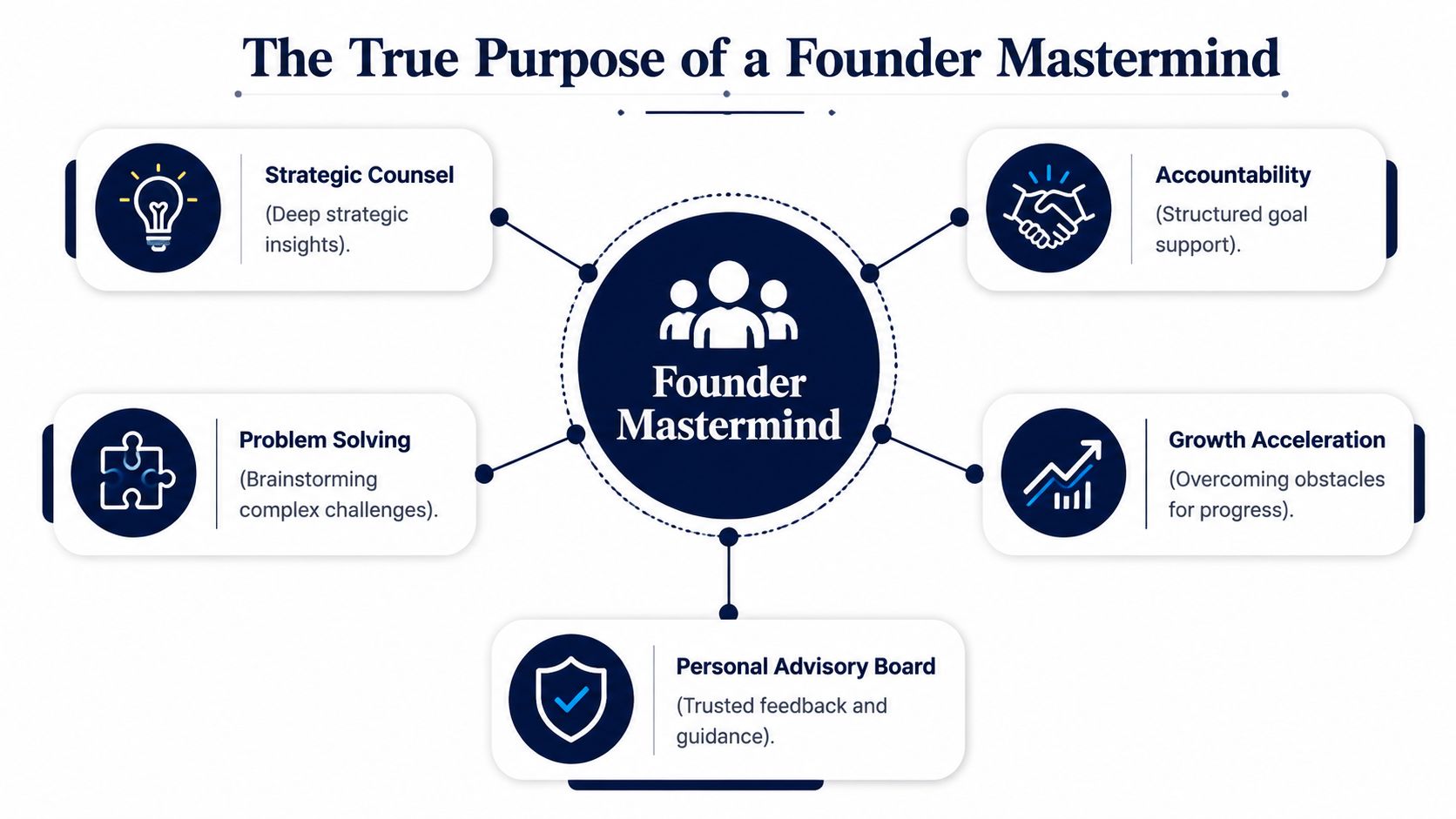
The best ecommerce leadership models were never built on hacks. Amazon's path matters here. Its early growth from an online bookstore into a global platform is a useful reminder that enduring ecommerce mastery comes from long-term execution, category expansion, and customer obsession, as outlined in MDS's founder lessons on ecommerce leaders.
That's the standard.
You shouldn't join a founder group to collect tactics. You should join one to improve how you think about building systems. Tactics change too fast. Good operating judgment compounds.
The wrong group gives you encouragement. The right group gives you friction.
You present a problem. They challenge your assumptions. They force specificity. They show you where you're hiding behind activity instead of solving the issue.
A serious mastermind should help you answer:
If you want another useful lens on operational discipline, this proven framework for profitable growth is worth reading because it pushes founders to think in terms of scalable economics instead of surface-level growth.
The real value of a mastermind isn't more ideas. It's better elimination.
A founder group is probably low value if it leads with any of this:
A mastermind should make you a more disciplined allocator of time, capital, and attention. If it mostly makes you feel excited, be careful. Excitement is cheap.
Not every founder needs the same room.
One of the biggest mistakes I see is founders joining a group because the brand looks impressive, not because the fit is right. Then they either feel overwhelmed, under-challenged, or surrounded by problems that don't match their stage.
That's why it helps to think in tiers.
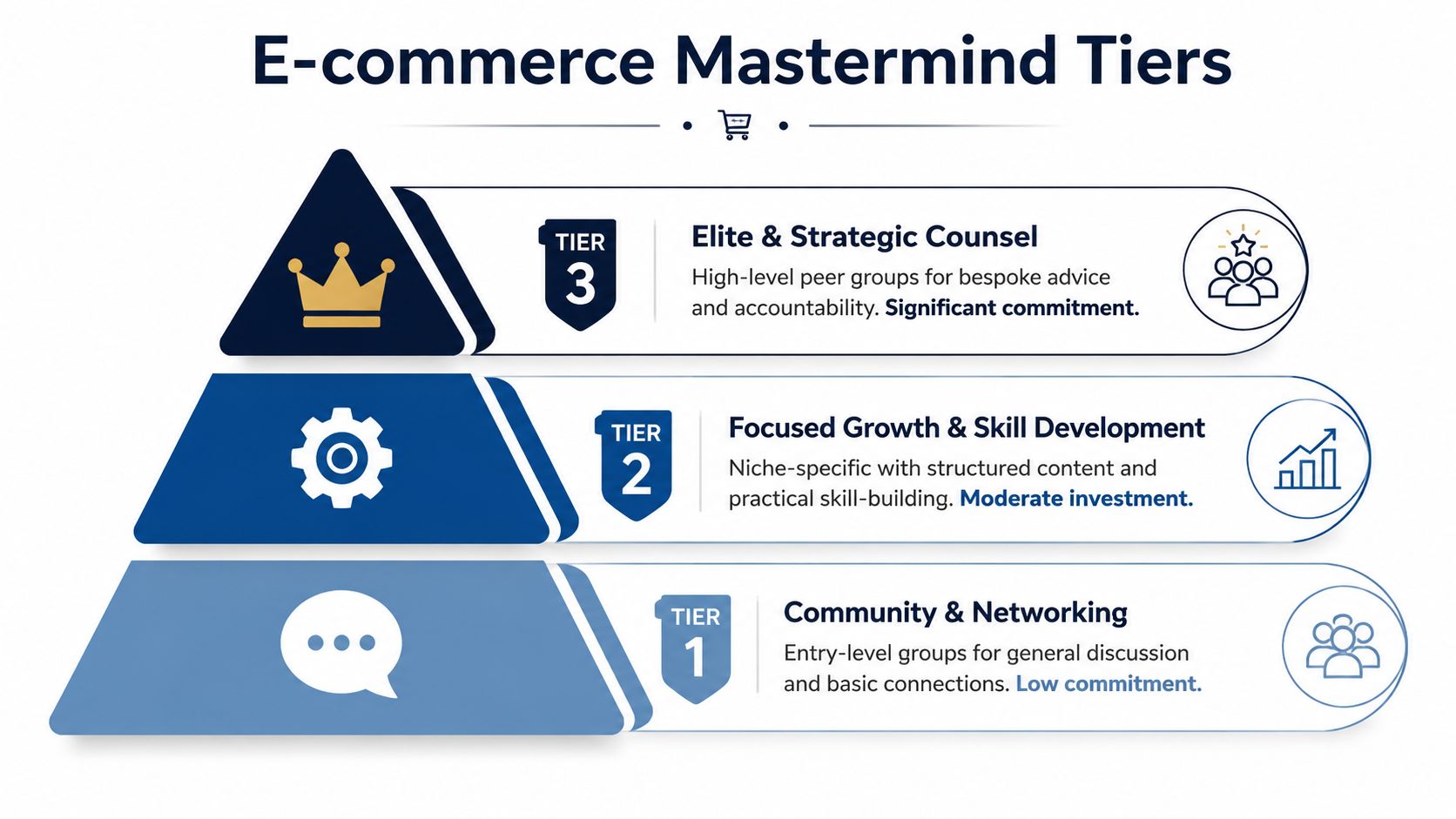
This tier is where a lot of founders start, and that's fine.
These groups usually center on broad ecommerce discussion, founder camaraderie, vendor referrals, platform updates, and surface-level troubleshooting. You'll hear a lot about ad accounts, email flows, Amazon issues, creative testing, and tool recommendations.
Who it fits:
What it's good for:
What it's not good for:
The subject now becomes more interesting.
At this stage, the conversations move from “how do I launch” to “how do I scale without breaking the machine?” Founders here are usually dealing with org design, cash flow pressure, hiring mistakes, merchandising decisions, inventory planning, and channel mix problems.
The structure tends to be tighter. More curation. Better moderation. More frameworks. Less random chatter.
You'll often see topics like:
| Discussion area | Typical founder concern |
|---|---|
| Hiring and leadership | Who owns what, and who shouldn't |
| Channel diversification | How dependent the brand is on one traffic source |
| Margin management | Whether growth is worth the operational stress |
| Systems and reporting | Which data actually drives decisions |
If you're trying to assess where you belong, this guide on how to find a mastermind group gives a useful filter for matching the room to your actual stage instead of your ego.
This is the tier commonly referenced when discussing top ecommerce masterminds for founders. But very few groups qualify.
The defining feature isn't exclusivity for its own sake. It's the quality of operator context in the room. The discussion shifts from growth tactics to harder, more valuable topics:
If your current founder group mostly talks about tactics, and your real questions are about structure, margins, and long-term value, you're in the wrong room.
This level only works when members are peers in both scale and responsibility. Otherwise, the incentives get weird fast. People posture. Advice becomes generic. Nobody wants to show accurate numbers or the full mess.
That defeats the purpose.
Don't ask “How much does it cost?” first.
That's not the first question serious founders ask when evaluating a mastermind. The first question is whether the room helps solve the problems that matter now. Price matters. But misalignment costs more than the fee ever will.
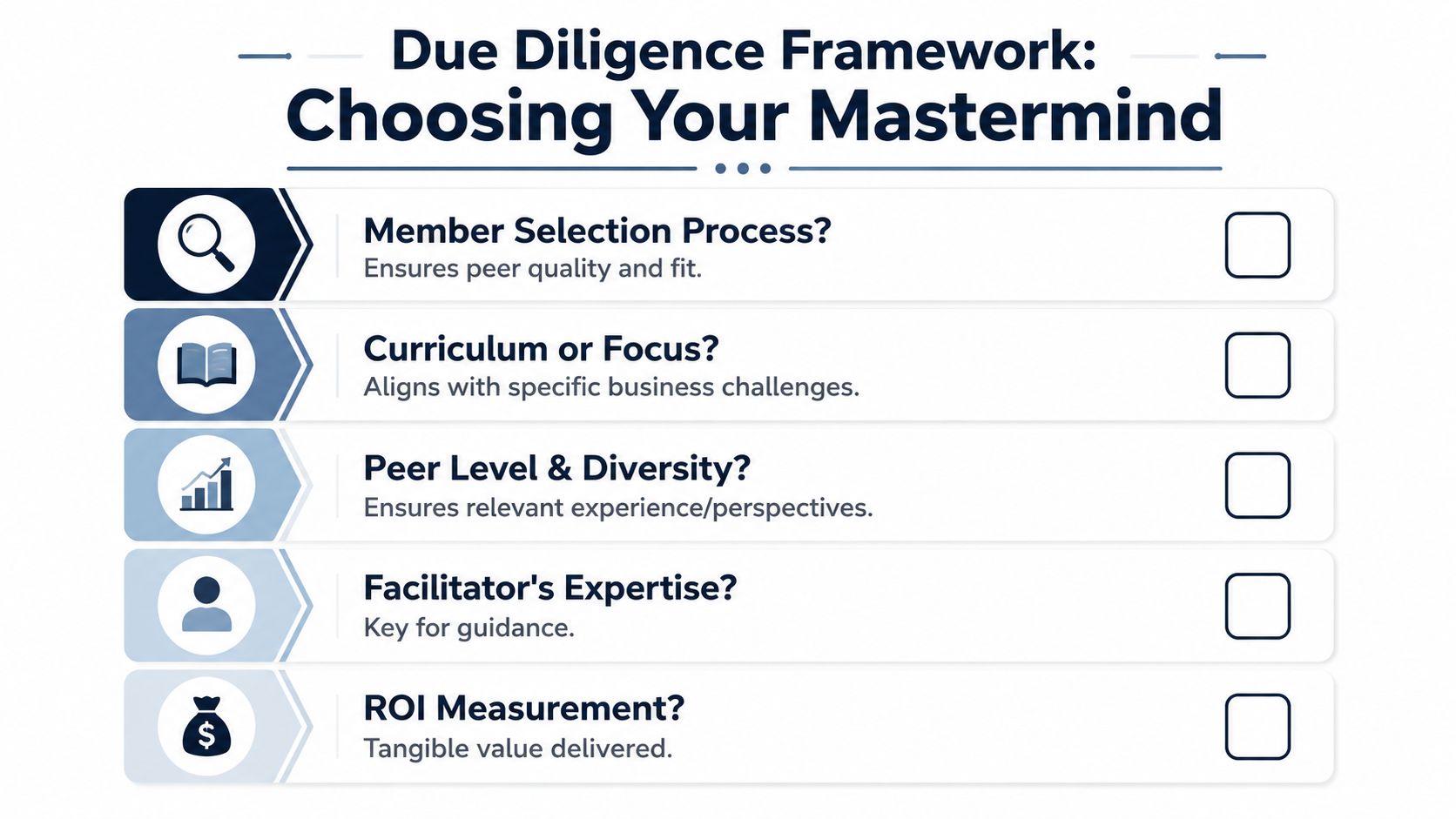
Most groups say they help founders grow. That statement is useless. Growth by itself tells you almost nothing.
Ask these instead:
Does this group talk seriously about profitability?
Revenue-only rooms create bad habits. One founder-oriented analysis argues that for brands scaling to roughly $20M–$30M in annual revenue, a strong founder brand and organic growth can outperform pure paid acquisition on profitability, which is exactly the kind of debate a sharp group should be having, as discussed in this YouTube analysis on ecommerce growth models.
How are members adapting to discovery shifts?
A lot of founders are still acting like search and social work the way they did a few years ago. They don't. Discovery is fragmenting across AI-driven search surfaces, marketplaces, and creator ecosystems. If the group never talks about that, it's behind.
Is the room built for durable businesses or louder businesses?
Those are different outcomes. One makes money. The other makes content.
A mastermind rises or falls on member quality.
Loose admission standards create three problems. Bad advice, hidden selling, and low trust. If people haven't earned their seat, they compensate with opinions. That gets old fast.
Use this quick screen:
If you've ever felt underwhelmed by broad entrepreneur groups, this breakdown on why ecommerce founders can't get real value from YPO or EO captures the issue well. General business peer groups often lack the channel-specific depth ecommerce founders need.
A mastermind should reduce confusion, not add more voices to it.
Most groups collapse at this point.
They host calls. Smart people talk. Notes get taken. Then nothing changes in the business. That means the group is entertainment with better branding.
You want evidence of an execution culture:
The room should reward action. Not eloquence.
You can spot a high-signal mastermind pretty quickly once you know what to look for.
The surface cues don't matter much. Nice branding, nice retreats, nice speakers. Fine. None of that tells you whether the room can help you solve a real bottleneck. What matters is the combination of member quality, candor, and operating depth.
Alex Hormozi's scaling framework is useful here because it strips away a lot of founder nonsense. The core idea is simple. Identify the bottleneck, subordinate everything else to it, and exploit it until it stops being the limiting factor, as covered in this Hormozi talk on finding the bottleneck.
That's what a strong mastermind should help you do.
Not “brainstorm everything.” Not “swap ideas.” Diagnose the actual constraint. Is it acquisition efficiency? Conversion? LTV? Leadership capacity? Inventory planning? Founder indecision? Those are very different problems, and they require different responses.
In a weak group, founders bring polished wins.
In a strong group, founders bring ugly problems. They share the channel that stopped working, the hire that failed, the margin pressure they can't hide behind topline growth, the operational mess behind the dashboard. That's where value comes from.
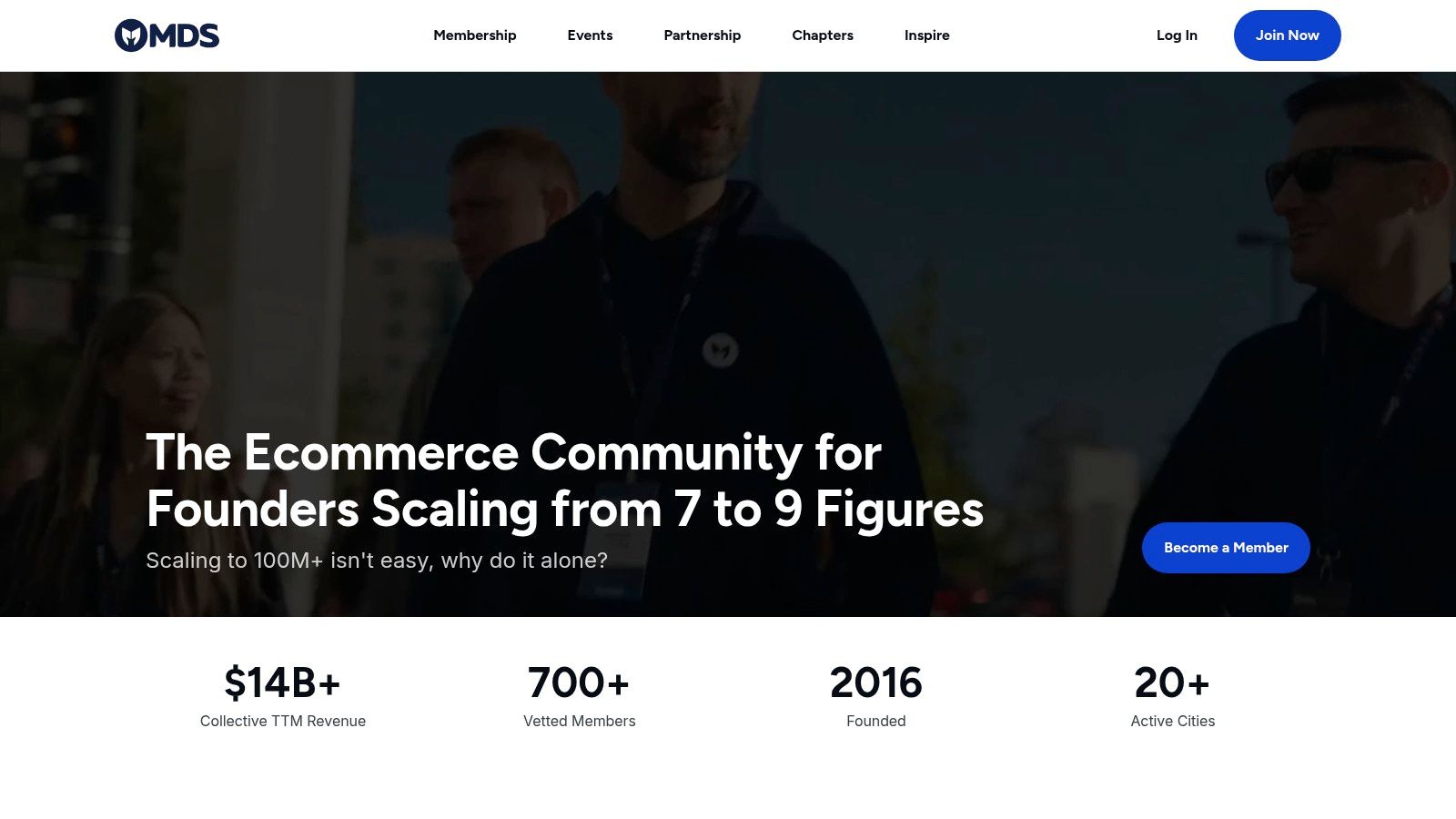
One example in this category is Million Dollar Sellers, which is an invite-only ecommerce founder community built around vetted operators across Amazon, DTC, and omnichannel brands. The useful part of that model isn't exclusivity by itself. It's that tighter peer filtering tends to make candid discussion more possible.
Here's what I'd expect from any group claiming to sit in this tier:
| Signal | What it tells you |
|---|---|
| Real vetting | The room protects peer quality |
| Operator-heavy membership | Advice comes from people with current exposure |
| Honest issue sharing | Members trust the room enough to drop the polish |
| Bottleneck-focused discussion | Time goes to leverage, not chatter |
If you want a parallel lens on expert access and why curation matters, this piece on avoiding wasted calls with expert advisors makes the same point from a different angle. Access without filtration wastes time.
The best mastermind for you probably won't feel flattering.
It should expose weak thinking. It should make vague reporting harder. It should force cleaner prioritization. It should challenge your pet projects and ask whether they deserve resources. If every meeting leaves you feeling validated, you may be paying for affirmation.
Strong founder groups don't just give answers. They improve the quality of the questions you bring back to your business.
That's what high-signal looks like.
Joining the right room is only half the job.
I've watched founders spend serious money to access smart peers, then extract almost no value because they show up passive. They attend calls. They listen. They nod. They maybe ask one vague question. Then they go back to business as usual. That's not a mastermind problem. That's a founder problem.
Don't come with broad topics. Come with a sharp decision.
Bad prompt: “How are people thinking about growth right now?”
Better prompt: “Paid search is still scaling, but the customers it brings have weaker repeat behavior than our creator channel. I need to decide where to reallocate attention over the next quarter.”
Specific questions produce useful answers.
Founders get better feedback when they bring context, not just conclusions.
Bring the tradeoff. Bring the failed test. Bring the org issue you've been avoiding. Bring the reason you're stuck. If you want surface advice, ask surface questions. If you want genuine help, show the actual problem.
A simple operating rule:
A mastermind should help you act faster and think better. It should not become another place to process feelings indefinitely.
That means turning advice into execution:
If you need help tightening your own circle beyond a mastermind, this article on how to find a business mentor is a useful complement because mentorship and peer counsel solve different problems.
The founders who get the most from these groups do one thing better than everyone else. They implement.
If you want a serious peer environment instead of another founder community built on fluff, take a look at Million Dollar Sellers. It's built for established ecommerce operators who want sharper discussion around scaling, constraints, and long-term business quality, not just louder revenue talk.
Join the Ecom Entrepreneur Community for Vetted 7-9 Figure Ecommerce Founders
Learn MoreYou may also like:
Learn more about our special events!
Check Events