
Chilat Doina
August 15, 2026
You publish consistently, but the sales still come from paid ads, marketplace momentum, or branded demand you built years ago. Your team produces blog posts, short-form videos, emails, and product assets, yet nobody can explain which pieces helped a shopper choose your brand, add an item to cart, or buy again.
That's the operating problem behind most ecommerce content. The issue usually isn't a lack of creativity. It's the absence of a content marketing strategy that connects audience questions to buyer intent, distribution, conversion, and retention across Amazon, DTC, and retail channels.
Content has become core infrastructure rather than a side project. The global content marketing industry is estimated at about $107 billion by 2026, and one industry summary reports that content represents 26% of total marketing spend on average (Digital Applied's 2026 content marketing data). Serious brands now need content that behaves like an operating system for growth, not a calendar full of disconnected posts.
The most common failure pattern starts with a reasonable request: publish more. A founder asks for more videos, more articles, more social posts, or more Amazon creative. The team responds by filling the calendar, often without deciding which customer belief each asset must change or which commercial action it should support.
That creates random content. A product tutorial sits beside a trend-driven Reel, which sits beside a generic search article. Each piece may look polished, but the collection doesn't establish authority, answer the right objections, or move shoppers toward a purchase.
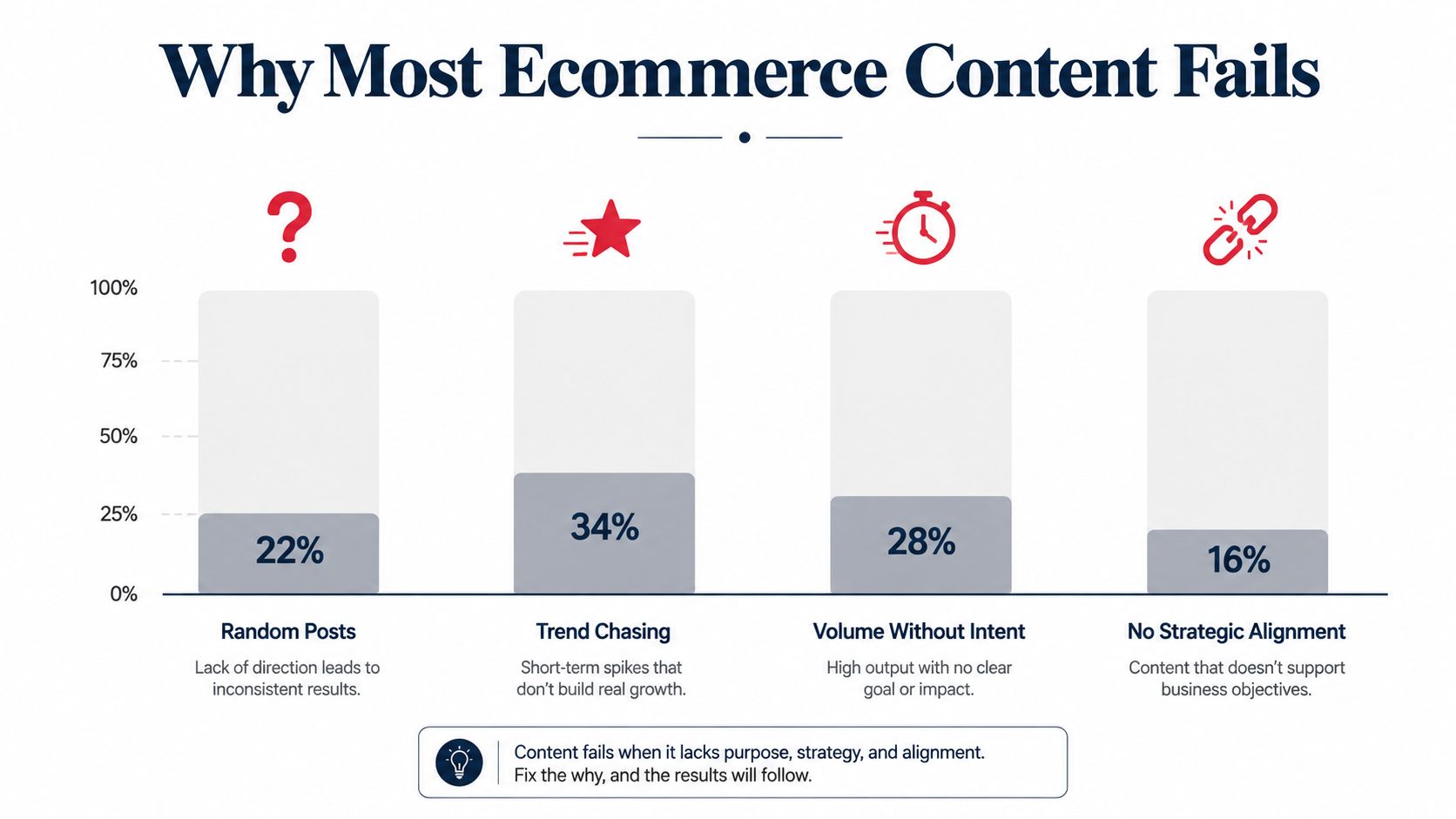
Trend chasing makes the problem worse. Short-form video, UGC, personalization, and omnichannel distribution can all work, but adopting a format doesn't create a strategy. A viral clip may produce attention without clarifying why your product is different, while a high-ranking article may attract visitors who have no reason to consider your offer.
Volume without intent creates a similar trap. A team can spend weeks producing assets that answer low-value questions while leaving critical consideration content unfinished. Shoppers still need comparisons, demonstrations, ingredient or material explanations, usage guidance, delivery information, and credible proof before they commit.
The market's maturity makes this waste more expensive. A 2026 industry summary reports that 97% of marketers have a content strategy, while 61% say it significantly or moderately improved results and ROI (Digital Applied). Having a strategy isn't enough, but operating without a documented one puts a brand at a structural disadvantage.
Practical rule: Every asset needs a defined audience, a buyer-journey role, a distribution destination, and a measurable next action.
A revenue-focused system connects discovery content to consideration content, then carries the same core message into Amazon listings, DTC landing pages, email, paid creative, and post-purchase education. If your team needs a useful planning reference, this guide on how to build a winning content strategy provides a practical starting point. The strategic shift is simple: stop asking whether a post performed and start asking which customer decision it was designed to influence.
Before assigning topics or commissioning creative, document the decisions that should govern the work. A one-page strategy blueprint is enough to begin, provided it answers four questions clearly: who you serve, what you want to change, where buyers make decisions, and which beliefs your brand will own.
Define priority audiences by situation rather than demographics alone. An Amazon shopper comparing two similar products has a different information need from an existing DTC customer deciding whether to reorder. A retail buyer, a gift purchaser, and a highly informed category enthusiast may all encounter the same product, but their objections differ.
Write down:
Then map content to the buyer journey. Discovery content should help a shopper recognize a problem or category need. Consideration content should make alternatives easier to evaluate. Decision content should reduce risk through demonstrations, comparisons, specifications, reviews, guarantees, and clear usage instructions. Retention content should help customers get the promised result and understand what to buy next.
A strategy guide from MDS on developing brand strategy can help connect these audience decisions to broader positioning. The important point is to keep the content blueprint tied to commercial priorities, not abstract brand language.
Most ecommerce brands try to cover every adjacent topic. That approach creates shallow authority and forces the team to compete with larger publishers on generic subjects. Choose 3 to 5 credibility themes instead, a recommendation also highlighted in Storyly's ecommerce content trend analysis.
A credibility theme should connect three things:
For a skincare brand, themes might involve barrier care, ingredient transparency, practical routines, and climate-specific use. For a kitchen brand, they could include material durability, cooking technique, space efficiency, and maintenance. These themes should appear across search content, product education, creative briefs, emails, and marketplace assets.
Generative AI can accelerate research, outlining, repurposing, and first drafts. It can also introduce inconsistent claims, generic language, unsupported product promises, and a tone that varies by channel. One benchmark notes that 61% of organizations using generative AI for content lack usage guidelines (Content Marketing Institute).
Create simple rules before using AI at scale:
Technical foundations matter too. For brands managing complex websites or content systems, this resource on technical SEO fixes for SaaS offers useful principles around crawlability and structure, even when the commercial model differs. A clean foundation keeps valuable content discoverable and reduces friction as the program expands.
A scalable creation system doesn't begin with a list of unrelated article ideas. It begins with a pillar topic that matters to your audience and supports your commercial position. The pillar becomes the authoritative destination, while supporting content answers narrower questions and sends qualified readers back to it.
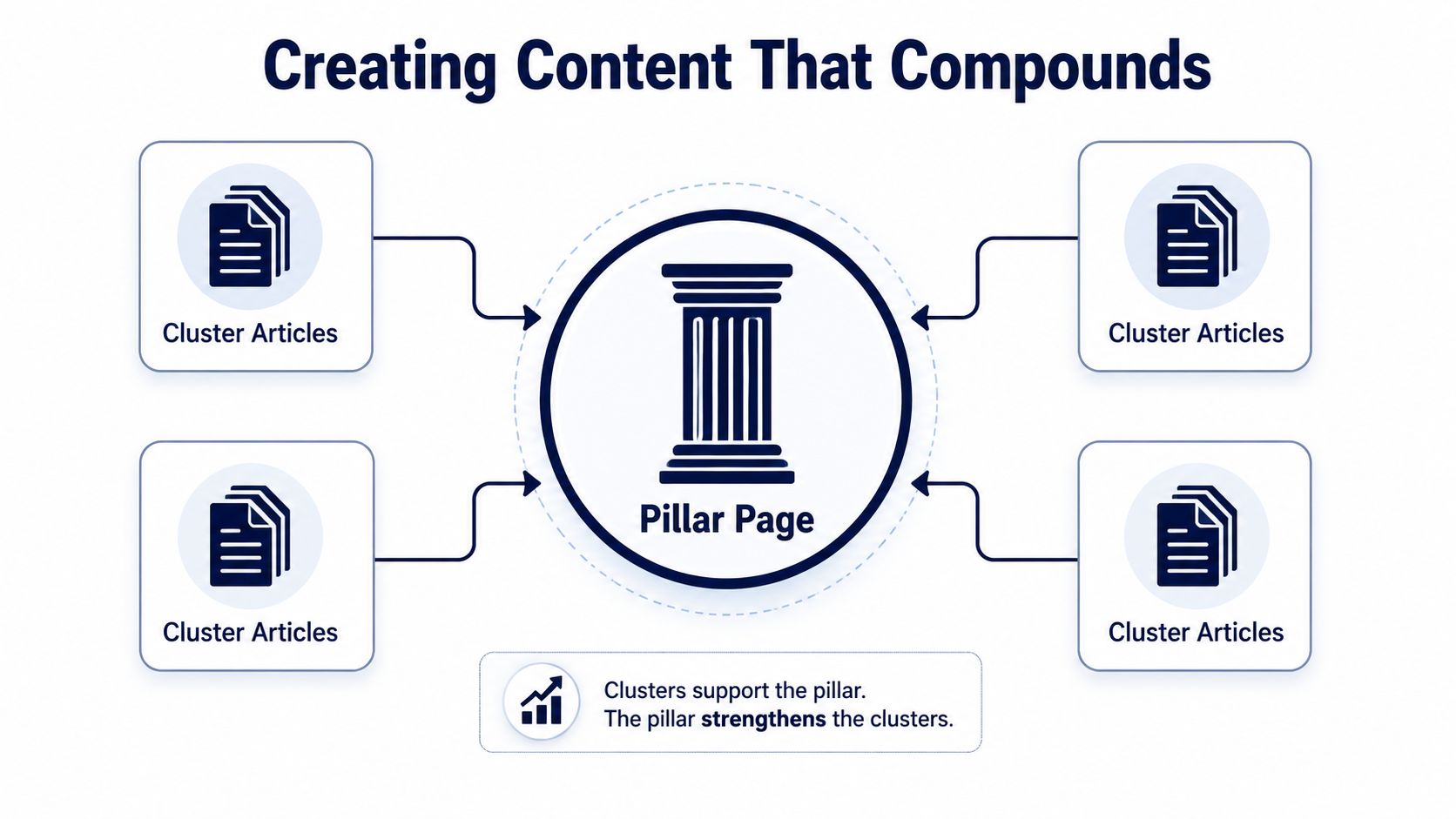
A pillar page should explain the category, decision process, or core problem in detail. Cluster articles should handle specific intent, such as comparisons, use cases, troubleshooting, materials, sizing, maintenance, or product selection. Internal links should guide readers between the supporting answers and the central commercial resource.
The architecture compounds because each new piece strengthens the same credibility theme. Contentful's benchmark reports that pillar pages supported by 10 or more cluster articles generate 3.4x more organic traffic than standalone long-form posts, and that refreshed content improves ranking within 90 days in about 70% of cases (Contentful). Treat those figures as benchmarks, not promises. The operational lesson is more valuable than the exact outcome: update strong assets before commissioning endless new ones.
The same Contentful benchmark places median quarterly output at 11 to 20 blog posts, 51 to 100 social posts, and 3 to 5 webinars (Contentful). Those figures can help with capacity planning, but copying them blindly is a mistake. Your cadence should reflect the number of credibility themes, review capacity, product launches, and distribution channels you can support.
A practical workflow looks like this:
Balance the content mix deliberately. Product education answers “how does it work?” Proof answers “why should I believe you?” Storytelling answers “why this brand?” A program that only educates may attract attention without urgency. A program that only sells will feel repetitive and lose trust.
Customer contributions can supply useful proof when handled carefully. This guide on user-generated content campaigns offers ideas for turning customer participation into reusable creative while keeping the brand message consistent.
A pillar can also become a visual asset, webinar, or founder-led explanation. Use video when demonstration, emotion, or physical product experience matters more than text.
The winning workflow is not “publish more.” It's invest once, adapt intelligently, and refresh what already earns attention or assists conversion.
Creation and distribution are separate jobs. A strong article can sit unseen, while a modest product demonstration can perform well because it appears exactly where a shopper is deciding. Your distribution plan should therefore begin with intent, not with the channels your team happens to use most often.
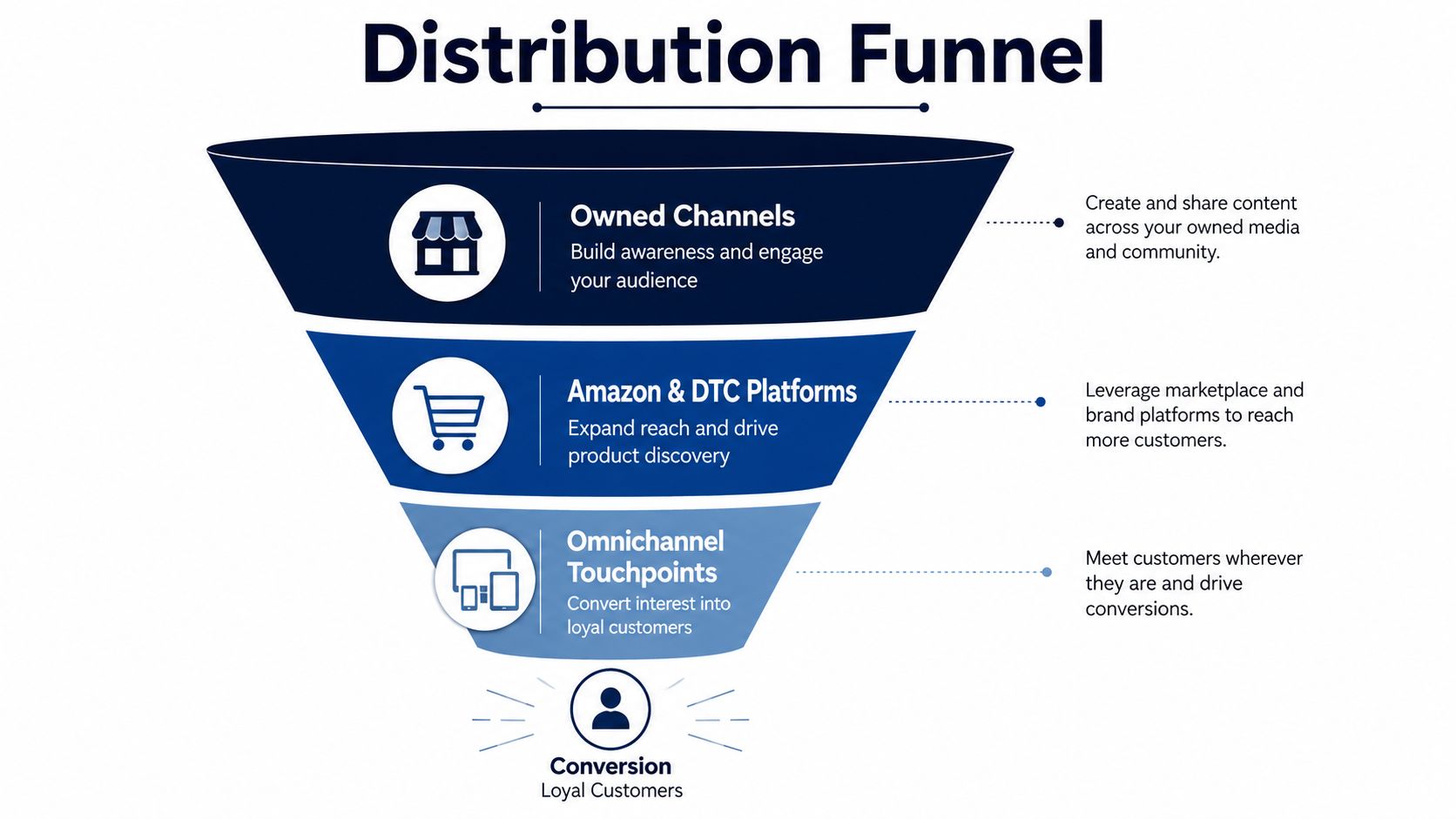
Search content captures questions before the shopper has chosen a product. It should address the problem, establish your credibility theme, and lead naturally to a relevant product or category page. Search traffic isn't the objective by itself. The page needs a clear next step, such as viewing a comparison, exploring a collection, subscribing for education, or buying.
Amazon Store content and A+ Content operate closer to the purchase decision. They should reduce uncertainty quickly through scannable benefits, comparisons, visual demonstrations, specifications, and answers to objections. Avoid pasting a blog article directly into a marketplace asset. Translate the insight into the shorter, more decisive format shoppers use while evaluating products.
DTC pages can carry more context. Use them for education hubs, comparison guides, bundles, quizzes, subscription explanations, and post-purchase support. The DTC environment also lets you connect content engagement with email capture, product discovery, and customer behavior more directly.
Short-form video and UGC work best when the viewer needs to see the product in use or wants social proof. A single pillar can produce a demonstration, a founder explanation, a customer question, a comparison clip, and an objection-handling ad. Each version should have a distinct job rather than repeating the same headline.
Every primary asset should have a launch plan that names:
Omnichannel brands need message consistency without identical execution. The product promise should remain stable, but the proof format must suit each environment. A retail-ready sell sheet, an Amazon comparison module, and a DTC buying guide can all express the same credibility theme while respecting the shopper's context.
For a broader framework around connecting these touchpoints, review this guide to omnichannel marketing strategy. The main discipline is prioritization. Pick the channels closest to your best customers' decisions, make repurposing systematic, and avoid distributing every asset everywhere just because the platform exists.
A content report can show rising page views while customer acquisition gets more expensive. That happens when teams treat visibility as value. Views, watch time, and likes indicate that an audience noticed an asset. They do not show whether it improved CAC, influenced a purchase, or supported retention.
Set the desired action before choosing the metric. A discovery article may aim to drive a product-page visit, email signup, or branded search. An Amazon asset may be judged by brand referral performance or product-detail interaction. DTC content can support an add-to-cart, checkout initiation, purchase, subscription, or repeat-order behavior.
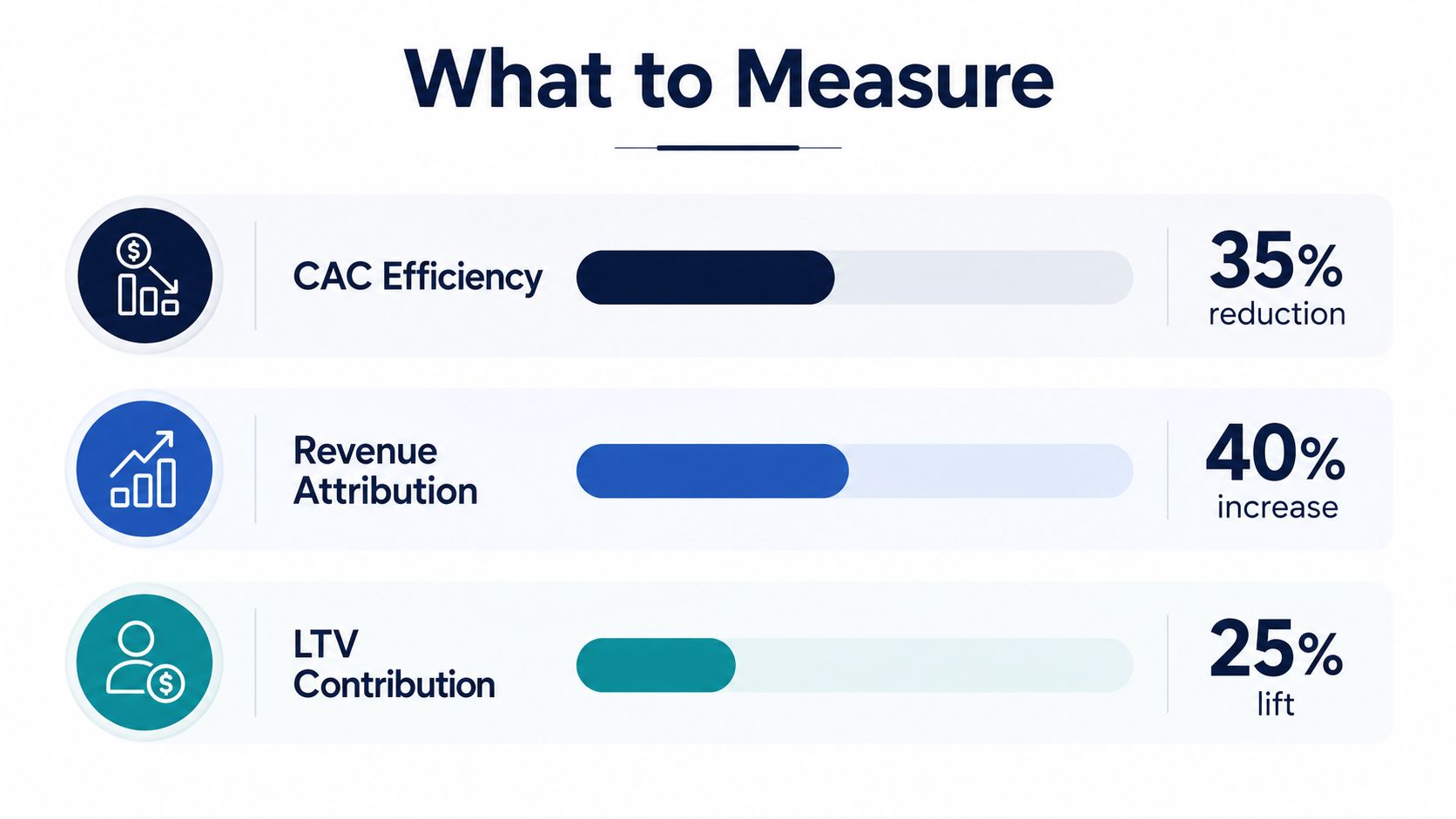
Use a clear chain instead of claiming that every conversion has one perfectly isolated cause:
Theme → asset → channel → action → order behavior → customer value
Group results by credibility theme, then review which assets generated qualified visits, assisted product discovery, captured leads, influenced add-to-cart behavior, or appeared before purchase. That view separates a theme that attracts likely buyers from one that produces inexpensive attention with little commercial value.
Amazon reporting should connect content activity with the marketplace signals available to the brand, including brand referral performance, product-detail engagement, branded demand, and sales movement during distribution windows. DTC reporting should connect tagged sessions with landing-page behavior, checkout events, purchase value, and subsequent orders. Keep the definitions consistent across themes. Perfect attribution is unavailable, but inconsistent tagging makes comparison impossible.
The economics support treating content as an acquisition investment. One benchmark cites an average $47 cost per lead through content marketing versus $121 through paid advertising, and reports that content marketing generates 3x more leads at 62% lower cost per lead (SearchLab). These figures are directional benchmarks, not a forecast for every Amazon or DTC account. They still give finance and growth teams a reason to track content against CAC rather than classify it as unpriced creative work.
A single post can rise or fall because of seasonality, distribution, or platform changes. A theme shows whether the brand's chosen position is earning attention from the right buyers. Track:
Research from the Content Marketing Institute reports that 40% of marketers identify creating content that prompts a desired action as a top challenge, 39% cite resource constraints, and 33% cite measuring effectiveness. Those constraints make theme-level prioritization practical. If a theme attracts attention but never assists a commercial action, stop expanding it until the offer, audience, or proof changes.
ROI measurement belongs in planning, not only in monthly reporting. One benchmark reports that 60% of top-performing B2B marketers track ROI, compared with 28% of the least successful (SearchLab). Ecommerce teams do not need perfect attribution. They need enough signal to increase investment in themes that improve CAC or LTV, and cut work that cannot show a credible path to either.
A scalable content marketing strategy is a set of choices about where your brand will be credible, which customer decisions you'll influence, and how you'll know the work paid back. It isn't a larger editorial calendar. It's a tighter connection between customer questions, commercial proof, distribution, and measurable behavior.
Use this filter before approving the next asset:
The brands that scale content usually stop doing three things. They stop chasing every format, stop rewarding volume without intent, and stop treating engagement as proof of revenue. They also establish ownership early, because AI-assisted production without review standards can create inconsistent claims and expensive rework.
Start by auditing existing assets against your 3 to 5 credibility themes. Keep the pieces that support a priority audience, improve them where intent or conversion paths are weak, and retire content that attracts the wrong demand. Then choose one pillar opportunity and build its supporting cluster deliberately instead of launching scattered topics.
During the same period, create a distribution checklist for Amazon, DTC, email, social, and retention surfaces. Assign one owner for the message, one for channel adaptation, and one for measurement. Review performance by theme and action, not by publishing count.
The question isn't whether your brand can produce more content. It's whether each new asset makes the next customer decision easier.
Warning signs include a calendar full of disconnected formats, content briefs without a desired action, repeated claims across channels, and reports that celebrate reach without showing product engagement or revenue contribution. When those symptoms appear, adding staff or increasing output won't solve the underlying issue. Narrow the themes, clarify the journey, improve distribution, and repair measurement first.
Content compounds when the brand repeats a differentiated belief with increasing depth and proof. That's how an Amazon listing, a DTC guide, a creator demonstration, an email sequence, and a post-purchase tutorial become one commercial system instead of five unrelated marketing tasks.
Million Dollar Sellers offers ecommerce founders access to a private peer network, strategy sharing, and behind-the-scenes insight from 7-, 8-, and 9-figure operators across Amazon, DTC, and omnichannel brands. If you're ready to pressure-test your content marketing strategy with people who understand scaling constraints, visit Million Dollar Sellers and explore the community.
Join the Ecom Entrepreneur Community for Vetted 7-9 Figure Ecommerce Founders
Learn MoreYou may also like:
Learn more about our special events!
Check Events