Chilat Doina
November 20, 2026
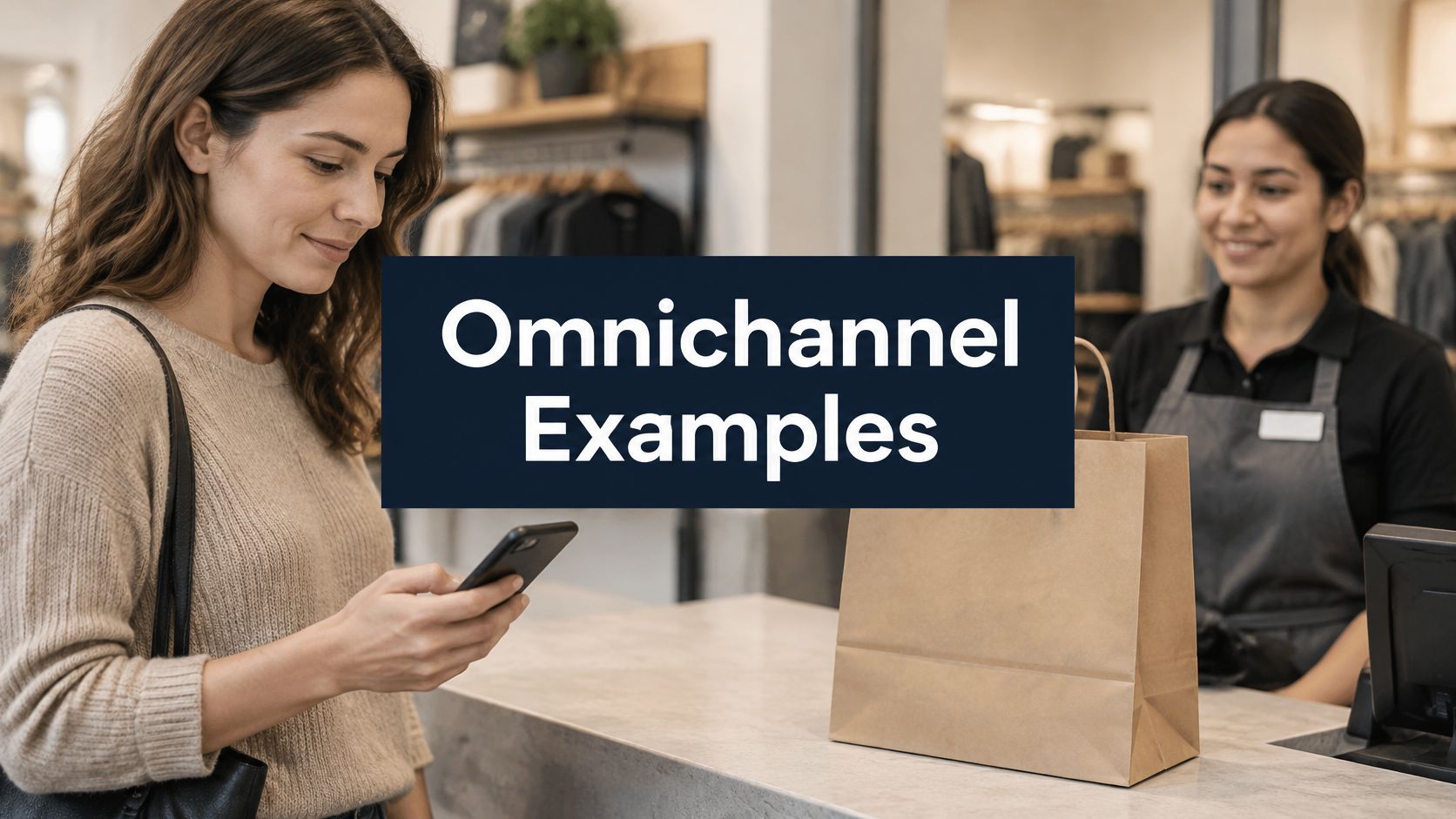
A shopper checks stock on their phone during lunch, orders for pickup, and drives to your store after work. They expect the bag to be ready. They don't care whether your website, point-of-sale system, and store team use different software.
Your team has a harder job. Someone must reserve the product, find it, confirm it's sellable, and send the ready notification. If a walk-in customer buys the last unit before the reservation reaches the register, your convenient pickup service becomes an apology.
Useful omnichannel examples explain those handoffs, not just the channels a brand operates. A website and a store aren't meaningfully connected until inventory, customer context, and service policies travel between them.
The models below range from curbside pickup and mobile ordering to virtual try-on, service appointments, and social live selling. Each solves a different customer problem. Each also creates work that somebody must own.
The operating test: Can a customer change channels without your staff reconstructing the order, the promise, or the conversation?
That continuity helps boost loyalty across channels, but consistency doesn't mean offering everything everywhere. A store can accept returns without shipping orders. A social channel can generate discovery without becoming your customer database. Copy the connection that removes a real buying obstacle, then build the inventory rules, staff responsibilities, and exception handling behind it.
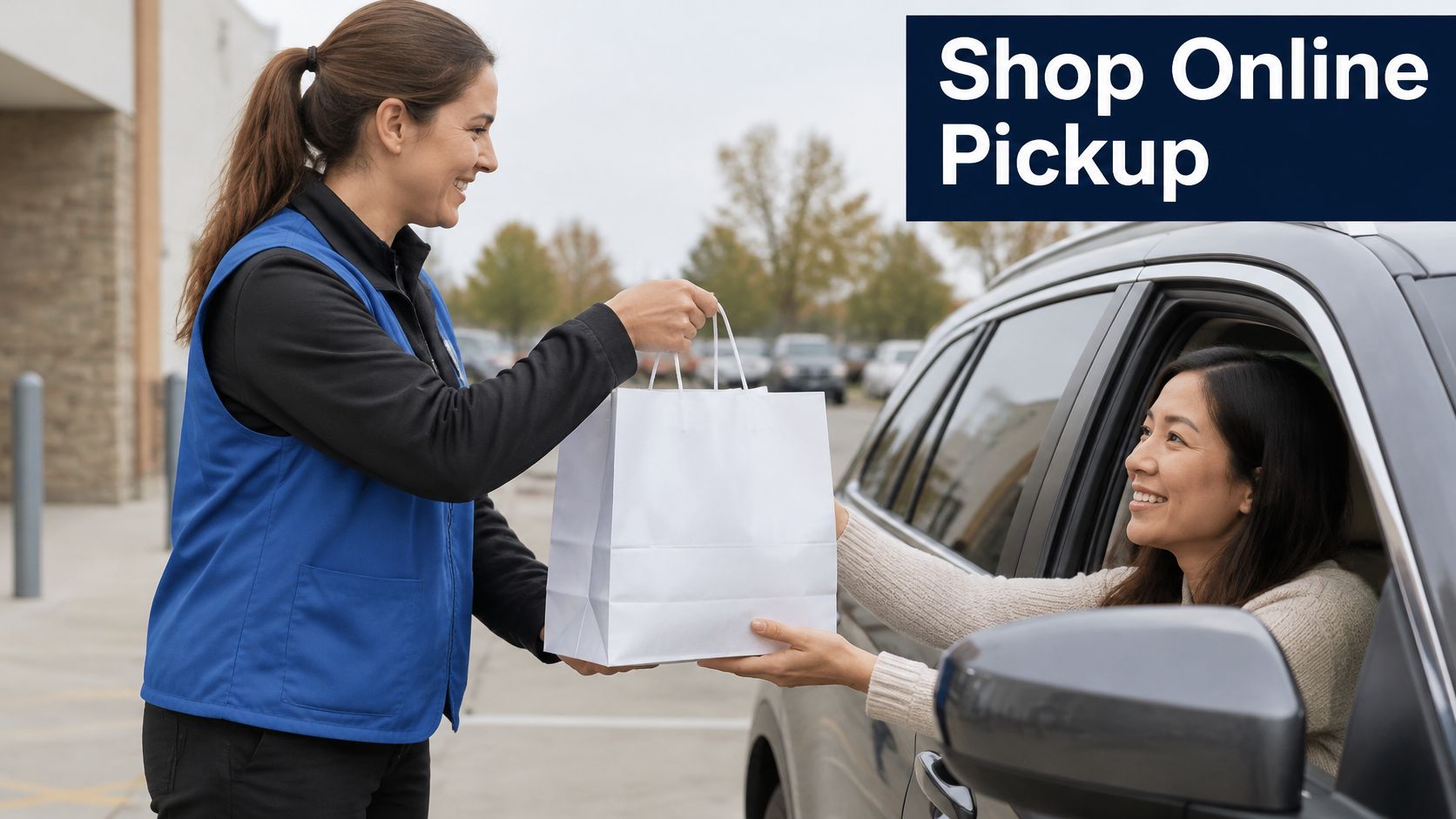
Target Drive Up illustrates the distinction between where an order starts and where employees fulfill it. In fiscal 2024, 19.6% of Target's merchandise sales were digitally originated, while stores fulfilled 97.6% of total merchandise sales, according to Target's annual report.
The useful lesson from Target's omnichannel strategy is that pickup requires a store workflow, not just a checkout option. The order-management system must reserve stock, assign a picking task, and distinguish order received from ready for collection.
Say a pet-supply retailer offers curbside collection of heavy food bags. A picker scans the bag into a labeled staging area before the customer receives a ready notification. An arrival message then alerts the employee responsible for carrying it outside.
Inventory reliability matters more than an ambitious collection promise. In a multi-location retailer case study, RFID Cloud reports that inventory accuracy improved from 68% to 97%, while BOPIS cancellations fell from 35% to below 3% after RFID implementation.
Don't rely on occasional batch updates for fast-selling products. Send reservation and sales events promptly, and remove pickup availability when synchronization fails.
The trade-off is store labor. Measure pickup no-show rate and order readiness before tightening service promises. Fast collection isn't profitable if employees repeatedly abandon paying customers to hunt for missing stock.
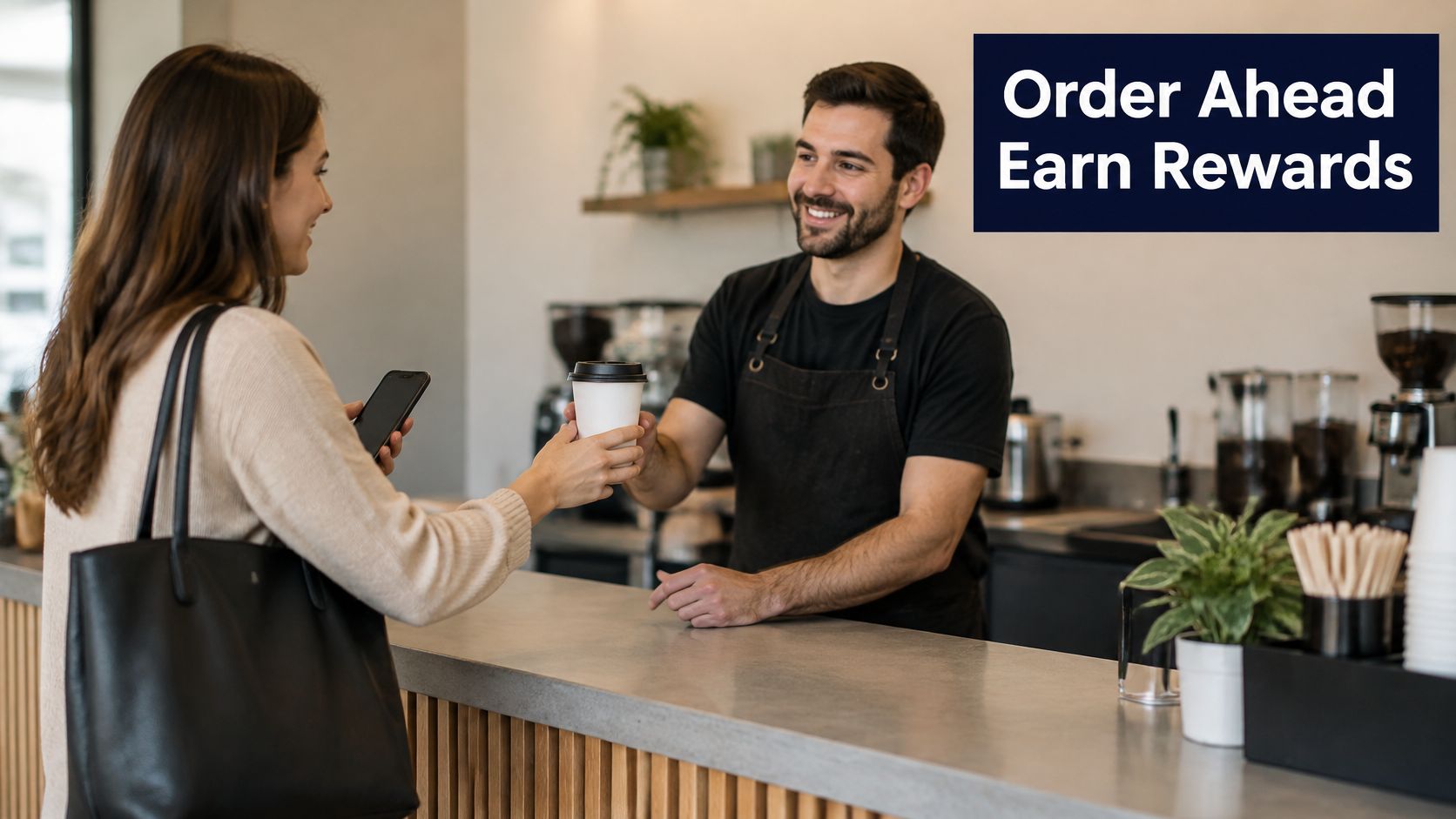
A reorder button is useful only if the store can prepare the order when promised. Starbucks-style mobile ordering connects payment, preparation, collection, and rewards, while Chipotle's digital ordering model provides another recognizable reference for connecting an app with restaurant operations.
For a repeat-purchase business, the app should remember useful details without forcing customers through setup every time. Saved preferences, a preferred location, and a clear reorder flow usually deserve attention before elaborate gamification.
Consider a neighborhood coffee business whose customers order on their commute. The app sends the drink specification to the preparation queue, records payment against the order, and attaches eligible rewards activity to the customer profile. Employees see the same modifiers the customer selected, rather than retyping them from a separate screen.
Ready-time estimates must reflect workload. If the preparation queue backs up, extend the estimate before accepting more orders, rather than letting customers discover the delay at the counter.
Reward the behavior you want without paying customers to move an order they would have placed anyway.
App-exclusive rewards can encourage adoption, but they can also subsidize existing demand. Test a targeted incentive against customers who don't receive it, and compare repeat purchase behavior after reward costs.
Keep operational notifications separate from marketing permission. Payment confirmation, preparation status, and collection instructions serve the current order. Promotional pushes serve a different purpose and should respect the customer's preferences.
The trade-off is queue competition. A store manager needs authority to throttle digital orders when demand exceeds preparation capacity. Otherwise, the app makes ordering easier while employees struggle to serve both walk-in and mobile customers.
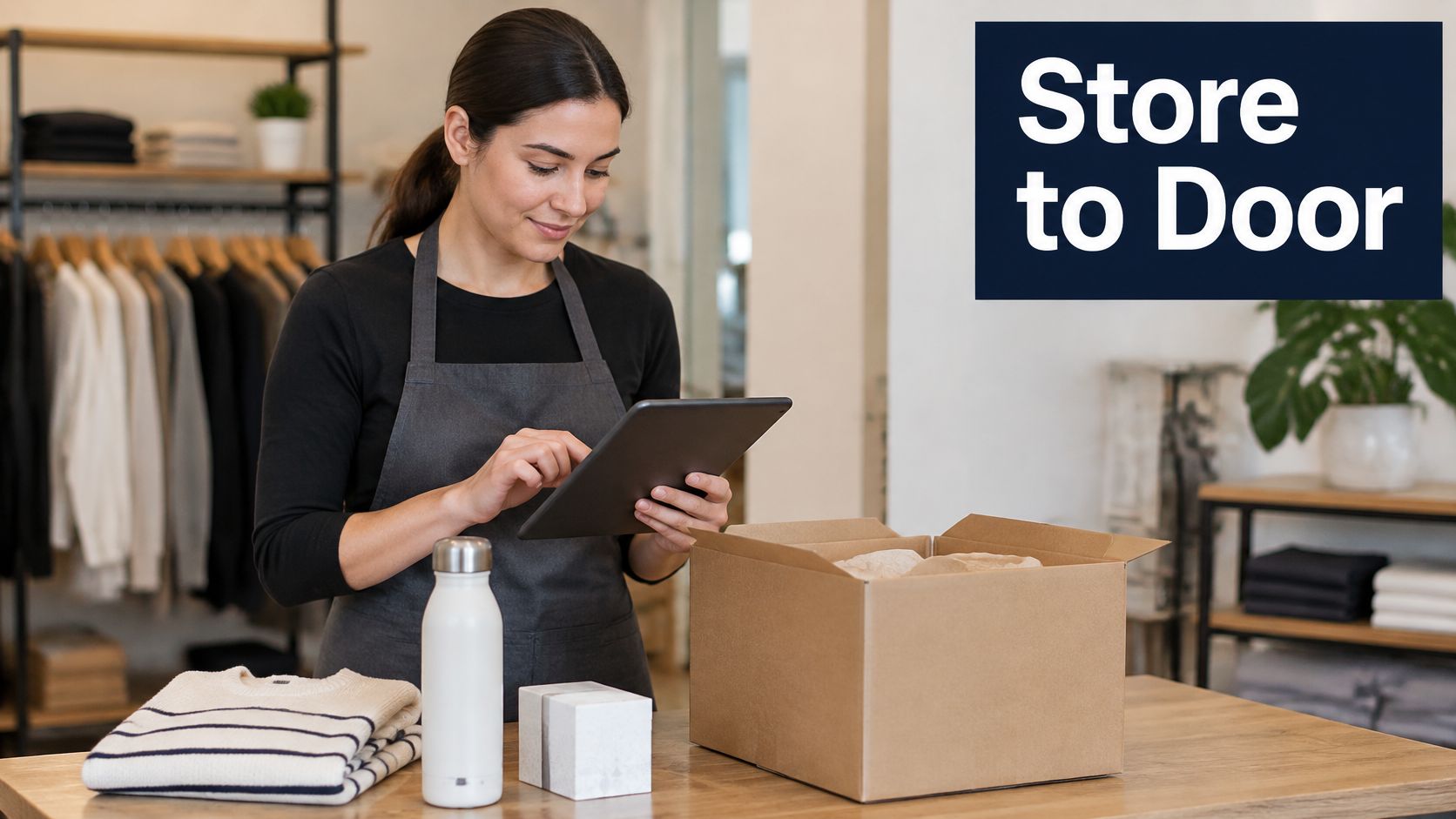
An out-of-stock shelf doesn't have to end the sale. Endless aisle lets an associate sell inventory held elsewhere; ship-from-store lets a store fulfill an order for a remote customer. They share inventory visibility, but they require different labor and routing rules.
Walmart provides a large-scale operational reference. Its 2024 annual report describes an omnichannel system combining stores and ecommerce with pickup, delivery, and ship-from-store, supported by more than 8,000 pickup locations globally.
Say a footwear customer wants a size missing from the local shelf. The associate checks available-to-promise inventory on a tablet, takes payment, and arranges delivery from an eligible location. The customer receives an order record that support can retrieve regardless of which store completes fulfillment.
A practical omnichannel fulfillment strategy evaluates more than the nearest postcode.
Start with products that employees can locate and pack consistently. Fragile, bulky, and easily confused variants need more preparation than a simple catalog expansion suggests.
Customer retention work, including building loyalty programs in Cincinnati, should connect to this same order identity so an associate-assisted purchase doesn't disappear from the customer's history.
The trade-off is local capacity. A nearby store may be expensive to fulfill from during a busy shift. Give managers capacity limits, and track contribution margin after fulfillment by location rather than celebrating shipped order volume alone.
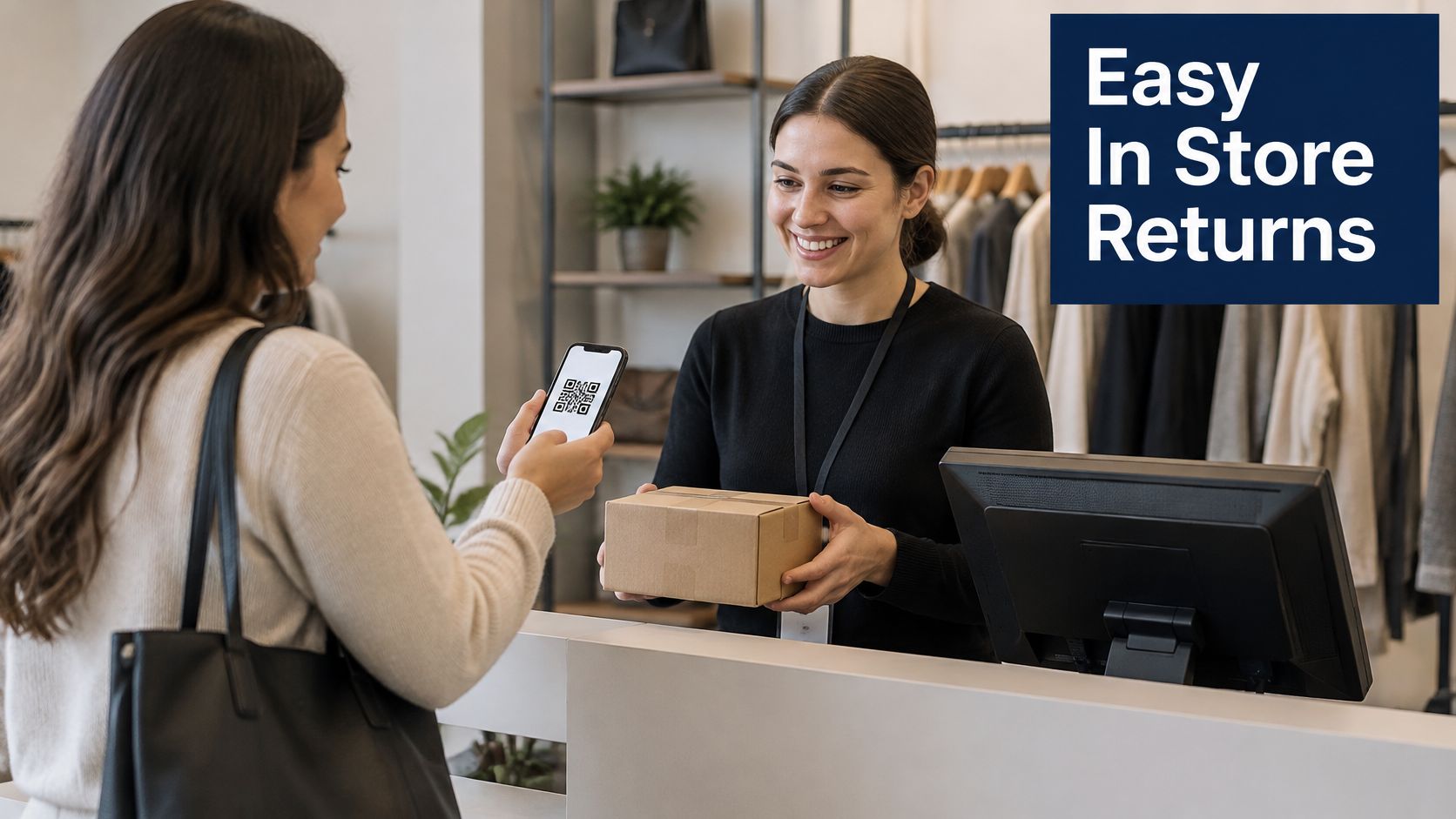
The difficult part of returning an online order in-store isn't scanning a QR code. It's deciding who can authorize the refund, where the item goes, and which team absorbs the cost.
A Nordstrom-style cross-channel return experience offers a useful model for policy design. Don't assume that accepting a parcel at a third-party drop-off point is operationally identical to inspecting, refunding, and restocking merchandise in your own store.
Say an apparel customer brings an online purchase into a store. The associate retrieves the original order, verifies eligibility, records the return reason, and initiates the appropriate refund. Only after inspection should the item become sellable stock.
That workflow needs connected systems. In Priority Software's retailer survey, 71% of surveyed retailers had no or only partial advanced order-management capabilities, including capabilities such as omnichannel order capture, BOPIS, real-time inventory visibility, and order orchestration.
Define the exceptions before launch:
An exchange can preserve a sale, but don't make it an obstacle to a valid refund. Employees should offer alternatives without pressuring customers or inventing exceptions.
The trade-off is additional store workload and potentially mismatched inventory. Returned online-only products may need transfer rather than shelf space. Track return handling cost alongside exchange outcomes, and review return reasons for sizing, imagery, or product-description problems that your ecommerce team can fix.
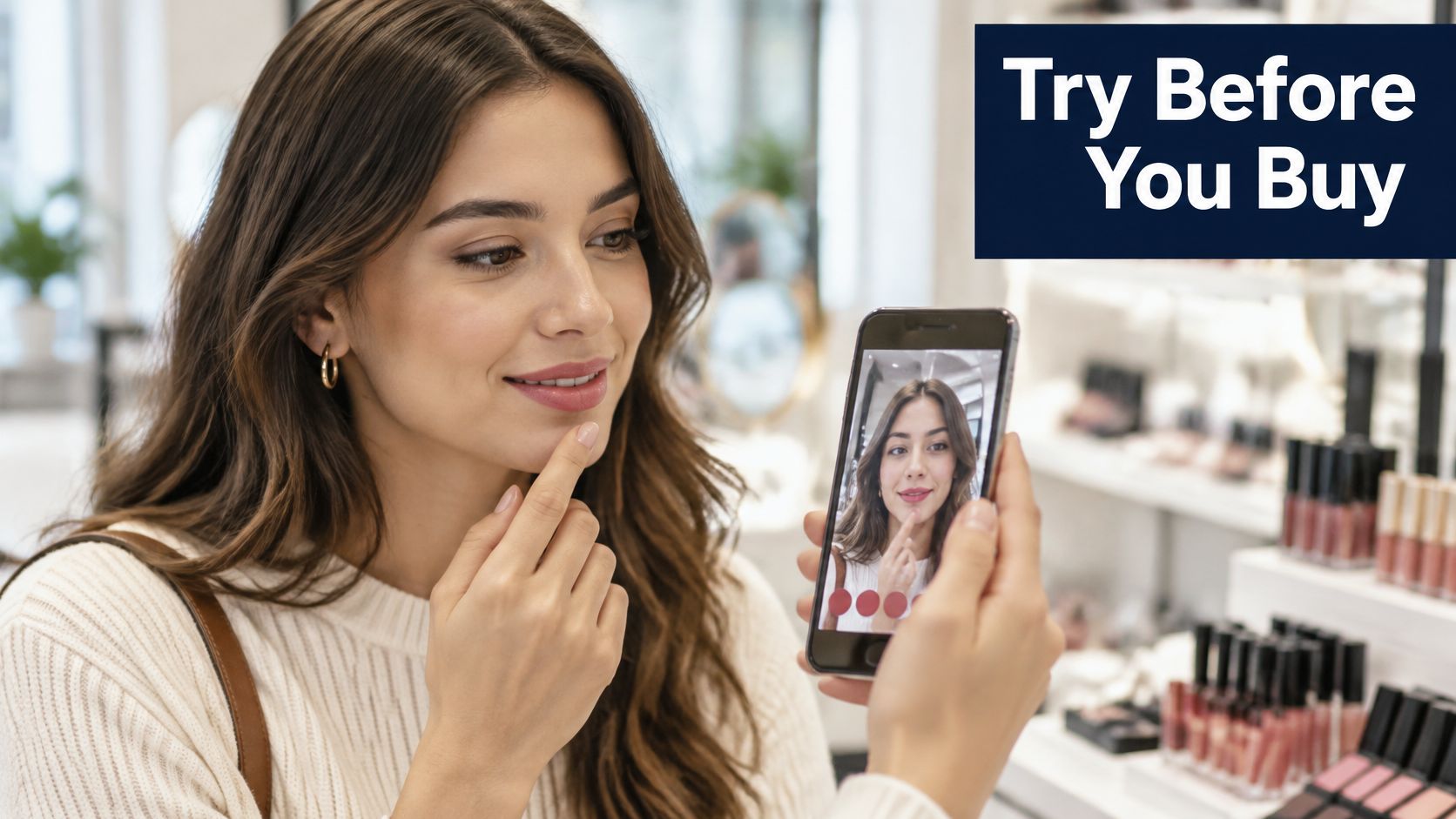
Sephora's Beauty Insider and virtual-try-on approach illustrate a useful combination: a persistent customer profile plus a tool that helps shoppers choose. The valuable connection isn't the visual effect alone. It's whether a saved preference can support a later consultation or purchase.
For a beauty brand, the customer record should distinguish declared preferences, purchase history, and exploratory behavior. Trying a bold lipstick virtually doesn't mean the shopper wants every future recommendation to feature that shade.
Consider a customer who experiments with lip colors online, saves a shortlist, and visits a store to compare finishes. With permission, an associate retrieves that shortlist and records the product the customer selects. The follow-up message links to the selected shade, not an unrelated bestseller.
That requires consistent product identifiers across the try-on tool, catalog, loyalty platform, and point of sale. Shade names alone aren't enough when packaging changes or variants have similar labels.
Design boundary: Treat virtual try-on as decision support, not a guarantee of real-world color, texture, or fit.
The trade-off is integration and maintenance. Product assets, shade mappings, and recommendation rules need ongoing attention. A smaller brand may get more value from saved consultation notes and unified rewards before investing in AR.
Measure whether customers make confident purchases and return to buy again. Compare repeat purchase lift after reward costs, rather than using virtual-try-on engagement as proof that the system pays for itself.
Home try-on addresses a problem that product photography can't always solve: the customer needs to experience fit, feel, or appearance before committing. Warby Parker's home-try-on model is a recognizable reference, but founders should copy the operating logic rather than assume a familiar program remains available unchanged.
The model connects online selection, a physical trial, and help from a store or adviser. Virtual try-on can narrow the shortlist, while an in-person consultation resolves questions the digital tool can't answer.
Say an eyewear brand lends demonstration frames to prospective customers. Those frames move through dispatch, customer possession, return transit, inspection, cleaning, and availability. They shouldn't appear as ordinary sellable stock throughout that journey.
The customer profile should preserve the trial selection and feedback so a store associate doesn't restart the consultation. Employees also need clear rules for damaged samples, missing returns, and customers who want to extend the trial.
Inventory allocation deserves equal attention. In its European retailer case study, Lokad reports 17.8% fewer stockouts alongside a 7.8% reduction in overall store stock levels, illustrating why allocation by location and demand matters more than holding more inventory.
For a trial program, allocate demonstration products according to actual requests and turnaround times. Keep popular sample variants available without treating every color or finish as equally important.
The trade-off is working capital tied up in products that aren't immediately earning revenue. Add outbound transport, return handling, inspection, and losses before judging the model's economics.
Measure trial-to-purchase conversion together with contribution after trial costs. A generous trial that attracts interest but produces few profitable purchases needs tighter eligibility, a narrower assortment, or a different consultation model.
A customer buying a technical product may need setup or repair more than another promotional email. Apple's combination of digital purchasing and Genius Bar appointments provides a recognizable example of connecting commerce with scheduled service.
The transferable tactic is shared context before the appointment. A service employee should know the product, reported problem, and relevant order details before the customer arrives, subject to appropriate access controls.
Consider a connected-home brand offering installation consultations through retail partners. A customer books from the order confirmation, selects the product involved, and describes the installation environment. The booking system assigns a suitable adviser rather than choosing any open slot.
Appointments need service definitions. A compatibility consultation, initial setup, and diagnostic repair require different skills, equipment, and preparation. If you mix them into an undifferentiated booking calendar, staff inherit promises they may not be equipped to keep.
Staff should be able to flag missing parts or unsuitable bookings before the visit. Where possible, offer remote assistance when a physical appointment isn't necessary.
A service appointment should solve the stated problem before it becomes an opportunity to sell something else.
The trade-off is reserved capacity. Empty slots waste specialist time, while overbooking creates queues and rushed consultations. Track appointment no-show rate and service completion, then adjust reminders, slot lengths, and booking eligibility.
Don't reward employees solely for accessories or upgrades sold during support visits. That creates an incentive to sell when the customer needs an honest diagnosis.
A creator demonstrates a product, answers a question, and directs viewers to a purchasable listing. TikTok Shop, Instagram product-tagging experiences, and Amazon Live illustrate different ways to connect content with commerce, although checkout options and eligibility depend on the platform and market.
The operational challenge starts when a viewer orders. The product variant, inventory reservation, shipping promise, and support record must reach the same systems your team uses elsewhere.
The video below provides a visual reference for the social-selling format.
Say a cookware brand runs a live demonstration with a creator. The team confirms the featured bundle's stock, supplies accurate product claims, and assigns someone to answer delivery and compatibility questions. Customer service receives the offer terms before viewers do.
A workable omni-channel selling strategy also defines what happens when platform orders arrive late or inventory updates fail.
Don't assume a social buyer's information can automatically enter your owned marketing database. Respect platform restrictions and obtain the necessary permissions for subsequent communication.
The trade-off is partial control over the customer relationship. Platform reporting may describe attributed sales without proving that you acquired additional demand. Braze's omnichannel retail guidance discusses the difficulty of connecting digital exposure with offline behavior and the value of signals such as pickups, returns, and repeat purchases.
Compare exposed and unexposed audiences where feasible. Judge the campaign on incremental contribution after creator fees, promotions, fulfillment, and returns, not live-view counts alone.
| Item | Channels Connected | Main Customer Benefit | Key Requirement |
|---|---|---|---|
| Buy Online, Pick Up In Store (BOPIS) and Curbside Pickup | Website, app, and physical stores | Fast, convenient local pickup | Accurate inventory and trained store staff |
| Mobile Order-Ahead with an Integrated Loyalty Program | Brand app, store, and loyalty program | Skip lines while earning personalized rewards | Reliable app, order timing, and loyalty integration |
| Ship-From-Store and Endless Aisle | Stores, warehouses, and online channels | Broader selection and potentially faster delivery | Unified inventory and order management |
| Buy Online, Return In Store (BORIS) | Online store, app, and physical stores | Easy returns without shipping items back | Connected return processing and clear policies |
| Unified Beauty Loyalty with AR Virtual Artist | Website, app, loyalty program, and stores | Consistent rewards and virtual product try-on | Shared customer profiles and maintained AR tools |
| Home Try-On with Store Experience | Online store, virtual try-on, home delivery, and physical stores | Try products at home before buying | Try-on logistics and connected customer records |
| Appointment-Based Retail Service Across Channels | Online store, app, physical stores, and support services | Convenient scheduled service and support | Integrated booking, sales, and support systems |
| Shoppable Social Commerce and Live Selling | Social platforms, online store, and fulfillment channels | Discover and buy products within social experiences | Platform integration and consistent fulfillment |
Choose the model that fixes your most expensive customer handoff. Don't begin by asking which channels your competitors have. Ask where shoppers currently abandon a purchase, repeat information, or wait for staff to resolve an avoidable exception.
Your starting point depends on inventory visibility, physical capacity, and customer-data maturity. A retailer with dependable store stock and spare picking capacity can test pickup. A DTC brand without stores may be better positioned to connect social discovery with existing fulfillment or offer appointments through an appropriate service partner.
If your stock records are unreliable, fix reservations and reconciliation before promising local availability. If your customer records are fragmented, connect order lookup and service history before launching cross-channel personalization. Neither problem improves merely because you add an app.
Select a narrow scope with clear ownership:
Assign an accountable owner across ecommerce, stores, operations, and finance. That person needs authority to resolve conflicts over inventory allocation, staffing, refunds, and channel credit. Otherwise, each department can meet its own target while the customer receives a broken promise.
Use a customer-facing metric and an economic measure. For pickup, that might mean pickup no-show rate alongside contribution after handling labor. For loyalty, compare repeat purchase behavior against a suitable unexposed group and deduct reward costs.
Set pause conditions before launch. Stop accepting orders when inventory events stop flowing, appointment capacity disappears, or staff can't meet the published service window. A controlled pause is better than collecting demand your team can't fulfill.
Review exceptions as carefully as successful orders. A cancellation can reveal a reservation failure; a repeated return reason can reveal misleading product information. Give each recurring exception an owner and a defined fix.
Operators who want to compare these trade-offs with peers running similar models can explore Million Dollar Sellers, an invite-only community for ecommerce founders. Use peer discussion to challenge assumptions about labor, channel ownership, and profitability, then validate the answer against your own operation.
The strongest omnichannel examples aren't instructions to copy every feature. They show how to make a specific customer promise reliably, with costs your business can support.
At Million Dollar Sellers, we connect ecommerce founders through private discussions, mastermind calls, and shared operating insights. Visit Million Dollar Sellers to explore the community and compare omnichannel decisions, from inventory ownership to fulfillment economics, with peers managing similar trade-offs.
Join the Ecommerce Community for Founders Scaling from 7 to 9 Figures
Learn MoreYou may also like:
Learn more about our events!
Check Events