Chilat Doina
July 14, 2026
Most founders hit the same wall with PPC for ecommerce. The account isn't technically broken. Ads are live, revenue is coming in, and some campaigns even look strong inside the ad platform. But the system doesn't scale cleanly. One budget increase wrecks efficiency. One creative refresh tanks conversion rate. One tracking issue blinds the team for weeks.
That usually happens because the business is still “running ads” instead of operating a customer acquisition engine.
Serious PPC for ecommerce has to connect three layers at once. The ad platform has to get clean signals. The funnel has to convert cold and warm traffic without leaks. The finance view has to tell you whether reported ROAS is creating actual profit or just buying top-line revenue that doesn't survive fulfillment, support, and returns. If those layers aren't tied together, scale becomes expensive chaos.
A founder reviews ad performance on Monday, sees healthy platform revenue, approves a budget increase, and then spends the next 30 days wondering why cash got tighter. That gap usually starts before campaign structure, creative testing, or bid strategy. It starts at the foundation.
PPC belongs in the same operating conversation as inventory, pricing, and retention because it changes cash conversion, customer mix, and how much room the business has to scale. Founders who build durable acquisition systems ask a different set of questions: which customers produce real contribution after fulfillment and returns, how much can the business pay to acquire them, and what signals do ad platforms need to keep finding more buyers like them.

Platform metrics are useful, but they are not the scoreboard. The scoreboard is contribution margin by order, payback period by customer cohort, and whether incremental ad spend improves the P&L or just inflates top-line revenue.
Before increasing spend, calculate break-even efficiency from your actual cost structure. That means product cost, shipping, payment fees, discounts, returns, support load, and any marketplace or fulfillment drag that changes order profitability. If that model is fuzzy, review your unit economics for ecommerce growth first and set targets from there.
I prefer a simple rule here. Every campaign should have a job and a profit threshold. If the team cannot explain both in one sentence, the account is not ready to scale.
Channel selection should follow buying behavior, not platform novelty.
Google is usually the clearest fit when shoppers already know the product type or problem they want to solve. Meta tends to do better when the offer, brand, or creative angle has to create demand before a search happens. Amazon matters if the customer comparison happens inside the marketplace. TikTok works best when the product demonstrates fast and the team can produce native creative at a high enough volume to keep learning. Microsoft Ads is often a sensible extension once paid search economics are already proven elsewhere.
That difference matters because each channel trains a different part of the acquisition engine. Search captures intent. Paid social shapes it. Marketplace ads intercept it at the point of comparison.
For a broader view of how those channels fit together, this guide to e-commerce advertising is a useful reference.
Founders lose control of PPC when decision rights are fuzzy. The account manager optimizes toward platform ROAS, finance looks at blended margin, and nobody owns the gap between the two.
A better system is boring on purpose:
That operating model is what turns PPC from a media buying function into a repeatable growth system. Without it, the business keeps reacting to campaign performance. With it, the business can use PPC deliberately, as a controlled engine for profitable customer acquisition and long-term brand value.
A lot of ecommerce accounts look fine until spend rises. Then the flaws show up fast. Branded and non-branded search get blended together, hero SKUs disappear inside bloated category campaigns, Shopping traffic routes to weak product data, and nobody can explain which part of the account is driving profit versus cheap clicks.
Architecture decides whether PPC stays manageable at $5,000 a month and at $500,000 a month. Good structure gives the team clean decision points. Bad structure forces constant exceptions, one-off fixes, and reporting debates.
Founders often build campaigns that mirror the site menu. That is easy to set up and hard to scale.
Campaign architecture should reflect how demand enters the business. Separate campaigns by intent, product economics, and audience temperature first. Merchandising categories matter, but they should sit inside a structure that makes bidding, reporting, and budget control easier.
In practice, that usually means distinct lanes for hero products, broader category coverage, prospecting, and remarketing. A hero SKU with strong margin and proven conversion rate should not compete for budget with a low-velocity catalog segment just because both sit under the same collection page.
Naming matters more than teams admit. A campaign name should immediately show platform, market, objective, audience state, product group, and targeting method. If operators have to click through the account to understand what they are looking at, review speed drops and mistakes go up.
High-priority products need tighter handling.
For the small set of SKUs that drive an outsized share of contribution profit, use more granular search structure and product-specific messaging. The point is not to create complexity for its own sake. The point is to protect budget allocation, query matching, and landing-page relevance for the products that matter most to the P&L.
That often looks like this:
A hybrid model usually beats an account-wide rule. Applying extreme granularity to every SKU creates maintenance overhead without adding much control. Hiding your top products inside broad campaigns has the opposite problem. You save time up front and lose visibility where it matters most.
The more a product contributes to profit, the more directly you should manage it.
Scalable architecture is really a budget system. It should make it easy to answer four questions fast.
First, where should the next dollar go?
Second, which campaigns can spend more without dragging blended efficiency below target?
Third, which segments are buying new customer volume versus harvesting existing demand?
Fourth, where is wasted spend accumulating?
That requires clear segmentation. Separate branded search from non-branded. Separate cold audiences from returning visitors. Separate hero products from general catalog traffic. Separate markets when shipping times, margins, or conversion rates differ enough to justify different targets.
Do not force incompatible goals into one campaign. If one segment exists to capture high-intent demand and another exists to introduce the brand, they need different expectations and usually different budget controls.
Feed quality is not a support task. It is part of the media system.
Shopping performance depends on clean titles, accurate product types, complete attributes, strong imagery, and variant logic that matches how people shop. If the feed is weak, campaign optimization gets distorted. The platform can only match and prioritize products based on the data you give it.
Landing destination logic matters too. Specific search intent should land on a specific product or tightly matched category page. Sending exact product intent to a generic collection page usually lowers conversion rate and makes search data harder to interpret later.
A scalable account should let you diagnose performance without a long cleanup project first. That means the structure has to support reporting by product tier, intent bucket, audience state, and acquisition role.
Use a simple readiness check:
This is where founders stop "running ads" and start building an acquisition engine. Campaign architecture is the control layer between platform activity and financial outcomes. If that layer is clear, scaling decisions stay rational. If it is messy, spend rises faster than insight.
The first month of a new PPC campaign isn't about proving that your media buyer is clever. It's about building a signal set the platform can trust and a baseline the business can act on.
Founders often sabotage this phase by judging a campaign too early or changing too many variables at once. They rewrite copy, change landing pages, narrow audiences, and swap bidding strategies before the account has collected enough stable data to tell a clear story. That creates noise, not learning.
At launch, fewer moving parts usually beat more. If you're introducing a new product line, keep the structure readable. Separate prospecting from remarketing. Keep geo logic simple. Don't stack multiple overlapping audience concepts into one campaign and hope the platform figures it out.
Your first job is to learn:
That means daily hygiene matters. Search terms need review. Low-quality queries need exclusions. Mismatched traffic needs to be cut before it trains the campaign in the wrong direction.
A campaign can spend on pace and still be unhealthy. If clicks are coming from the wrong intent bucket, the platform is learning from bad inputs. If traffic reaches the wrong page, the algorithm gets blamed for a funnel problem it didn't create.
I like to judge early campaigns by diagnostic questions more than platform excitement:
| Early signal | Healthy interpretation | Warning sign |
|---|---|---|
| Search query quality | Intent matches the offer | Broad or irrelevant traffic |
| Landing page path | Clicks reach the right page | Users land on generic pages |
| Conversion feedback | Orders reconcile cleanly | Platform and backend disagree |
| Budget use | Spend follows priority terms | Spend drifts into weak themes |
Early optimization should remove obvious waste, not force scale before the account understands who converts.
Founders who want a repeatable system need a repeatable review process. During activation, I'd keep the cadence simple:
This phase feels slower than aggressive tinkering, but it produces cleaner winners. And clean winners are what scale later.
A shopper searches for a problem, sees your ad, clicks with intent, and lands on a page that forces them to figure out whether they are in the right place. That gap kills more ecommerce PPC profit than bidding tweaks ever recover.
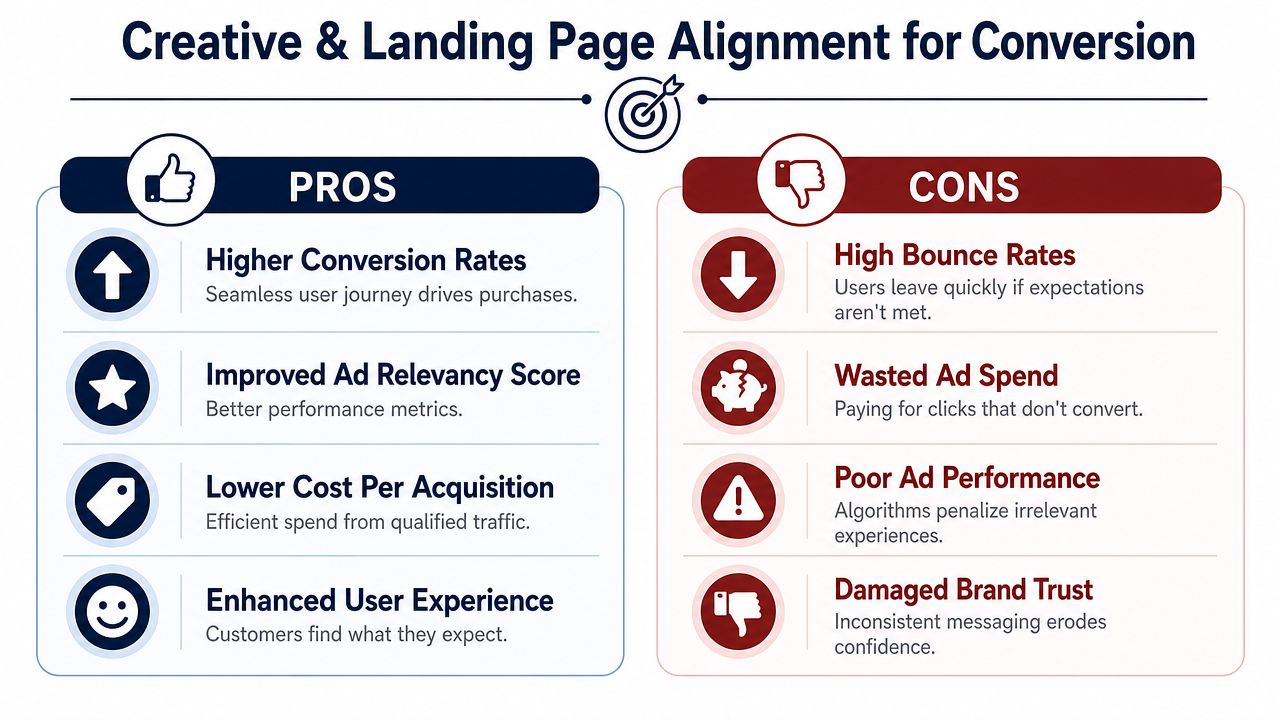
The handoff from ad to page is part of the acquisition system. If the ad promises "wide fit running shoes for flat feet," the page needs to confirm that promise in the first screen with the right product set, the right headline, and the right next action. If it drops the visitor onto a generic category page, paid traffic has to re-orient itself. Conversion rate drops, assisted conversions weaken, and the platform learns from lower-quality sessions.
Creative alignment is not just copy consistency. It is structural consistency across the whole path.
A strong handoff usually includes:
This sounds basic. At scale, it is where accounts drift.
Teams launch new hooks faster than they build matching pages, so ads get more specific while landing experiences stay generic. That creates a false read on channel performance. The media team sees weak return. The actual issue sits in merchandising, page structure, or offer presentation.
For teams studying what this looks like in practice, these high-converting ecommerce landing pages are useful because they show how page structure supports buying intent.
Cold prospecting traffic and branded traffic should not hit the same experience and be judged by the same standard.
Cold traffic usually needs fast orientation. What is the product, who is it for, why trust this brand, and what should I do next? Branded and retargeting traffic can tolerate shorter paths because the buyer already carries context into the click. Founders who want a repeatable PPC system should map landing page templates to intent tiers, then connect each template to a defined campaign type. That makes testing cleaner and budget decisions easier.
A practical framework looks like this:
| Traffic type | Best page format | Primary job of the page |
|---|---|---|
| Non-brand search | Focused category or collection page | Confirm relevance and reduce decision friction |
| Shopping or product-led ads | Product detail page | Close uncertainty on product fit, price, and proof |
| Offer-led social traffic | Promotional landing page | Frame the deal clearly and drive the first action |
| Retargeting traffic | Product or cart-return page | Remove objections and recover the sale |
Paid ecommerce traffic is mobile-heavy in many accounts, so the page has to earn the next tap fast. Buyers should not need to hunt for price, delivery details, reviews, variant selection, or the add-to-cart button.
That usually means fewer competing elements above the fold, clearer product hierarchy, tighter image selection, and less dead weight in the template. Long pages are fine if they are well ordered. Bloated pages are expensive.
If you want a practical process for tightening this part of the funnel, review your ecommerce conversion rate optimization process through a paid-traffic lens. Start with headline clarity, product page friction, offer visibility, and checkout path drop-off. PPC efficiency improves when the page removes hesitation.
A lot of teams say they are testing creative when they are really rotating assets and hoping the dashboard sorts it out. Useful testing isolates one part of the handoff at a time so you can keep what scales.
Use a simple matrix:
| Variable | What to test | What you're learning |
|---|---|---|
| Hook | Problem-aware vs benefit-led | Which angle earns qualified clicks |
| Hero image | Product-only vs in-use | Which visual reduces uncertainty |
| CTA copy | Add to cart vs shop collection | Which action matches intent level |
| Landing page hero | Product-first vs offer-first | Which opening closes the click gap |
Run the test long enough to see downstream behavior, not just CTR. The winning asset is the one that produces better session quality, stronger cart rate, and better margin after traffic costs.
Good PPC creative gets the click. A matched landing page turns that click into a usable economic signal the account can scale on.
A founder checks Meta and Google, sees healthy ROAS, and assumes acquisition is under control. Then the month closes, refunds hit, returning customer rate softens, and finance shows contribution margin went the wrong way. The ad platforms reported efficiency. The business absorbed the cost.
That gap is where ecommerce PPC breaks.
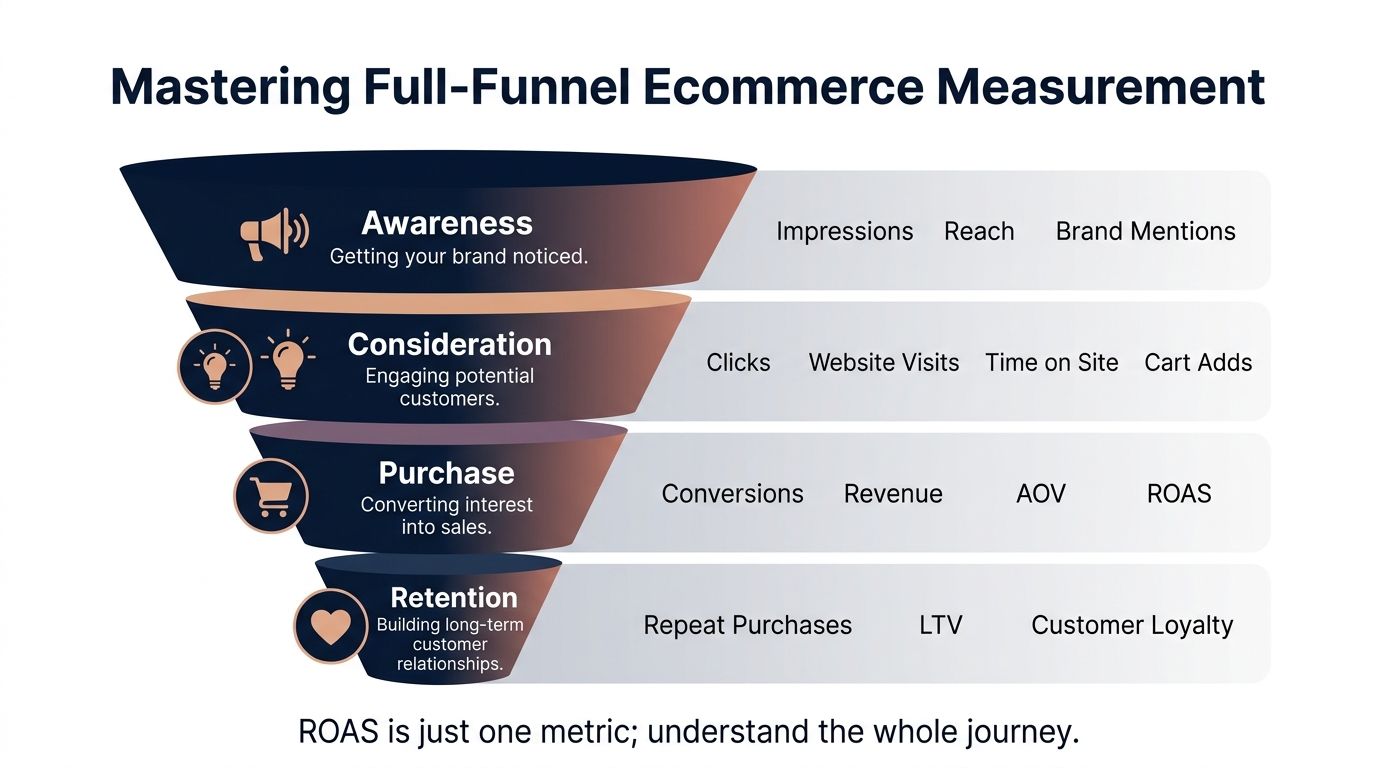
Full-funnel measurement ties ad spend to economic output, not just attributed purchases inside ad managers. You need to know which campaigns bring in first orders, which ones attract customers who buy again, and which ones produce volume that looks efficient until returns, discounting, and low repeat rate show up.
One useful walkthrough on measurement mindset is below.
Smart bidding only works as well as the conversion signal you feed it. If tracking is delayed, duplicated, or missing key events, the platform will still spend. It will just spend against a distorted version of reality.
At scale, that usually shows up in two places. The account starts favoring traffic that converts cheaply in-platform but underperforms in your store data. Then the team makes budget or creative decisions from bad inputs and compounds the problem.
Build the measurement stack to answer one question clearly: did this click create profitable customer behavior?
That means setting up:
Purchase is the final event. It is also too late to diagnose most performance problems.
Scalable PPC systems watch intent progression across the funnel. Product view rate, add-to-cart rate, checkout start rate, new customer rate, refund rate, and blended contribution after ad spend give a much clearer read on account health than ROAS alone. For teams tightening reporting discipline, define an ecommerce KPI framework that connects channel metrics to business outcomes, not just platform outputs.
Different failures manifest at different stages of the funnel. Low CTR points to offer or message mismatch. Strong CTR with weak product views often points to a landing page handoff problem. Healthy cart activity with poor purchase completion usually means checkout friction, pricing resistance, or weak trust signals. Measurement should help your team isolate the break, not just confirm revenue arrived late.
Many ecommerce brands still judge PPC on same-session or same-day purchases, even when a meaningful share of revenue lands later through email, SMS, branded search, retail follow-up, or sales-assisted conversion paths. That creates a bad operating habit. Founders cut acquisition sources that introduce high-value customers because the first-click economics look weaker than they are.
The fix is straightforward. Map lead and order events back to original campaign data wherever your stack allows it. Then compare channels by downstream value, not just front-end conversion rate.
Here is the practical difference:
| Measurement approach | What happens |
|---|---|
| Platform-only view | Search and social claim credit, but delayed revenue gets missed |
| Store-only view | Orders appear, but campaign and keyword insight stays limited |
| Full-funnel view | Paid media gets judged on actual customer value and margin impact |
Good measurement protects both growth and judgment. It keeps you from scaling noise, and it helps you build a customer acquisition engine that finance can trust.
A campaign hits target efficiency for a few days, revenue looks good, and the natural reaction is to force growth. Budget gets pushed too fast, the platform starts buying a different mix of traffic, and the account suddenly looks "volatile." The problem usually is not the auction. It is the scaling method.
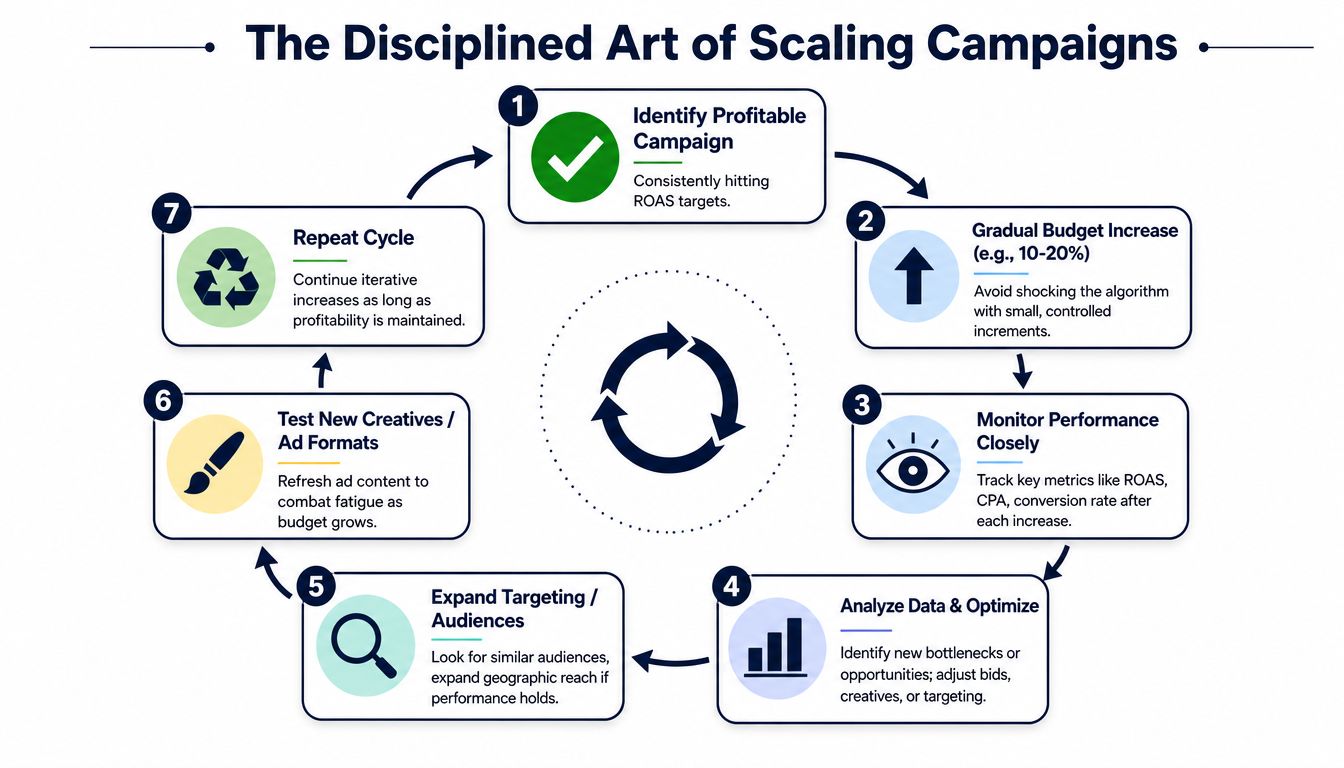
Profitable scale comes from operating the account like a system. The goal is not to spend more. The goal is to add budget while keeping contribution margin, payback period, and customer quality inside acceptable ranges. If those three metrics drift, spend growth is just a more expensive way to buy noise.
Raise budgets in measured increments after the campaign shows stable performance over a meaningful window. Small increases keep the delivery model close enough to the prior state that your team can still read the result. Large jumps change too many variables at once. Inventory mix shifts. Audience depth changes. Placement quality moves. Then nobody can say what caused the drop.
Use a simple gate before every budget increase:
I prefer a weekly scaling cadence for this reason. Daily reactions create churn. Weekly reviews create cleaner decisions and cleaner readouts.
A campaign does not earn the right to scale because the dashboard looks efficient. It earns the right to scale when it can absorb more spend and still produce acceptable economics after product cost, shipping, returns, discounts, and blended overhead.
That changes how teams define a "winner."
Some SKUs can scale at a lower front-end return because repeat purchase rate is strong and refund risk is low. Other SKUs need tighter acquisition costs because margin is thin or return rates punish every bad click. Founders who scale from blended economics make better decisions than teams that manage to a generic platform benchmark.
Increase spend only when the campaign can keep margin at the new volume, not when the account has a streak of pretty numbers.
Vertical scaling eventually hits resistance. Frequency climbs, auction pressure rises, and efficiency starts fading. At that point, more budget into the same setup usually produces worse traffic, not better growth.
The better move is controlled horizontal expansion. Add one new lane at a time so the core engine keeps producing while the test lane proves itself. That can mean a new audience segment, a new geography, a new placement, or a new platform. The rule stays the same. Isolate the variable and protect the baseline.
I like to structure this as core, growth, and test.
That structure sounds simple because it is. It also keeps teams from mixing experimentation with revenue production, which is where a lot of scaling mistakes start.
As spend grows, small operating weaknesses turn into expensive ones. Merchandising issues show up in conversion rate. Creative fatigue shows up in rising CPA. Team confusion shows up in delayed responses to performance shifts. None of that gets fixed by checking the account more often.
Use a standing scale review with one required output for every campaign: increase, hold, reduce, or branch into a new lane. Each decision should be justified in a few lines tied to business outcomes. If the team cannot explain why a campaign deserves more budget in plain language, it is not ready.
That discipline is what turns PPC from a channel you manage into a customer acquisition engine you can scale.
Your core campaigns are hitting target MER. Branded search is efficient. Shopping is stable. Retargeting looks strong. Then growth stalls because the account is only capturing demand you already created. Market leaders fix that by building a PPC system that creates demand, measures incrementality, and reallocates budget based on business impact.
The shift at this stage is strategic. PPC stops being a channel team's reporting function and becomes part of how the company defends margin, gains share, and increases customer lifetime value.
Expansion works when each added channel has a job inside the acquisition engine. Programmatic display can widen reach against category buyers before they search. Video can improve recall and raise click-through on branded and non-brand campaigns later. Retail media can protect share where competitors are trying to intercept buyers close to purchase.
Each of those channels should be judged in context. A view-through campaign that looks weak in platform reporting may still deserve budget if branded search volume rises in the matched markets and new customer mix improves. A prospecting campaign that drives cheap clicks but no lift in downstream conversion quality does not.
That trade-off matters.
Advanced teams map channel roles before launch. They decide which campaigns are meant to create awareness, which ones are meant to recover consideration, and which ones are meant to convert existing demand. That keeps upper-funnel spend from getting killed too early and keeps lower-funnel campaigns from taking credit for work done elsewhere.
AI helps most in repetitive decisions with clear constraints. Use it to cluster search terms, draft variant copy, identify feed gaps, flag creative fatigue, and process query themes faster than a buyer can do manually. Those gains are real when the operating inputs are clean.
Bad inputs still break the system. If product titles are inconsistent, margins are missing, tracking is delayed, or landing pages do a poor job matching intent, automated bidding and asset generation scale those problems. The fix is not more automation. The fix is better structure.
Operator communities such as Million Dollar Sellers can be useful at this stage because the questions get more operational. Teams compare testing methods, measurement frameworks, and execution details that rarely show up in beginner PPC advice.
At scale, attribution is the easy story. Incrementality is the one finance cares about.
Run holdout tests. Exclude exposed audiences from retargeting cells. Compare matched geographies. Pause branded support in controlled windows if traffic volume allows it. The goal is simple. Separate demand capture from demand creation.
Mature ecommerce accounts get fooled. Branded search, remarketing, and repeat-purchase traffic can make the dashboard look excellent while net new customer growth is flat. If a campaign disappears and revenue barely moves, that spend was less productive than reported. If pulling a campaign drops new customer rate, branded search volume, or assisted conversion paths meaningfully, you found a real growth lever.
Market leadership comes from that level of discipline. The winning brands do not collect more tactics. They build a repeatable acquisition system that creates demand, tests causality, and sends capital to the campaigns that improve the P and L, not just the ad account.
Join the Ecom Entrepreneur Community for Vetted 7-9 Figure Ecommerce Founders
Learn MoreYou may also like:
Learn more about our special events!
Check Events