Chilat Doina
April 10, 2026
TikTok Shop did $15.82 billion in U.S. sales in 2025, up 108% year over year, and it is projected to reach 24.1% of U.S. social commerce by 2027 according to DataSlayer. That is the number that should reframe this conversation.
Most founders still evaluate TikTok Shop like a media channel. That is the wrong frame. It is now a commerce infrastructure decision.
If you run an established brand across Amazon, Shopify, and wholesale, a tiktok shop agency is not just there to post content and chase creators. The right one helps you build a profitable operating layer inside a platform that behaves very differently from Amazon search or Meta-driven DTC. The wrong one gives you a creator list, some flashy clips, and a backend mess that stalls growth right when demand shows up.
For high-revenue operators, the key question is not whether TikTok Shop matters. The question is whether your systems, team, and agency partner can capture the demand without breaking fulfillment, margin, or channel alignment.
108% year-over-year growth is no longer a signal to monitor. It is a channel shift to operationalize.
For 7 to 9 figure brands, TikTok Shop matters because it changes how demand enters the business. Amazon captures existing intent. Shopify captures branded demand you already paid to create. TikTok Shop creates purchase intent upstream, then converts it inside the same environment. That changes forecasting, replenishment, promo planning, and channel conflict management.
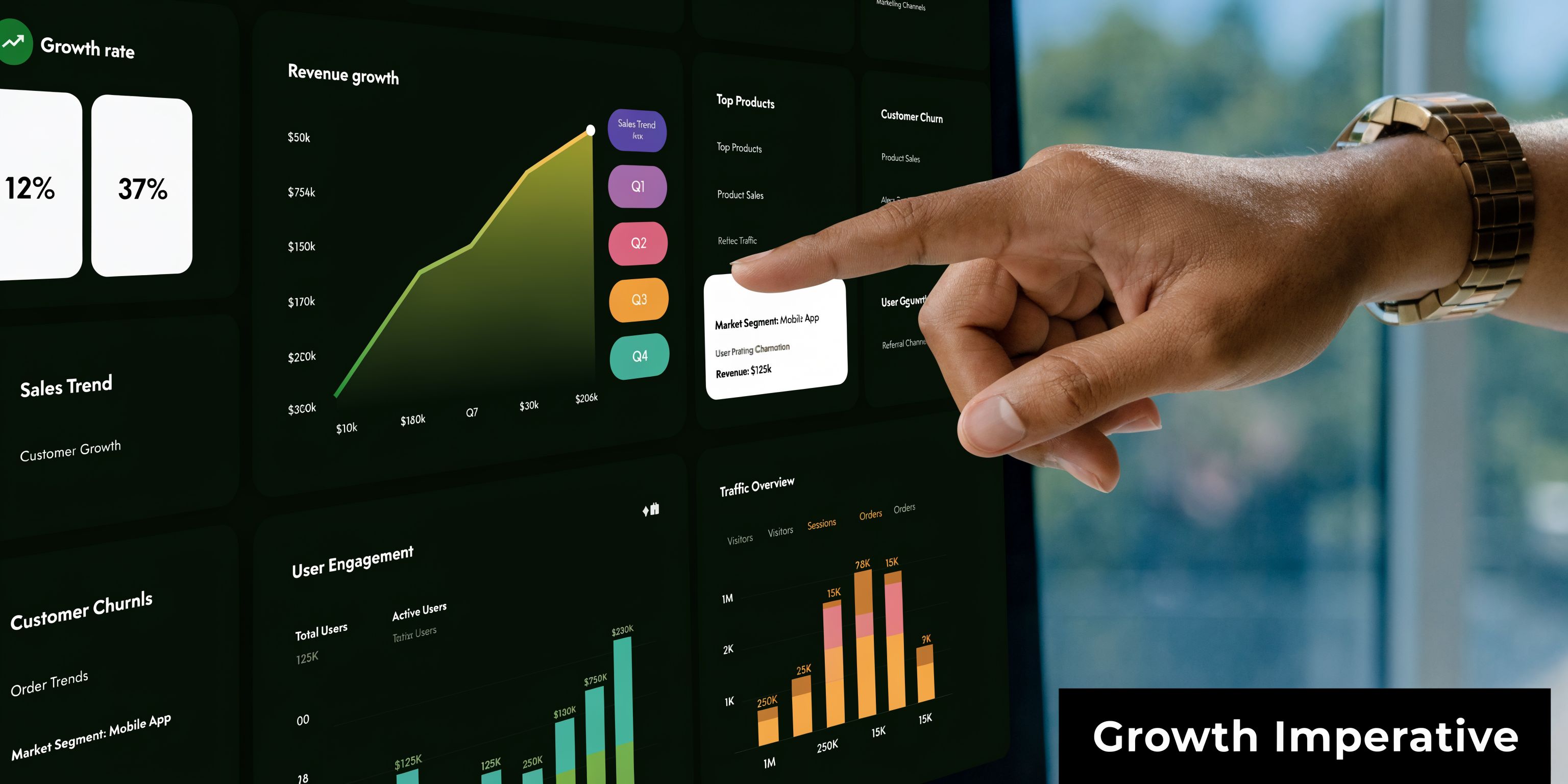
The opportunity is substantial. So is the operational cost of getting it wrong.
Brands with established Amazon FBA and DTC volume usually hit the same wall. They can generate TikTok Shop orders, but they have not set up the business to absorb them cleanly. Inventory gets allocated with the wrong assumptions. Promo calendars drift out of sync across channels. Margin disappears under affiliate commissions, platform discounts, returns, and expedited fulfillment workarounds. Then leadership blames the channel when the underlying problem sits in execution.
That is why a broader omnichannel marketing strategy that connects demand, fulfillment, and margin planning matters. TikTok Shop cannot sit off to the side as a creator experiment. It has to plug into the same operating model that governs FBA inventory, Shopify offers, ERP visibility, and finance reporting.
Established operators should evaluate TikTok Shop through three practical lenses:
This is also where teams confuse front-end growth with business growth. Strong content can create velocity fast. If stock allocation, order routing, and channel pricing are loose, that velocity creates a mess, not durable contribution profit.
One common mistake is under-committing. The brand treats TikTok Shop like a side project, gives it partial inventory, junior ownership, and no clear P&L standards, then decides the channel is weak.
The other mistake is over-delegating. A creator agency can drive samples and content output, but many cannot manage the operational layer that determines whether demand converts into profitable, repeatable revenue. Sellers comparing partners should understand the difference between influencer coordination and what an e-commerce growth agency does across acquisition, conversion, and retention systems.
The brands that win on TikTok Shop do not ask whether the platform can produce sales. They ask whether their Amazon FBA flows, DTC stack, reporting, and supply chain can support a discovery channel that moves faster than the rest of the business. That is the threshold now.
A tiktok shop agency is not the same as a social media agency, a UGC shop, or a paid media team with TikTok in its service list.
The closest analogy is an Amazon agency that also had to manage creators, native content, marketplace ops, and conversion mechanics at the same time. That mix is what makes TikTok Shop harder than it looks.
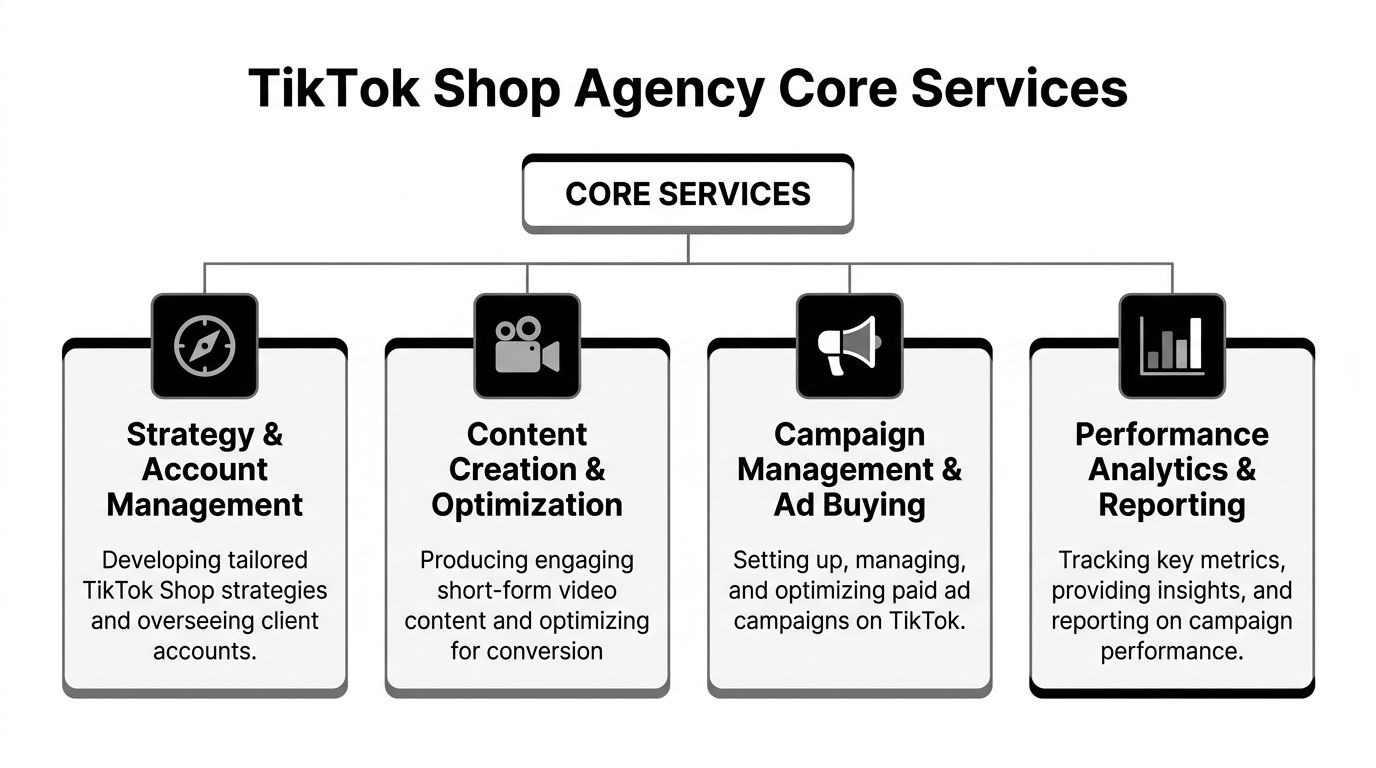
At minimum, the agency should operate across four workstreams:
Many agencies fail on that last piece. They understand front-end content and have no idea how to support an operator with existing FBA inventory, Shopify fulfillment rules, or ERP constraints.
TikTok Shop buyer behavior looks different from what most ecommerce teams are used to. In the U.S., 58% of sales come from short-form videos, and repeat purchase rates reached 81.3% in 2024 according to Capital One Shopping research. That means the agency has to understand both discovery and retention.
A generalist agency usually focuses on awareness. A capable TikTok Shop partner focuses on transaction paths.
That distinction matters. If product discovery starts with content, then creative is not just branding. It is shelf placement. If repeat purchase is strong, then post-purchase experience and SKU sequencing matter more than most agencies admit.
A useful way to think about this is to compare the job to what an e-commerce growth agency does. The broad growth mandate is familiar. The TikTok Shop version is narrower and more operational.
The agency should be able to answer questions like:
If the agency talks mainly about followers, hooks, and virality, but gets vague on logistics, reviews, inventory, and payout workflows, it is not a TikTok Shop operator. It is a creative vendor.
That difference shows up fast once volume starts moving.
Most agency proposals sound similar because they over-index on content and under-describe execution. A serious tiktok shop agency should show depth across strategy, creative, paid distribution, and operations.
If one of those pillars is weak, scale usually stalls.
The partner decides the shop's objectives at this stage.
For a mature brand, that usually starts with product selection, channel role, and offer structure. Not every SKU belongs on TikTok Shop. The agency should identify hero products, price architecture, promo cadence, and the role of bundles versus single-SKU offers.
Good account management also means the agency owns platform mechanics. That includes Seller Center hygiene, catalog accuracy, policy issues, promo setup, and coordination between your internal team and external creators.
A strong strategy lead asks practical questions:
Without that layer, teams default to random testing.
Most brands think this is the whole job. It is only one part of the job, but it is still a major one.
The agency should run a structured creator pipeline. That means prospecting, outreach, product seeding, briefing, follow-up, rights management, and performance ranking. It should not depend on one star creator or a handful of lucky videos.
The creative side should be built around throughput and iteration. Teams that understand short-form video editing for viral content usually produce better testing velocity because they know how to package hooks, product demos, objection handling, and social proof into formats the platform favors.
Look for a workflow that separates content types:
Agencies that lump all video into one bucket usually struggle to scale.
A top agency should know when to let affiliate content run organically and when to push paid support behind it.
Weak teams often burn margin at this stage. They scale spend before creative proves itself, or they fail to turn winning organic content into structured ad testing. Paid media on TikTok Shop is not just about more reach. It is about extending the life of creative that already has conversion intent baked in.
What matters here is decision quality. The agency should know which assets deserve promotion, which offers deserve more budget, and which audience or product combinations are not worth forcing.
You want a partner that can explain:
This is the least glamorous service and the one that protects profit.
According to Harvest Group, top agencies use Target Weeks of Supply (WOS) to manage inventory in a way that can reduce stranded inventory by 20% to 30%, prevent algorithm-related GMV loss, and double inventory velocity when handled properly. That is an operating discipline, not a nice-to-have.
A competent agency should monitor:
If they understand WOS, they can help avoid dead inventory and missed sales. If they do not, they can accidentally create both.
Founders do not need another deck full of top-of-funnel screenshots.
They need reporting that ties together GMV, margin quality, creator performance, inventory health, and platform-specific bottlenecks. The agency should tell you what happened, why it happened, and what gets changed next week.
The best agencies do not just send performance data. They turn the data into SKU decisions, creator decisions, and inventory decisions.
That is what makes them useful at scale.
Pricing for a tiktok shop agency gets messy fast because agencies blend media buying, affiliate management, content production, and marketplace operations into one proposal.
That is why founders should focus less on the headline fee and more on incentives. A cheap structure can become expensive if it rewards activity instead of profitable growth. An expensive structure can be fair if it aligns the agency with sell-through, margin protection, and scalable output.
| Model | Typical Structure | Pros | Cons |
|---|---|---|---|
| Monthly retainer | Flat monthly fee for management and execution | Predictable cost, easier budgeting, good for full-scope support | Can reward maintenance over performance if scope is vague |
| Percentage of ad spend | Agency fee tied to paid media volume | Easy to understand, common for paid teams | Can incentivize spend growth even when efficiency drops |
| Commission on GMV | Agency earns a share of attributed sales | Better alignment with revenue outcomes | Attribution disputes are common, and agencies may chase low-quality sales |
| Hybrid model | Retainer plus performance component | Best alignment when structured well, balances service and incentives | More contract complexity, needs clear KPI definitions |
Views matter. Likes can matter. Neither should drive the relationship.
For an established operator, the KPI stack should center on:
A founder should also distinguish between account-level performance and SKU-level performance. One strong hero product can hide weak economics elsewhere.
Category matters more than most agencies admit, and many pitch decks collapse at this point.
According to the benchmark noted in this YouTube source, beauty brands may see 3x to 5x ROAS, while general merchandise often lands closer to 1.5x to 2x ROAS without 30+ product reviews. The same source argues that advanced brands should push for category-specific KPIs and target at least a 20%+ month-over-month GMV lift.
That does not mean every non-beauty category underperforms. It means the operating assumptions need to change. Home, apparel, gadgets, and consumables each behave differently on TikTok Shop. Review count, creator fit, margin structure, and replenishment cycles all shape outcomes.
A useful KPI framework should borrow from broader ecommerce measurement discipline, especially if your leadership team already uses a mature dashboard for channels like Amazon and Shopify. This guide to key performance indicators for ecommerce is a solid reference point for building the right scorecard.
If an agency cannot tell you which KPI matters by category, it is probably selling one playbook to every brand.
That usually ends with lots of content and very little clarity.
The fastest way to waste six months on TikTok Shop is to hire an agency that looks strong in creative and weak everywhere else.
Most founders ask the wrong first questions. They ask about creator network size, video volume, or ad experience. Those matter. But for an omnichannel brand, the first hard question is operational integration.

A source discussing agency necessity and backend execution notes that 70% of stalled TikTok Shops among high-revenue brands report backend integration issues, and brands can lose 25% to 40% of potential GMV without proper API bridges for unified order fulfillment according to NB Global. That should change how you evaluate every proposal.
If your brand already sells through Amazon FBA, Shopify, or both, you need a partner that understands the operational chain, not just the storefront.
Ask these directly:
A weak agency will answer with generalities. A strong one will talk through systems, ownership, and failure modes.
For brands already comparing service providers across channels, it helps to understand what separates a tactical vendor from an operator-level partner. That same thinking applies when evaluating the best full-service Amazon agency, because the core issue is integration discipline, not flashy channel language.
Do not settle for “we’ve worked with many ecommerce brands.”
Ask what kinds of products they have scaled. Ask what happens when the category is not beauty. Ask how they handle slower purchase cycles, lower impulse conversion, or products that need more education before checkout.
A capable agency should be able to explain:
If they cannot speak clearly about category-specific differences, assume they are recycling examples from beauty or wellness.
Many agencies can recruit creators. Far fewer can manage creators well.
You want to know:
One of the fastest ways to lose momentum is to build your whole program around a few creators who deliver early wins and then disappear. The agency should have a repeatable system, not a personality-driven network.
A short walkthrough helps expose this. Use this video as a useful prompt while evaluating how structured a partner really is:
You are not hiring a content studio. You are hiring a growth partner.
Ask them how they decide when to push promotions, when to hold back, and how they monitor excess or at-risk inventory. If they cannot explain inventory logic clearly, they will eventually create a mismatch between demand generation and order fulfillment.
The best agencies usually have:
A good vetting process is less about finding who sounds smartest on the call. It is about finding who has already solved the messy problems that appear after the first burst of traction.
That is the standard that protects revenue.
The first three months tell you almost everything about whether the partnership has a chance.
Not because the channel is fully mature by then. It will not be. But by day ninety, you should know whether the agency is building an operating system or just shipping activity.
The first month should feel heavier on infrastructure than most founders expect.
A serious agency starts with account access, Seller Center review, product feed cleanup, fulfillment mapping, creator brief development, and a clear decision on which SKUs will lead. This is also where sync issues and order-routing rules need to be surfaced early if you already run Amazon and Shopify at scale.
This period should produce:
If the agency jumps straight into pumping out content before cleaning up the backend, they are setting up avoidable problems.
The second month is where the creative engine starts to prove whether it can generate signal.
You should expect active creator outreach, sample coordination, early affiliate content, brand-owned content production, storefront optimization, and the first paid amplification tests if organic traction appears. The point is not to force scale. The point is to identify what kind of product-content pairing converts.
This is also where founders need discipline. Many brands either panic because results are uneven or overreact to one good week. TikTok Shop usually rewards iteration, not premature certainty.
Month two is for finding the repeatable pattern, not declaring victory.
The third month should look more commercial.
By now the agency should know:
You should also see sharper decision-making. Underperforming creators get cut faster. Better hooks get reused. Product pages get refined. Weak SKUs get deprioritized. Paid support, if used, should become more selective.
At this stage, the question is not whether the account is perfect. The question is whether the system is improving. Strong agencies become more focused by month three. Weak ones become more chaotic.
Most TikTok Shop failures do not start with one dramatic mistake. They start with small operational shortcuts that pile up.
The market tends to blame content first. In practice, many bad outcomes begin with misaligned incentives, shallow process, and no connection between demand generation and the rest of the business.

No serious operator should hire an agency based on promises of viral success.
Virality can happen. It cannot be the plan. A good agency builds a process for testing hooks, creators, offers, and landing conditions. A bad one sells upside and hides the lack of operational depth behind big creative claims.
If the agency talks about GMV but gets fuzzy on discounting, creator commissions, sample cost, shipping drag, and post-promo behavior, they are not managing a business. They are managing optics.
That is especially dangerous on TikTok Shop, where aggressive offers can create revenue spikes that look healthier than they are.
Early success often comes from a narrow pocket. One creator resonates. One product hits. One offer works.
The mistake is assuming that pocket is the whole machine. If the agency is not actively broadening the creator bench, testing adjacent SKUs, and protecting against concentration risk, the account becomes fragile.
This is the big one for omnichannel brands.
Agencies that do not think about fulfillment lag, stock sync, catalog mismatch, or order routing will often keep pushing front-end activity while backend errors grow. By the time the founder notices, the account is already under strain.
Watch for these signs:
If an agency cannot explain what usually breaks after success, it probably has not managed enough success.
Experienced founders should trust that instinct. Good partners talk comfortably about failure points because they have had to solve them.
Not necessarily.
A formal partner relationship can signal platform familiarity, but it does not guarantee strategic fit or operational excellence. Some partners are strong at account setup and platform navigation. Others are stronger at creative, paid, or affiliate execution. A full-service agency should connect those functions into one commercial system.
Usually when the playbook becomes repeatable enough that speed and control start to matter more than external partnerships.
That tends to happen when your creative testing process is stable, your creator pipeline is predictable, and your ops team already understands the platform’s impact on inventory and fulfillment. Many brands keep agency support for creator sourcing or specialized paid work while bringing strategy and daily control in-house.
Keep them simple and tied to outcomes that matter.
A base retainer plus performance upside can work well if the variables are clearly defined. The key is to avoid incentives that reward only ad spend growth or gross sales without regard for discount pressure, creator cost, or inventory quality. If the agency wins when your margin gets worse, the structure is broken.
Only if the access level matches the actual job.
Give enough access for the team to execute fast, but control permissions carefully. Established brands should separate storefront operations, financial reporting, fulfillment settings, and broader system access wherever possible. Access should follow responsibility, not convenience.
The business gets cleaner as it grows.
You see better decisions, not just more activity. Winning creators become easier to identify. Weak products get cut sooner. Reporting becomes sharper. Operational friction drops instead of rising with volume. The channel starts fitting into your broader business instead of acting like a separate experiment.
You keep hearing explanations, but the system never improves.
That usually looks like repeated backend issues, lots of content with no learning agenda, vague KPI reporting, and no strong point of view on what should happen next. Good agencies do not need to be perfect. They do need to get more precise over time.
Million Dollar Sellers is where high-level ecommerce founders compare notes on what is working across Amazon, DTC, and emerging channels like TikTok Shop. If you want vetted operator insight instead of agency sales pitches, apply to Million Dollar Sellers.
Join the Ecom Entrepreneur Community for Vetted 7-9 Figure Ecommerce Founders
Learn MoreYou may also like:
Learn more about our special events!
Check Events