Chilat Doina
April 24, 2026
You’re probably in the zone where the catalog is established, reviews are solid, and the product line makes sense, but growth has started to feel heavier. Each incremental dollar of revenue takes more effort. Organic rank doesn’t bail you out like it used to. Competitors copy your listing structure, squeeze your clicks, and show up on your branded terms.
That’s the point where most sellers make the same mistake. They keep treating Amazon ads like a bidding system to tame, not a growth system to architect.
The founders who keep scaling don’t think about advertising services on amazon as one PPC dashboard. They treat the platform like an investment portfolio. Some tools are cash-flow assets. Some are market-share plays. Some are defensive positions that stop competitors from taking your shelf space. The brands that win usually combine all three.
A lot of brands stall because the playbook that got them to low seven figures is built around listing optimization, review velocity, and a handful of Sponsored Products campaigns. That works until the market matures. Then your ad account starts carrying more of the weight.
That shift isn’t theoretical. Amazon’s advertising services revenue reached $68.63 billion in 2025, up 22% year over year, and average Amazon PPC conversion rates hit 11.55%, compared with the 1.33% e-commerce website average according to Marketplace Pulse’s Amazon advertising services data. Sellers don’t keep pouring money into a channel at that scale unless it keeps influencing buying behavior.
When a founder says, “I’m trying to get my ACOS down,” I usually hear a narrower problem underneath it. They’re still viewing ads as rent paid to maintain sales, not as a lever for category control.
On Amazon, ad spend often determines who gets the first look, who captures the branded search, and who protects organic rank long enough to compound. In mature categories, that matters more than small listing tweaks.
Practical rule: If your growth plan still assumes organic will carry the next phase, you’re underestimating how much visibility now has to be bought, defended, and orchestrated.
At the next stage, the question isn’t whether to advertise. It’s how to use the full stack of Amazon’s ad tools with intent.
That means:
The sellers who keep climbing usually stop asking, “What campaign should I launch?” and start asking, “How do I build a system where each ad format does a specific job?”
That’s the difference between spending on ads and operating a growth engine.
Most confusion around advertising services on amazon comes from using the right tool for the wrong job. Sellers open the console, see a list of options, and run them all like interchangeable traffic taps. They aren’t interchangeable.
A better way to think about it is a carpenter’s toolbox. A hammer, level, and drill can all help build the same structure, but they solve different problems. Amazon’s ad formats work the same way.
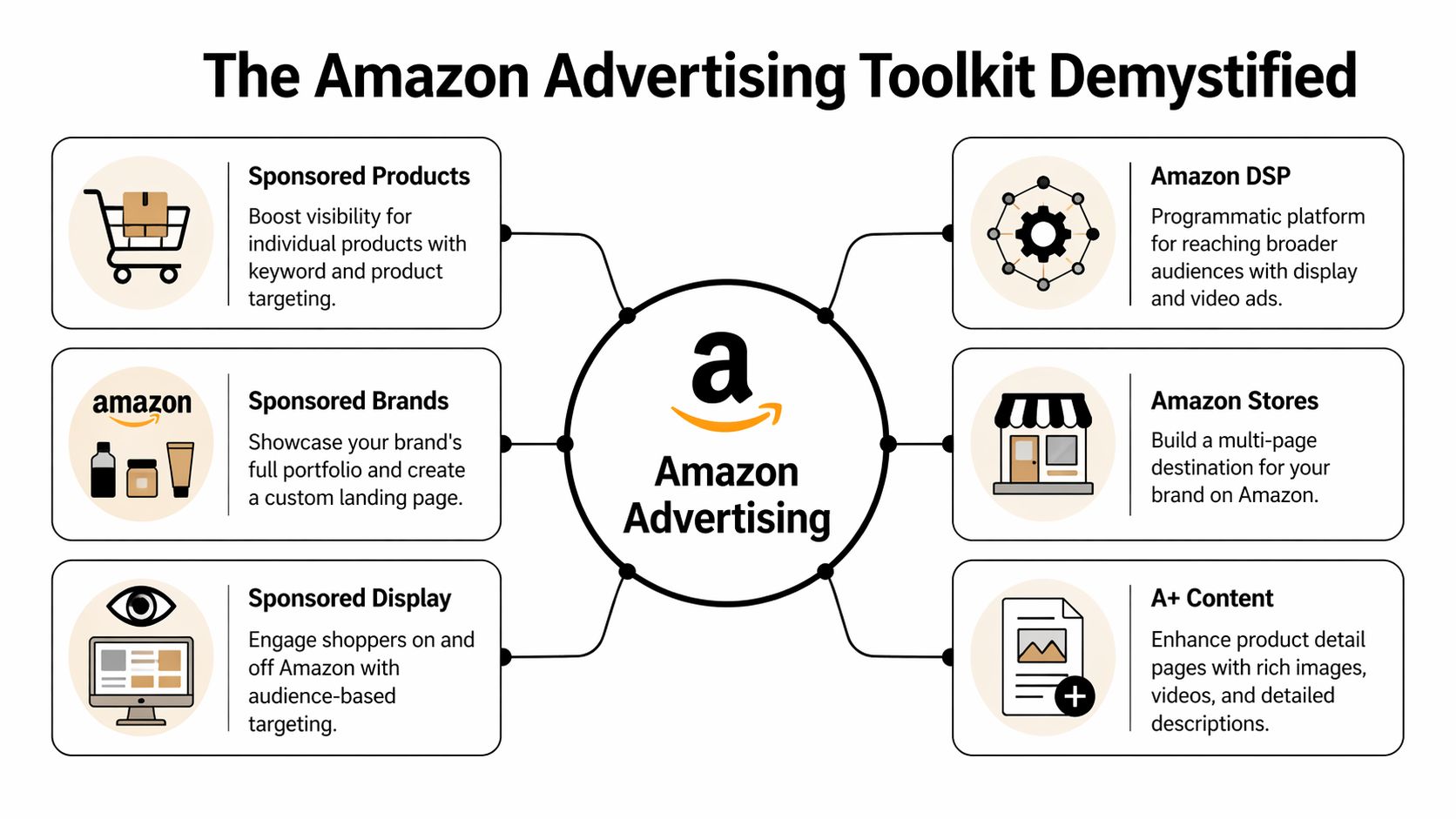
Sponsored Products are your most precise sales tool. They put a single ASIN in front of shoppers who are already browsing search results or product detail pages. For most brands, this is the engine room of the account.
Use them when you want to:
Sponsored Products are usually where operators learn the basics of bidding, placement adjustments, negation, and search term mining. They also create a bad habit. Sellers start believing every ad should be judged as if it were a last-click conversion tool.
That’s fine for this format. It breaks the minute you move broader.
Sponsored Brands sit higher in the visual hierarchy. They’re less about one SKU and more about owning a slice of the category conversation.
If Sponsored Products are a sniper rifle, Sponsored Brands are the storefront sign over the street corner you want to own. They’re useful when a customer hasn’t chosen your exact ASIN yet, but is still deciding between options in the category.
A few practical use cases:
Branded search defense
If shoppers type your brand name, a Sponsored Brand campaign can keep competitors from borrowing your demand.
Portfolio selling
If your products work better as a system than as isolated SKUs, this format lets you show that relationship.
Category framing
You can position your brand around a use case, problem, or product family rather than one item.
The biggest mistake with Sponsored Brands is sending traffic somewhere generic. If the ad speaks to one use case but the landing experience is broad and muddy, you waste the click.
Sponsored Display sits in a different mental bucket. It’s less “someone searched, now show an ad” and more “someone showed interest, now stay in front of them.”
That makes it useful for:
Many seller accounts begin to function more like actual marketing programs. You’re no longer just buying keywords. You’re buying relevance around behavior.
The right use of Sponsored Display isn’t “more traffic.” It’s better sequencing. Someone saw the hero SKU, left, and later sees a message tied to that same buying journey.
Your Store isn’t an ad in itself, but it’s a critical piece of the system because ads need somewhere coherent to send traffic. A strong Store lets you merchandise by collection, use case, seasonality, or audience.
That matters because ad efficiency often dies after the click. If the landing path is messy, you pay for traffic and then force the shopper to do the sorting work you should’ve done.
A Store does three jobs well:
| Tool | Primary job | Best use |
|---|---|---|
| Sponsored Products | Convert existing purchase intent | Core non-branded and branded terms |
| Sponsored Brands | Own more search real estate | Category positioning and brand defense |
| Sponsored Display | Re-engage and expand audiences | Retargeting and audience-based reach |
| Amazon Stores | Improve post-click path | Portfolio merchandising and brand storytelling |
| A+ Content | Strengthen listing persuasion | Conversion support on detail pages |
A+ Content doesn’t generate traffic by itself. It increases the odds that paid traffic converts once it arrives. That makes it one of the most impactful assets in the ad stack because every campaign depends on the listing doing its job.
Strong A+ Content should answer the objections that ads can’t handle in a tiny block of copy. It can compare models, explain feature differences, show use cases, and reduce confusion inside a crowded category.
What doesn’t work is turning A+ into a brochure. Founders often load it with lifestyle filler and forget the shopper is trying to decide.
Use it to make buying easier, not prettier.
At a certain point, maxing out Sponsored Products stops being enough. You can optimize bids, prune waste, and improve creative, but those are still incremental moves. The bigger jump comes when you use Amazon’s broader ecosystem to build brand familiarity before the customer enters the search results.
That’s where the advanced levers come in.

According to Statista’s Amazon advertising revenue development data, Amazon’s advertising ecosystem, including Prime Video, Twitch, and Fire TV, serves over 275 million monthly ad-supported U.S. audiences. That’s why savvy operators don’t see Amazon as only a search marketplace. They see it as a media network with commerce attached.
Amazon DSP is the tool that shifts you from keyword-led buying to audience-led buying. Instead of waiting for someone to search a term, you can reach shoppers based on signals, behaviors, and inventory across Amazon-owned and external environments.
That changes the role of your ad strategy in three ways:
For a practical breakdown of how teams approach this channel, Amazon DSP advertising is worth reviewing because it frames DSP more like a strategic media layer than a bolt-on campaign type.
DSP also forces discipline. If your creative is weak, your audiences are too broad, or your landing path isn’t aligned, you can spend a lot without learning much. The upside is scale. The downside is that it exposes sloppy strategy fast.
Most sellers undervalue brand assets because they don’t show up as a line item in the ad account. That’s a mistake. Your Store and A+ Content shape how paid traffic monetizes and whether a first purchase turns into brand memory.
Think about it like retail shelf space. Ads drive foot traffic into the aisle. Your Store and listing content determine whether the shopper sees a coherent brand or a pile of disconnected SKUs.
What usually works:
What usually fails:
Brands don’t scale through media alone. They scale when the media promise and the landing experience say the same thing.
A lot of founders get excited about upper-funnel tools and then neglect the blocking and tackling. That’s backwards. Advanced media only compounds when the base account is stable.
If you need a refresher on that foundation, PPC Advertising Best Practices is useful because it reinforces the habits that still matter even when you move into DSP, video, and broader audience campaigns.
The true value lies in combining these layers. Search campaigns catch demand. DSP and video shape it earlier. Stores and A+ make the click more profitable. That’s how a brand starts building market-share protection instead of just buying revenue one week at a time.
Most ad accounts are built campaign by campaign. The founder launches what feels urgent, patches leaks, adds some branded defense, and keeps going. That creates motion, but not a system.
The full-funnel version is cleaner. You assign each ad service a job based on the stage of the buying journey, then budget according to role instead of emotion.
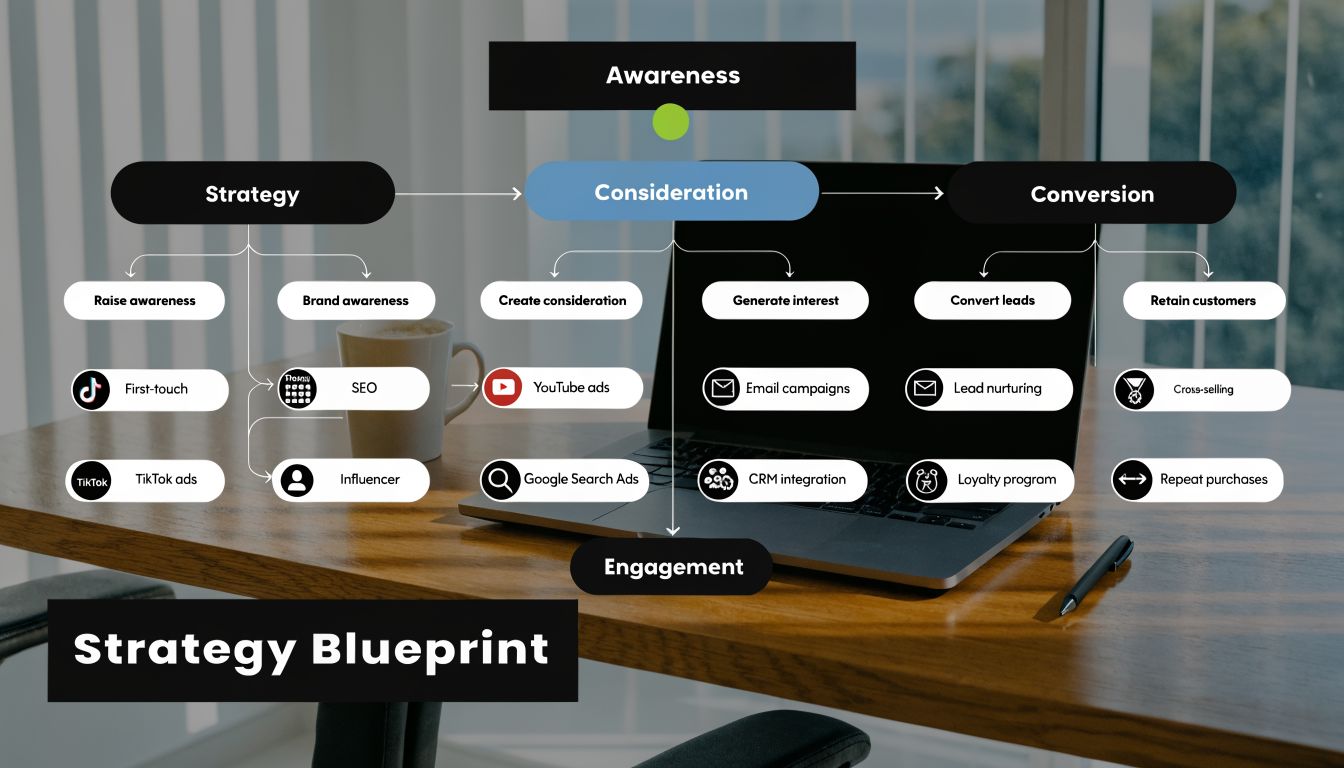
Top of funnel exists to put your brand in front of the right people before they type a keyword. On Amazon, that usually means DSP, video inventory, and broader audience-led placements.
This stage is where many founders underinvest because attribution is less immediate. But if every campaign in your account is bottom-funnel, you’re fighting over shoppers who are already close to buying. That gets crowded and expensive.
Use top of funnel when you want to:
This is also where omnichannel operators think differently. One of the more underused plays is Amazon DSP for non-endemic advertising, where brands use Amazon’s audience data to send traffic to their own DTC site or service page. As covered by Skai’s discussion of non-endemic Amazon ads, that approach helps diversify traffic sources and counter rising PPC costs on the marketplace.
That matters if you sell beyond Amazon, run subscriptions elsewhere, or offer services adjacent to your product line.
Middle of funnel is where the shopper knows the category, maybe knows your brand, but hasn’t committed. At this stage, Sponsored Brands, Sponsored Display, and tightly structured Store destinations become useful together.
Your goal here isn’t raw reach. It’s controlled comparison.
A practical setup often looks like this:
| Funnel stage | Best-fit tools | Main objective |
|---|---|---|
| Top of funnel | DSP, video, broad audience campaigns | Build awareness and seed demand |
| Middle of funnel | Sponsored Brands, Sponsored Display, Stores | Shape consideration and keep shoppers engaged |
| Bottom of funnel | Sponsored Products, product targeting | Convert high-intent traffic efficiently |
A strong middle layer usually does three things at once. It reintroduces the brand, narrows the buyer’s options, and routes traffic into a curated path instead of a random listing click.
If your account jumps from awareness straight to hard conversion, you’re asking cold traffic to behave like branded traffic. That rarely scales cleanly.
Bottom of funnel is still where the money gets collected. Sponsored Products carry a lot of that load because they align tightly with search intent and product detail page behavior.
Here, discipline matters most:
The account structure should make it obvious which campaigns are there to acquire new demand and which ones are there to close it.
Later in the buying journey, creative matters less than clarity. The shopper wants the right product, the right proof, and the easiest path to purchase.
A short visual can help frame how the stages fit together in practice.
The best Amazon operators today don’t isolate Amazon from the rest of the business. They use it as one major node inside a larger commerce system.
If you want another perspective on that broader planning process, this guide to a winning Amazon marketing strategy is a useful complement because it pushes beyond campaign management into channel coordination.
That’s the actual leap. You stop asking whether a campaign “worked” in isolation and start asking whether each layer of spend moved the buyer one step closer to becoming a customer of the brand, not just a one-time purchaser of the SKU.
ACOS matters. It just doesn’t deserve the throne most sellers give it.
The problem with using ACOS as the only scorecard is simple. It rewards short-term efficiency, even when that efficiency starves future growth. A campaign can post a pretty ACOS while doing nothing to expand reach, defend visibility, or strengthen branded demand.
If you want to manage advertising services on amazon like an operator, you need a wider dashboard.
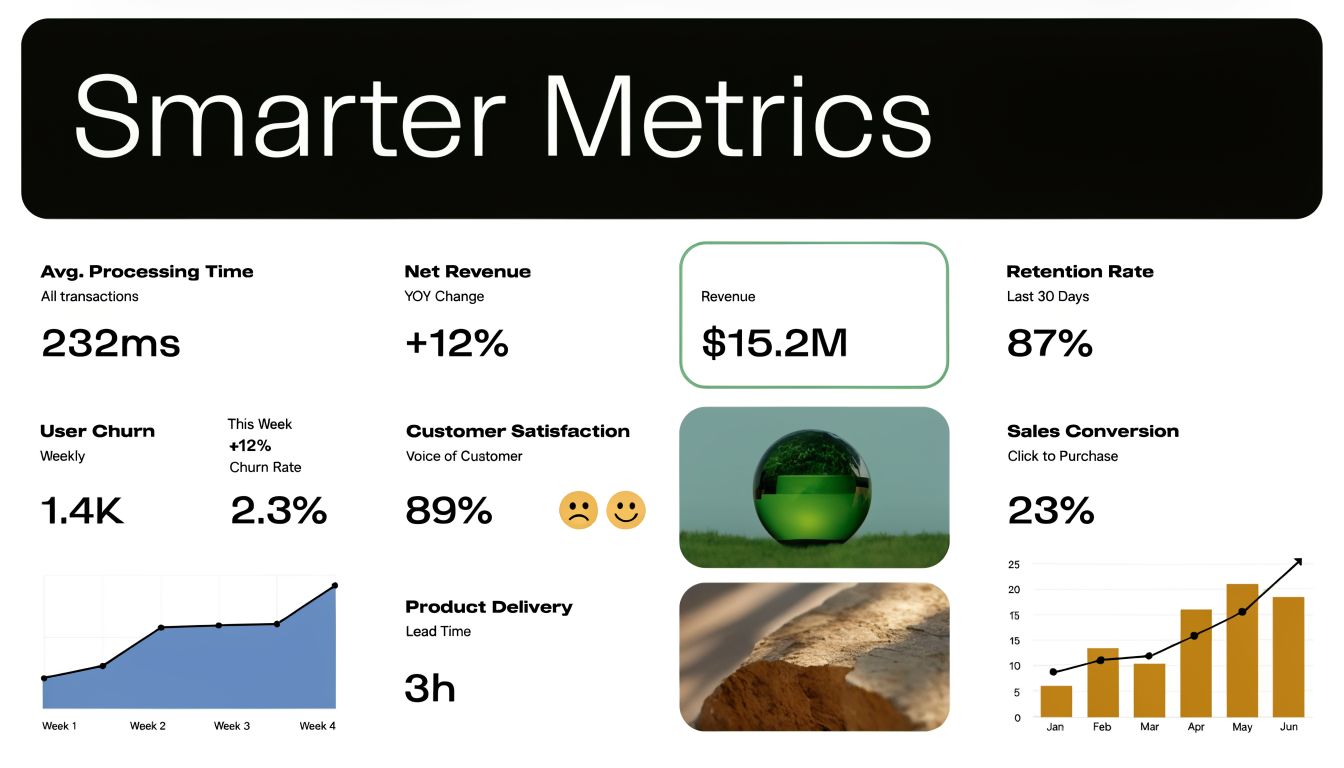
ACOS is useful for campaign-level efficiency. It tells you how much ad spend it took to generate attributed ad sales. That’s helpful when deciding whether a keyword, placement, or targeting group is too expensive.
What it doesn’t tell you is whether the spend improved the business overall.
A founder can cut spend, lower ACOS, and still lose category position because competitors take the traffic that was keeping the brand visible. That’s why many experienced teams pair ACOS with broader business metrics and visibility metrics.
If you need a plain-English refresher on the revenue side of ad efficiency, this explanation of Return on Ad Spend (ROAS) is a useful companion metric.
A good dashboard should answer more than “Was this campaign efficient?”
It should also answer:
That’s where metrics like TACOS, New-to-Brand, and Impression Share of Voice become more useful than a single ACOS snapshot.
For founders trying to benchmark cost expectations more broadly before optimizing the dashboard, advertising on Amazon cost is a practical reference point.
Impression Share of Voice, or ISoV, tells you what percentage of available impressions you’re capturing. That moves the conversation from “Did my keyword convert?” to “Am I even present enough to compete?”
According to Brandwoven’s breakdown of Amazon reporting and ISoV, top performers often achieve over 70% ISoV on their core keywords, and that visibility correlates with stronger organic rank and market share.
That’s powerful because it lets you identify a very different kind of problem. Sometimes the issue isn’t that a keyword is inefficient. The issue is that you’re underbidding and never showing up enough to win.
Operator lens: A term with strong economics but weak share often deserves more aggression, not less.
A useful dashboard doesn’t need fifty tabs. It needs to separate metrics by purpose.
Try organizing performance review around these buckets:
| Metric bucket | Question it answers | Typical use |
|---|---|---|
| Efficiency | Are we spending profitably? | ACOS, ROAS, CPC trends |
| Business impact | Are ads lifting total sales health? | TACOS, blended revenue view |
| Customer acquisition | Are we bringing in fresh buyers? | New-to-Brand metrics |
| Competitive position | Are we visible where it counts? | ISoV, branded defense, category terms |
When sellers get stuck, it’s often because they’ve built reporting that monitors spend without measuring position. Good operators track both. Efficiency keeps the machine healthy. Visibility keeps the machine relevant.
At some point, every scaling founder asks the same question. Should we run this in-house, hire an agency, or build some hybrid setup with internal ownership and external specialists?
There isn’t one right answer. There is a wrong one, though. Handing the account to whoever can lower ACOS fastest without understanding the broader business.
This decision is really about opportunity cost. If your internal team can’t manage creative, placement strategy, reporting, mobile behavior, catalog structure, and testing cadence at a high level, “saving” on fees usually gets expensive in hidden ways.
According to Amazon’s own guide on going beyond sponsored ads, 77% of Amazon traffic is mobile-driven and 68% of orders are placed on smartphones. That’s why mobile optimization isn’t a nice add-on. It’s table stakes, as outlined in Amazon’s guide to moving beyond sponsored ads.
If a team can’t explain how mobile behavior changes creative choices, Store design, ad placement priorities, and post-click friction, they probably aren’t operating with sufficient insight.
That applies whether you’re interviewing an employee or an agency.
Use this checklist before you hire, outsource, or restructure responsibility.
Strategy depth
Ask how they think about demand creation, consideration, and conversion separately. If every answer comes back to bids and ACOS, the thinking is too shallow.
Reporting transparency
You should know what they measure, how often they review it, and what actions come from the data. If reporting is mostly screenshots and summaries, push harder.
Channel range
Can they operate Sponsored Products and Sponsored Brands well, but also discuss Sponsored Display, DSP, Stores, and content alignment? If not, you may be hiring a campaign manager when you need a growth operator.
Mobile competence
Have them walk through how they audit ad creative and listing experiences for smartphone shoppers, as a significant portion of traffic and ordering behavior now occurs on mobile.
Creative judgment
Ask for examples of how they decide which message belongs in search ads versus Display versus Store pages. Good operators understand sequencing, not just execution.
Ownership model
Clarify who writes briefs, who changes bids, who approves tests, and who catches problems. Ambiguity creates lag, and lag burns budget.
In-house tends to work better when your brand already has:
The upside is speed and alignment. The downside is key-person risk. A lot of “in-house teams” are really one talented operator carrying too much.
Agency or managed-service support makes sense when the account needs broader expertise than the current team can supply, especially in DSP, advanced reporting, or cross-format strategy.
The key is selecting for strategic clarity, not presentation quality. If you’re comparing options, a curated network like Amazon PPC agencies can save time because it narrows the field to firms already known in the ecosystem.
You can also run a hybrid model. Internal ownership for merchandising, launches, and business priorities. External support for execution depth and platform specialization.
The best setup is the one where accountability is obvious. If performance drops, you should know exactly who owns the diagnosis and the fix.
The primary shift with advertising services on amazon isn’t learning one more campaign type. It’s changing how you think about the platform.
Small sellers often use ads to chase sales. Bigger operators use ads to shape demand, defend market share, and make the rest of the catalog perform better. They stop treating each campaign like an isolated bet and start managing the entire account like a coordinated system.
That system has layers. Sponsored Products close. Sponsored Brands frame the choice. Sponsored Display and DSP extend your reach and keep the brand visible. Stores and A+ Content make the paid click more valuable. Better measurement tells you whether you’re improving position, not just trimming costs.
If there’s one practical takeaway, it’s this. Don’t let your ad account become a spreadsheet of disconnected optimizations. Build it like a portfolio with roles, risk levels, and clear return expectations.
That’s how a brand moves from reactive spending to deliberate growth.
If you want to compare notes with founders operating at real scale, Million Dollar Sellers is an invite-only community where 7-, 8-, and 9-figure ecommerce operators share what’s working across Amazon, DTC, and omnichannel growth.
Join the Ecom Entrepreneur Community for Vetted 7-9 Figure Ecommerce Founders
Learn MoreYou may also like:
Learn more about our special events!
Check Events