Chilat Doina
February 28, 2026
To get your products on Target’s virtual shelves, you need an invitation to Target+, their curated third-party marketplace. This isn't like other platforms where you just sign up and start listing. Breaking into Target is a strategic play for established e-commerce brands wanting to diversify and partner with a premium, trusted retailer.
For years, the playbook for 7- and 8-figure e-commerce brands was straightforward: dominate Amazon and build a strong direct-to-consumer (DTC) site. But as marketplaces get more crowded and competitive, smart entrepreneurs—especially those in communities like Million Dollar Sellers—are hunting for the next growth channel. That's exactly where Target+ comes in.
Don't mistake Target+ for another Amazon. It’s a completely different animal, built on curation and brand partnership, not an open-for-all free-for-all. And frankly, that exclusivity is its biggest advantage.
Unlike the noisy, algorithm-driven battlegrounds of other marketplaces, Target+ is a much quieter, less saturated space. With a smaller, hand-picked group of third-party sellers, your brand faces far fewer direct competitors. This gives your products room to breathe and helps you avoid the constant race to the bottom on price and the headache of listing hijackers.
Target's goal here is to complement its own first-party inventory, not just endlessly expand its catalog. They deliberately seek out partners that match their reputation for quality and style, which in turn creates a more premium shopping experience for everyone.
For a sophisticated brand, getting onto Target+ isn't just about opening another sales channel; it's a stamp of approval. It tells the market that your products meet the high standards of one of America's most beloved retailers. That’s a powerful brand-building asset you can't buy.
The choice to sell on Target is also a choice to connect with a unique and incredibly loyal customer base. The average Target shopper is a world away from the typical Amazon bargain hunter. They tend to be:
If your brand has been focused mainly on Amazon or your own DTC site, this demographic is a massive, untapped market. It's a chance to win over new customers who might never have found you otherwise.
Becoming a Target+ partner gives your brand an undeniable "halo effect." Simply being associated with Target elevates your public perception and lends you a level of trust that can take years to build on your own. When shoppers see your products on Target.com, that credibility is instantly transferred to your brand.
This perceived endorsement can create positive ripples across your entire business. It can boost conversion rates on your DTC site, give you more leverage when negotiating with other retailers, and even make your brand a more attractive acquisition target down the road. It’s a strategic move for long-term brand equity, which makes the effort to get on Target+ a very worthwhile investment for any high-growth company.
Unlike open marketplaces where anyone can sign up, selling on Target is a different ballgame. The Target+ marketplace is an invite-only platform. This means Target’s partnership team hand-picks sellers who they believe align with their brand and can impress their loyal customer base.
Your job isn't just to fill out an application. It's to build a brand so compelling and operationally sound that Target wants you on their platform.
First things first, let's talk logistics. Target has a couple of non-negotiable requirements right out of the gate. You absolutely must have a U.S.-based business entity and ship all your products from a U.S. warehouse. This isn't just about legal compliance; it’s about guaranteeing the fast, reliable shipping Target customers have come to expect.
Beyond the logistical basics, Target's team is looking for established brands with a proven track record. This is where your performance on other channels—like your own DTC website or your Amazon storefront—becomes your most powerful asset. Strong sales history is a form of social proof, showing Target that there's real demand for your products and that you know how to run a tight ship.
They want to see that you can handle volume, manage your inventory without stockouts, and keep customers happy. High sales velocity, glowing reviews, and a polished brand presence are the signals they’re looking for. This proven success tells Target you’re a low-risk, high-reward partner ready for a premium retail stage.
The bar for "proven success" is getting higher every year. Consider that the number of Amazon sellers pulling in over $1 million in annual revenue is expected to jump from 60,000 in 2021 to over 100,000 by 2025. This explosion of top-tier sellers, which you can read more about in this seller forum discussion, shows just how much operational skill it takes to stand out.
Target isn't looking for startups to test their ideas. They are recruiting established, professional brands that can add immediate value and variety to their existing catalog without compromising the customer experience.
Before you even dream of getting that invitation, you need to get your house in order. Target’s vetting process is meticulous, so having your documentation ready is a must.
Here’s a quick checklist of what you should have on hand:
Paperwork is only half the battle. Your brand’s entire visual identity has to vibe with Target’s clean, modern, and family-friendly aesthetic. We’re talking professional, high-resolution product shots on pure white backgrounds, aspirational lifestyle imagery, and a brand story that resonates. Amateur branding is an instant dealbreaker.
Finally, your product category is a huge piece of the puzzle. Target doesn't just add sellers for the sake of it; they're strategically filling gaps in their first-party catalog and expanding into high-growth areas.
They often focus on categories like:
On the flip side, if a category is already jam-packed with Target’s own products or existing Target+ sellers, your chances of getting in are slim. Do your homework. Spend time on Target.com to see who’s selling in your niche. If you can identify a gap and pitch your brand as the perfect solution, you’re in a much stronger position.
To help you get organized, we've put together a readiness checklist that summarizes what Target's team is really looking for.
This table breaks down the key operational and brand requirements you need to nail before even thinking about applying to the Target+ marketplace.
.tbl-scroll{contain:inline-size;overflow-x:auto;-webkit-overflow-scrolling:touch}.tbl-scroll table{min-width:600px;width:100%;border-collapse:collapse;margin-bottom:20px}.tbl-scroll th{border:1px solid #ddd;padding:8px;text-align:left;background-color:#f2f2f2;white-space:nowrap}.tbl-scroll td{border:1px solid #ddd;padding:8px;text-align:left}Requirement AreaWhat Target Looks ForMDS Pro-TipU.S. OperationsA registered U.S. business entity and a physical U.S. warehouse for fulfillment.No exceptions here. If you're based internationally, you'll need a U.S. partner or entity to manage this.Proven Sales HistoryStrong, consistent sales on other platforms (Amazon, DTC, etc.) with positive velocity.Prepare a one-sheet with your key metrics: annual revenue, top-selling SKUs, and growth percentages.Customer SatisfactionHigh review scores and low return rates. Evidence of excellent customer service.Highlight your average star rating (ideally 4.5+) and any customer service awards or recognition.Brand PresentationProfessional product photography, a cohesive brand story, and a premium look and feel.Invest in a professional photoshoot. Your images are your first impression and must meet Target’s high standards.Product ComplianceAll products must have authentic GS1-registered UPCs. No resellers.Verify all your UPCs through the GS1 database. This is a common and easily avoidable mistake.Category AlignmentProducts that complement Target's existing assortment and fill a strategic gap.Research your category on Target.com. Frame your pitch around how you add to their catalog, not just compete with it.
Think of this as your pre-flight check. Getting these elements dialed in shows you’re a serious, professional partner who understands what it takes to succeed in a curated retail environment. This isn't just about meeting minimums; it's about proving you belong.
Alright, let's break down what it really takes to get your brand onto Target's digital shelves. It’s less about filling out a form and more about making a rock-solid business case.
Getting the green light to sell on Target+ isn't just about checking a few boxes. You have to understand that the application is your one shot to prove you're a low-risk, high-reward partner for them. I always tell brands to think of it less like a bureaucratic hurdle and more like a sales presentation to Target’s core partnership team.
You’ll be asked for standard business information, of course, but it’s how you frame it that makes all the difference. Your goal is to tell a compelling story of reliability, top-tier quality, and proven market demand. Don't just state your annual revenue; show them the momentum with your year-over-year growth figures.
This is where you make your case. Target’s team is looking for brands that not only have strong sales but also a bulletproof operational backbone. They need to know you can deliver a stellar customer experience and, frankly, make the Target brand look good.
Focus on hitting these key areas hard in your application materials:
Instead of a vague statement like "we have good reviews," get granular. For instance: "Our flagship product holds a 4.7-star rating across over 5,000 verified Amazon reviews, with a return rate under 2%." That kind of data-backed precision builds instant credibility and makes their decision a whole lot easier.
Remember, Target gets flooded with applications. The ones that actually get noticed are those that present a clear, data-driven case for why a partnership makes sense for them. You’re not just asking to get on their platform; you're showing them why it’s a smart business move to have you there.
Once you get that coveted "yes," the real work begins. The entire onboarding process is managed through Partner Central, Target’s seller portal. This is your command center for everything from technical setup to getting paid.
The onboarding can feel like a maze, but it’s actually quite structured. Your first order of business will be configuring all your account settings. This means getting your business info, banking details for payment, and tax forms like your W-9 loaded into the system. Have your legal business name, EIN, and bank routing numbers ready to go so you can fly through this part.
Next up is the technical integration. Honestly, this is where I see most brands get tripped up. You'll need to connect your fulfillment system to Target’s platform to sync orders, inventory, and shipping confirmations. Whether you're using a 3PL or shipping from your own warehouse, that handshake between your system and Partner Central has to be perfect for a smooth launch.
A common pitfall? Mismatched data. For example, if the UPCs in your catalog file don't perfectly match what's registered with GS1, your listings will get kicked back. Every single time. Double- and triple-check every data point before you hit submit to avoid a frustrating back-and-forth with the onboarding team. A clean, error-free setup from the jump can easily shave weeks off your launch timeline. This is what separates a smooth launch from a maddening one.
Once you’ve made it through the onboarding gauntlet, it’s time to shift your focus to what really drives sales when you sell on Target: your product content. This is not the place to just copy and paste your Amazon listings. Target's entire ecosystem is built around a more refined, retail-ready presentation that speaks directly to their quality-conscious shopper.
Your goal is to create a premium, brand-forward experience. It should feel less like a crowded marketplace and more like a curated boutique shelf. To really connect with buyers and make your products stand out on Target+, mastering an effective e-commerce content strategy is absolutely essential for building compelling listings and telling your brand's story.
Right away, you'll notice Target product titles follow a much cleaner, customer-friendly format than the keyword-stuffed strings common on other platforms. Their algorithm and style guide prioritize readability and brand identity over raw keyword density. Forget jamming in every possible search term; you need to think like a retail merchandiser.
A strong Target title usually sticks to this structure:
Brand Name + Product Name + Key Differentiator(s) + Size/Count
For instance, an Amazon-style title might be: "Organic Baby Wash & Shampoo, 16oz, Tear-Free, Hypoallergenic for Sensitive Skin, Lavender Scented."
On Target, that same product should be presented cleanly, like this:
Burt's Bees Baby - Tear-Free Shampoo & Wash, Lavender - 16 fl oz
It's crisp, it’s branded, and it instantly tells the shopper exactly what they need to know without feeling overwhelming. This approach fits perfectly with Target’s clean aesthetic and helps build consumer trust from the first glance.
What Amazon calls A+ Content, Target refers to as Enhanced Content. The concept is similar, but the execution and expectations are worlds apart. Target's version is less about cramming in specs and more about telling a compelling brand story. This is your digital endcap, designed to forge an emotional connection.
Think of Enhanced Content as your opportunity to bring your brand's mission to life. Use this space to showcase aspirational lifestyle imagery, highlight your brand's unique values, and visually explain why your product is the superior choice. It’s where you justify your premium positioning.
Use high-resolution banners and well-designed modules to walk customers through your product's benefits. Show your product in a real-world context that reflects the Target shopper's life. If you sell home goods, show them styled in a modern, family-friendly living room. This kind of visual storytelling is how you truly stand out.
Your product imagery is, without a doubt, the most critical piece of your listing. Target's standard is non-negotiable: you need crisp, high-resolution photos on pure white backgrounds for your main images. But beyond that, your lifestyle and in-use shots must feel authentic and align with that signature "Target-chic" look.
Here’s how to nail your visual presentation:
While you shouldn't stuff your titles with keywords, they are still crucial for getting discovered on Target.com. The trick is to place them strategically where they have the most impact. Target's search algorithm behaves differently than Google's or Amazon's; it places a much heavier emphasis on a product’s core attributes and structured data.
Your primary keywords should be woven into:
Getting your listings right is an ongoing process. For a deeper dive into the mechanics of improving visibility, check out our guide on listing optimization strategies, as many of the core principles translate well across different platforms. By combining retail-quality content with smart keyword placement, you can build listings that not only attract but also convert Target's loyal shoppers.
Once you get that coveted approval to sell on Target+, the spotlight shifts to your operational game. How you get products into customers' hands isn't just a backend detail—it's a massive part of your success on the platform. Target shoppers expect a quick, reliable experience, and your fulfillment strategy has to deliver on that promise. No excuses.
Unlike marketplaces with their own fulfillment networks, Target+ partners are on the hook for their own logistics. This gives you incredible control, but it also means the responsibility is squarely on your shoulders. You’ve got two main options: you can either partner with a third-party logistics (3PL) provider or fulfill orders yourself using a dropship model from your own warehouse.
For most established brands, handing off fulfillment to a specialized 3PL just makes sense. It lets you focus on your products and marketing while logistics pros tackle the nitty-gritty of picking, packing, and shipping. But be warned: not just any 3PL will cut it for Target.
Your fulfillment partner has to meet Target’s very strict Service Level Agreements (SLAs). These aren’t suggestions; they're hard-and-fast requirements that directly feed into your seller performance scores. Key SLAs you'll live and die by include:
When you're vetting a 3PL, you need to ask for their performance data—specifically for other big retail marketplaces. A provider that’s a rockstar at direct-to-consumer (DTC) fulfillment might not have the rigid systems needed for Target's B2B-style standards. Choosing the wrong 3PL can put your entire Target+ account at risk, fast.
The other path is to manage fulfillment from your own warehouse, dropshipping orders as they come in. This model gives you the ultimate control over your inventory, branding, and the end-to-end customer experience. You own the entire journey, from the moment an order pops up in Partner Central to that final delivery scan.
Of course, that control is a double-edged sword. It means your team is 100% responsible for hitting Target's SLAs. If orders ship late, there’s no one else to point the finger at. To make an in-house model work, your warehouse has to be an incredibly efficient, well-oiled machine with solid systems for order processing, real-time inventory syncing, and carrier management. This is a great route for brands that have already invested heavily in sophisticated fulfillment operations. You can get a better sense of how this fits into a bigger picture by understanding what is omnichannel fulfillment and how it all connects.
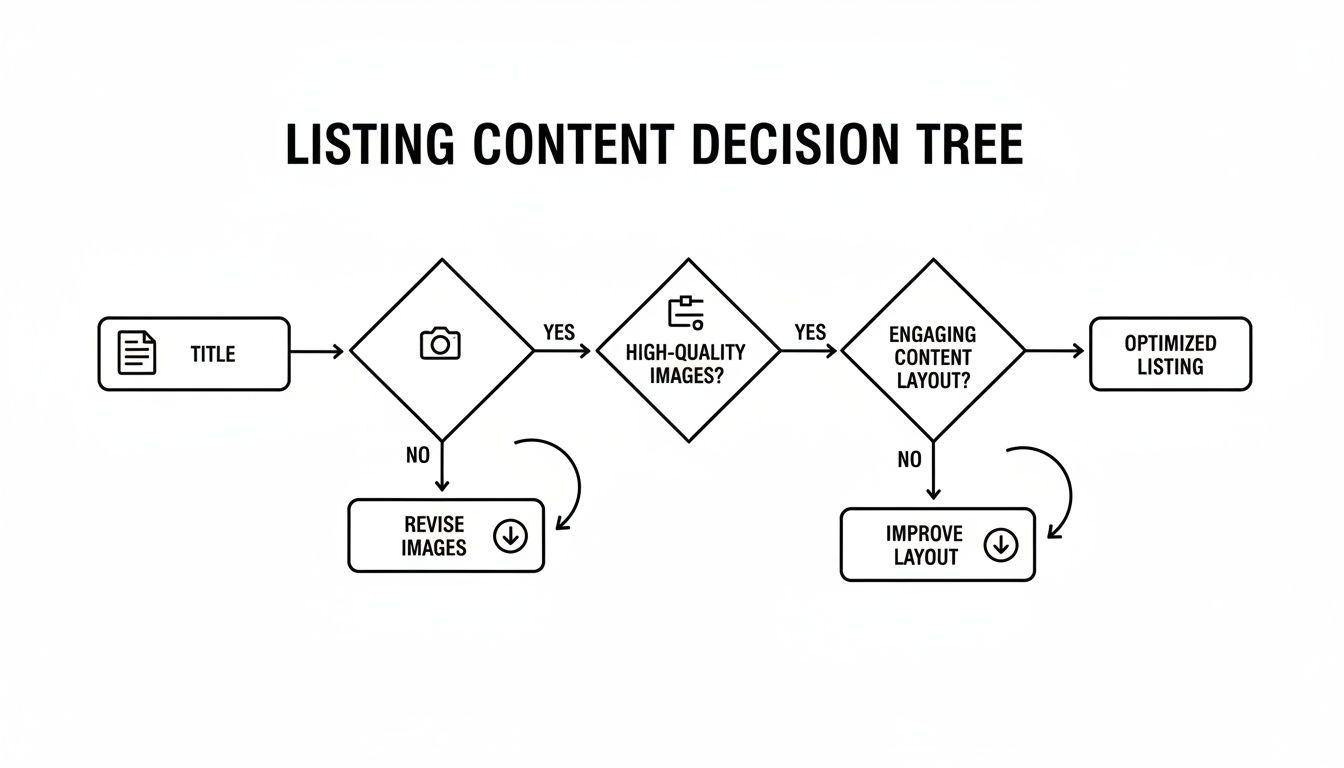
This fulfillment decision is a critical one. How you handle it directly impacts your ability to create a high-performing listing that converts.
One of the best perks for customers—and a major operational hurdle for sellers—is Target's returns policy. Shoppers can return items they bought from you to any of Target's nearly 2,000 brick-and-mortar stores. That convenience is a huge factor in getting customers to click "buy."
For sellers, this means you absolutely must have a solid reverse logistics plan in place. Target handles the in-store return for the customer, but that product eventually has to make its way back to you. You'll need to work with Target to figure out how returned inventory gets consolidated and shipped back to your warehouse.
This process is creating big opportunities for top-tier sellers who can manage these kinds of complex operations. In fact, one recent report showed that Amazon registered just 165,000 new sellers in 2023, a 44% drop from 2022, as the marketplace consolidated around fewer, more capable operators. You can dig into how this trend is opening doors for skilled sellers by reading the full analysis from Marketplace Pulse. In this tough environment, nailing your reverse logistics is a skill that truly sets you apart.
Getting your products live on Target.com is a huge win, but honestly, it’s just the starting line. To really make a dent and sell on Target successfully, you need a dedicated growth plan. You can't just copy and paste your Amazon or Google ad strategy and expect it to work here—it won't.
The real key is blending on-platform advertising with your existing marketing channels to build sustainable sales velocity. Before you even think about spending a dollar, though, you have to get crystal clear on how to identify your target audience. Every budget and creative decision you make flows from that understanding.
Target’s in-house media company, Roundel, is going to be your best friend. This is your primary tool for reaching shoppers right on Target.com and across their other digital properties. It’s an incredibly powerful ecosystem built on Target's own first-party data, letting you connect with people based on what they actually buy.
The main ad format you'll be using is Product Ads. These are the sponsored listings that pop up in search results, on category pages, and even on other product detail pages. They are absolutely crucial for getting eyeballs on your products, especially right after you launch when you have zero sales history to lean on.
What makes Roundel different is its precision. Forget broad-stroke campaigns. Here, you can target shoppers who’ve previously bought from your category, purchased from a direct competitor, or fit the exact demographic profile of Target's core customer.
Your advertising game plan for Target needs to be its own thing. It requires a different budget, a different mindset, and a different set of KPIs than what you're used to on other channels.
Think of your Target marketing budget as a long-term investment. You're not just trying to make a quick sale; you're building a brand presence inside a premium retail space. The goal is to become a name the Target shopper recognizes and trusts.
Don't just sit back and wait for Target to bring you customers. One of the biggest levers advanced sellers pull is driving their own traffic to their Target.com product pages. This is where all your off-platform work pays off.
If you have a big social media following or a healthy email list, you can launch campaigns that point your audience directly to your Target listings. For example, run an Instagram story saying, "We're officially at Target! Shop the collection here." This is a classic two-for-one move.
First, it drives immediate sales, which helps boost your product's organic ranking in Target’s search algorithm. Second, it sends a powerful signal to Target that your brand has an active, engaged following, which instantly makes you a more valuable partner. Weaving these efforts together is a cornerstone of any solid omnichannel marketing strategy.
When you combine paid ads on Roundel with your own external marketing, you create a powerful growth engine. It’s what will accelerate your success and lock in your spot on the digital shelf.
Even for experienced sellers, jumping into a new marketplace like Target+ always brings up a few questions. Let's tackle some of the most common ones we hear from brands eyeing a spot on Target's shelves.
Officially, the answer is no. Target+ is pretty strict: partners must have a U.S.-based business entity and ship from a U.S. warehouse.
However, there's a well-established workaround. International brands can get on the platform by setting up a U.S. legal entity and then partnering with a U.S.-based 3PL. This partner will need to handle all your fulfillment and returns. This isn't just a suggestion; it's a non-negotiable requirement to even be considered for the program.
Good news here. Unlike some marketplaces that hit you with a monthly subscription, Target+ has no upfront application fees or monthly account maintenance costs.
Your main cost will be the referral fees. These are simply percentage-based commissions taken from each sale. The exact percentage depends on your product category, so you'll definitely want to get that number and bake it into your pricing strategy once you're approved.
This is a bit of a hybrid model. You're on the hook for handling any direct customer service questions about your products—think features, how to use it, etc. But when it comes to the transaction itself, Target manages all payment processing and is the first point of contact for returns.
The real game-changer here is Target’s in-store return policy. A customer can walk into any physical Target store and return your product. This is a huge plus for them, but it means you absolutely need a rock-solid reverse logistics plan to manage all that returned inventory. Don't underestimate this part.
It’s a solid "maybe." Target’s Partner Central platform is built to play nicely with major e-commerce tools and middleware solutions like ChannelAdvisor or Linnworks. These can help you sync up your listings, inventory, and orders without much of a headache.
If you're running a custom-built system or a less common platform, you'll likely need to roll up your sleeves. Be prepared to develop a custom API integration to get your operations synced up with Target's system. It’s doable, but it will require some dev resources.
If you're an established e-commerce entrepreneur ready to break into new, high-value marketplaces, the private community at Million Dollar Sellers is where you'll find the strategies and network to make it happen. Learn more and see if you qualify to join.
Join the Ecom Entrepreneur Community for Vetted 7-9 Figure Ecommerce Founders
Learn MoreYou may also like:
Learn more about our special events!
Check Events