Chilat Doina
July 23, 2026
Tariff classification is the process of assigning a standardized HS code to a product so customs can determine the right duties, taxes, and border controls when it crosses a border. The system uses more than 5,000 commodity groups and is used by more than 200 countries, which is why a wrong code can create real operational pain, not just paperwork noise (CBSA on HS scale and usage).
You've probably felt this in practice already. A shipment is moving, the product is selling, customer support has promised a delivery date, and then customs asks for more detail because the paperwork doesn't line up with the goods. That's where tariff classification stops being a back-office task and starts acting like a growth lever, because the code you choose can change landed cost, clearance speed, and whether a market is easy or painful to enter.
A shipment can look perfectly routine on the warehouse side and still get stuck at the border because the code on the commercial invoice doesn't match the product's actual characteristics. For an ecommerce brand, that's not an abstract compliance issue. It's a late delivery, a customer service headache, and often an avoidable margin leak.
Tariff classification is the legal process of assigning the correct HS code to a product so customs can apply the right treatment. The Harmonized System was adopted as the global standard in 1983 and entered into force on January 1, 1988, and today it serves as the common foundation for customs tariffs and trade statistics in almost all world economies (HS history and global foundation). That history matters because it explains why customs doesn't treat classification as casual description, it treats it as a standardized international language for goods.
For founders, the practical takeaway is simple. If you're scaling cross-border, tariff classification touches the same things that drive growth.
Practical rule: if a SKU can change duty, licensing, or clearance outcome, it needs a documented classification decision, not a guess.
A clean way to think about it is landed cost control. If you want to sanity-check how tariff classification flows into your margin math, review how landed cost gets built. Classification is one of the inputs that can swing the number you pay to get inventory on shelf, not just what your supplier charged.
The trap is that many teams treat HS codes as a line-item in the shipping software. In reality, they're closer to the tax ID for the product itself. Once you see it that way, it becomes obvious why SKU setup, product data, and customs paperwork have to agree.
Think of an HS code as a universal ZIP code for products. It doesn't tell customs your brand story or your advertising angle, it tells customs what the item is in a legal trade sense, so the right duty and control rules can be applied consistently across markets.

The structure is hierarchical. The international standard starts at 6 digits, and that six-digit base is the common language used across borders. Countries then extend it for their own tariff and statistical needs, which is why Canada uses 10 digits for import administration and domestic statistics, while the United States uses 8-digit tariff lines in the HTS (CBSA tariff classification guide).
That means the code isn't random. It moves from broad to narrow, like a library system that starts with a main shelf, then a section, then a specific book. In practice, the global six-digit base gives you the shared identity, and the extra national digits fine-tune duty rates and reporting.
A simple way to read it is this:
The EU does the same thing in its own structure. The Union Customs Code ties classification to a CN subheading or a further subdivision, and the EU TARIC layer adds two more digits to apply duty rates and measures (EU tariff classification framework). So whether you're shipping into Toronto, Chicago, or Rotterdam, the code is doing the same job, just with different national extensions.
If you sell internationally through Amazon, that structure matters because marketplace listings don't override customs logic. A useful operational reference is selling internationally on Amazon, especially when you're mapping one product catalog across multiple countries.
For importers trying to estimate duties in a specific market, a practical resource is understanding Australian import costs. The useful insight isn't the country itself, it's the principle. The same product can carry different border treatment once the national digits and local rules are applied.
A single HS code can change more than duty. It can change market access, customer experience, and how predictable your operations feel when you start adding countries.

The EU's customs framework is explicit that the assigned code legally drives duty liability and other border controls, and a single misclassification can change the applicable tariff treatment, trigger or remove non-tariff controls, and alter whether preferential rates apply under trade agreements (EU tariff classification goods page). That's why this isn't just a compliance box. It's a margin, speed, and access decision.
For an ecommerce founder, the impact usually shows up in a few places:
If you want a broader view of how policy can ripple through operating decisions, tariff impact analysis for global businesses is a useful complement. The point for operators is simple, tariffs and classification are linked, and when policy shifts, the commercial meaning of a code can change fast.
A code that looks harmless on a spreadsheet can become a cash-flow problem once it hits customs.
Classification then becomes strategic. Brands that expand into new regions need a product-level decision process, not a one-off lookup by the freight forwarder. That's especially true when your catalog has variants, bundles, or products that can be described in more than one way.
For tax planning, the internal note is just as important. If you're building your operating rhythm around customs exposure, tax optimization strategies helps frame why classification belongs in the same discussion as margin protection and market expansion. The better your code choices, the less likely you are to get blindsided by avoidable cost.
Classification starts with the product, not the marketing copy. U.S. Customs says merchandise must first be classified at the 4-digit heading level using General Rule of Interpretation 1, and the decisive criterion is the product's objective characteristics and properties, not its commercial description (CBP classification guidance). That's the part ecommerce teams often miss when they assume a nice product title or a supplier's code is enough.
Build the file from the physical item outward. For each SKU, capture the material composition, function, manufacturing process, physical form, and state of presentation. If you sell a supplement bundle, document what's in the bottle, how it's presented, and whether it's a set or a single article. If you sell apparel, note the fiber content, garment type, and construction. If it's an electronic device, list the components, power source, and what the item does.
A good classification packet usually includes:
Start at the heading level, then move narrower only after the heading is correct. That sequence matters because customs logic doesn't begin with the most convenient subheading, it begins with the broad legal category and then narrows from there. For complex items, compare how the item is made versus how it is marketed, because the legal answer can differ from the sales description.
If you're unsure, use a decision memo. Write down the item facts, the heading text you matched, and the rule you relied on. That's useful both for internal training and for broker review.
A quick example helps. A private-label supplement bottle and a cosmetic-looking gummy can be sold under similar marketing language, but the classification outcome depends on the objective composition and presentation. Same with a hoodie and a performance fleece, or a charging accessory and a data accessory. The product family may look close to a non-specialist, but customs sees the physical facts first.
For edge cases, use a broker, trade consultant, or customs counsel. That's especially wise when the item has mixed components, can fit multiple headings, or has meaningful duty exposure. You don't need expert input for every SKU, but you do need it when the cost of being wrong would hurt cash flow or delay launch.
If you want a visual refresher on the process, here's the step flow used by many import teams.
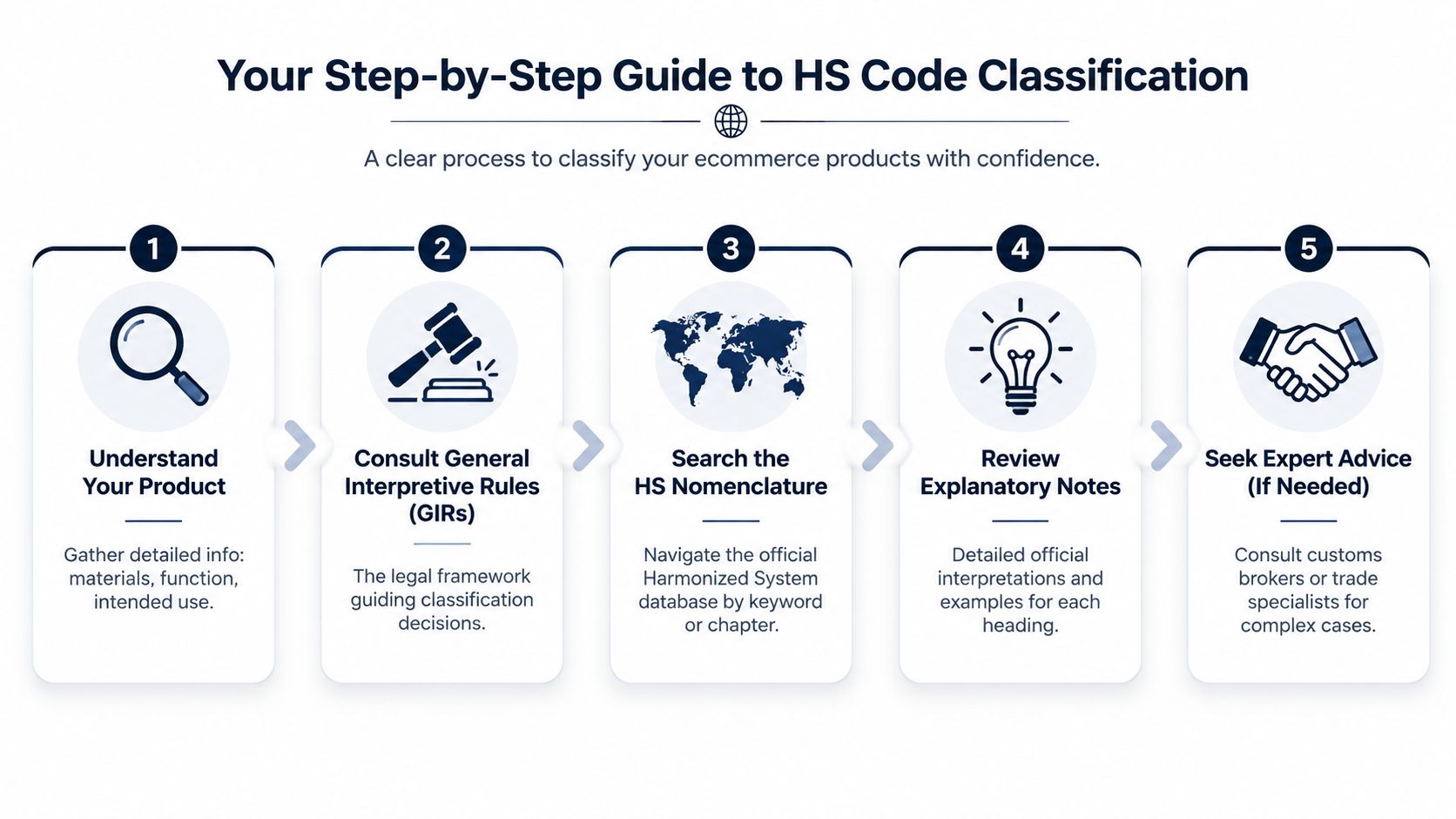
If your catalog is growing fast, treat the code as master data, not a shipping note. That mindset alone prevents a lot of downstream pain.
Compliance with tariff classification is not a one-time task. U.S. guidance recommends re-checking classifications when HTS revisions are published, monitoring trade policy changes, and using binding rulings when duty exposure is material (classification change management guidance).
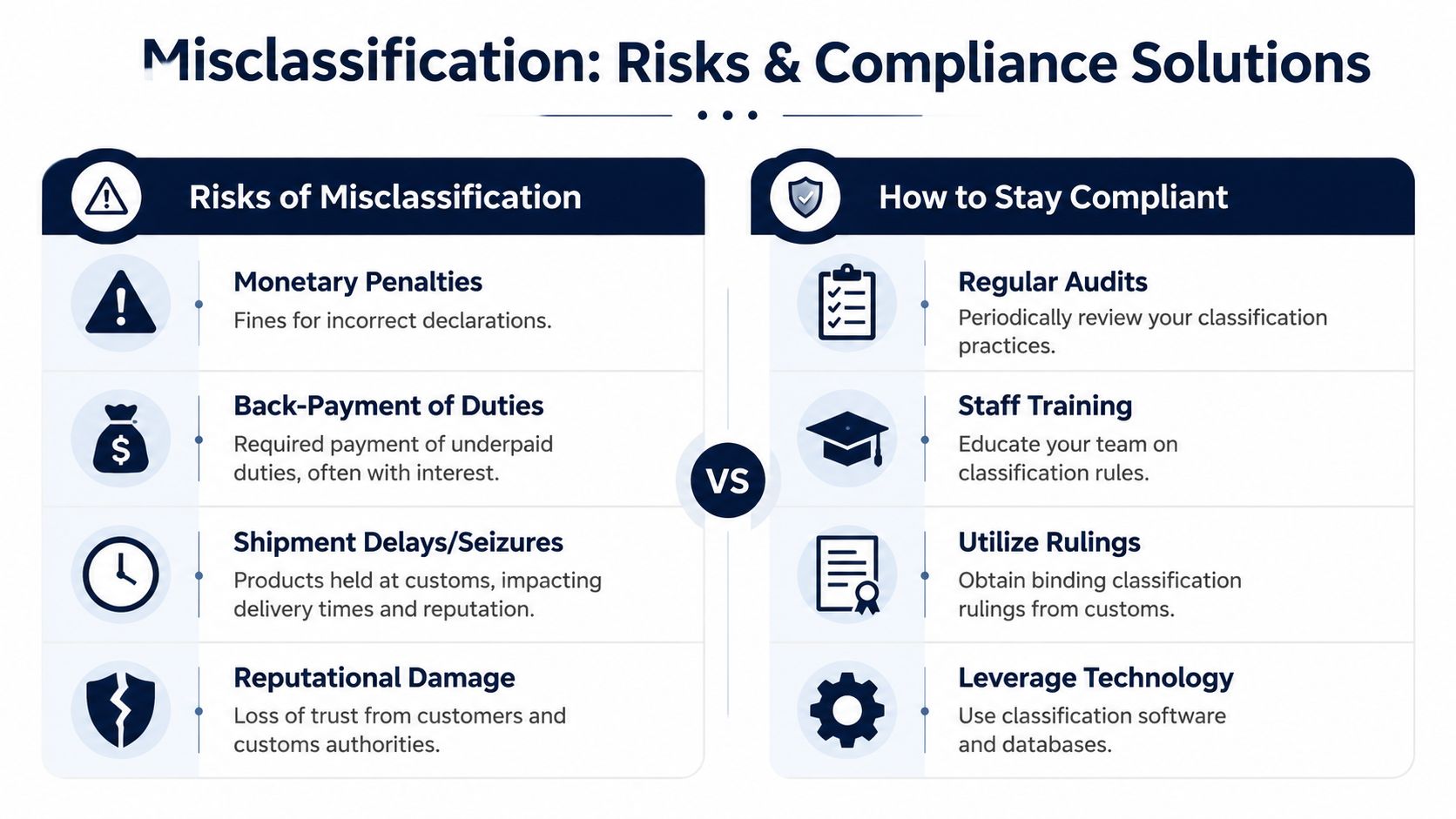
The pain points are straightforward. If a product is classified badly, customs can assess the wrong duty treatment, hold the shipment, or question prior entries. In tougher cases, a bad pattern can put your team on the radar for future reviews.
The common risk categories are:
The most practical defense is documentation discipline. Keep a classification rationale on file for every meaningful SKU, and make sure the person approving it can explain the product facts behind the decision. That matters more than having a fancy software label.
A few controls work especially well:
If you're using a broader internal audit framework, a useful companion is the SA business trade compliance audit checklist. The structure is less important than the habit. Good compliance systems don't rely on memory, they rely on repeatable review.
Practical rule: if the product changed, the packaging changed, or the tariff environment changed, re-check the code.
That's the primary job. Not chasing perfection in theory, but building a process that catches changes before they turn into border problems.
The fastest way to tighten this process is to treat classification like a live control, not a filing task. The HS system spans more than 200 countries and covers about 98% of world trade, with more than 5,000 commodity groups, so a systematic process is the only sane way to manage a global catalog (CBSA HS scale reference).
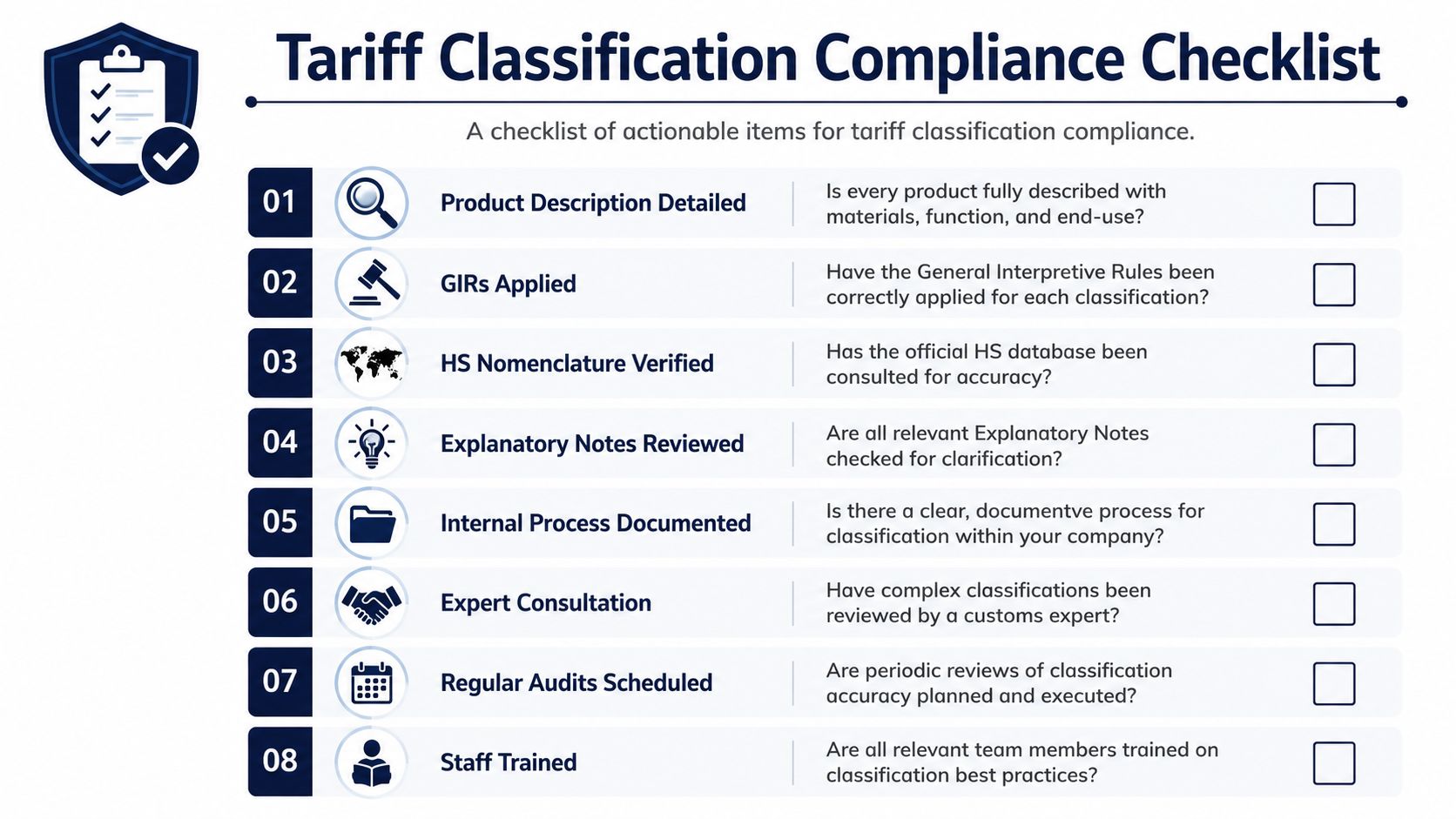
If your process relies on the vendor's code alone, that's a red flag. If your product data lives in five systems and nobody owns the final decision, that's another one. The fix isn't more complexity, it's a clean master data file, a documented rationale, and a review cadence your team follows.
Tariff classification is one of those unglamorous systems that effectively protects profit, delivery performance, and expansion plans. Tighten it now, and you'll make every future launch less stressful.
If you want a sharper operating system for growth, join Million Dollar Sellers and tap into a network of founders who treat compliance, margin, and scale as one connected playbook.
Join the Ecom Entrepreneur Community for Vetted 7-9 Figure Ecommerce Founders
Learn MoreYou may also like:
Learn more about our special events!
Check Events